What Makes a Luxury Rehab Center Truly Different?
Most facilities that call themselves a "luxury rehab" simply offer nicer bedrooms while running the same outdated programs that have been failing people for decades — group therapy circles, 12-step ideology, and medication management. That is not luxury. That is a comfortable cage with the same broken key.
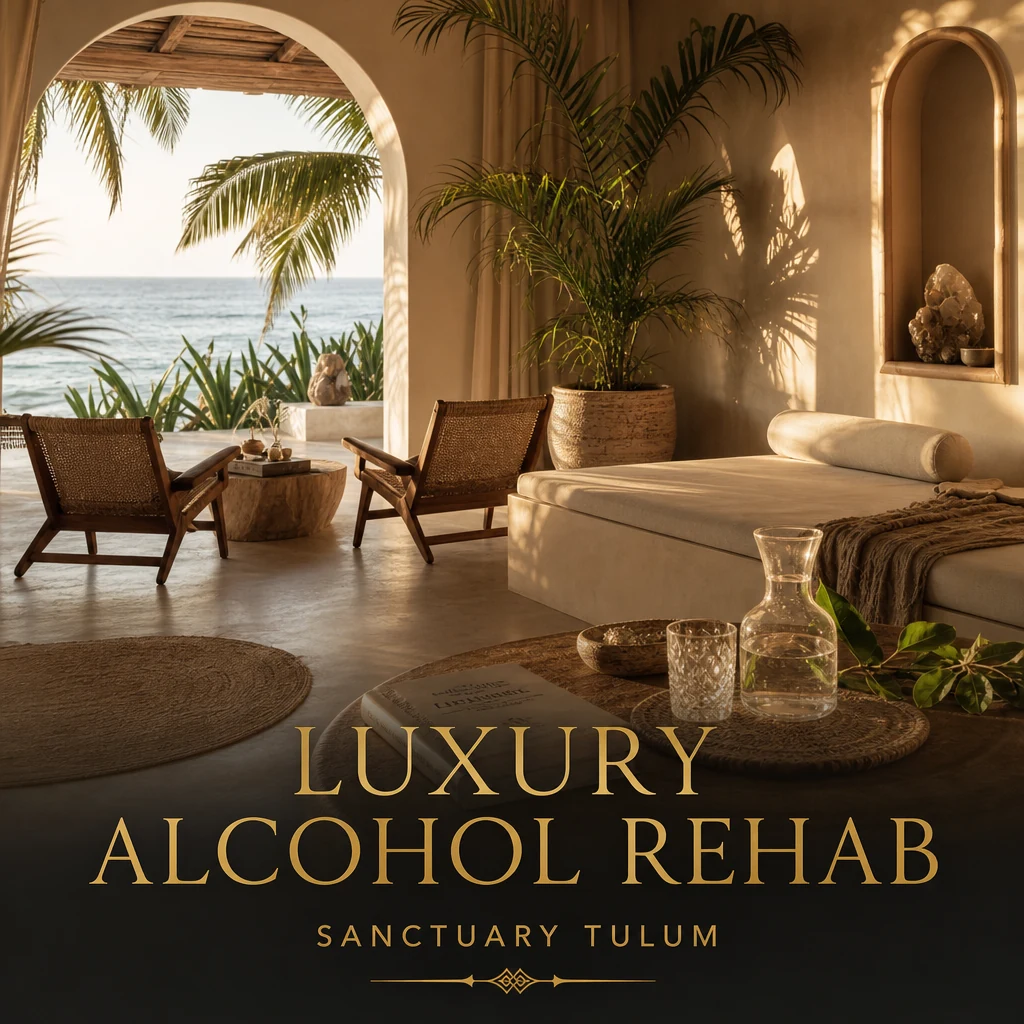
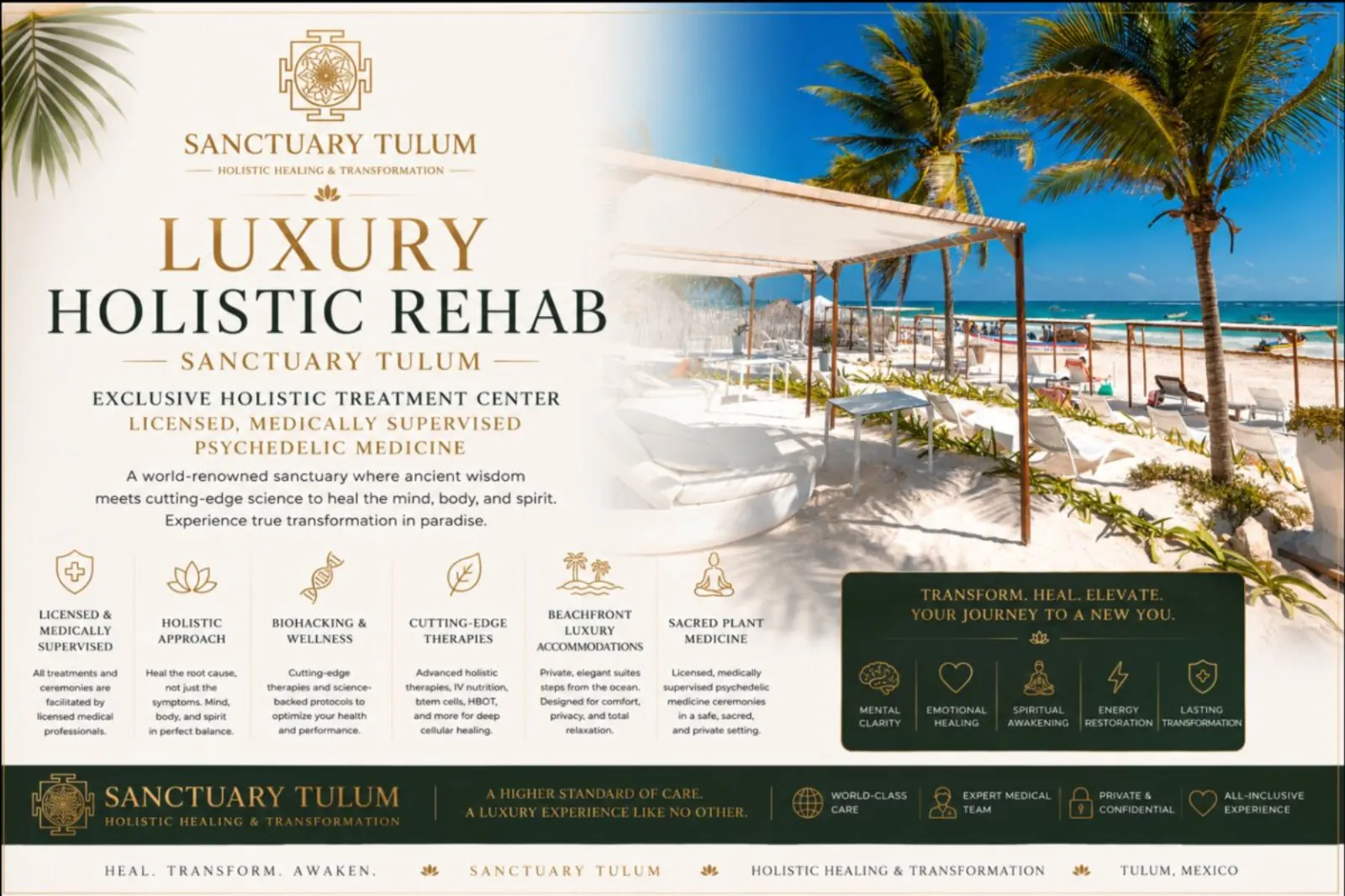
At Sanctuary Tulum, luxury rehab means something radically different. It means a fully private oceanfront estate where you are the sole focus of an entire medical and therapeutic team. It means zero group sessions, zero medications, and zero cookie-cutter treatment plans. Every hour of every day is designed around your specific neurochemistry, trauma history, and healing goals.
Since 2011, we have operated as a licensed medical facility in Tulum under a federal health license — combining ibogaine therapy, medically supervised ayahuasca ceremonies, psilocybin-assisted therapy, and supervised 5-MeO-DMT ceremonies with regenerative medicine under one roof, all under on-site physician supervision. We serve clients from across the United States — California, Florida, New York, Texas, and beyond.
Why Conventional Rehab Fails — And Why Luxury Rehab Works
The traditional rehab industry has a devastating track record. Studies consistently show that conventional 28-day programs relying on group therapy and medication-assisted treatment produce relapse rates between 40% and 60% within the first year. The reason is simple: these programs treat symptoms while ignoring the root cause.
Addiction, depression, PTSD, and anxiety are not character flaws — they are neurochemical imbalances rooted in unresolved trauma, toxic environments, and depleted brain chemistry. A luxury rehab center that understands this provides treatments that actually repair the brain and body at the cellular level, rather than masking problems with more drugs or repetitive talk therapy.
At Sanctuary Tulum, guests receive extensive one-on-one holistic therapy each week — care delivered individually rather than in groups. This is paired with the proprietary Brain Repair IV Drip for neurochemical support, NAD+ IV therapy for cellular energy, stem cell treatments, hyperbaric oxygen therapy, infrared sauna, cold plunge, and red light therapy to physically restore the body while medically supervised sacred plant medicine ceremonies support psychological and emotional healing.
The Pouyan Method™: Our Proprietary Healing Protocol
At the heart of every transformation at Sanctuary Tulum is the Pouyan Method™ — a trademarked, all-natural healing system developed by our founder, Johnny Tabaie. This evidence-based protocol was born from personal experience and refined over more than a decade of clinical application with thousands of guests.
The Pouyan Method works by supporting cellular detoxification, rebuilding neurochemistry, addressing trauma stored in the subconscious, and restoring the body's natural serotonin, dopamine, and GABA pathways — without pharmaceutical replacement drugs. Our protocol integrates all four sacred plant medicines with regenerative medicine in a licensed medical setting.
Complete Treatment Menu at Our Luxury Rehab
Every guest receives a bespoke combination of the following therapies, calibrated to their unique condition:
Sacred Plant Medicine Ceremonies
- • Ibogaine treatment — neurological reset that interrupts addiction at the receptor level
- • Ayahuasca ceremonies — deep emotional purging and spiritual reconnection
- • Psilocybin (magic mushroom) therapy — neuroplasticity and treatment-resistant depression breakthrough
- • 5-MeO-DMT ceremonies — ego dissolution and transcendent healing for PTSD and trauma
Regenerative & IV Therapies
- • Stem cell therapy — cellular regeneration targeting brain, liver, and immune system
- • Brain Repair IV Drip — proprietary neurochemical reset protocol (standalone — NOT NAD+ or vitamins)
- • NAD+ IV therapy — cellular energy and mitochondrial support (separate therapy from Brain Repair IV)
- • Amino acid, glutathione, vitamin C, and chelation IV drips (separate supportive therapies)
- • Ozone therapy for blood detoxification and immune activation
Body & Mind Restoration
- • Hyperbaric oxygen therapy (HBOT) — stem cell activation and brain repair
- • Infrared sauna for deep tissue detoxification
- • Cold plunge therapy for nervous system reset and mental clarity
- • Red light therapy for cellular regeneration
- • Daily yoga, breathwork, and guided meditation
- • Therapeutic massage and bodywork
- • Green coffee enemas for liver detoxification
- • 100% organic superfood nutrition, juicing, and supplementation
Conditions We Treat at Our Luxury Rehab Center
Sanctuary Tulum is not exclusively an addiction treatment center. Our luxury rehab program treats the full spectrum of mental, emotional, and physical health challenges:
- • Alcohol addiction and dependence
- • Opioid and heroin addiction
- • Benzodiazepine withdrawal and dependency
- • Methamphetamine, cocaine, and stimulant addiction
- • Prescription medication dependency
- • Treatment-resistant depression
- • PTSD, complex trauma, and childhood trauma
- • Anxiety disorders and panic attacks
- • Burnout, existential crisis, and emotional exhaustion
- • Autoimmune disorders and chronic inflammation
Privacy, Exclusivity & the Luxury Rehab Experience
For high-profile individuals — executives, entrepreneurs, celebrities, professional athletes, and public figures — discretion is non-negotiable. US-based rehab facilities cannot guarantee privacy. Patient lists leak, staff talk, and group settings make anonymity impossible.
At Sanctuary Tulum, confidentiality is absolute. Our private oceanfront estate accommodates only a small number of guests at any time, each with their own luxury suite. There are no group sessions, no shared spaces with strangers, and no institutional atmosphere. Your healing journey is entirely your own.
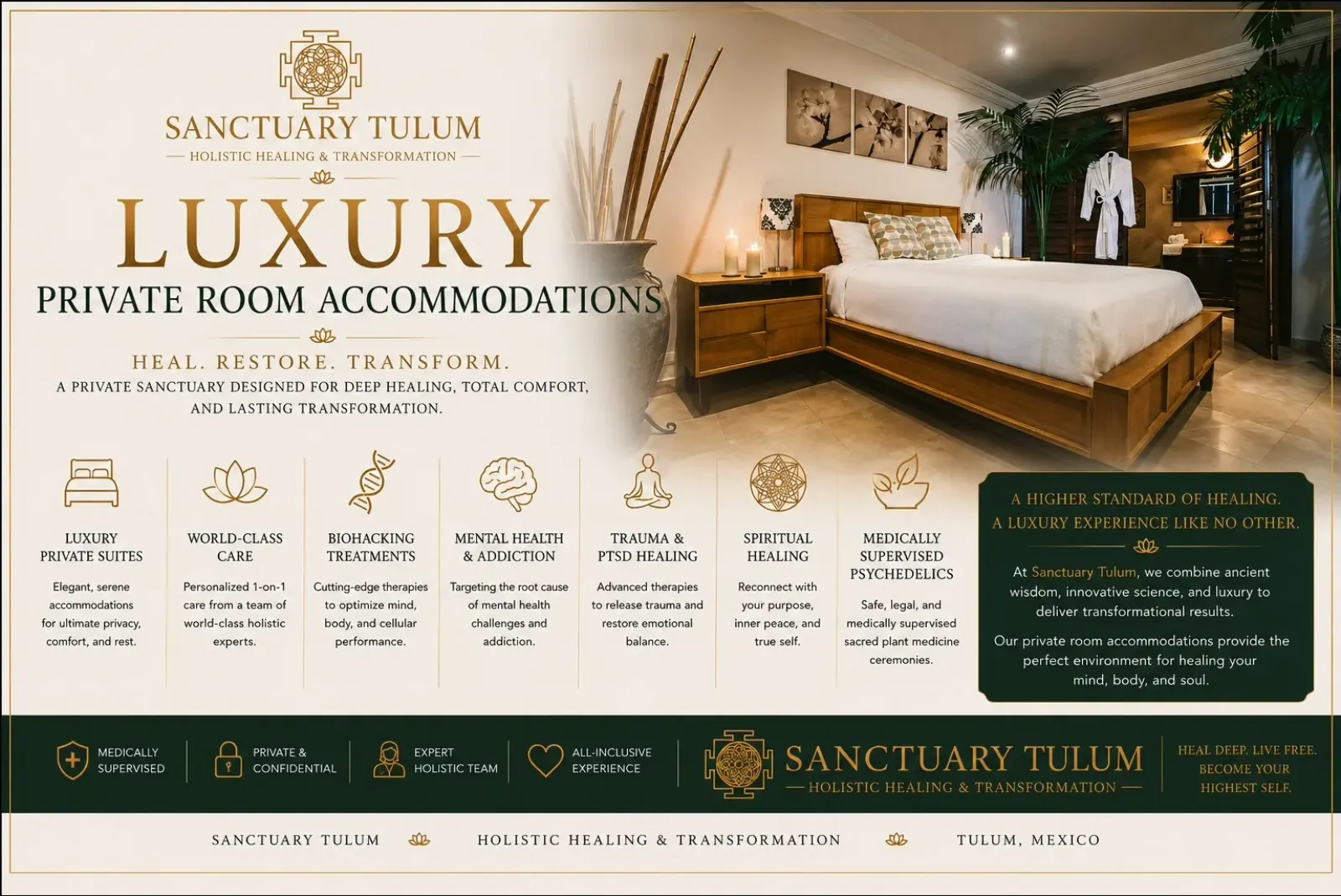
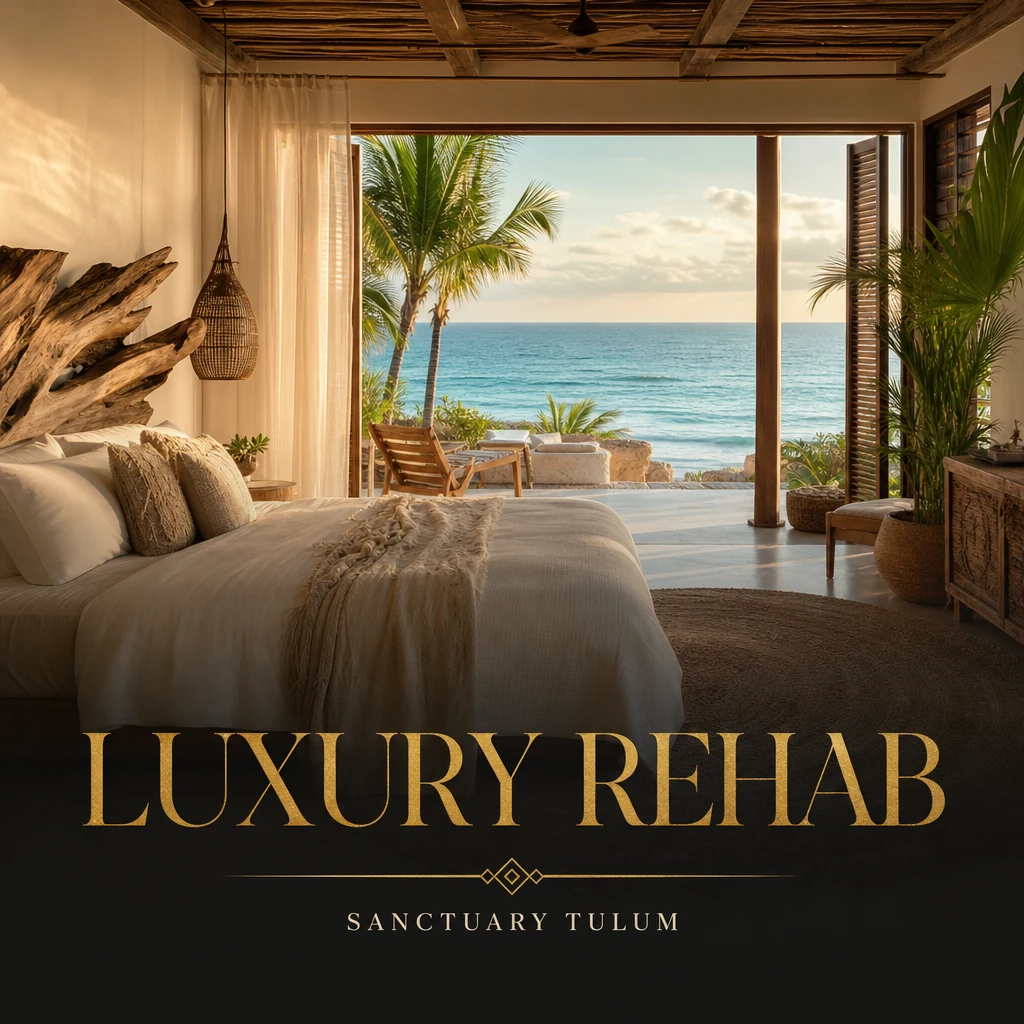
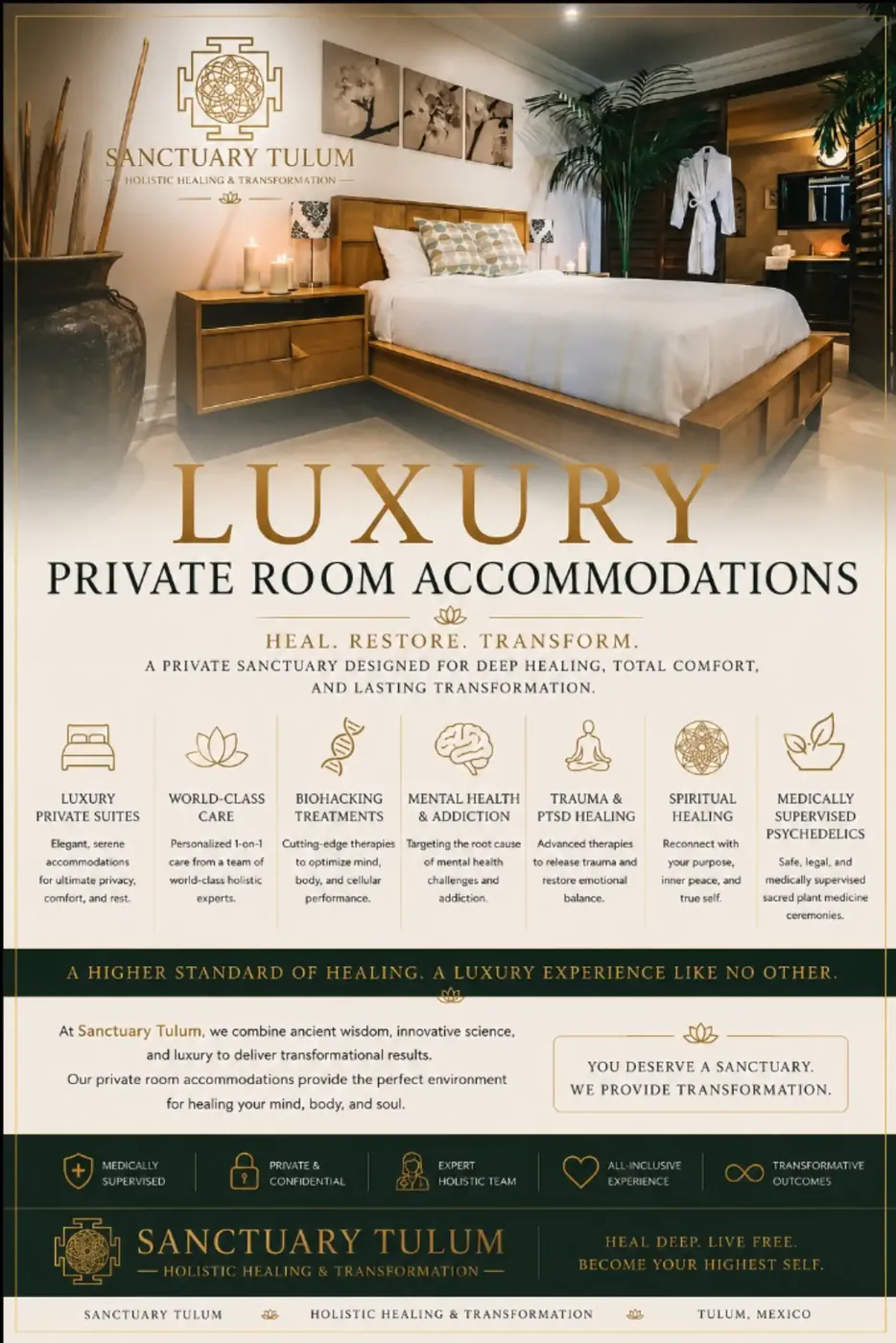
Luxury private room accommodations — elegant suites designed for deep healing and total comfort
Why Our Location Is Ideal for U.S. Residents
Environment directly impacts recovery outcomes. Clinical research confirms that natural settings reduce cortisol, activate the parasympathetic nervous system, and accelerate neurological healing. Our Caribbean-coast location provides warm tropical climate, ocean air rich in negative ions, abundant natural sunlight, and profound spiritual energy — all of which create the optimal conditions for transformation.
Unlike sterile clinical facilities in urban centers, our luxury rehab immerses you in nature's healing power from the moment you arrive. For U.S. residents from California, Florida, New York, and Texas, we provide seamless private transfers and a concierge experience from door to door.
Luxury Rehab Program Packages
We offer three tiers of care to match the severity and complexity of each guest's condition:
- Gold Package (12 weeks) — For guests seeking deep emotional, psychological, or spiritual healing with the full holistic curriculum in a luxury jungle mansion setting.
- Platinum Package (12 weeks) — For guests with moderate-to-severe trauma, substance dependency, or treatment-resistant mental health conditions, delivered in a private oceanfront villa.
- Elite VIP Package (12 weeks) — For complex cases and high-privacy guests: private beach mansion, private chef, live-in coach, regenerative medicine, and full-spectrum optimization.
Each package is meticulously crafted — there is no one-size-fits-all approach. Learn more about luxury rehab pricing and what's included.
What We Provide at Sanctuary Tulum
- • Licensed medical facility — a Mexican federal health license, hospital and clinic classification
- • Operating since 2011 — over a decade of continuous clinical practice
- • On-site physician supervision throughout every plant medicine ceremony and detox phase
- • One-on-one care — no group therapy sessions, no shared treatment rooms
- • Integrated modalities — Ibogaine, Ayahuasca, Psilocybin, 5-MeO-DMT, Brain Repair IV, NAD+ IV, stem cell therapy, and HBOT within a single program
- • Medical Reviewer: Dr. Jose A. Jimenez, on-site Medical Director
- • Pre-treatment screening — EKG, echocardiogram, bloodwork, and medication review prior to ceremony
- • Program lengths from 4 to 16 weeks, tailored to each guest
Frequently Asked Questions About Luxury Rehab
What is luxury rehab?
Luxury rehab is a premium addiction and mental health treatment program providing private accommodations, one-on-one therapy, holistic treatments, gourmet nutrition, and a serene environment. At Sanctuary Tulum, luxury rehab goes further — incorporating sacred plant medicine, regenerative medicine, and the proprietary Pouyan Method for complete transformation rather than symptom management.
How much does luxury rehab cost?
Programs typically range from $60,000 to $300,000+ depending on duration and treatment complexity. Sanctuary Tulum's programs include ibogaine, ayahuasca, stem cell therapy, NAD+ IV, HBOT, and all holistic modalities. Read our complete luxury rehab cost breakdown.
How long is a luxury rehab program?
Programs range from 4 to 16 weeks depending on individual needs. Unlike rigid 28-day programs, our treatment is fully personalized and can be adjusted based on progress. Complex cases typically benefit from 12–16 week Platinum programs.
Does Sanctuary Tulum use medications or 12-step programs?
No. We are 100% medication-free and do not use 12-step ideology, group therapy, or conventional talk therapy. The Pouyan Method uses sacred plant medicine, regenerative science, and holistic therapies to heal the root cause — not mask symptoms with more drugs.
Is luxury rehab more effective than traditional rehab?
Luxury rehab offers one-on-one treatment ratios, personalized protocols, and integrated modalities unavailable at standard facilities. Sanctuary Tulum is a licensed medical facility operating in Tulum since 2011.
What substances can luxury rehab treat?
All substances — including alcohol, opioids, heroin, fentanyl, benzodiazepines, methamphetamine, cocaine, prescription medications, and poly-substance dependency. We also treat non-substance conditions including depression, PTSD, anxiety, and trauma.
Is it safe to use plant medicine for addiction treatment?
All sacred plant medicine ceremonies at Sanctuary Tulum are conducted under on-site physician supervision, with pre-treatment cardiac screening (EKG, echocardiogram) and continuous monitoring. We have administered ibogaine, ayahuasca, psilocybin, and 5-MeO-DMT since 2011 as a facility licensed by Mexico's federal health authority.
Screening and Safety: What Happens Before Admission
Every prospective guest completes a pre-arrival medical workup before any admission decision: comprehensive metabolic and lipid panels, CBC, liver function tests, HbA1c where indicated, 12-lead EKG, and — for guests with cardiac risk factors, complex polypharmacy, or prior cardiac events — echocardiogram and cardiology consult. Every current prescription is reviewed against interaction, contraindication, and cardiac-risk lists. Guests on chronic benzodiazepines or opioids are transitioned under supervision rather than forced through abrupt discontinuation. Applicants with untreated long QT syndrome, active severe hepatic encephalopathy, decompensated cardiac disease, active suicidal intent requiring inpatient psychiatric hospitalization, or medical conditions that contraindicate international travel are directed to stateside acute care first. This screening framework is the reason our medically supervised safety record has held across more than a decade of continuous operation. The broader safety architecture is documented on our safety page.
A Day Inside the Program: What Nine Clinical Hours Actually Look Like
Guests frequently ask what nine hours of daily one-on-one clinical time actually means in practice, because most residential programs cannot describe an hourly schedule without collapsing back into group sessions. The Sanctuary Tulum day is deliberately structured to keep the nervous system in a parasympathetic-dominant window while the harder biological and psychological work is done. Mornings open with a supervised medical check-in, vitals, and a nutrient-dense superfood breakfast built around the anti-inflammatory dietary framework detailed on our superfood nutrition page. Late morning is reserved for the day's primary regenerative block: a Brain Repair IV infusion, NAD+ or amino-acid IV, or — depending on the guest's protocol — a hyperbaric oxygen session and red-light therapy. Afternoons rotate through infrared sauna, ozone therapy, targeted bodywork, breathwork, guided movement, and one-on-one clinical time with the therapy team, rather than the group-based programming that most residential centers default to.
Plant-medicine days are treated as separate clinical events with their own preparation, monitoring, and integration windows — they are not squeezed alongside a normal schedule. On ceremony days, the guest's calendar is cleared of overlapping regenerative therapies, on-site physicians remain continuously present, and the following 24–48 hours are dedicated exclusively to integration work rather than a return to routine programming. Evenings across the week close with a nutrient-focused dinner, journaling and reflection time, and a sleep-hygiene protocol calibrated to the guest's early recovery sleep architecture — because sleep consolidation, not motivational content, is what drives measurable improvement in mood, craving states, and executive function during the first month of recovery. The therapies are sequenced deliberately for compounding, rather than competing, effects.
Why Program Length Is Matched to Clinical Severity
The 28-day residential window was built around insurance reimbursement, not around neurobiology. Peer-reviewed longitudinal work in JAMA, Addiction, and the Journal of Substance Abuse Treatment has repeatedly shown that treatment duration and intensity are among the strongest predictors of sustained remission across substance-use, mood, and trauma diagnoses. Our 12-week Gold and Platinum programs are calibrated to the biology of post-acute recovery; our Elite VIP program provides the longer, fully-private runway required for guests with high-dose polysubstance histories, treatment-resistant depression, complex PTSD, or long-duration medication tapers. Full detail is available on our packages and pricing page.
Integration and the Post-Program Window
The most under-taught fact of luxury rehab is that discharge is the highest-risk moment of a guest's recovery. Neurochemistry is still consolidating, sleep architecture is fragile, and old environments and stressors return within days. Our program is designed to prevent that cliff. Detox and stabilization are not the terminal events — they are the biological floor on which the medically supervised plant-medicine work, integration coaching, nutritional protocol, and long-term nervous-system recovery are built. Guests leave with a written integration plan covering sleep, nutrition, movement, breathwork, red-light and sauna protocols, ongoing supplementation, and structured check-ins with the clinical team. Guests with high-visibility responsibilities frequently coordinate a phased re-entry through one-on-one integration coaching.
Related Programs & Resources
- → Luxury alcohol treatment center
- → Ayahuasca retreat
- → Medical detox center
- → Holistic Rehab Program
- → Executive Rehab for Burnout & Chronic Stress
- → Functional Medicine Retreat
- → Holistic Addiction Treatment
- → Luxury Rehab vs. Traditional Rehab
- → Luxury Rehab for Executives & High-Profile Clients
- → What to Expect at a Luxury Rehab
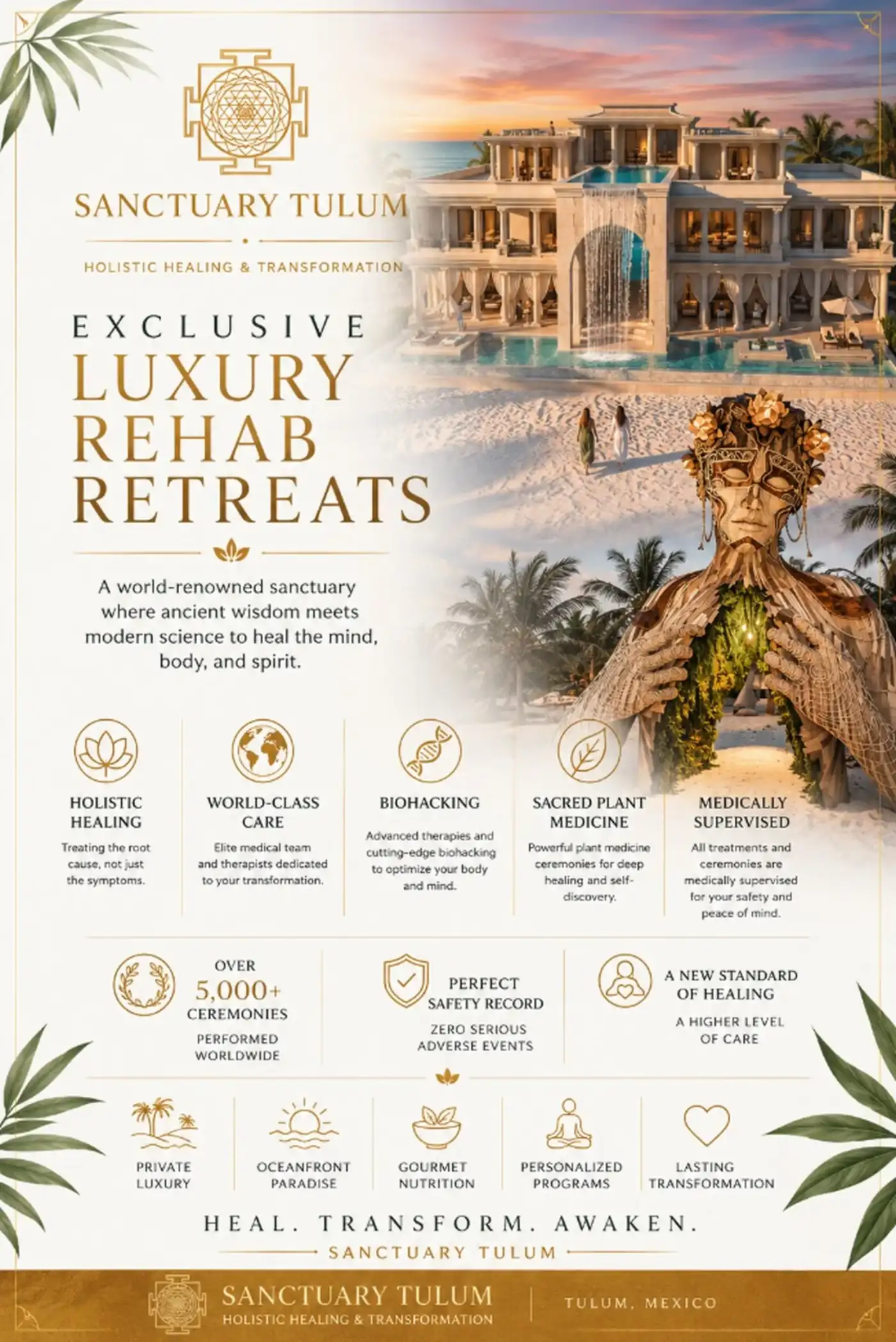
The Scientific Basis for the Non-Pharmacologic Model
Randomized controlled trials in JAMA Psychiatry, Nature Medicine, and The Lancet Psychiatry have demonstrated durable improvements in depression, anxiety, and substance-use outcomes following supervised psilocybin-assisted therapy. Independent observational cohorts have documented sustained interruption of craving states in opioid and polysubstance dependence following standardized ibogaine protocols. Neuroimaging work has shown lasting changes in default-mode-network connectivity — the network most consistently implicated in rumination, addictive cognition, and depressive relapse. None of this evidence positions plant medicine as a shortcut. It positions plant medicine as a neurobiologically active tool that, when embedded inside a comprehensive luxury rehab program with medical screening, regenerative medicine, and structured integration, addresses layers of the addictive and depressive process that pharmacology alone cannot reach.
Nutritional and Metabolic Recovery
Chronic substance use, long-duration psychiatric-medication regimens, and long-term stress all produce measurable disruptions to micronutrient status, gut microbiome composition, and mitochondrial function. Deficiencies in thiamine, folate, magnesium, zinc, and B-complex vitamins are the norm rather than the exception in guests entering the program. Our medical team screens for these deficits on admission and repletes them aggressively through IV protocols, then reinforces the repair through 100% organic superfood nutrition — bone broth, lion's mane, spirulina, moringa, colostrum — calibrated to each phase of recovery. This nutritional layer is not a luxury add-on; it is the biochemical scaffolding on top of which the neurochemical and psychospiritual work becomes durable. Full architecture is documented on our Pouyan Method™ page.
Frequently Asked Clinical Questions
How is a physician-supervised residential program different from an outpatient one? Outpatient models are designed around a guest returning to their home environment between sessions, which is appropriate for stable, low-severity cases but insufficient for the complex, high-severity presentations our program is built for. Residential care under continuous physician supervision allows for real-time medication adjustment, 24-hour observation during sensitive taper phases, and immediate response to autonomic instability — variables that cannot be reproduced in an outpatient setting.
What does a typical intake process look like? Intake begins with a confidential clinical consultation to establish medication history, substance-use history, medical history, prior treatment attempts, and current goals. A pre-arrival medical workup is coordinated — labs, EKG, and where indicated, echocardiogram and cardiology consult. Every current prescription is reviewed against interaction and cardiac-risk lists. When the clinical picture confirms fit, admission is scheduled; when it does not, guests are referred to a more appropriate level of care.
What is the family's role during the program? Family members are often as depleted as the guest by the time admission occurs. Our program offers structured family communication, phased re-engagement, and — where indicated — family integration sessions that address the systemic dynamics that recovery inevitably surfaces. This is coordinated through one-on-one integration coaching.
What happens after the program ends? Guests leave with a written integration plan — sleep architecture, nutrition, movement, breathwork, supplementation, environmental design, and structured clinical check-ins. Guests with high-visibility responsibilities frequently coordinate a phased re-entry through ongoing coaching. The most durable outcomes come from guests who treat the post-program window with the same seriousness as the acute phase.
How is confidentiality protected? Privacy is architected into the program at every layer — private accommodations, one-on-one clinical sessions, no group settings, and structured protocols for guests with public profiles or high-visibility responsibilities. This is a core reason the program has served executives, artists, and public figures continuously for more than a decade. The full editorial position on privacy is documented on our luxury rehab center page.