Ibogaine Resource Library
Every ibogaine article, guide, cardiac safety resource, and addiction-specific piece on Sanctuary Tulum — organized so you can find what you need. 23 resources across six sections.

What Ibogaine Is — and What This Library Is
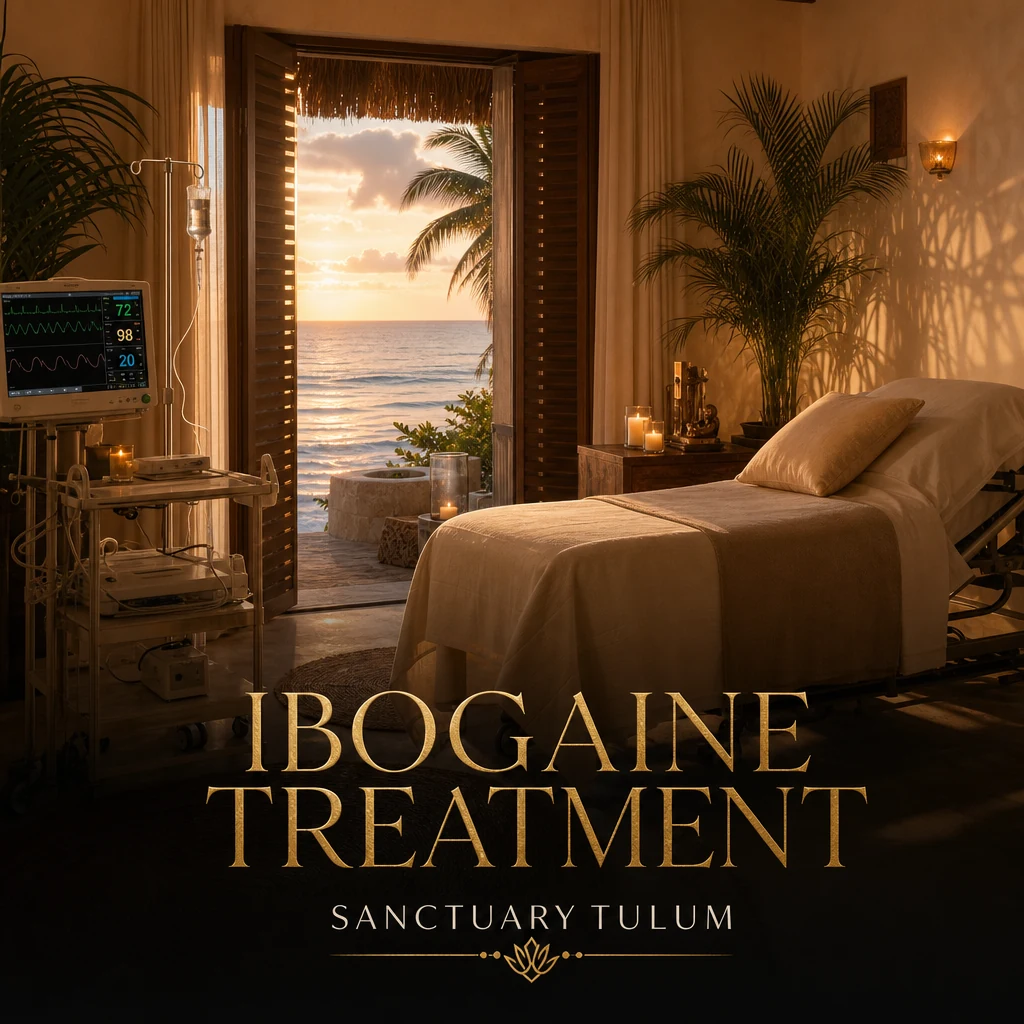
Ibogaine is an isolated psychoactive alkaloid extracted from the root bark of Tabernanthe iboga, a West African shrub used ceremonially for centuries by the Bwiti of Gabon. In modern clinical use, ibogaine is not a ceremony. It is a pharmacologically active compound administered under continuous cardiac monitoring inside a licensed medical facility, and it is one of the most powerful known interrupters of opioid dependency. Patients on heroin, fentanyl, oxycodone, and long-acting agonists routinely emerge from a single medically supervised ibogaine session without withdrawal symptoms — a result no other pharmacological agent produces.
That capacity — the receptor reset, the elimination of acute withdrawal, the interruption of craving — is why serious research programs and licensed clinics have been building around ibogaine for two decades. It is also why the drug is dangerous in the wrong setting. Ibogaine prolongs the QT interval of the cardiac cycle, which in a patient with undiagnosed structural heart disease or electrolyte imbalance can produce a fatal arrhythmia. Every ibogaine death on record traces back to inadequate screening, poor monitoring, or administration outside a properly equipped medical environment. Screening is not a formality. It is the difference between a treatment and an obituary.
How to Use This Library
If ibogaine is new to you, start with the Ibogaine Treatment page, then read What Is Ibogaine and the mechanism-of-action piece. If you are researching safety before choosing any provider, the Safety & Cardiac Screening section is required reading — the cardiac screening article in particular. If you are researching for addiction — heroin, fentanyl, or long-acting opioid dependency — the Ibogaine for Addiction section is where the clinical case is made in depth. If you are evaluating cost or geography, the Cost & Logistics section covers the U.S., Mexican, Canadian, and UAE landscapes honestly.
Who This Library Is For
This library is written for adults, families, and clinicians evaluating ibogaine as a serious medical option — usually for opioid dependency that has not resolved through conventional treatment. It is not written for the curious or the recreational. Every article on this site is medically reviewed. Every safety claim is grounded in the clinical record. Sanctuary Tulum operates a licensed medical facility in Mexico and has maintained a documented zero-fatality record across more than a decade of medically supervised ibogaine treatment. That record exists because we do not compromise on screening. If you or a family member is considering ibogaine anywhere, use this library to build the questions you need to ask any provider before you give them your trust.
Ibogaine is not FDA-approved in the United States and is not administered on U.S. soil under conventional medical practice. Sanctuary Tulum's ibogaine treatment is delivered in Mexico under federal health licensing with continuous physician supervision.
Start Here — Ibogaine Guides
The core pages that describe our ibogaine treatment program. Read these first — they define what medically supervised ibogaine treatment actually is, and how it differs from a ceremonial or underground administration.
Ibogaine Treatment — Guide
The full page: how our licensed ibogaine treatment program is structured, cardiac screening, on-site physician supervision, and post-treatment protocol.
Read →Ibogaine Treatment Therapies
The full therapy stack that surrounds an ibogaine session — Brain Repair IV, NAD+, HBOT, EBOO, and the Pouyan Method™.
Read →Ibogaine for Fentanyl Detox
The specific fentanyl protocol — why fentanyl requires more medical infrastructure than heroin and how our program handles it.
Read →Understanding Ibogaine — What It Is & How It Works
Ibogaine is an isolated alkaloid extracted from the root bark of Tabernanthe iboga. It is not a ceremony medicine in the ayahuasca sense — it is a pharmacologically active compound administered under continuous cardiac monitoring inside a licensed medical facility.
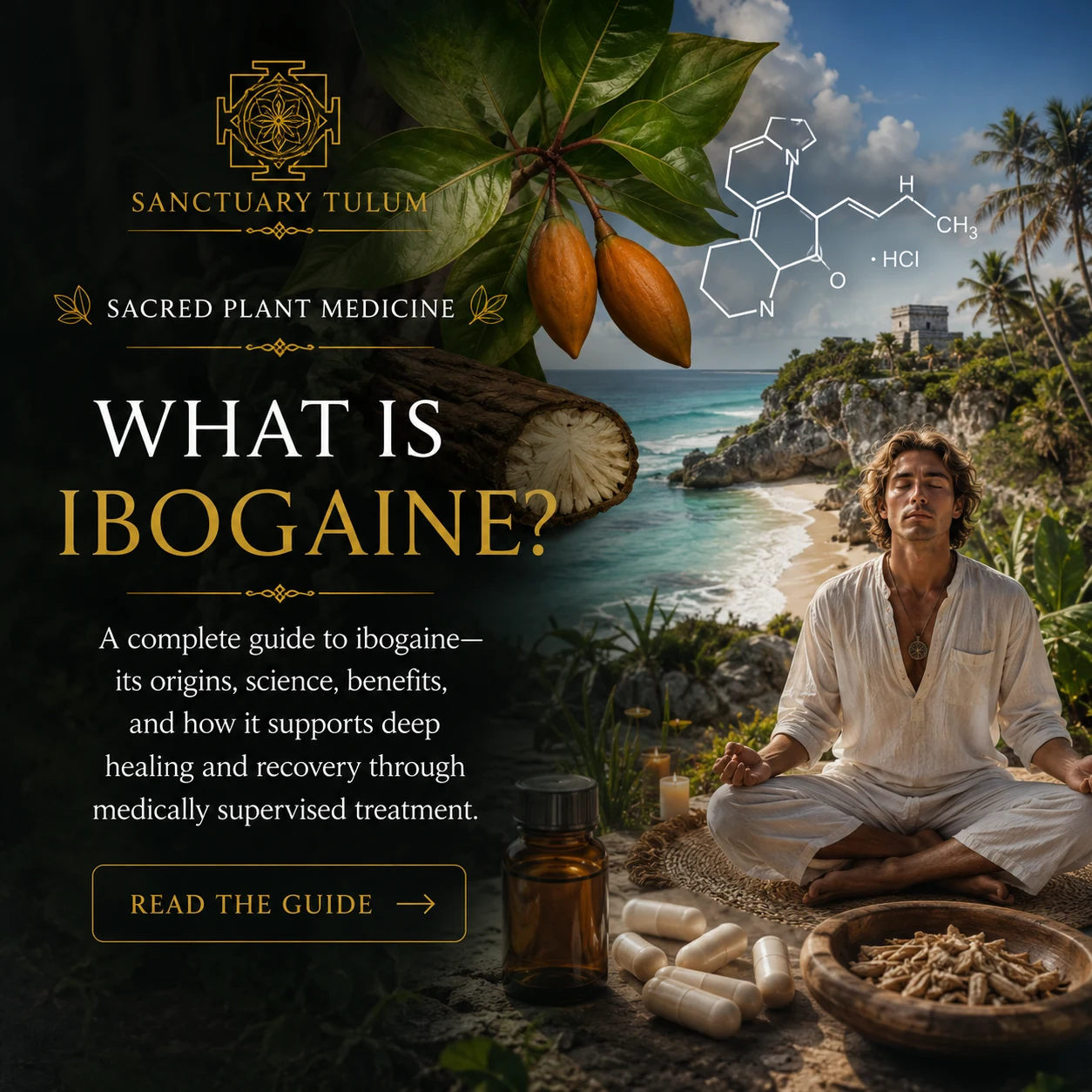
What Is Ibogaine?
The origin, chemistry, and clinical profile of ibogaine — from Bwiti root use through modern medical isolation and the addiction-interrupting mechanism.
Read →Ibogaine Mechanism of Action
The multi-receptor pharmacology — NMDA, kappa- and mu-opioid, SERT, sigma, and the role of the metabolite noribogaine in receptor resetting.
Read →Ibogaine Therapy — How It Heals
Ibogaine therapy in a full clinical program: what a session actually looks like, the introspective phase, and integration.
Read →Ibogaine Treatment Guide
The complete guide to safe ibogaine treatment — pre-treatment screening, dosing decisions, session monitoring, and aftercare.
Read →Safety & Cardiac Screening
Ibogaine's primary clinical risk is cardiac — it prolongs the QT interval, which can be dangerous in patients with undiagnosed heart conditions. This is not a small point. It is the reason unlicensed ibogaine has a mortality record and why every serious provider requires a full cardiac workup.
Ibogaine Cardiac Safety Screening
The pre-treatment cardiac workup — EKG, echocardiogram, electrolyte panel, and QT-interval assessment — that must precede any ibogaine session.
Read →Ibogaine Heart Safety Protocol
Our full heart safety protocol before, during, and after ibogaine administration, including continuous telemetry and on-site emergency infrastructure.
Read →Ibogaine Safety & Side Effects
A grounded review of ibogaine's real risk profile, the side effect spectrum, and how licensed medical settings mitigate each risk category.
Read →Safest Psychedelic Facility (Credentials)
Facility-level licensing, medical staff, and emergency infrastructure at Sanctuary Tulum.
Read →Ibogaine for Addiction
Ibogaine's clinical case is strongest for opioid dependency — it is the only known pharmacological agent that appears to interrupt opioid withdrawal in a single session while resetting receptor sensitivity. These articles cover the addiction-specific use cases and comparative pieces vs conventional maintenance therapy.
Ibogaine for Addiction — Neurological Mechanism
How ibogaine interrupts addiction at the receptor level — the dopamine and opioid receptor reset that other detox modalities cannot produce.
Read →Ibogaine for Opioid Addiction
The specific opioid-dependency use case — heroin, oxycodone, hydrocodone, and long-acting agonists.
Read →Ibogaine Opioid Addiction Research
A review of the clinical literature on ibogaine for opioid use disorder, including the Brazilian, Mexican, and New Zealand outcome studies.
Read →Ibogaine vs Methadone
Two fundamentally different models — receptor reset vs long-term agonist maintenance — compared honestly on outcomes, side effects, and quality of life.
Read →Cost & Logistics
What licensed ibogaine treatment actually costs, why the price varies so widely across providers, and the geographic and legal landscape for clients traveling from the U.S., Canada, UK, and UAE.
Ibogaine Treatment Cost
The real cost of ibogaine treatment across price tiers and what the price includes at each level — from budget clinics to full residential medical programs.
Read →Best Ibogaine Treatment Center — Selection Criteria
How to evaluate any ibogaine treatment center — cardiac screening, medical staff, on-site emergency equipment, and post-treatment protocol.
Read →Ibogaine Treatment in Mexico: The Complete Clinical Guide
The Mexican legal landscape, licensing, and why Mexico became the global hub for licensed ibogaine treatment.
Read →Ibogaine Clinic in Mexico — What to Look For
How to distinguish a properly licensed medical clinic in Mexico from an unlicensed compound running the same drug.
Read →Ibogaine in New York
The New York legal landscape, why ibogaine is not administered in the U.S., and what New York residents actually do.
Read →Ibogaine in Florida
Florida-specific context, legal status, and how South Florida residents access licensed programs abroad.
Read →Ibogaine Treatment for Dubai / UAE Residents
How Dubai and Abu Dhabi residents travel to licensed treatment, plus visa and travel logistics.
Read →Policy & The Cultural Moment
The regulatory and policy landscape around ibogaine is changing quickly. These pieces cover the Trump administration executive order, the pharmaceutical acquisitions reshaping the field, and why serious medical infrastructure — not hype — is what matters.
How to Choose the Right Resource
Five steps for using this library as a decision framework. The order matters — clients who skip the safety material until after they have picked a provider are the ones who end up at the wrong clinic.
- Step 01
Confirm the medical indication before anything else
Ibogaine's strongest clinical case is opioid dependence — heroin, fentanyl, oxycodone, and long-acting agonists. Its case for stimulants, alcohol, or non-substance depression is weaker and more nuanced. Read Ibogaine for Addiction and the mechanism-of-action piece to see whether your indication fits the drug's actual clinical profile.
- Step 02
Read the cardiac safety material next — not last
Ibogaine prolongs the QT interval. Every death on record traces to inadequate cardiac screening. Read Ibogaine Cardiac Safety Screening and the Heart Safety Protocol before you evaluate any provider. If a clinic cannot describe their EKG, echocardiogram, electrolyte, and QT protocol in detail, they are not a real medical option.
- Step 03
Understand what a session actually is
Ibogaine is not a ceremony. It is a pharmacologically active alkaloid administered under continuous cardiac telemetry inside a licensed medical facility. Read What Is Ibogaine and Ibogaine Therapy — How It Heals so your expectations match the clinical reality before you contact any provider.
- Step 04
Evaluate the full program, not just the session
A single ibogaine session without a supporting therapy stack (Brain Repair IV, NAD+, HBOT, integration) frequently produces initial abstinence followed by relapse. Read Ibogaine Treatment Therapies to see what a full residential program includes and why the surrounding infrastructure matters more than the session itself.
- Step 05
Compare cost against what is actually delivered
Ibogaine treatment ranges from $6,000 clinics with minimal medical infrastructure to $40,000+ residential programs with full cardiac monitoring, therapy stack, and integration. Read Ibogaine Treatment Cost and Best Ibogaine Treatment Center — the price delta is medical infrastructure, not amenities.
Editorial FAQ
Ready to Discuss Treatment?
If you've read the material and want to discuss whether ibogaine treatment is medically appropriate for your situation, our admissions team can walk you through cardiac screening and program design.
Contact Admissions