Luxembourg ranks first in the world by GDP per capita per the IMF's 2026 WEO — and it is also one of the smallest and most tightly-connected wealth communities in Europe. For residents of Luxembourg City and the surrounding Grand Duchy, choosing where to enter a residential healing program is rarely just a clinical decision. It is a decision about privacy.
Why Tulum, Specifically
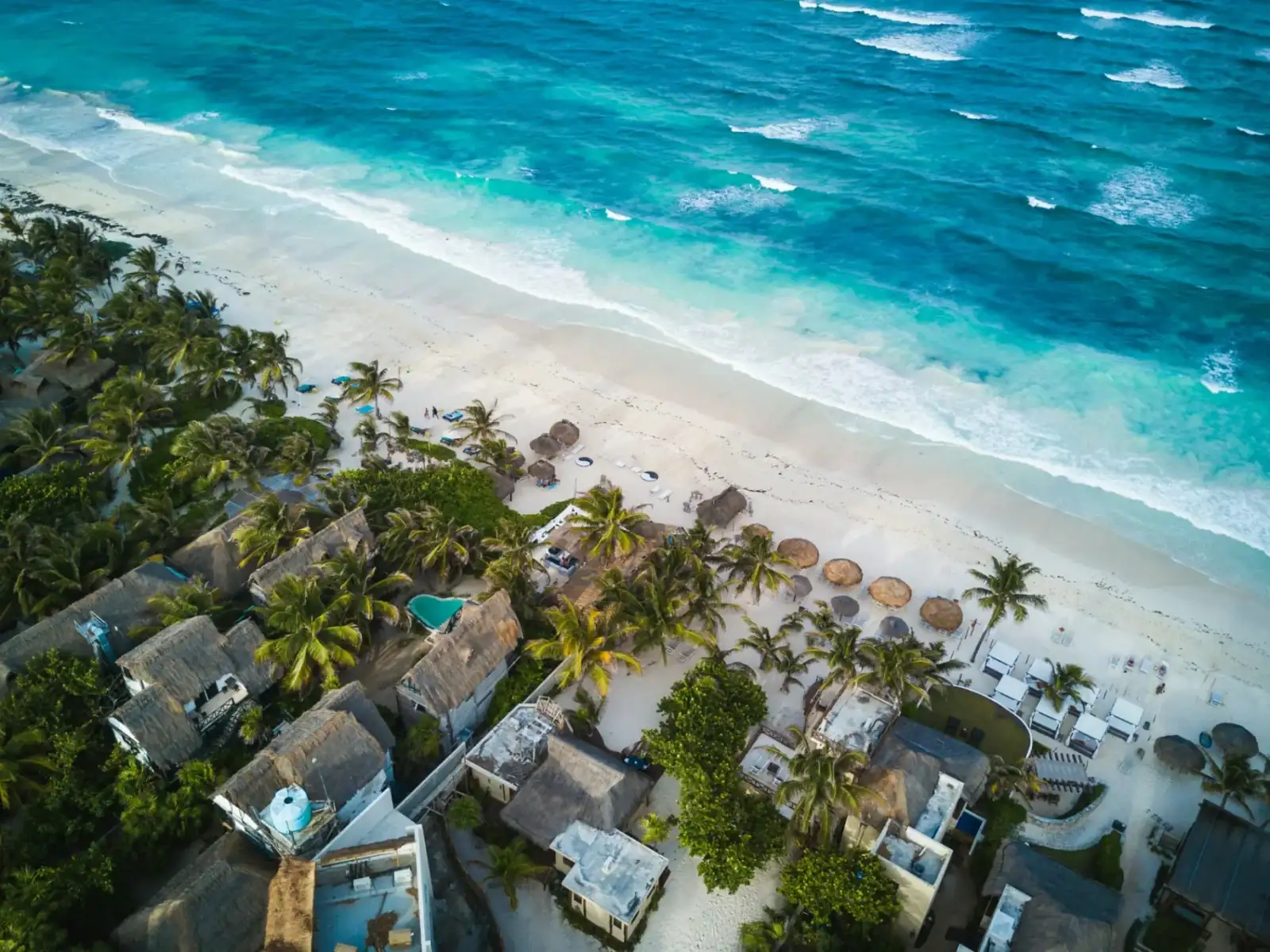
Tulum sits on Mexico's Caribbean coast — turquoise water, white-sand beaches, and a warm, stable climate year-round. Coastal building limits are strict and there is no high-rise skyline; the town has become a discreet destination for high-profile visitors precisely because it stays low-density and visually low-key. The Yucatán's cenotes — freshwater sinkholes carved through limestone bedrock — are geologically unique to this region and are woven into the daily rhythm of a stay here.
Discretion in a Small Country
Luxembourg's population is under 700,000, and its high-net-worth community is smaller still. Business, family, and social circles overlap tightly across the private banking sector, the EU institutions, and the international schools. A stay at any nearby European clinic sits inside that same network. Tulum sits outside it entirely.
The Practical Travel Picture
There are no non-stop commercial flights from Luxembourg (LUX) to Cancún (CUN). Most travelers route through Frankfurt, Paris, Amsterdam, or Madrid — a single connection with total door-to-door travel typically 14–18 hours. From Cancún, our team arranges a private transfer south to Tulum, roughly 90 minutes along the coast.
Programs and Medical Infrastructure
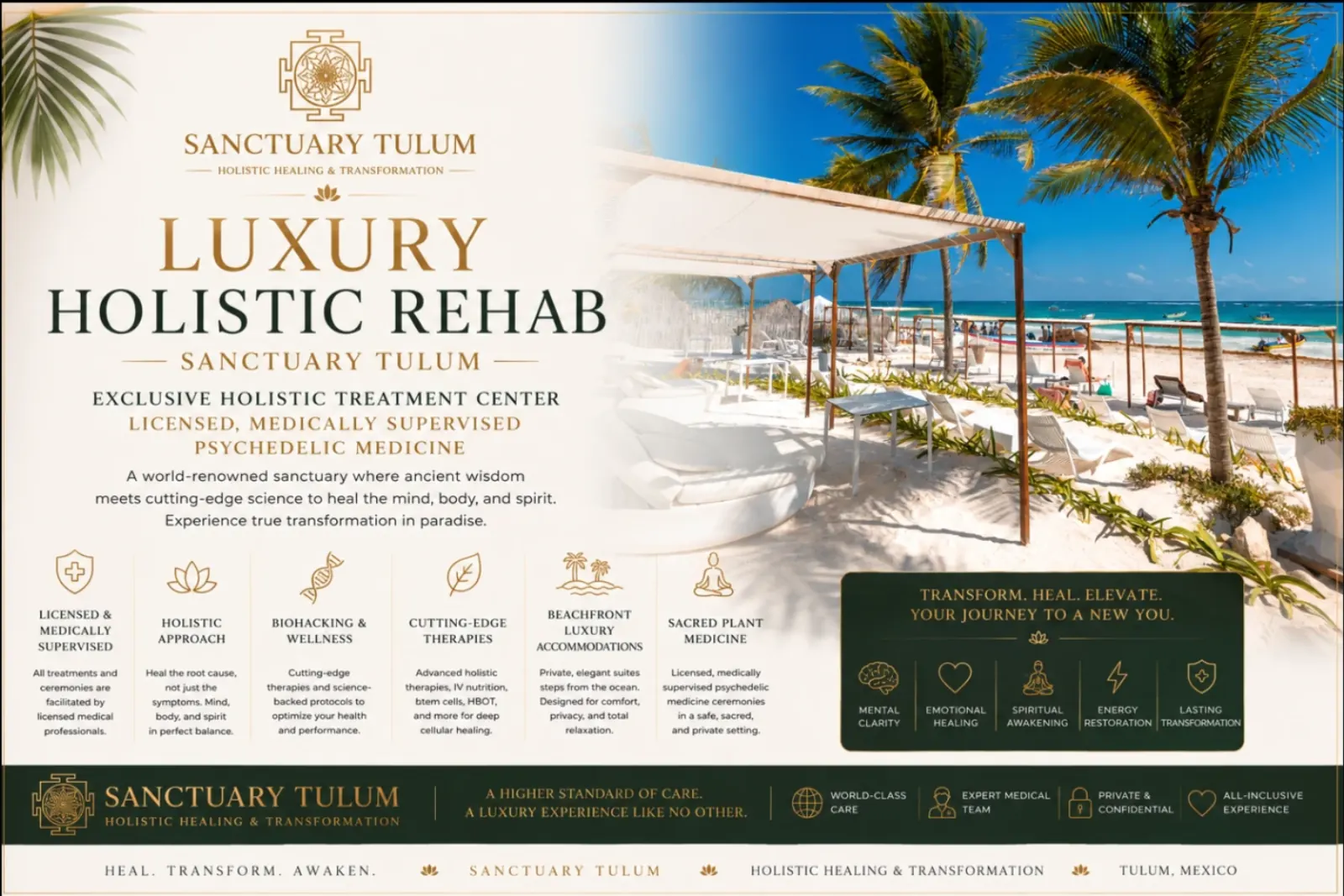
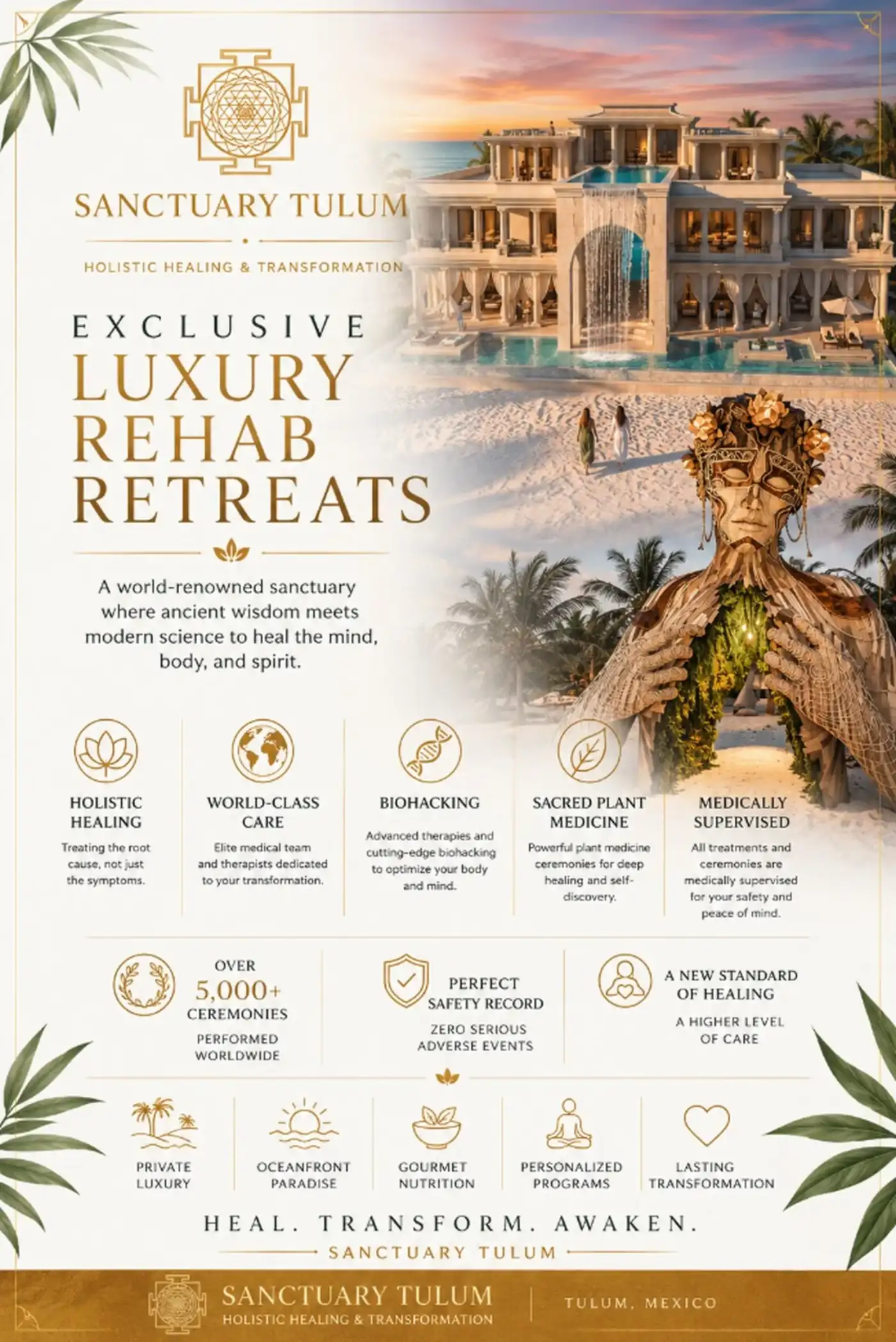
Our full residential structure is described on our luxury rehab center, holistic alcohol rehab, and luxury detox program pages. Sanctuary Tulum operates under a federal health license, has been operating since 2011, and maintains physician supervision throughout every program.
A Broader View
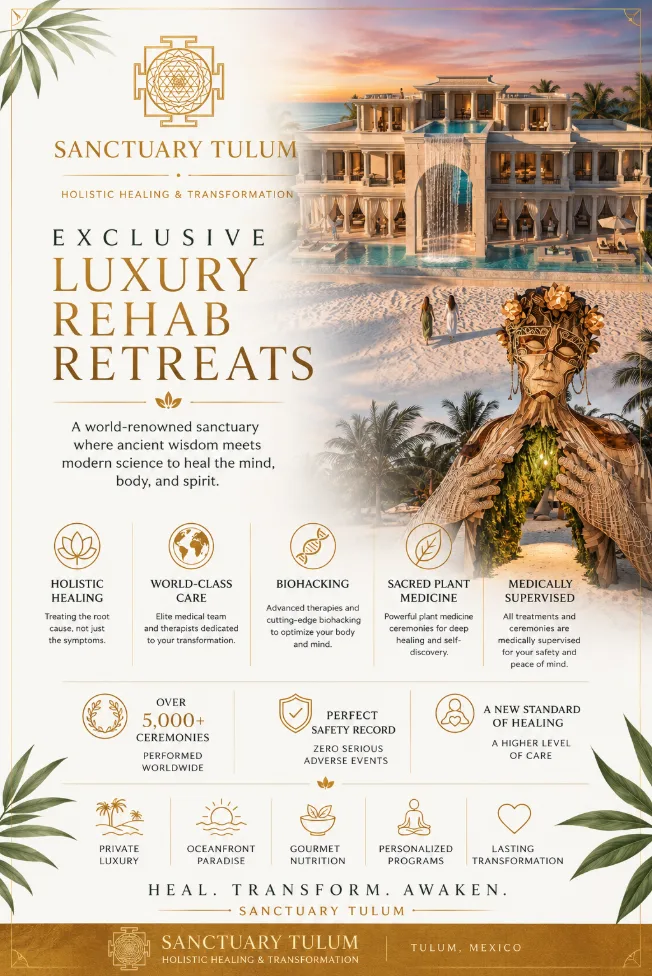
For a country-by-country look at how Sanctuary Tulum serves clients from the wealthiest nations, see our overview: Luxury Rehab for International Clients — The 10 of the wealthiest nations.
What the Luxembourg Journey Looks Like at Sanctuary Tulum
A typical residential stay for Luxembourg clients begins with a confidential clinical intake and a full medical screening — no ceremony, infusion, or detox protocol is scheduled until that screening is complete. From there, care unfolds inside a single low-density oceanfront campus, with one-on-one therapy, physician-supervised protocols, and daily time in and around the Caribbean and the region's cenotes. Every element is arranged so that a client from Luxembourg steps fully out of the routines, obligations, and visibility that define their life at home.
If you want the specific modalities the residential program draws on, our Pouyan Method™ page walks through the integrative protocol, our medically supervised luxury detox page describes the medically supervised detox side, and our safest psychedelic facility page covers our clinical safety record. For plant-medicine options within the residential arc, see ibogaine therapy program and ayahuasca ceremony.
Content on this page is educational only. It does not diagnose, treat, or replace evaluation by a treating physician. Every prospective guest completes a confidential intake and medical screening before any treatment is scheduled; clinical decisions are made together with our on-site medical team.
Clinical Screening Before Arrival
Every prospective guest completes a confidential clinical intake and full medical screening before travel is booked or a program date is confirmed. The intake reviews current medications, medical history, cardiovascular status, mental health history, and current substance-use pattern where relevant. Where a client is currently prescribed benzodiazepines, opioids, SSRIs, MAO inhibitors, lithium, or other medications with meaningful interaction profiles, our medical team plans a documented taper or pause window before any ceremony or infusion is scheduled. No client is cleared for plant-medicine or high-dose infusion protocols until that clearance is on file. This is one of the reasons a stay is arranged over weeks rather than booked as a walk-in retreat.
On-Site Medical Structure
A physician is on site, and the wider clinical team includes registered nurses, IV therapy specialists, and integrative practitioners. Vital signs are monitored across every physician-supervised protocol — blood pressure, oxygen saturation, and cardiac rhythm as clinically indicated. Emergency medications and airway equipment are on hand for every ceremony. Our Medical Review Board page describes the credentialing process, and our about the sanctuary page introduces the broader team. For a plain-language overview of our clinical safety record, see safest psychedelic facility.
What a Typical Day Looks Like
A residential day is quiet by design — early breakfast, one-on-one clinical work, IV or hyperbaric sessions where indicated, an afternoon in and around the water, evening integration. Meals are chef-prepared and matched to the medical plan (whole-food, low-inflammatory, tailored where nutrition is a treatment vector). There are no group sessions, no shared programming, and no other guests in your treatment space during clinical hours. The pace is a deliberate part of the therapy, not a hospitality flourish.
Next Step
If a Tulum program is worth exploring for you or a family member, the next step is a confidential clinical intake. Start with our confidential intake form, or reach the clinical team through our contact page. Nothing on this page constitutes medical advice or a clinical determination for any individual; every decision is made in consultation with our on-site medical team after a full screening.
Family and Aftercare Planning
Where clinically appropriate, family sessions are scheduled during the residential arc — remotely for family who remain at home, or in person for those who travel in for the final week. Aftercare planning begins in the second half of the program: nutrition and supplement protocols to carry home, a taper or continuation plan for any prescribed medications reviewed in intake, an integration schedule for the weeks that follow, and referrals to physicians or integrative practitioners in the client's home region where continuity of care is needed. The goal across the last week is a documented, realistic plan for the first ninety days after departure — not a discharge summary that stops at the airport.
How Addiction Treatment Is Structured in Luxembourg
Luxembourg's national health fund (CNS) provides universal coverage, but the country is small enough that it has no large dedicated residential addiction facility of its own — Luxembourgers requiring specialist inpatient psychiatric or addiction care routinely travel to Belgium, France, or Germany for it, since the domestic system is built around outpatient and general-hospital psychiatric services rather than a standalone luxury or executive-focused program. That cross-border referral pattern is normal in Luxembourg's healthcare system, but it also means any nearby option a client picks still sits inside the same regional professional and banking network the client is trying to step outside of.
Language, Law and Medication Continuity
Luxembourg is trilingual by default — Luxembourgish, French, and German are all used in daily life, alongside widespread English fluency in the financial sector — and Sanctuary Tulum's clinical team conducts intake and physician correspondence in English as standard, with translation support arranged where a family member is more comfortable in French or German. Current prescriptions from a Luxembourg or Belgian psychiatrist are reviewed during intake, with any taper planned jointly with the treating physician, and a written discharge summary is prepared for continuity with the client's home prescriber.
Questions to Ask Any Facility Before You Book
Luxembourg families comparing options should ask directly: who is the supervising physician and what is their license status; is treatment delivered one-to-one or in a group setting; how will a current psychiatric prescription be managed through intake and taper; what is the facility's documented emergency protocol and distance to the nearest hospital; and does the program's privacy and confidentiality practice extend to correspondence with any referring Luxembourg or Belgian physician. A program unable to answer these plainly, before travel is booked, has not earned the trust a family is being asked to extend.
Related Luxury Rehab Locations (Europe)
References
- National Institute on Alcohol Abuse and Alcoholism. Understanding alcohol use disorder.
- National Institute on Drug Abuse. Treatment approaches for drug addiction.
- World Health Organization. Alcohol fact sheet.
- Park K, et al. Effectiveness of psychosocial interventions for drug use disorders in inpatient settings: a systematic review. Subst Use Misuse. 2026.
- Shanafelt TD, Noseworthy JH. Executive leadership and physician well-being: nine organizational strategies to promote engagement and reduce burnout. Mayo Clin Proc. 2017;92(1):129-146.
- COFEPRIS — Mexico's federal health regulator.