Bodywork & Nervous System
Massage Therapy: Daily Bodywork for Recovery
Daily therapeutic and trauma-informed massage to reduce cortisol, release stored tension, and support nervous-system regulation throughout your stay.
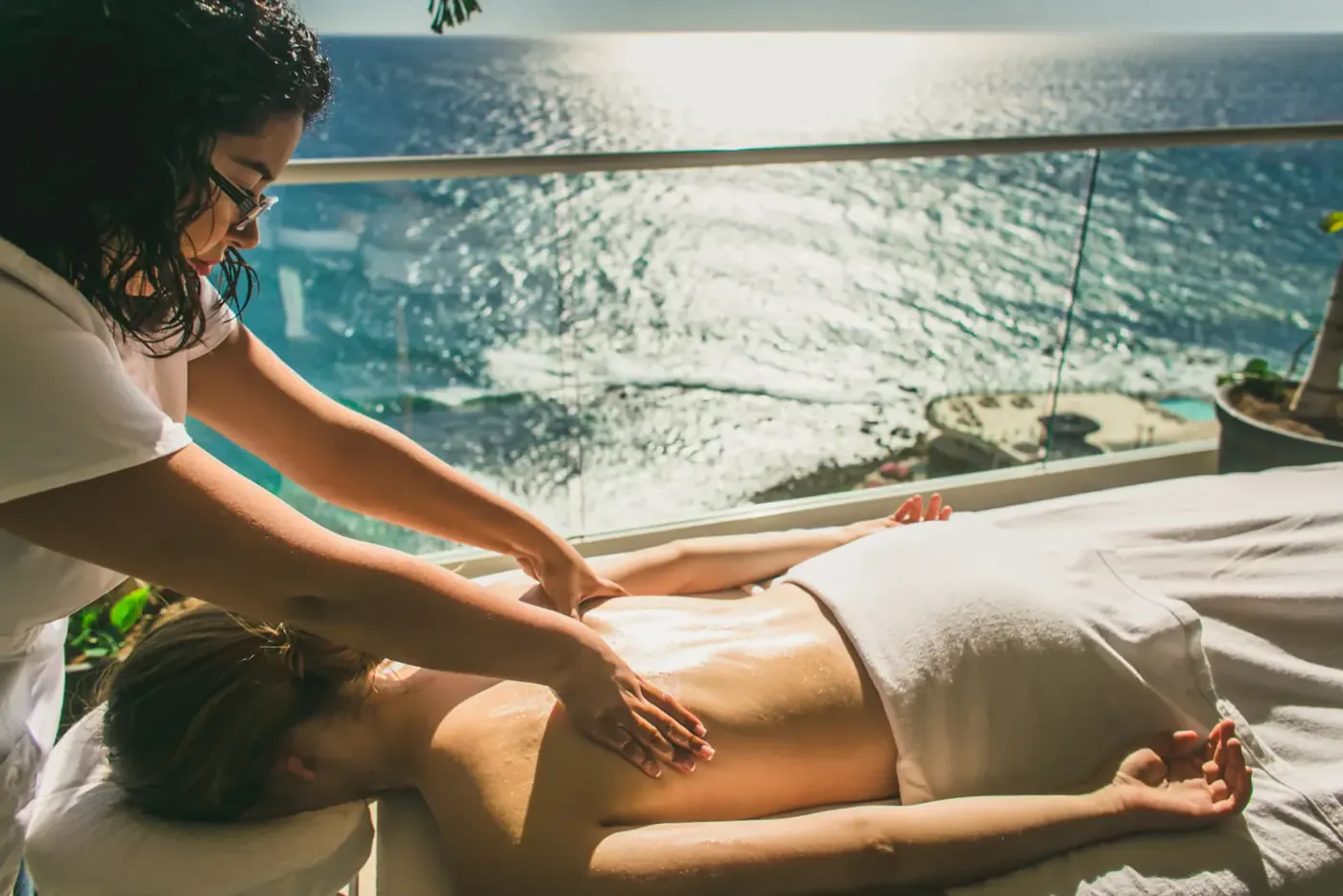
What the Evidence Shows
Massage therapy is one of the most consistently supported non-pharmacologic interventions for stress physiology. A meta-analytic review by Field and colleagues found that massage produced statistically significant reductions in salivary and urinary cortisol across multiple study populations, along with measurable increases in serotonin and dopamine metabolites. Systematic reviews in cancer supportive care and chronic low-back pain settings likewise report meaningful short-term reductions in anxiety and pain intensity.
For guests at Sanctuary Tulum, this is not spa pampering — it is a clinically meaningful piece of the Pouyan Method™. Daily hands-on work supports lymphatic drainage during detox, calms the sympathetic nervous system during medication tapers, and helps the body integrate the intensity of private ayahuasca ceremonies and ibogaine treatment center.
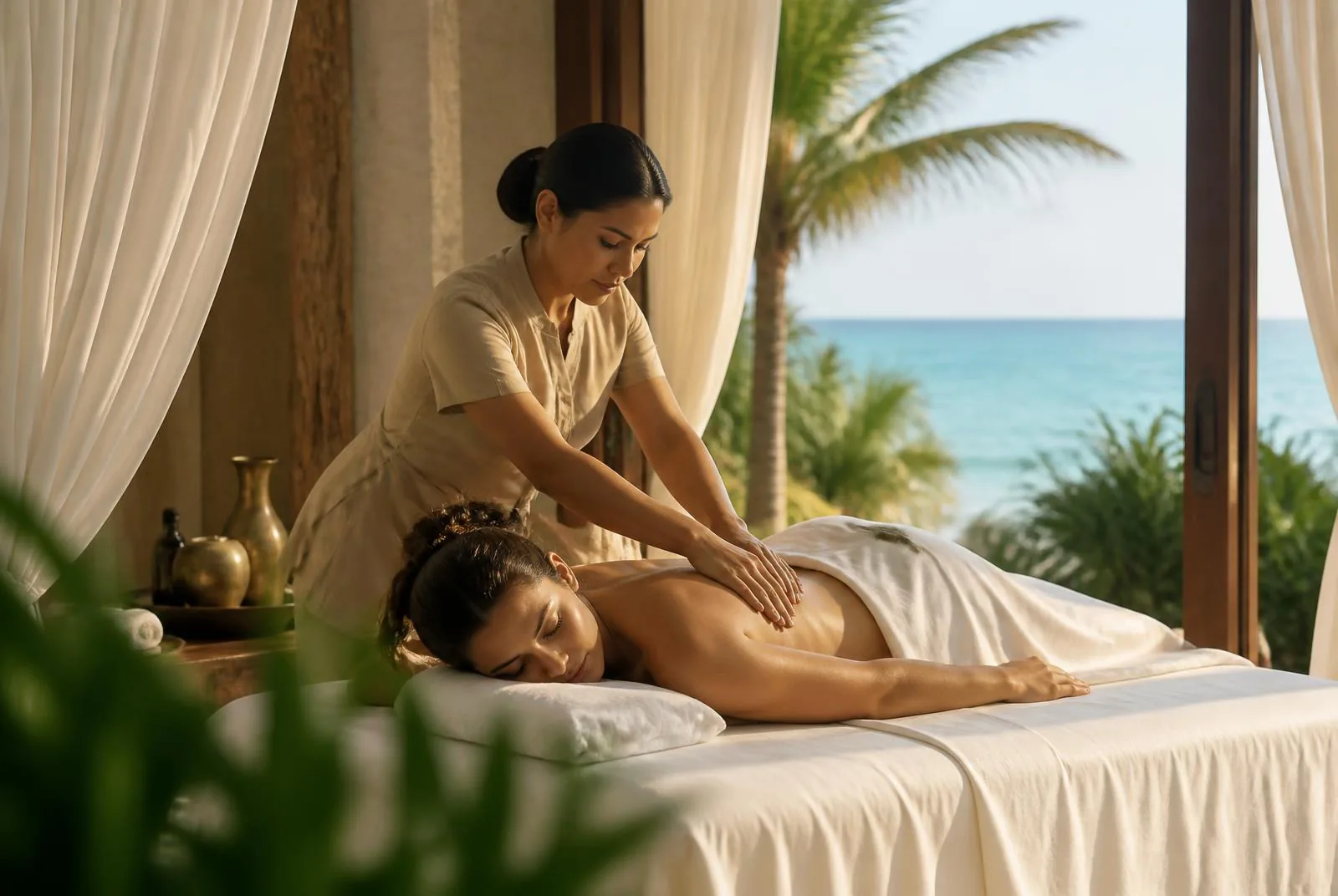
Modalities Offered
- Swedish massage — a foundational session for parasympathetic activation and relaxation
- Deep-tissue massage — for chronic muscular holding patterns and scar tissue
- Manual lymphatic drainage — gentle, rhythmic technique that supports fluid movement during detox
- Myofascial release — targeted work to restore mobility and reduce referred pain
- Craniosacral therapy — subtle nervous-system regulation for guests in fragile states
- Trauma-informed bodywork — slower, consent-forward sessions for PTSD and complex trauma
How Sessions Are Structured
Every guest completes an intake with the lead therapist during their first day — current pain patterns, prior injuries, surgical history, PTSD or complex trauma, and current medications. That intake shapes not just the modality choice but the pressure, positioning, and even the room setup. Guests with a heightened startle response, for example, are set up so they can see the therapist enter the room rather than being approached from behind.
Sessions run 60–90 minutes and are scheduled around the day's higher-intensity work. On mornings before an ayahuasca ceremony or ibogaine session, we favor slower, parasympathetic-leaning work — craniosacral or lymphatic drainage — that settles the nervous system without demanding integration. On the days after, when guests are processing intense emotional material, sessions lean toward gentler somatic experiencing techniques with frequent verbal check-ins rather than deep-tissue release.
Consent runs continuously. Guests choose their draping, choose which regions are included and which are off-limits, and can stop or pause the session at any moment without needing to justify it. That framework matters especially for guests with a history of assault, medical trauma, or invasive procedures — populations where a poorly-timed pressure change can undo the benefit of the session.
Where It Fits in the Program
Sessions are scheduled around the day's other work. On ceremony preparation days, a slower lymphatic or craniosacral session helps guests settle. On integration days, deeper release work can support the emotional processing already underway from meditation and yoga. On detox days, sessions pair with infrared sauna and hydration for elimination support.
A single massage produces measurable cortisol and pain reductions — but the effects fade within days. Daily sessions across a four- to twelve-week stay produce a cumulative shift: baseline resting heart rate drops, sleep architecture improves, and chronic holding patterns start to release rather than snap back. Massage is presented as a supporting therapy, not a cure. It complements — and never replaces — the medical, nutritional, and integration work that anchors each program.
Safety, Contraindications, and Scope of Practice
Massage is a supporting therapy, not a medical treatment for the underlying conditions guests come to Sanctuary Tulum to address. Our therapists are trained to recognize contraindications — deep vein thrombosis, unstable cardiac conditions, acute injury, or fever — and to modify or defer a session when one is present. Guests recovering from recent IV therapy, stem cell treatment, or hyperbaric oxygen sessions are cleared by the medical team before any deep-tissue work, since pressure applied too soon after certain regenerative treatments can be counterproductive. Every therapist on staff works within a defined scope of practice and refers any finding that looks medically significant — an unexplained lump, unusual swelling, restricted range of motion — back to the clinical team rather than attempting to diagnose it.
For guests tapering off benzodiazepines or opioids under medical supervision, bodywork is intentionally lighter and more frequent during the highest-risk withdrawal window, when autonomic symptoms such as elevated heart rate, sweating, and muscle rigidity are most pronounced. This is designed to support comfort and nervous-system regulation alongside the taper protocol — it does not replace medical monitoring, and any adverse withdrawal symptom is managed by the medical team first.
Frequently Asked Clinical Questions
Guests often ask how bodywork interacts with the more intensive parts of their stay. In practice, the massage schedule is built around — never in competition with — ceremony days, IV therapy, and medical appointments. A therapist reviews the day's full schedule each morning with the clinical coordinator so that, for example, a guest is not scheduled for deep-tissue work within a few hours of an IV infusion or immediately before an evening ceremony. This coordination is part of why massage functions as connective tissue across the wider program rather than a stand-alone spa amenity.
Guests also ask whether massage alone can resolve chronic pain or anxiety. The honest answer, consistent with the research cited below, is that massage produces real but time-limited physiological changes — reduced cortisol, reduced muscular tension, improved short-term mood. Lasting change comes from combining that regulation with the deeper clinical work: plant medicine integration, IV-supported neurochemical repair, and the daily coaching that helps a guest process what surfaces. We do not present massage, or any single modality, as a cure.
Related Resources
References
References
- 1. Field T, Hernandez-Reif M, Diego M, Schanberg S, Kuhn C. Cortisol decreases and serotonin and dopamine increase following massage therapy. Int J Neurosci. 2005;115(10):1397-1413.
- 2. Rapaport MH, Schettler P, Bresee C. A preliminary study of the effects of a single session of Swedish massage on hypothalamic-pituitary-adrenal and immune function in normal individuals. J Altern Complement Med. 2010;16(10):1079-1088.
- 3. Furlan AD, Giraldo M, Baskwill A, Irvin E, Imamura M. Massage for low-back pain. Cochrane Database Syst Rev. 2015;(9):CD001929.
- 4. Rapaport MH, Schettler P, Larson ER, Edwards SA, Dunlop BW. Acute Swedish massage monotherapy successfully remediates symptoms of generalized anxiety disorder: a proof-of-concept, randomized controlled study. J Clin Psychiatry. 2016;77(7):e883-891.
- 5. Reader M, Young R, Connor JP. Massage therapy improves the management of alcohol withdrawal syndrome. J Altern Complement Med. 2005;11(2):311-313.
- 6. Sturgeon M, Wetta-Hall R, Hart T, Good M, Dakhil S. Massage therapy for psychiatric disorders. Focus (Am Psychiatr Publ). 2019.
Daily Support, Not an Afterthought
See how daily bodywork integrates with the rest of your Sanctuary Tulum program.
Enroll Today Intake FormMassage Therapy FAQs