Licensed · Physician-Led · Since 2011
The Safest Psychedelic Treatment Facility in the World
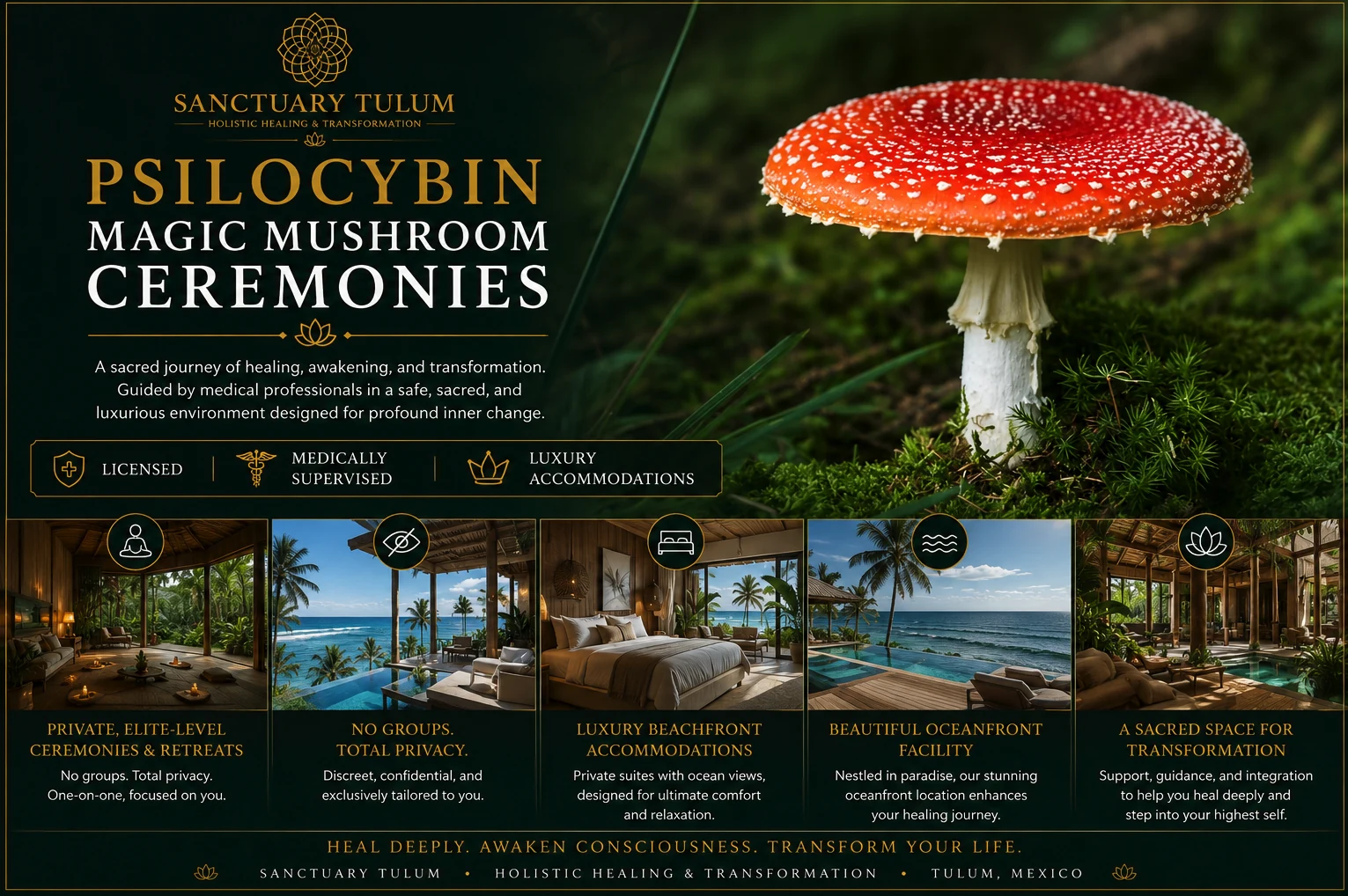
A government-licensed, physician-led sanctuary where every plant medicine ceremony is preceded by full medical screening and delivered under 24/7 medical supervision.
Explore the full Ibogaine Resource Library and Ayahuasca Resource Library — every safety, screening, and treatment resource on the site, organized editorially.
What Makes a Psychedelic Treatment Facility Safe
A safe psychedelic treatment facility is government-licensed, medically supervised, and physician-led. Sanctuary Tulum operates under a Federal License of Operation for Hospital and Clinic, has been in continuous operation since 2011 — over 15 years, performs pre-treatment cardiac screening (EKG and echocardiogram), provides 24/7 medical monitoring during every ceremony, and has maintained a documented, fatality-free safety record across thousands of sessions.
Sanctuary Tulum's Safety Credentials
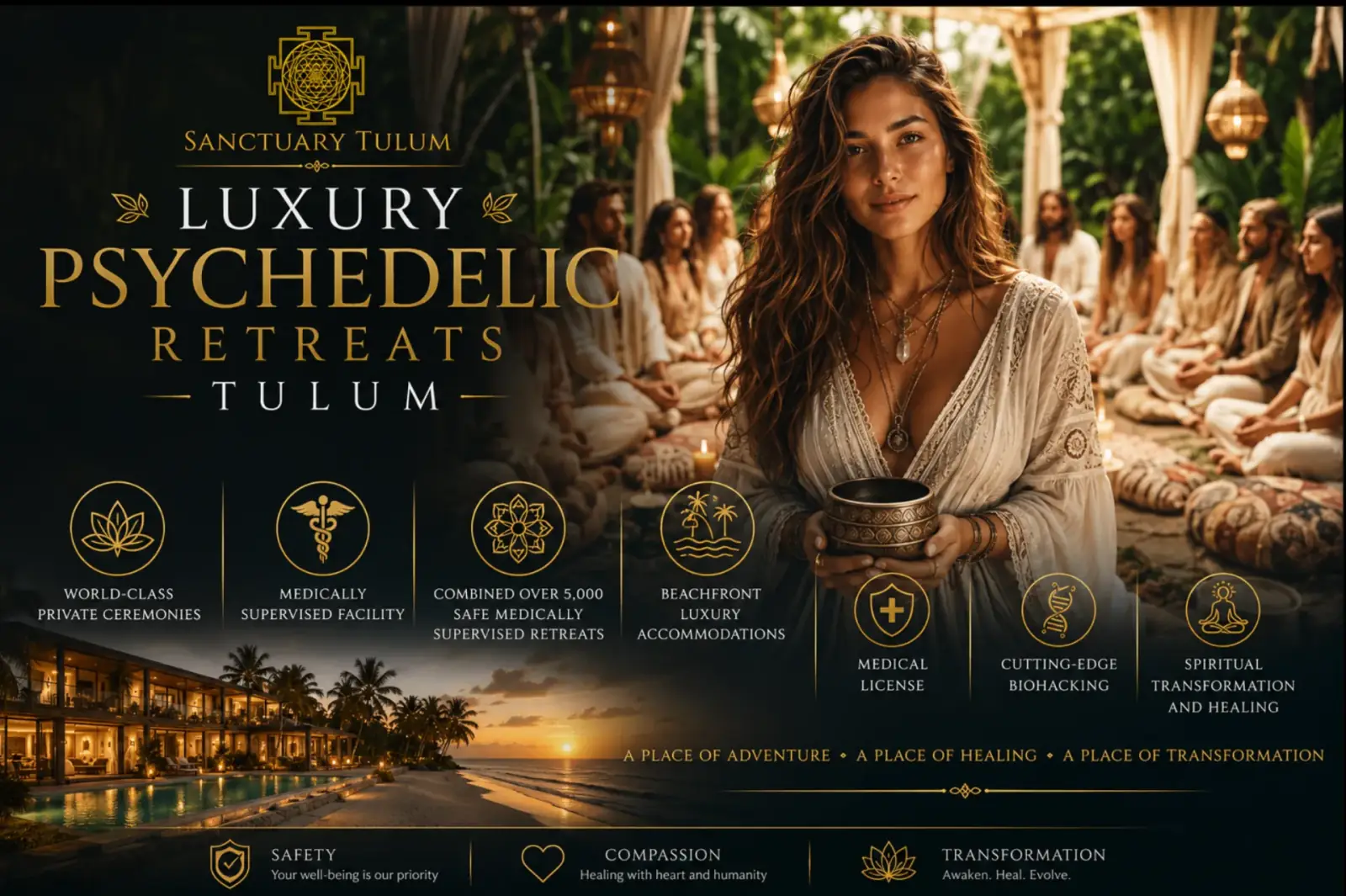
- • Licensed since 2011 under a federal health license (Hospital & Clinic).
- • On-site physicians — not on-call — throughout every treatment day.
- • Pre-treatment EKG and echocardiogram screening before every ibogaine session.
- • 24/7 medical monitoring during and after every plant medicine ceremony.
- • Documented emergency response protocols and on-site emergency equipment.
- • Documented, fatality-free safety record across thousands of medically supervised sessions.
- • Reviewed and overseen by our Medical Review Board.
What Makes a Facility Genuinely Safe
Anyone evaluating a psychedelic treatment facility — for themselves or a loved one — should measure it against clear, verifiable criteria. The following are the standards a genuinely safe facility should meet in full:
1. Government Medical Licensing
A safe facility holds a verifiable, government-issued medical license — not a wellness registration, spa permit, or "retreat" classification. Ask for the license number and verify it with the issuing authority. Sanctuary Tulum operates under a federal health license.
2. Physician-Led Medical Screening
Before any plant medicine is administered, patients should undergo full medical intake, medication review, cardiovascular assessment, and — for ibogaine therapy program specifically — EKG and echocardiogram screening. Ibogaine's cardiac risk profile is well documented; skipping screening is not acceptable.
3. On-Site Medical Staff During Ceremony
A safe facility keeps physicians and medical personnel on-site — not on-call — for the full duration of every ceremony. This is the single largest differentiator between medical-grade facilities and unregulated retreats.
4. Emergency Response Protocols
Documented protocols, on-site emergency equipment, and clear escalation pathways should exist for every treatment offered — from medically supervised ayahuasca ceremonies to benzodiazepine withdrawal management.
5. Aftercare and Integration
Safety does not end when the ceremony ends. A safe facility provides structured medical and psychological integration in the days and weeks that follow, along with follow-up contact.
About the Team Behind Our Safety Record
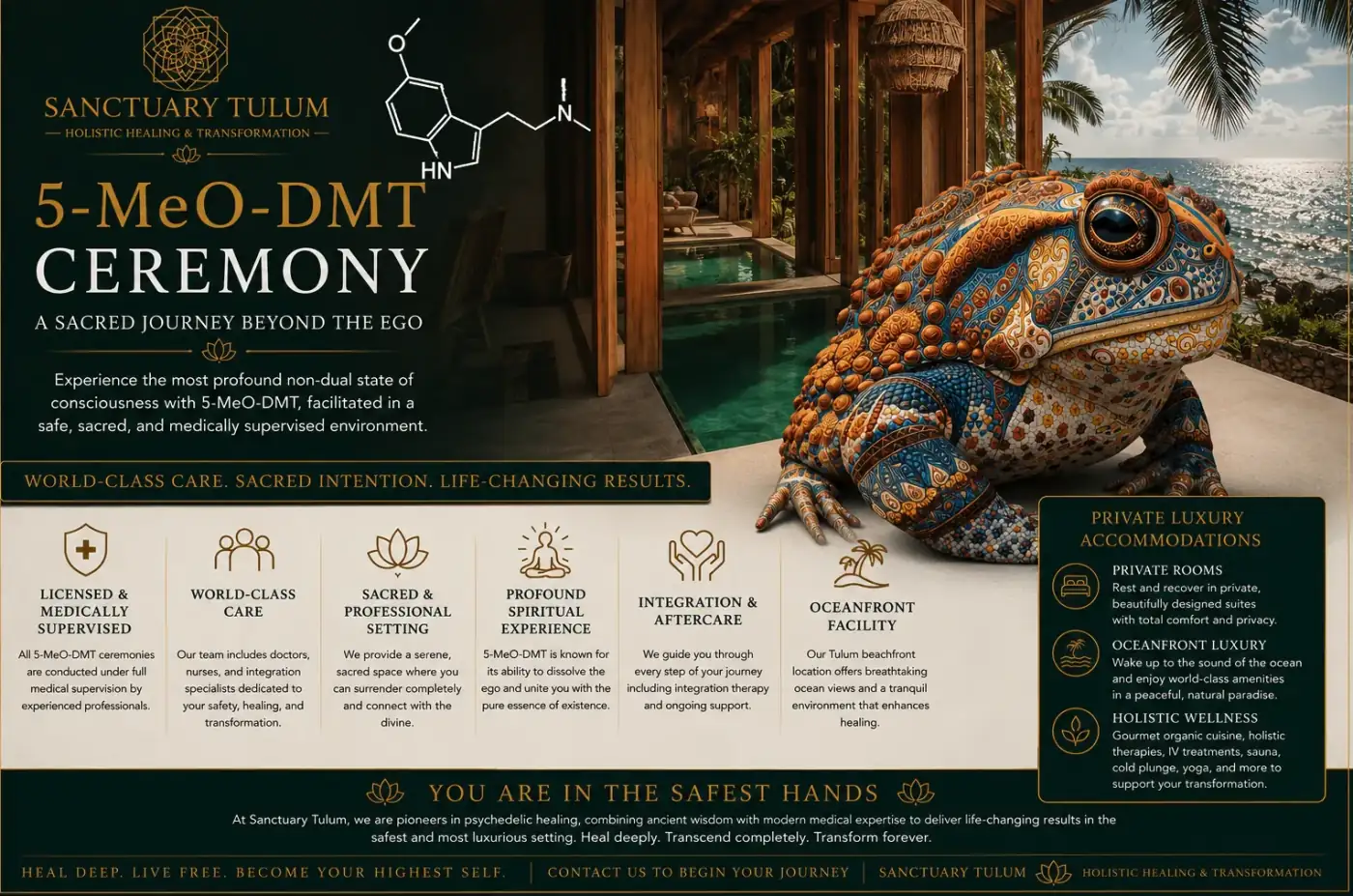
Our safety record is the product of a specific team and a specific protocol. Founder Johnny Tabaie built Sanctuary Tulum in 2011 as the first licensed luxury facility to combine all four sacred plant medicines under one medically supervised roof. Every treatment protocol is reviewed and overseen by our Medical Review Board, led by medical director Dr. Jose A. Jimenez.
The Evidence Behind Medically Supervised Psychedelic Care
Peer-reviewed literature is clear on one point: the safety of psychedelic-assisted therapy depends almost entirely on the setting in which it is delivered. Published cardiac safety data on ibogaine, for example, show that adverse events cluster overwhelmingly in unmonitored, non-clinical environments where pre-treatment EKG screening and continuous telemetry are absent. When ibogaine is administered under physician oversight with baseline QTc measurement, electrolyte correction, and continuous cardiac monitoring, the safety profile changes dramatically. This is the exact protocol Sanctuary Tulum has followed since 2011.
The same principle applies to ayahuasca, 5-MeO-DMT, and psilocybin. The FDA's Breakthrough Therapy designations for psilocybin and MDMA were granted in the context of tightly controlled clinical settings — not open retreats. Multi-site trials of psilocybin for treatment-resistant depression report robust safety when participants are screened for cardiovascular risk, drug interactions (particularly SSRIs and MAOIs), and personal or family history of psychosis, and when medical staff remain physically present throughout the session. Our intake protocol mirrors these clinical standards.
Why Physician Presence Changes Outcomes
The single largest predictor of a serious adverse event during a plant medicine ceremony is the absence of on-site medical staff. Vomiting, temporary hypertension, and transient arrhythmia are foreseeable events during ayahuasca ceremony program and ibogaine flood dosing. In an unmonitored setting these are emergencies; in a licensed facility with physicians, nurses, IV access, and crash-cart equipment on the floor, they are managed events. Sanctuary Tulum keeps a dedicated team of 24 nurses and on-site physicians present for every ceremony day — not on-call, not one hour away.
Physician presence also enables medically informed dose titration. For clients tapering from benzodiazepines, opioids, or SSRIs, our team performs a supervised medical taper under our proprietary Brain Repair IV protocol before any psychedelic is introduced. This is the standard of care described in current addiction medicine literature and it is the reason we can accept complex cases that unlicensed retreats cannot.
How to Verify Any Psychedelic Facility Before You Book
Before committing to any psychedelic treatment center — ours included — verify the following in writing. If a facility hesitates on any of these, that hesitation is the answer.
Related: the ibogaine heart safety protocol we follow.
- • License number and issuing authority. Ask for the exact number and confirm it with the regulator (in Mexico, Mexico's federal health authority).
- • Physician credentials. Ask for the medical director's name, license, and whether they are on-site during ceremonies.
- • Cardiac screening protocol. Confirm EKG and echocardiogram are performed prior to any ibogaine administration.
- • Medication and contraindication screening. Confirm SSRIs, MAOIs, cardiac medications, and psychiatric history are reviewed prior to ceremony.
- • Emergency protocol. Ask what happens if a client requires stabilization, and where the nearest hospital is.
- • Years in continuous licensed operation. Unbroken years under the same license matter more than marketing claims.
- • Documented safety record. Ask directly: how many treatments, how many adverse events, and are those figures documented.
Related Resources
References
- Alper KR, Stajić M, Gill JR. Fatalities temporally associated with the ingestion of ibogaine. J Forensic Sci. 2012;57(2):398-412.
- Koenig X, Hilber K. The anti-addiction drug ibogaine and the heart: a delicate relation. Molecules. 2015;20(2):2208-2228.
- Carhart-Harris R, et al. Trial of psilocybin versus escitalopram for depression. N Engl J Med. 2021;384(15):1402-1411.
- Palhano-Fontes F, et al. Rapid antidepressant effects of the psychedelic ayahuasca in treatment-resistant depression: a randomized placebo-controlled trial. Psychol Med. 2019;49(4):655-663.
- Davis AK, et al. Effects of psilocybin-assisted therapy on major depressive disorder: a randomized clinical trial. JAMA Psychiatry. 2021;78(5):481-489.
- Mexico's federal health authority. Mexican Federal Commission for the Protection against Sanitary Risk — Hospital & Clinic Licensing.