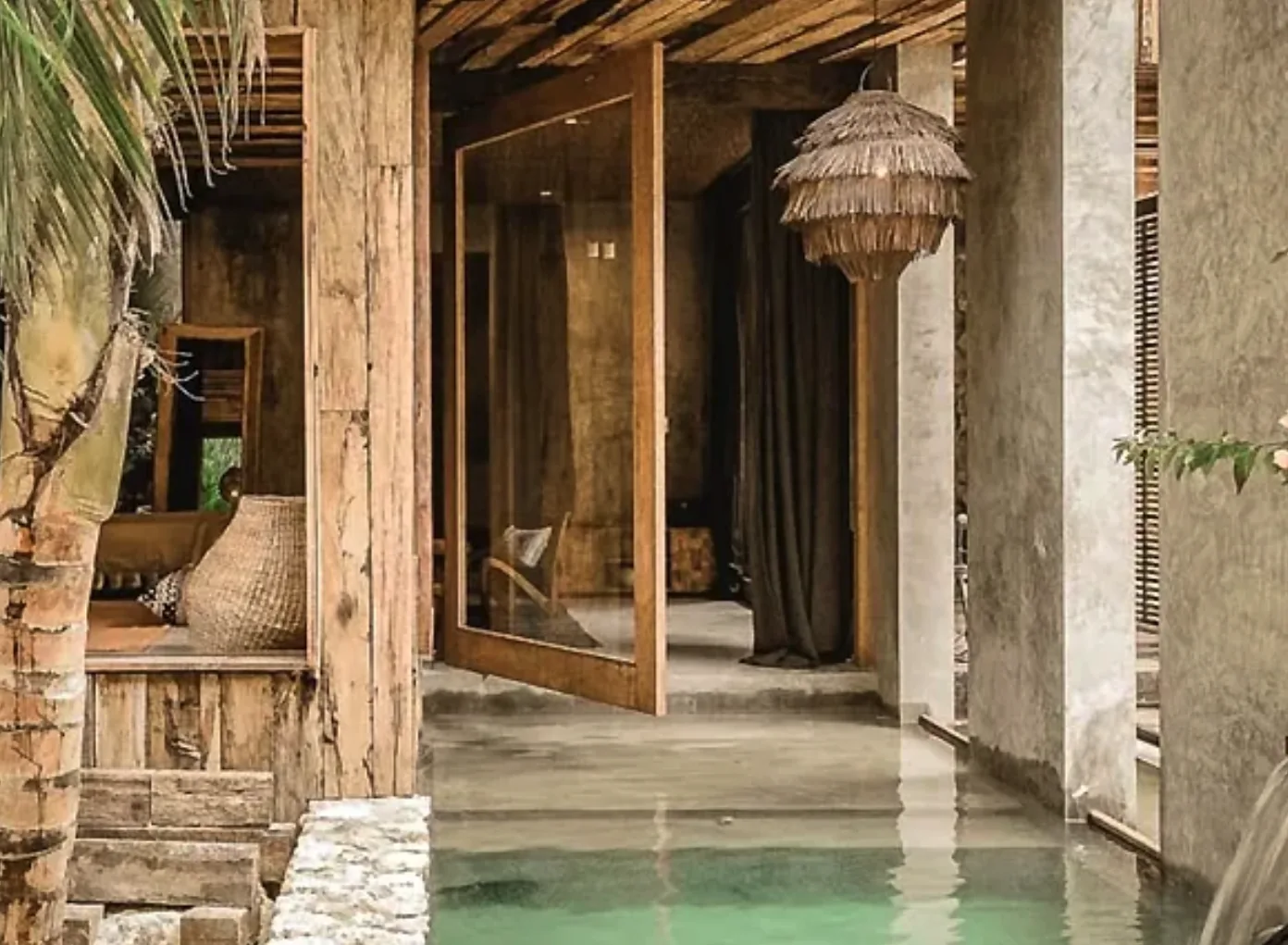
Iceland ranks among the wealthiest nations per capita per the IMF's 2026 WEO — and is also one of the smallest and most tightly-connected societies in the world. For Icelandic residents, traveling to Tulum is often the most direct way to enter a healing program with genuine privacy.
Why Tulum, Specifically
Tulum sits on Mexico's Caribbean coast — turquoise water, white-sand beaches, warm sunlight year-round, and a low-rise coastline. For Icelandic clients, the environmental contrast with home is stark and deliberate. The Yucatán's cenotes — freshwater sinkholes carved through limestone bedrock — are geologically unique to this region.
Discretion for a Very Small Country
Iceland's population is under 400,000, and its public-figure and high-net-worth community is small enough that discretion within the country is structurally almost impossible. Tulum offers what no domestic option can: full separation from Iceland's social sphere.

The Practical Travel Picture
Icelandair has operated seasonal non-stop service between Keflavík (KEF) and Cancún (CUN) in winter months in recent years, with a flight time of roughly 8–9 hours. Outside that window, most travelers connect once through a US or European hub, with total door-to-door travel typically 12–15 hours. From Cancún, we arrange a private transfer of roughly 90 minutes south to Tulum.
Programs and Medical Infrastructure
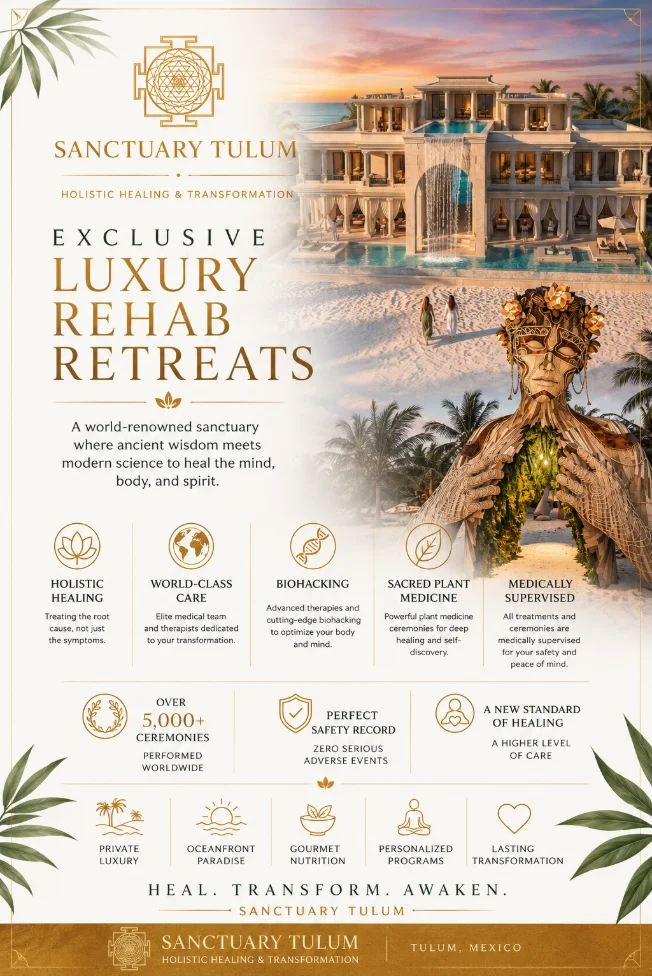
Our full residential structure is described on our luxury residential rehab, luxury alcohol rehab program, and medically supervised luxury detox pages. Sanctuary Tulum operates under a federal health license, has been operating since 2011, and maintains physician supervision throughout every program.
A Broader View
For a country-by-country look at how Sanctuary Tulum serves clients from the wealthiest nations, see our overview: Luxury Rehab for International Clients.
What the Iceland Journey Looks Like at Sanctuary Tulum
A typical residential stay for Iceland clients begins with a confidential clinical intake and a full medical screening — no ceremony, infusion, or detox protocol is scheduled until that screening is complete. From there, care unfolds inside a single low-density oceanfront campus, with one-on-one therapy, physician-supervised protocols, and daily time in and around the Caribbean and the region's cenotes. Every element is arranged so that a client from Iceland steps fully out of the routines, obligations, and visibility that define their life at home.
If you want the specific modalities the residential program draws on, our Pouyan Method™ page walks through the integrative protocol, our medical detox center page describes the medically supervised detox side, and our safest psychedelic facility page covers our clinical safety record. For plant-medicine options within the residential arc, see medically supervised ibogaine treatment and ayahuasca ceremony.
Content on this page is educational only. It does not diagnose, treat, or replace evaluation by a treating physician. Every prospective guest completes a confidential intake and medical screening before any treatment is scheduled; clinical decisions are made together with our on-site medical team.
Clinical Screening Before Arrival
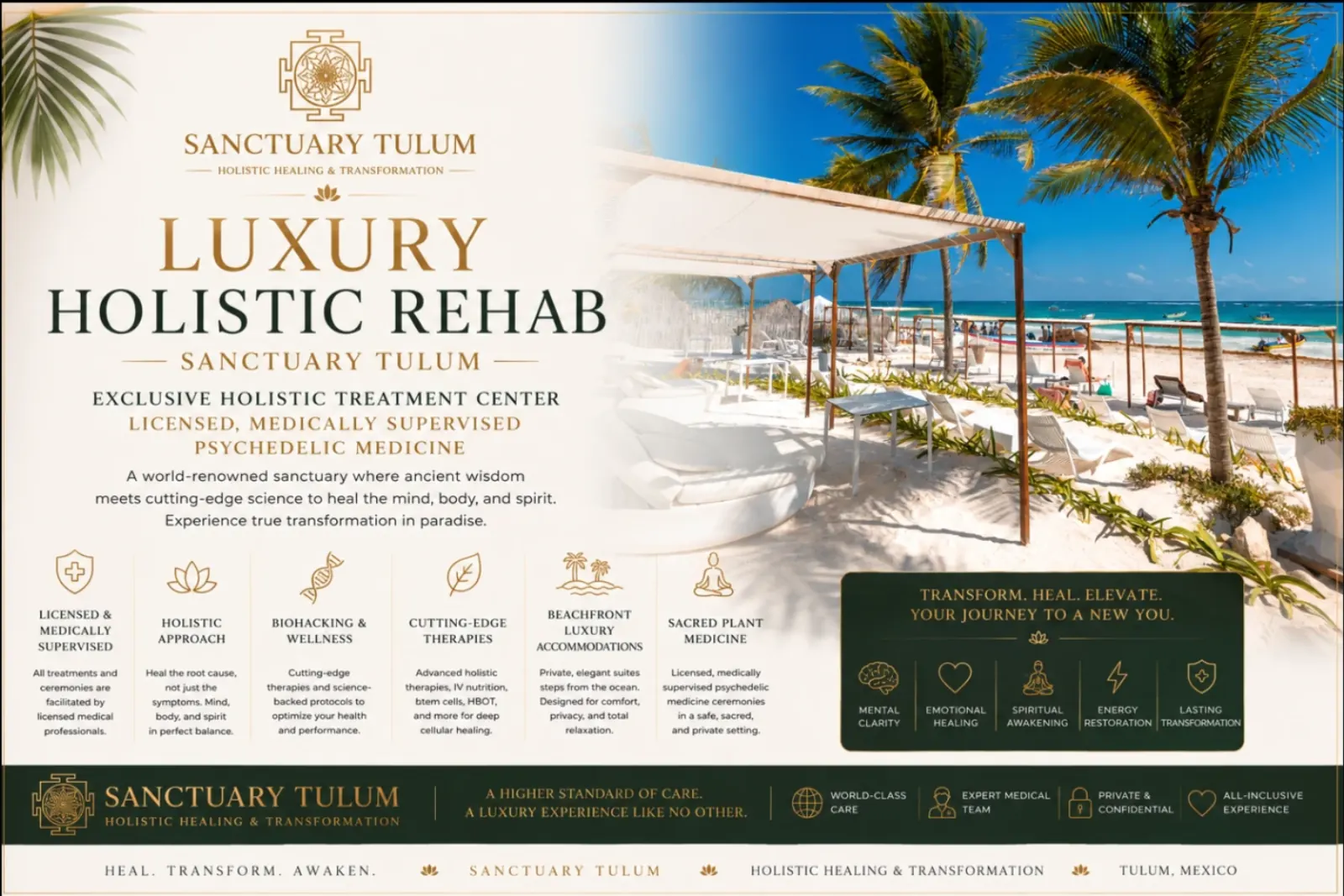
Every prospective guest completes a confidential clinical intake and full medical screening before travel is booked or a program date is confirmed. The intake reviews current medications, medical history, cardiovascular status, mental health history, and current substance-use pattern where relevant. Where a client is currently prescribed benzodiazepines, opioids, SSRIs, MAO inhibitors, lithium, or other medications with meaningful interaction profiles, our medical team plans a documented taper or pause window before any ceremony or infusion is scheduled. No client is cleared for plant-medicine or high-dose infusion protocols until that clearance is on file. This is one of the reasons a stay is arranged over weeks rather than booked as a walk-in retreat.
On-Site Medical Structure
A physician is on site, and the wider clinical team includes registered nurses, IV therapy specialists, and integrative practitioners. Vital signs are monitored across every physician-supervised protocol — blood pressure, oxygen saturation, and cardiac rhythm as clinically indicated. Emergency medications and airway equipment are on hand for every ceremony. Our Medical Review Board page describes the credentialing process, and our about the sanctuary page introduces the broader team. For a plain-language overview of our clinical safety record, see safest psychedelic facility.
What a Typical Day Looks Like
A residential day is quiet by design — early breakfast, one-on-one clinical work, IV or hyperbaric sessions where indicated, an afternoon in and around the water, evening integration. Meals are chef-prepared and matched to the medical plan (whole-food, low-inflammatory, tailored where nutrition is a treatment vector). There are no group sessions, no shared programming, and no other guests in your treatment space during clinical hours. The pace is a deliberate part of the therapy, not a hospitality flourish.
Next Step
If a Tulum program is worth exploring for you or a family member, the next step is a confidential clinical intake. Start with our confidential intake form, or reach the clinical team through our contact page. Nothing on this page constitutes medical advice or a clinical determination for any individual; every decision is made in consultation with our on-site medical team after a full screening.
Family and Aftercare Planning
Where clinically appropriate, family sessions are scheduled during the residential arc — remotely for family who remain at home, or in person for those who travel in for the final week. Aftercare planning begins in the second half of the program: nutrition and supplement protocols to carry home, a taper or continuation plan for any prescribed medications reviewed in intake, an integration schedule for the weeks that follow, and referrals to physicians or integrative practitioners in the client's home region where continuity of care is needed. The goal across the last week is a documented, realistic plan for the first ninety days after departure — not a discharge summary that stops at the airport.
Why Evidence-Based Screening Matters for Iceland Clients
Medically supervised detoxification is associated with meaningfully better safety outcomes than unsupervised withdrawal, particularly for benzodiazepines, alcohol, and opioids, where withdrawal itself carries clinical risk. SAMHSA's Treatment Improvement Protocol on medication-assisted treatment outlines the standard-of-care framework our medical team references when planning any taper before a Iceland client's arrival. For guests carrying co-occurring anxiety or mood conditions, the World Health Organization's guidance on mental health treatment underscores why an integrated medical and psychological plan — not detox alone — is the appropriate frame for recovery.
Continuity of care after discharge is one of the strongest predictors of durable outcomes in the clinical literature on residential treatment. That is why every Iceland client leaves Sanctuary Tulum with a written aftercare plan, not just a discharge summary, and why our on-site team documents vitals and clinical findings throughout the physician-supervised protocol rather than relying on a single intake assessment.
Related Luxury Rehab Locations (Europe)
References
- Center for Substance Abuse Treatment. "Medication-Assisted Treatment for Opioid Addiction in Opioid Treatment Programs." SAMHSA Treatment Improvement Protocol (TIP) Series 43.
- Substance use and mental health treatment outcomes in residential settings: a review of retention and continuity-of-care factors.
- Review of benzodiazepine tapering protocols and clinical management prior to procedural sedation.
- World Health Organization. "Mental Health Fact Sheets." WHO.int.
- Clinical outcomes literature on structured aftercare and relapse-prevention planning following residential treatment.
- Research on physician-supervised medical detoxification protocols and monitoring standards.