A Real Solution to Opioid Addiction
The opioid crisis has claimed hundreds of thousands of lives, and conventional treatment has failed to provide lasting solutions. Suboxone, methadone, and vivitrol simply replace one opioid with another, keeping patients dependent on medication indefinitely. At Sanctuary Tulum, we offer a fundamentally different approach.
Our Pouyan Method™ protocol uses ibogaine therapy to reset the brain's opioid receptors in a single medically supervised session. Combined with NAD+ IV therapy, stem cell treatments, and comprehensive holistic healing, our clients achieve true freedom from opioid dependence.
Our Opioid Recovery Protocol
- • Medical stabilization with 24/7 physician oversight
- • Ibogaine therapy to reset opioid receptors and eliminate withdrawal
- • Brain Repair IV Drip — proprietary neurochemical reset protocol
- • NAD+ IV therapy for cellular energy restoration
- • Stem cell therapy for brain and organ repair
- • 5-MeO-DMT ceremony program for deep psychological healing
- • Ayahuasca ceremony program for trauma resolution
- • Hyperbaric oxygen therapy for accelerated brain healing
- • Daily yoga, meditation, massage, and superfood nutrition
Opioids We Treat
- • Fentanyl and synthetic opioids
- • Heroin
- • OxyContin / Oxycodone
- • Hydrocodone / Vicodin
- • Morphine and Codeine
- • Suboxone and Methadone dependence
- • Kratom
Why Ibogaine Changes Everything
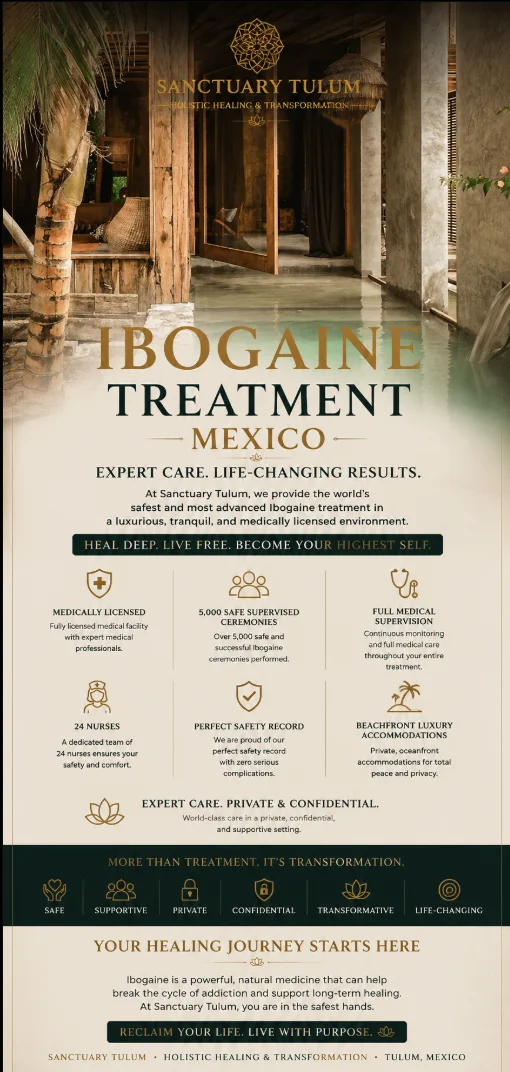
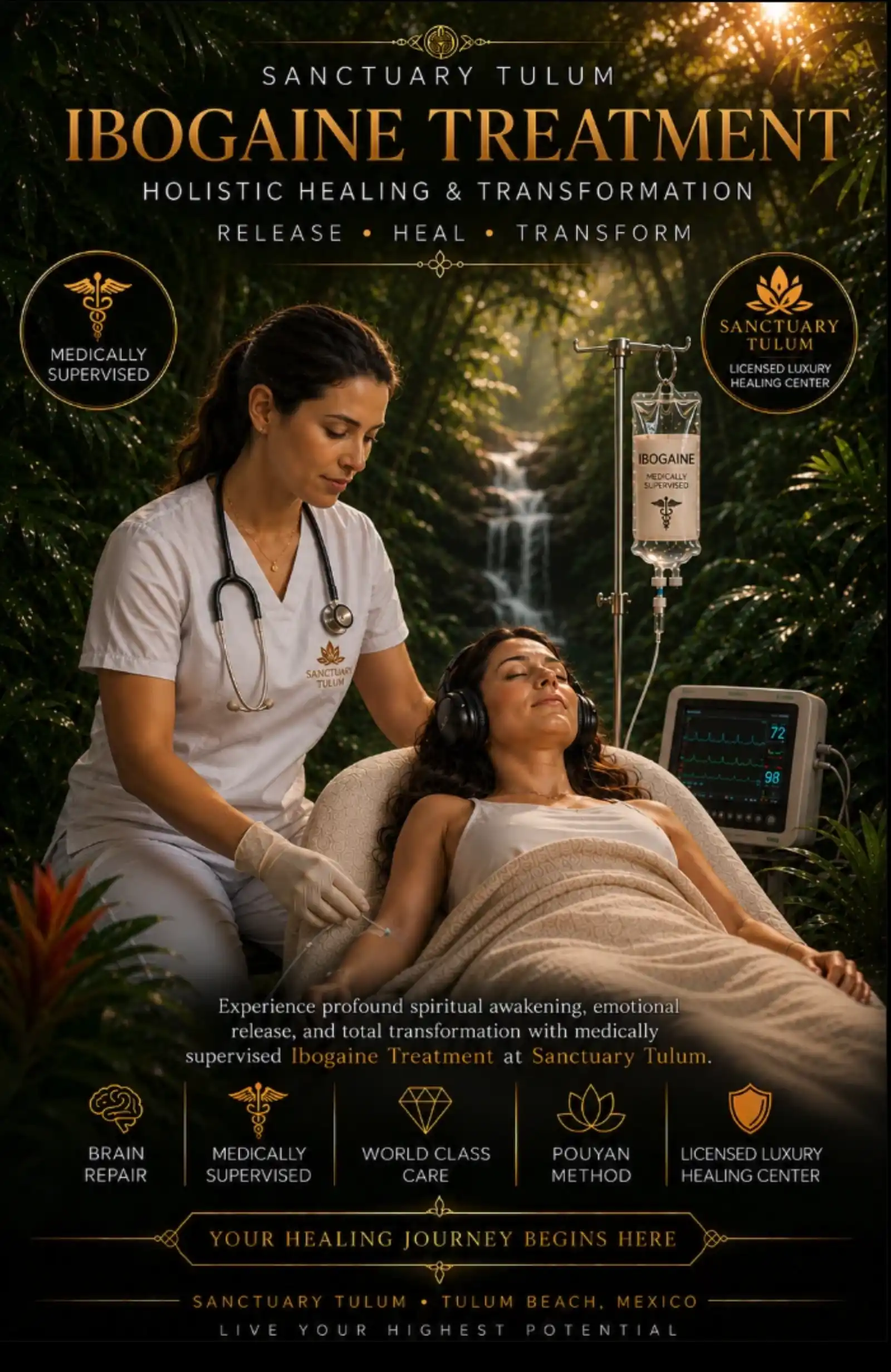
Ibogaine is a naturally occurring psychoactive substance that has been shown to dramatically reduce opioid withdrawal symptoms and cravings — often within a single session. It works by resetting the brain's neurochemistry, restoring dopamine and serotonin pathways that have been damaged by chronic opioid use. At Sanctuary Tulum, ibogaine is administered under full cardiac monitoring by experienced physicians as part of our comprehensive healing protocol.
Related: ibogaine versus methadone for opioid recovery.
How Ibogaine Compares With Maintenance Medication
Buprenorphine and methadone are opioid agonist medications designed to reduce cravings and withdrawal by occupying opioid receptors in a controlled, longer-acting form. A randomized double-blind trial comparing buprenorphine and methadone maintenance in opioid-dependent patients found both effective at reducing illicit opioid use, but neither approach resolves dependence — patients typically remain on the medication indefinitely (Johnson et al., 2003). Ibogaine is studied as a single-episode intervention rather than a daily maintenance medication: a controlled observational study of ibogaine-assisted detoxification documented reductions in withdrawal and craving scores over the course of treatment (Brown & Alper, 2018), and pharmacokinetic research has begun mapping how ibogaine and its active metabolite noribogaine behave in patients with opioid use disorder (van der Sluis et al., 2024).
Why Cardiac Screening and Monitoring Matter
Ibogaine is not risk-free. Published case reports and pharmacology reviews describe ibogaine's potential to prolong the QT interval and, in unsupervised or unscreened settings, trigger dangerous arrhythmias (Koenig & Hilber, 2015; case report, PMC). This is precisely why Sanctuary Tulum's protocol is designed around pre-arrival cardiac screening, continuous ECG monitoring during administration, and a physician present throughout the session — not an assumption that ibogaine is inherently safe, but a clinical infrastructure built to manage its known risks.
What Happens After Ibogaine
Interrupting physical dependence is only the first phase of opioid recovery. The National Institute on Drug Abuse notes that addiction is a treatable but chronic condition in which relapse risk is shaped by ongoing brain changes, environment, and psychosocial support, not simply the initial detox event (NIDA, Treatment and Recovery). This is why the weeks following ibogaine at Sanctuary Tulum are structured around NAD+ IV therapy to support neurochemical repair, daily clinical check-ins, trauma-informed therapy, and a discharge plan aimed at sustaining the gains made during the acute treatment phase. Research reviewing residential treatment models for substance use disorders emphasizes that structured, supervised environments away from a client's usual triggers are associated with improved engagement in early recovery (Residential Treatment for Substance Use Disorder, NCBI Bookshelf).
Who Should Consider This Program
This protocol is designed for adults with a diagnosed opioid use disorder who want to end physical dependence rather than transition to indefinite maintenance medication, and who are medically stable enough to undergo cardiac screening and a monitored ibogaine session. It is not a substitute for emergency care, and it is not appropriate for every cardiac or psychiatric profile — which is exactly why medical screening happens before travel, not after arrival. Anyone currently on high-dose opioids, methadone, or Suboxone should not stop those medications independently; contact our clinical team first to plan a medically supervised transition.
Related Resources
- → Ibogaine for Addiction: Complete Guide
- → What Is Ibogaine? A Complete Guide
- → Your Guide to Safe Ibogaine Treatment
- → Ibogaine Treatment Cost: What to Expect
- → Medical Detox Meets Holistic Healing
Explore Our Programs
- → Ibogaine Treatment Program
- → Luxury rehab
- → Luxury detox program
- → Benzo Withdrawal Treatment
- → NAD+ IV Therapy
- → Stem Cell Therapy
References
- Brown TK, Alper K. Treatment of opioid use disorder with ibogaine: detoxification and drug use outcomes. Am J Drug Alcohol Abuse. 2018.
- van der Sluis R, et al. The pharmacokinetics and pharmacodynamics of ibogaine in opioid use disorder patients. J Psychopharmacol. 2024.
- Koenig X, Hilber K. The anti-addiction drug ibogaine and the heart: a delicate relation. Molecules. 2015.
- Cardiac arrest after ibogaine intoxication, case report. PMC.
- Johnson RE, et al. Buprenorphine versus methadone maintenance therapy: a randomized double-blind trial with 405 opioid-dependent patients. Drug Alcohol Depend. 2003.
- National Institute on Drug Abuse. Treatment and Recovery.
- Residential Treatment for Substance Use Disorder: A Review of Clinical Effectiveness. NCBI Bookshelf.