Sacred Plant Medicine
Ayahuasca Ceremonies
Medically supervised, one-on-one ayahuasca ceremonies in a licensed luxury sanctuary.
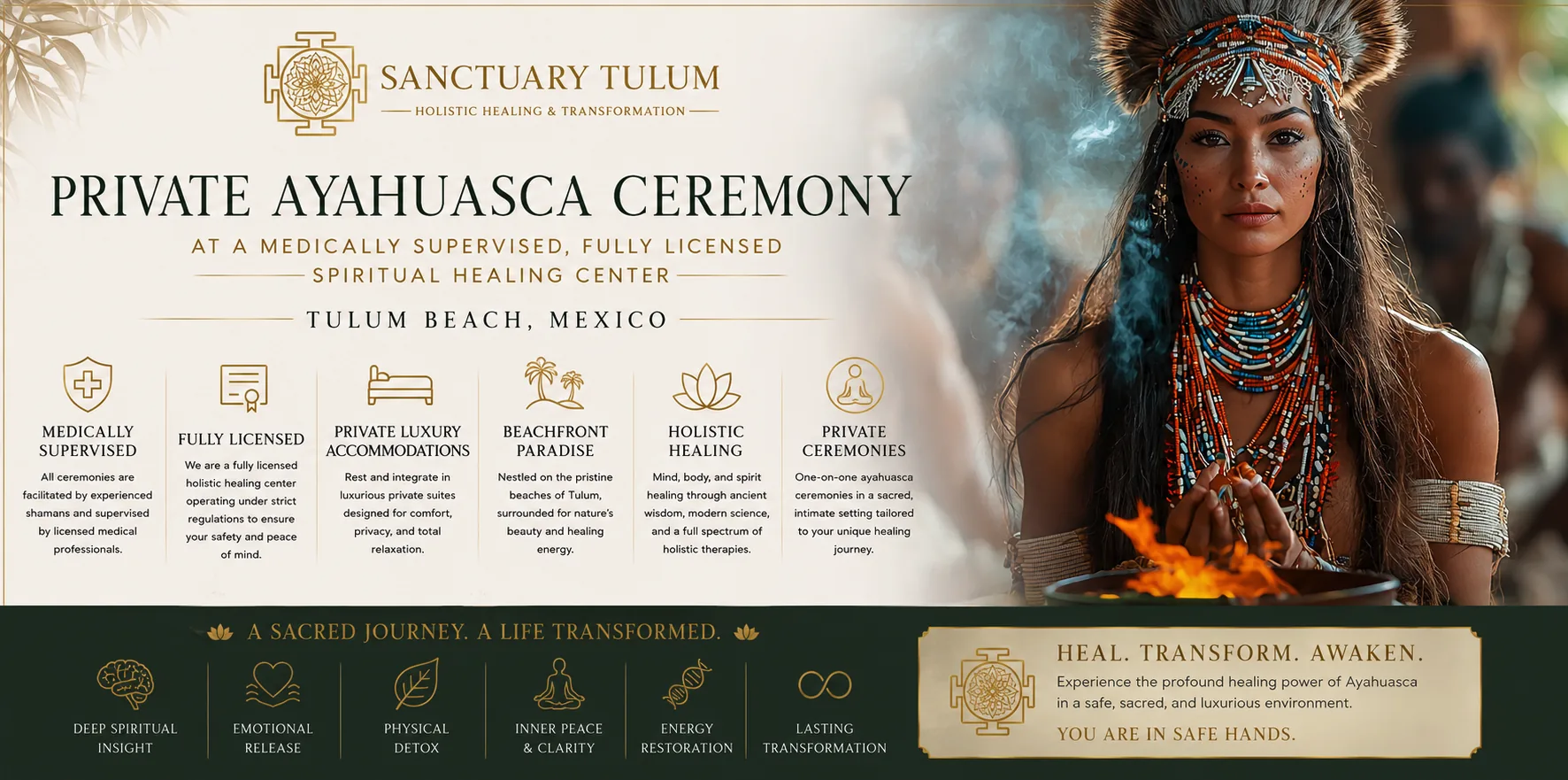
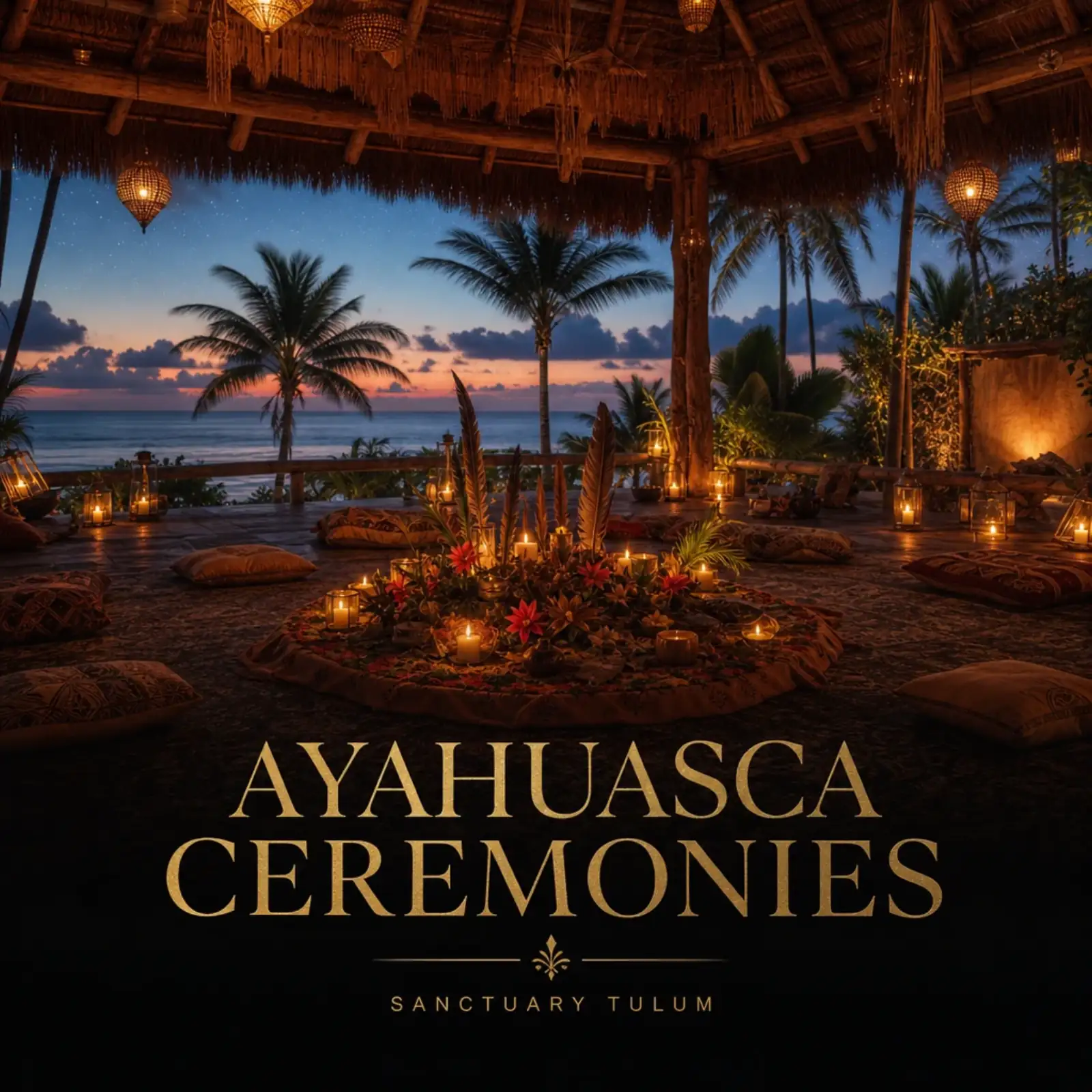
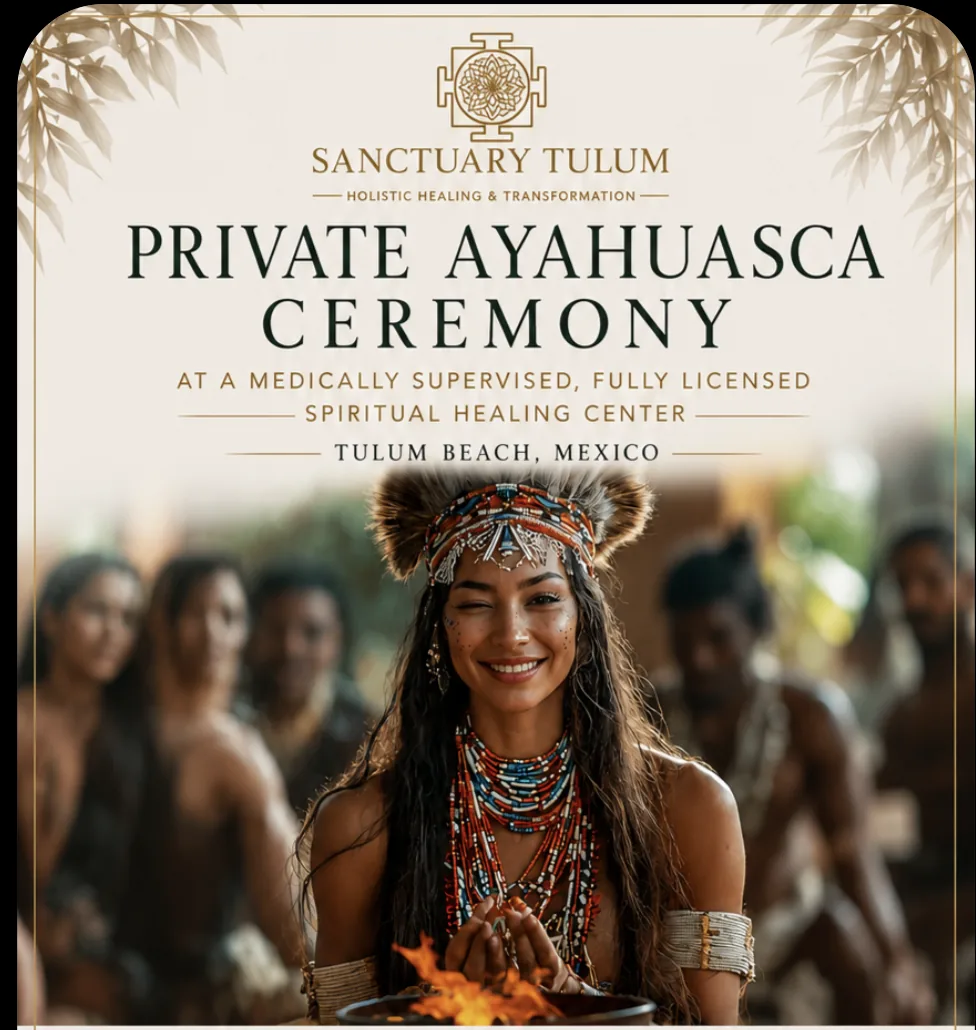
The private ceremonial space at Sanctuary Tulum — every ayahuasca ceremony is held one-on-one, oceanfront, under licensed medical supervision.
Browse the full Ayahuasca Resource Library — every related article on the site, organized editorially.
What Is an Ayahuasca Ceremony?
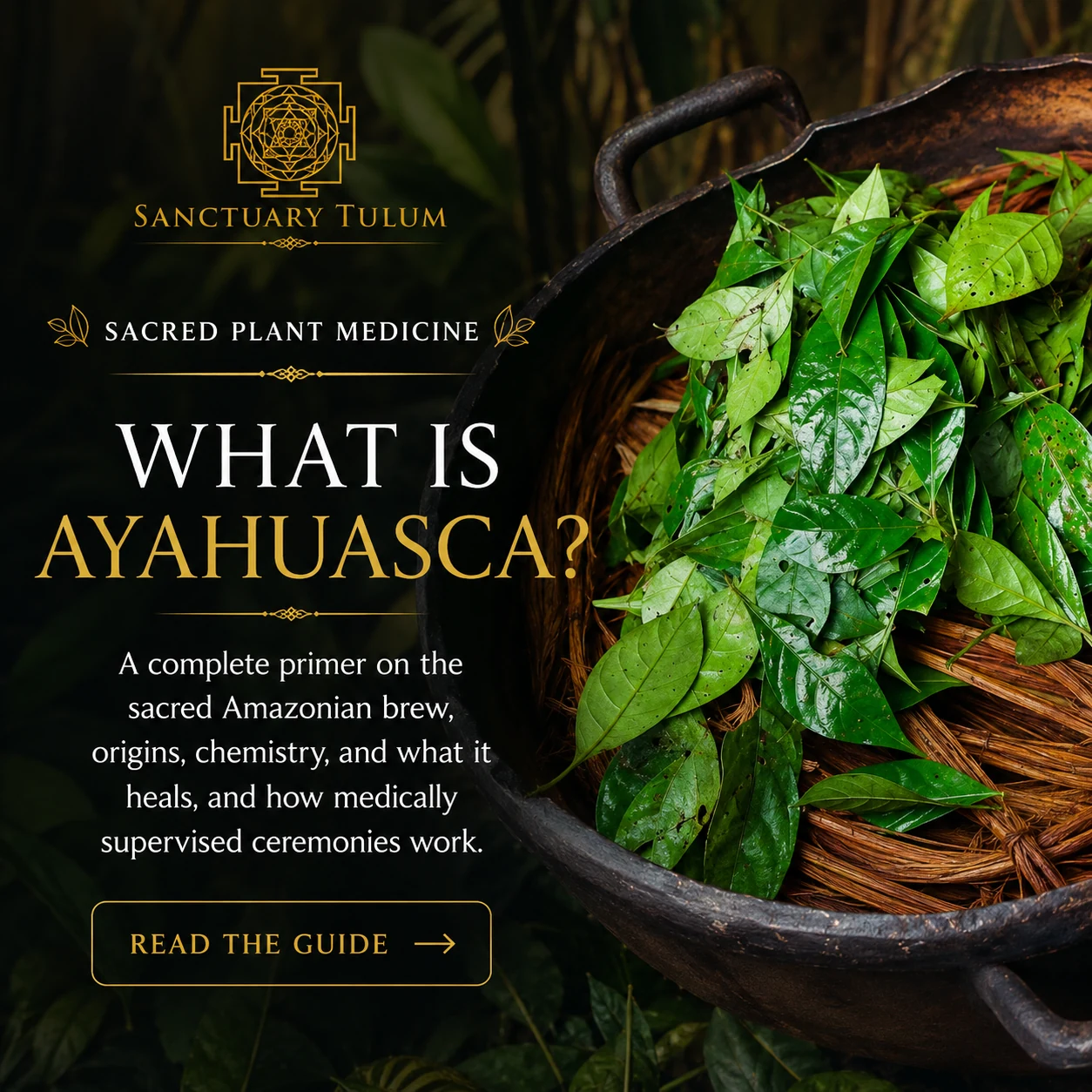
An ayahuasca ceremony is a sacred, ritualized session in which a participant drinks the ayahuasca brew — a decoction of the Banisteriopsis caapi vine and the DMT-containing Psychotria viridis leaf — under the guidance of an experienced facilitator. The brew is pharmacologically distinctive because the harmala alkaloids in B. caapi act as reversible MAO-A inhibitors, allowing orally consumed N,N-dimethyltryptamine (DMT) to become psychoactive rather than being broken down in the gut [1]. At Sanctuary Tulum, every ceremony is conducted one-on-one, in a private ceremonial space, with licensed medical staff present and a shamanic tradition honored since 2011.
This page is about the ceremony itself — its ritual structure, the facilitator's role, the duration, the purge, and what happens in integration the following morning. If you're researching the full multi-week program that a ceremony fits inside, see our ayahuasca retreat page.
Ritual Structure of a Ceremony
A traditional ayahuasca ceremony follows a structure that has been refined over generations in the Amazon and adapted for a clinical setting at Sanctuary Tulum. The room is prepared with candles, a mesa (altar), and the personal items or intentions of the participant. The facilitator opens the ceremony with prayer, sound, and the setting of sacred space. A single measured dose of ayahuasca is served, and the participant reclines on a private mat or bed with a bucket, water, and blanket close at hand.
Music — traditionally icaros sung by the facilitator, sometimes accompanied by rattle, drum, or live instrument — carries the participant through the arc of the experience. In our medical model, a nurse and physician remain in the room or immediately adjacent throughout, monitoring vital signs and available to intervene if needed. The onset of the experience typically begins 20–45 minutes after drinking, peaks at 60–120 minutes, and gradually subsides across the remaining hours.
The Role of the Facilitator (and Why It Isn't Talk Therapy)
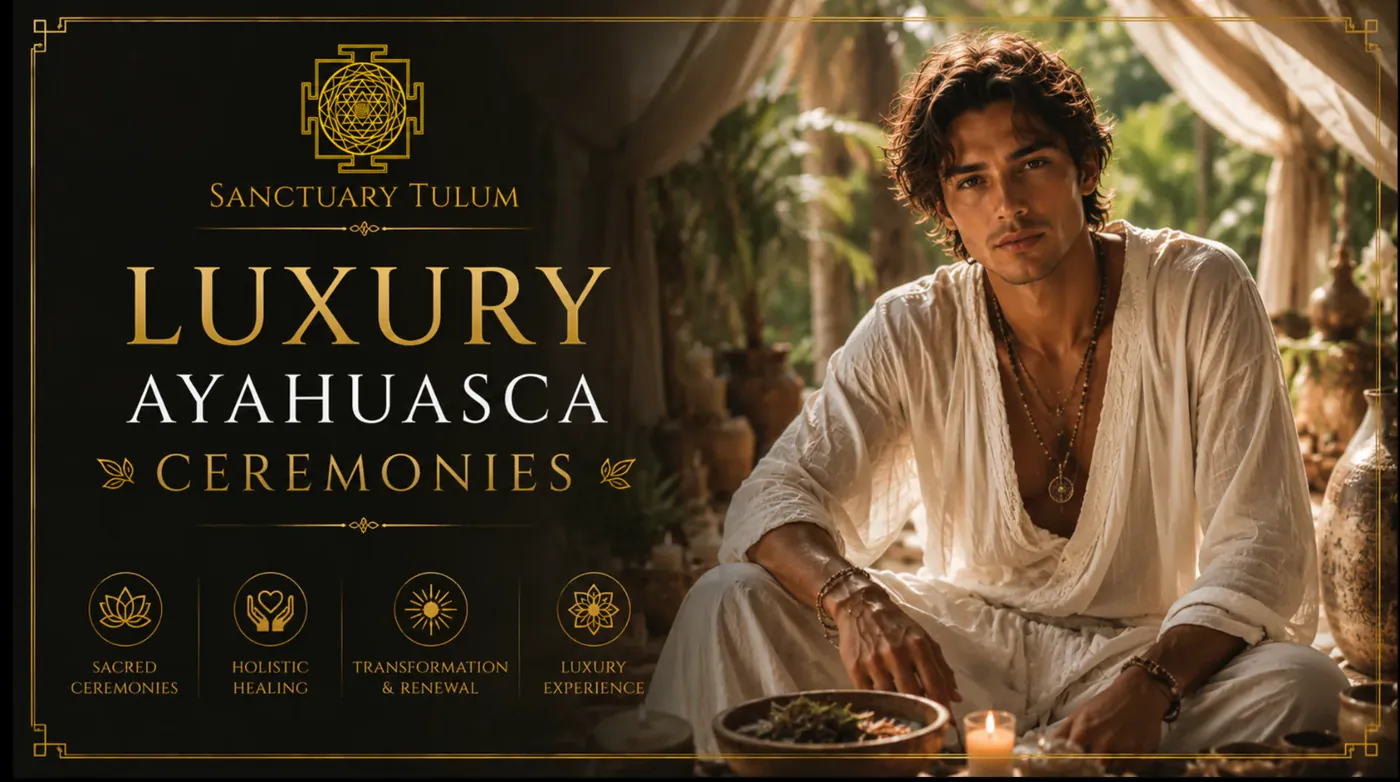
The facilitator — sometimes called curandero, ayahuasquero, or shaman — is the ceremonial guide, not a psychotherapist. Their job during the ceremony is not to interpret your visions or ask questions but to hold space: to sing, to attend, to intervene ritually if a participant becomes stuck, and to maintain the safety and coherence of the ceremony. Modern reviews of ayahuasca in clinical contexts consistently note that the therapeutic frame around the medicine — set, setting, and skilled facilitation — is inseparable from outcomes [2].
At Sanctuary Tulum every facilitator works alongside our clinical team. There is no group processing, no confrontation, no "sharing circle" during the ceremony. The work is between the participant, the medicine, and the facilitator holding the room.
Ceremony Duration and Timeline
- 0:00 — Opening. Prayer, intention, mesa preparation, dose served.
- 0:20–0:45 — Onset. First body sensations, altered visual field, sometimes early purge.
- 1:00–2:00 — Peak. Full immersion in the visionary state; facilitator sings continuously.
- 2:00–4:00 — Working phase. Emotional processing, insight, sometimes a second smaller dose if clinically appropriate.
- 4:00–6:00 — Descent. Return to ordinary awareness; facilitator closes the ceremony.
- Next morning — Integration. One-on-one session with facilitator and clinical team.
The Purge — Why It Happens and How It's Managed
The la purga — vomiting, and less commonly diarrhea, tears, sweating, or yawning — is a normal and expected part of an ayahuasca ceremony. Traditional Amazonian frameworks describe it as an energetic release of what the body and psyche are ready to let go of. Pharmacologically, it reflects the direct action of DMT and the harmala alkaloids on serotonergic pathways in the gut and central nervous system, combined with the MAO-A inhibition that changes how tyramine and other dietary amines are processed [1].
This is exactly why the ayahuasca dieta matters — restricting tyramine-rich foods, alcohol, and SSRIs before ceremony reduces the risk of adverse reactions [1]. The purge typically resolves within the first two hours. Our medical team monitors hydration, electrolytes, and vitals throughout.
Physiological and Psychological Experience
Systematic reviews of ayahuasca in human studies describe consistent short-term effects — introspection, autobiographical memory retrieval, vivid closed-eye imagery, altered time perception, and often a strong emotional arc from confrontation to acceptance [3]. Neuroimaging studies show reduced activity in the default mode network during the experience, which researchers have linked to the loosening of rigid self-referential thinking associated with depression, trauma, and addiction.
In a randomized, placebo-controlled trial, a single dose of ayahuasca produced rapid and sustained antidepressant effects in patients with treatment-resistant depression, with significant separation from placebo maintained through the primary endpoint at day seven [4]. Preclinical work on DMT — the primary visionary alkaloid in the brew — has also shown promotion of structural neuroplasticity, including increased dendritic spine density and synaptogenesis in cortical neurons [5].
Integration — the Morning After
A ceremony without integration is an experience without a home. At Sanctuary Tulum, the morning after every ceremony begins with a one-on-one integration session with your facilitator and a member of the clinical team. You are not asked to "share" in a group; you are helped, privately, to make sense of what came up, to notice what the body is holding, and to translate insight into concrete lifestyle, relational, and neurobiological change through the Pouyan Method™ protocol.
Safety, Licensing & Medical Supervision
Sanctuary Tulum operates under a Federal License of Operation for Hospital & Clinic. Every ceremony is medically supervised by our Medical Director, Dr. Jose A. Jimenez, MD, and our clinical team. We have maintained a documented, fatality-free safety record across thousands of ceremonies since 2011. Pre-ceremony screening includes ECG, blood work, medication review (particularly for serotonergic drugs contraindicated with MAO inhibitors), and a full psychiatric history.
Ceremony vs. Full Retreat
A single ayahuasca ceremony is one element of deeper healing. Most guests choose our full medically supervised ayahuasca retreats (4–12 weeks) combining multiple ceremonies with the Pouyan Method™, Brain Repair IV therapy, and integration coaching.
US-based readers evaluating travel logistics can also review our detailed guide on ayahuasca retreats near me for a NYC-focused breakdown of the legal landscape and licensed Mexico alternative.