What the Research Actually Shows
Sauna bathing is one of the most extensively studied traditional therapies in modern medicine. A landmark Finnish prospective cohort study of 2,315 men followed for more than 20 years found that frequent sauna use (4–7 sessions per week) was associated with significantly lower all-cause and cardiovascular mortality. Meta-analyses of short-term sessions consistently show measurable reductions in blood pressure and arterial stiffness following heat exposure.
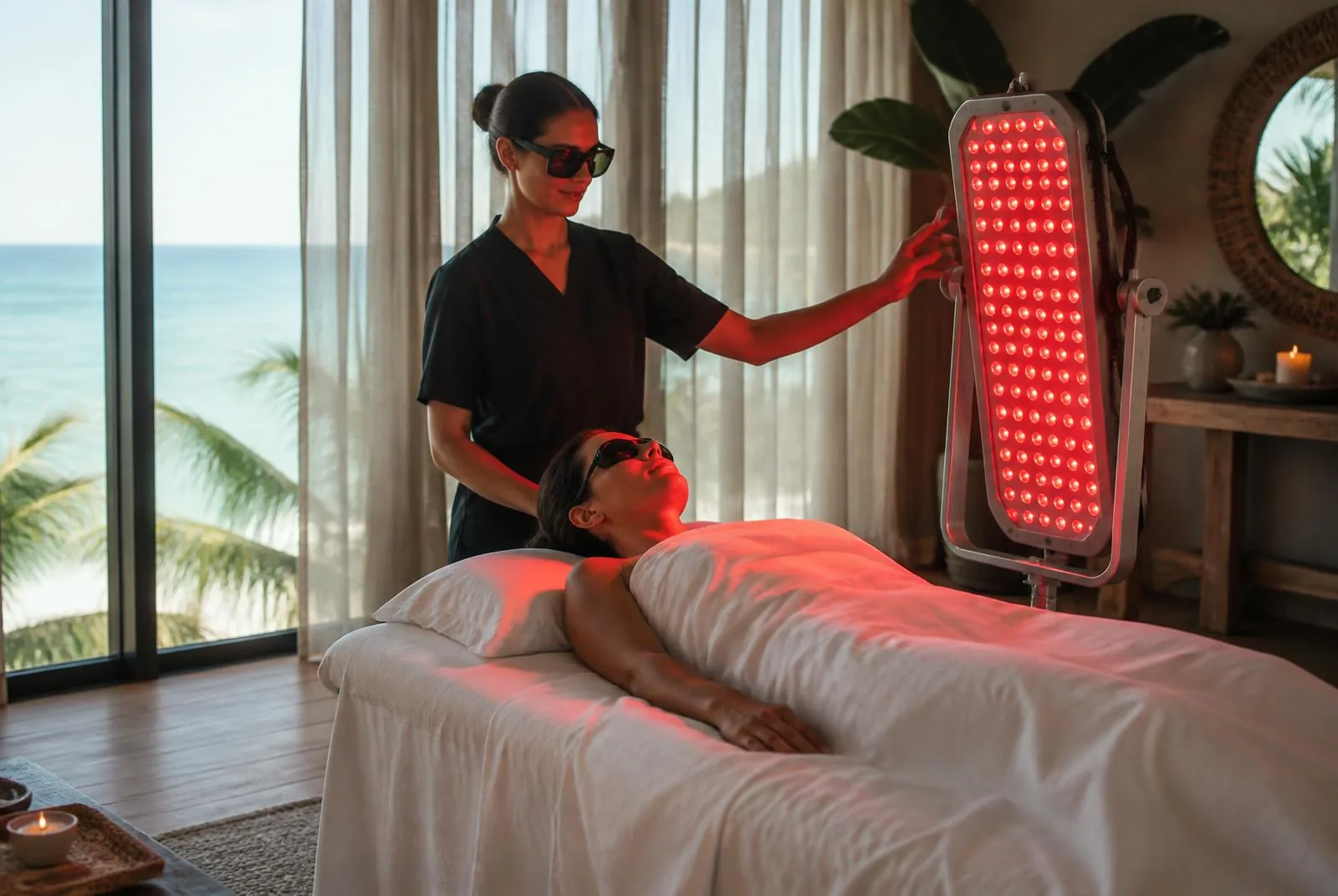
Infrared saunas produce similar cardiovascular loading at lower cabin temperatures, which many guests find easier to tolerate — particularly during the early weeks of detox when heat tolerance can be reduced. At Sanctuary Tulum, infrared sauna is one of several recovery tools inside the Pouyan Method™, paired with hydration, electrolyte replacement, and post-session cold plunge or rest.
What Guests Experience
- • A meaningful sweat response supporting elimination and hydration cycles
- • Reduced perceived muscle soreness and joint stiffness
- • Improved sleep quality when sessions are timed in the late afternoon
- • Parasympathetic activation and post-session relaxation
- • Improved cardiovascular tolerance across weeks of consistent use
- • A calm, private setting that complements meditation and breathwork
How It Fits the Protocol
Guests recovering from long-term substance use or medication burden are often in a state of chronic sympathetic activation. Infrared sauna sessions provide a controlled, heat-based stress exposure that supports vascular function, followed by a return to a regulated baseline — the same "stress and recover" rhythm we build with cold plunge and breathwork. Sessions are always paired with NAD+ IV therapy, brain repair IV support, and rest, and never used as a stand-alone treatment for addiction or mental health conditions.
How a Session Runs
A typical infrared session begins with a brief hydration and vitals check, then a 20–40 minute cabin session at a controlled temperature. Guests are given cold water with electrolytes before, during, and after — a detail that makes the difference between a restorative session and one that leaves someone depleted. Timing is deliberate: most sessions are scheduled in the late morning or early afternoon so the thermic effect does not interfere with sleep.
After the sauna, guests transition to a re-cooling window — sometimes a supervised cold plunge, sometimes a shaded rest with cool towels. The heat-and-cool contrast is where much of the cardiovascular benefit consolidates: peripheral vasoconstriction after peripheral vasodilation is essentially a repeated vascular training stimulus. Guests early in medication tapering or with fragile cardiovascular profiles skip the cold plunge and rest quietly instead.
Frequency is tuned to how each guest is responding to the wider protocol. Someone in the intensive detox phase might use the sauna three times per week; a guest closer to discharge, focused on cardiovascular reconditioning, might use it six. Every session is logged so the clinical team can spot trends — sleep quality, resting heart rate, weight fluctuations, subjective energy — and adjust the plan.
What We Do Not Claim
Infrared sauna therapy is not a treatment for addiction, mental illness, cancer, or autoimmune disease. It is a well-tolerated cardiovascular and recovery modality with a real evidence base for a specific set of endpoints — blood pressure, arterial stiffness, subjective recovery, sleep quality — and we present it in those terms. Marketing claims that a specific number of sessions will "eliminate heavy metals" or "sweat out drugs" run beyond what the published data support, and we deliberately avoid them.
That honest framing lets guests use sauna therapy for what it is actually good at, without expecting it to do the job of IV nutrition, medication tapering, or trauma-informed care. Inside a well-designed protocol, it becomes one reliable piece of a much larger picture.
Related Resources
References
- 1. Laukkanen T, Khan H, Zaccardi F, Laukkanen JA. Association between sauna bathing and fatal cardiovascular and all-cause mortality events. JAMA Intern Med. 2015;175(4):542-548.
- 2. Hussain J, Cohen M. Clinical effects of regular dry sauna bathing: a systematic review. Evid Based Complement Alternat Med. 2018;2018:1857413.
- 3. Beever R. Far-infrared saunas for treatment of cardiovascular risk factors: summary of published evidence. Can Fam Physician. 2009;55(7):691-696.