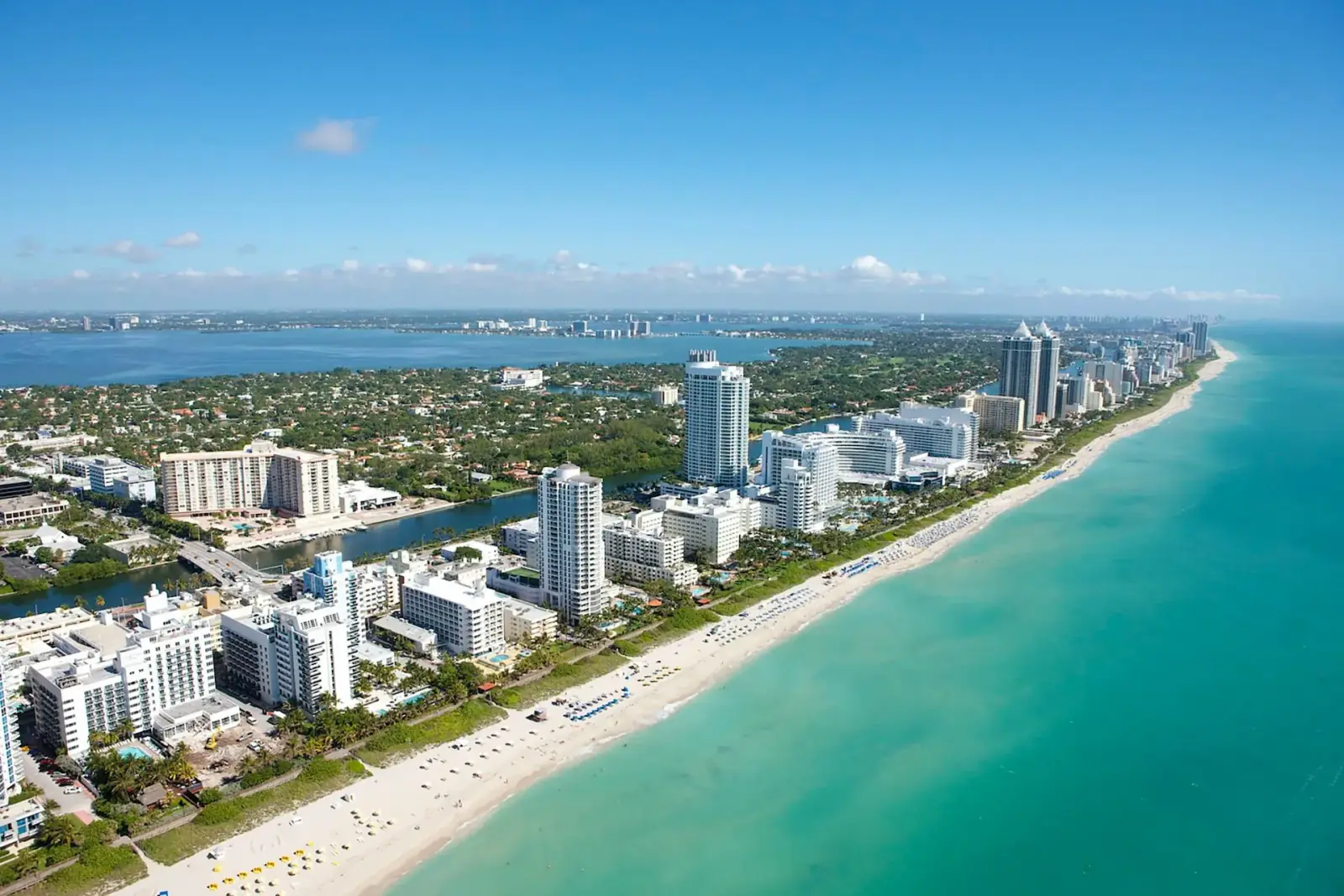
South Florida has plenty of luxury rehab options — and for many high-net-worth residents, that proximity is exactly the reason they choose to leave. This piece walks through why residents of Pinecrest, Key Biscayne, Palm Beach, Golden Beach, and Parkland — the state's highest-income communities per 2024 US Census data — are choosing Tulum, Mexico over a facility inside the state.
A Different Coastline, a Short Flight Away
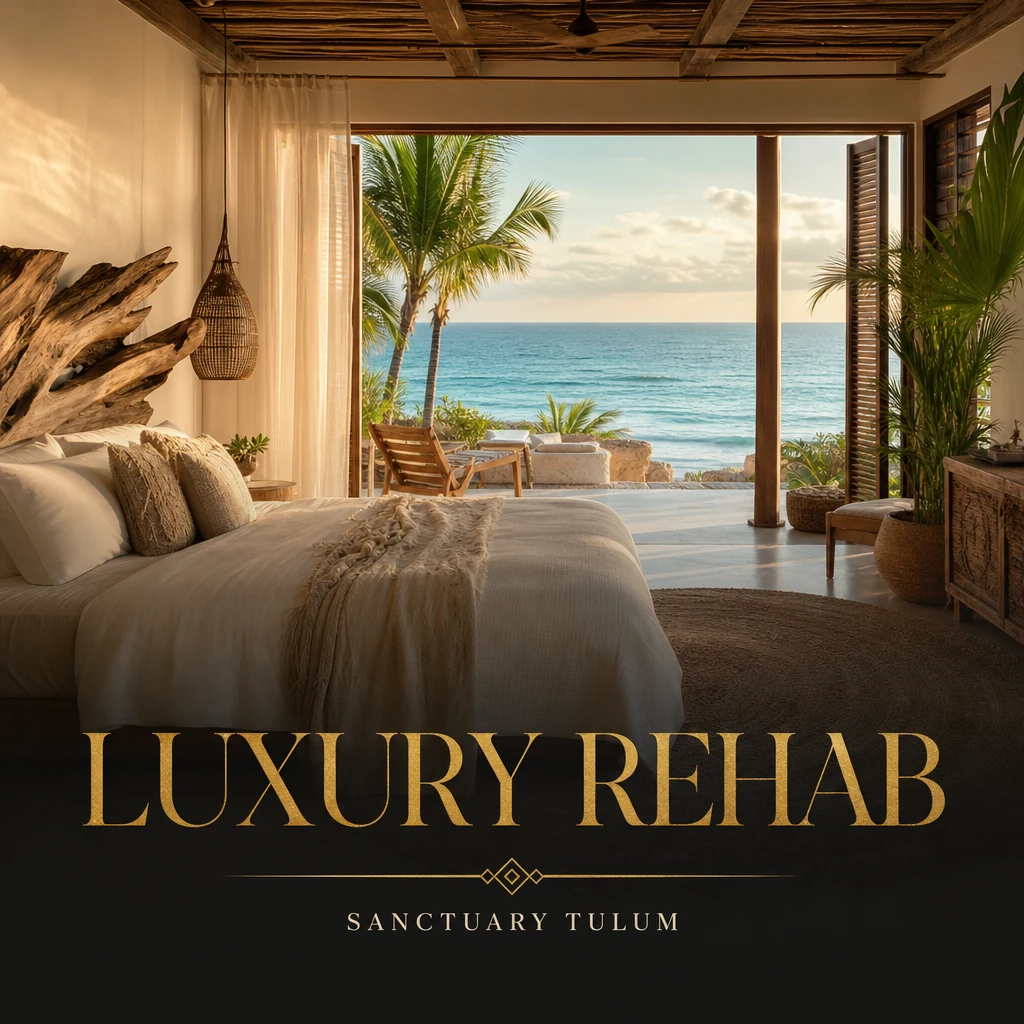
Tulum sits on the Riviera Maya, on Mexico's Caribbean coast. The water is turquoise, the beaches are white sand, and strict coastal building limits keep the shoreline low-density and visually undeveloped. The Yucatán Peninsula is also home to the a large network of freshwater cenotes — sinkholes and underground rivers carved through the limestone bedrock — which are geologically unique to this region and not present in Florida.
For a South Florida resident already familiar with warm-water coastlines, Tulum offers a genuinely different environment (Caribbean vs. Atlantic, jungle behind the beach road, cenotes) without a long-haul travel day.
Discretion Outside the Florida Network
The South Florida luxury facilities sit inside the same tightly connected finance, real estate, and social network that high-net-worth residents of Palm Beach, Key Biscayne, and Golden Beach are trying to step away from. Tulum sits outside that network. It has a long-established reputation as a discreet destination for public figures, executives, and creatives, and presence there does not carry the specific signal a stay at a recognizable Florida facility can.
The Travel Picture (Genuinely Convenient)
Direct flights from Miami (MIA) and Fort Lauderdale (FLL) to Cancún (CUN) run about 1.5–2 hours on multiple carriers daily. From Palm Beach (PBI), one-stop routings are widely available and total travel time is still short. From Cancún International, Sanctuary Tulum arranges a private transfer of about 90 minutes south along the coast. For clients traveling privately, several Riviera Maya airports can accommodate direct arrivals. This is one of the shortest international flights available from the continental US to a luxury Mexican coastal destination.
Medical Credibility Behind the Destination
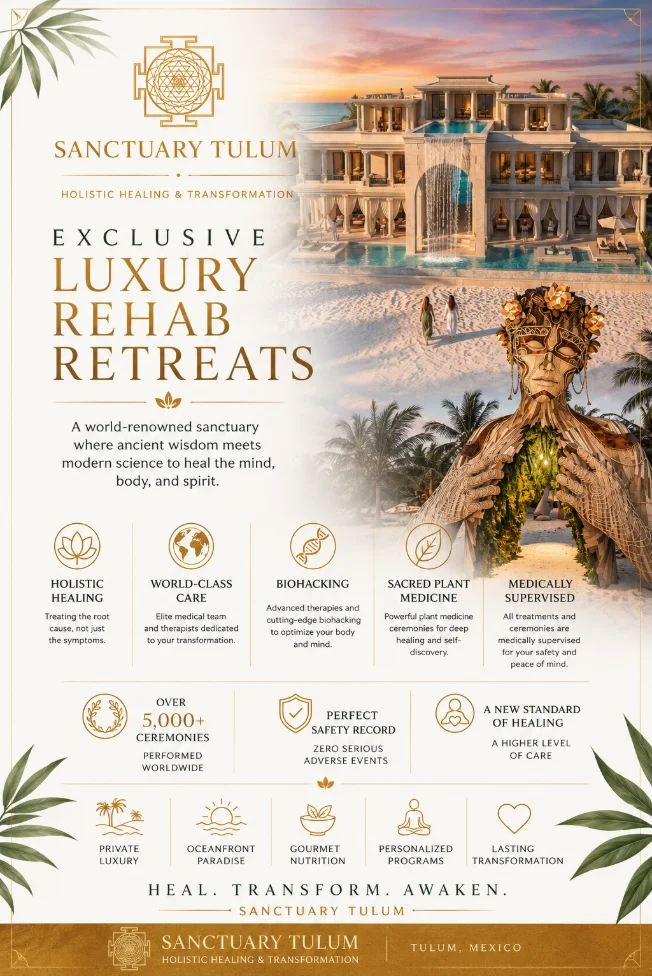
The destination is the lead, but this remains a rehab decision, not a wellness holiday. Sanctuary Tulum operates under a federal health license as a hospital and clinic, with a physician on site and medical supervision throughout every program. Our luxury residential rehab and luxury alcohol rehab program pages describe the residential program in detail.
A Note on Frame
This is not a claim that Florida facilities are inadequate. It is a description of what Tulum genuinely offers — Caribbean coastline, cenotes, distance from local networks, and one of the shortest international travel days from the US — for people who want a healing setting structurally separated from South Florida. Explore our ibogaine treatment center, ayahuasca retreat, luxury detox, and holistic rehab center programs, or read our executive rehab and about Sanctuary Tulum pages.
What Residential Treatment Looks Like Day to Day
A residential stay is structured around one-on-one clinical time rather than group sessions. Mornings typically begin with a medical check-in, followed by individual therapy, bodywork, and any scheduled IV or regenerative therapies. Afternoons are built around integration work — processing what has come up, adjusting the treatment plan with the medical team, and time for rest. This individualized structure is a deliberate departure from the group-therapy model common at many larger facilities, including several well-regarded South Florida programs.
For guests transitioning from a high-pressure executive or public-facing role, this format also reduces the exposure risk that comes with group treatment settings, where confidentiality depends on the discretion of every other person in the room.
Evidence Behind Environment and Distance in Recovery
Clinical literature on substance use disorder treatment, including research from the National Institute on Drug Abuse and peer-reviewed work by researchers such as McLellan and Volkow, frames addiction as a chronic medical condition shaped by neurobiology, environment, and social context. Reducing exposure to familiar triggers and old social networks during and immediately after residential treatment is a recognized principle of relapse prevention, and it is part of why some residents deliberately choose a facility outside their home region and daily orbit.
Distance alone is not treatment, of course. What matters clinically is what happens inside the program: a physician-led team, individualized therapy, and a structured continuing-care plan after discharge. Sanctuary Tulum's model combines the environmental separation many residents are looking for with a licensed clinical framework, rather than offering distance as a substitute for medical rigor.
Who Tends to Choose This Path
Guests coming from South Florida's highest-income communities are frequently founders, physicians, attorneys, and finance professionals for whom confidentiality and continuity of care both matter. Many arrive directly from a demanding role and need a program that can accommodate a phased return to work, coordinate with an existing therapist or psychiatrist at home, and provide clear documentation for continuing care once they are back in Florida.
Family members are also welcomed into structured, scheduled communication and, where clinically appropriate, family therapy sessions — a process the clinical team designs around the individual case rather than a fixed weekly template.
References
- McLellan AT, Lewis DC, O'Brien CP, Kleber HD. Drug dependence, a chronic medical illness: implications for treatment, insurance, and outcomes evaluation. JAMA. 2000;284(13):1689-1695.
- Moos RH, Moos BS. Long-term influence of duration and intensity of treatment on previously untreated individuals with alcohol use disorders. Addiction. 2003;98(3):325-337.
- Volkow ND, Koob GF, McLellan AT. Neurobiologic Advances from the Brain Disease Model of Addiction. N Engl J Med. 2016;374(4):363-371.
- National Institute on Drug Abuse. Principles of Drug Addiction Treatment: A Research-Based Guide (Third Edition).
- COFEPRIS — Mexico's federal health regulator, licensing authority for Sanctuary Tulum.