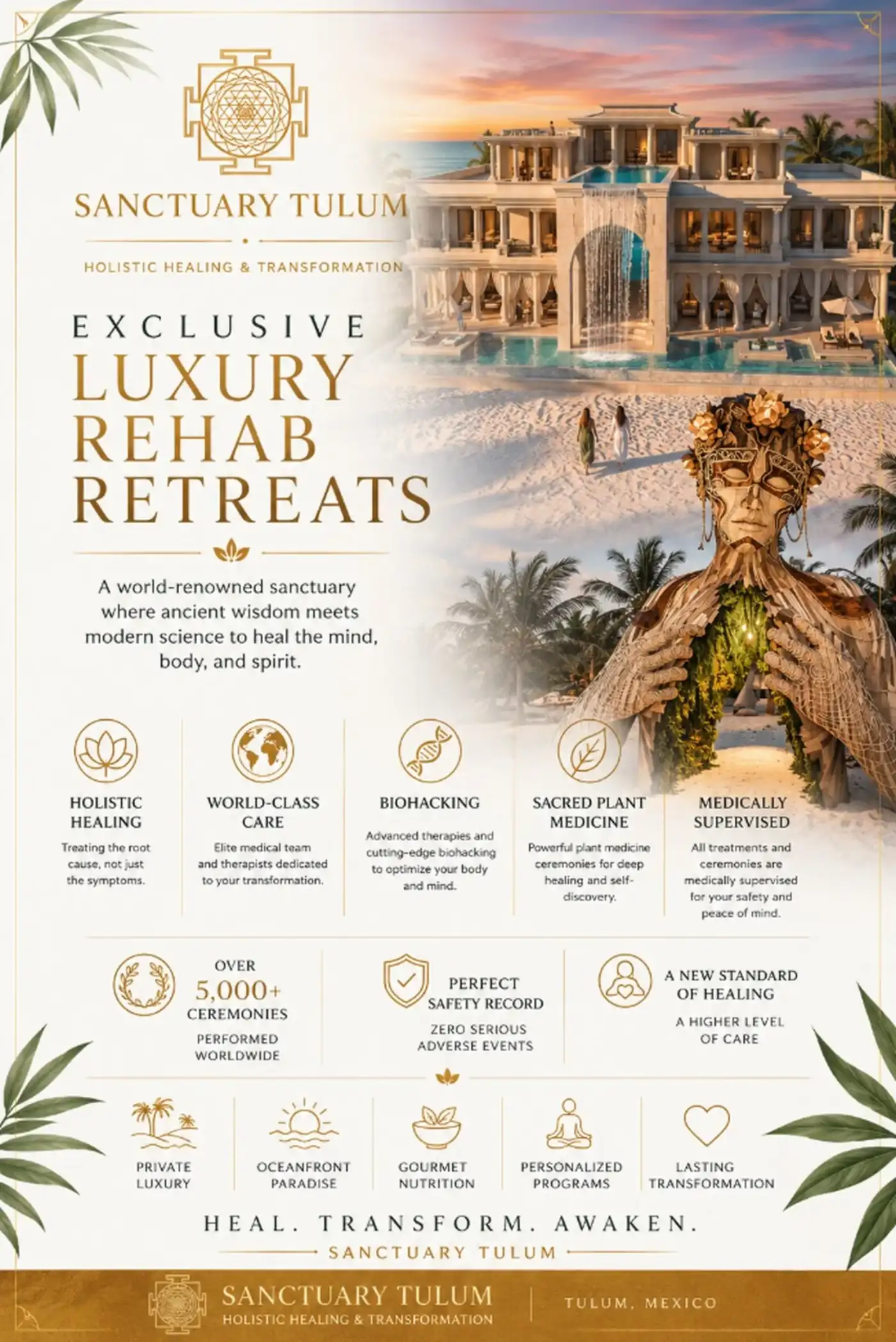
When researching rehabilitation options, understanding the fundamental differences between a luxury rehab and a traditional rehab facility is essential. The differences extend far beyond amenities — they represent entirely different philosophies of healing.
Treatment Philosophy
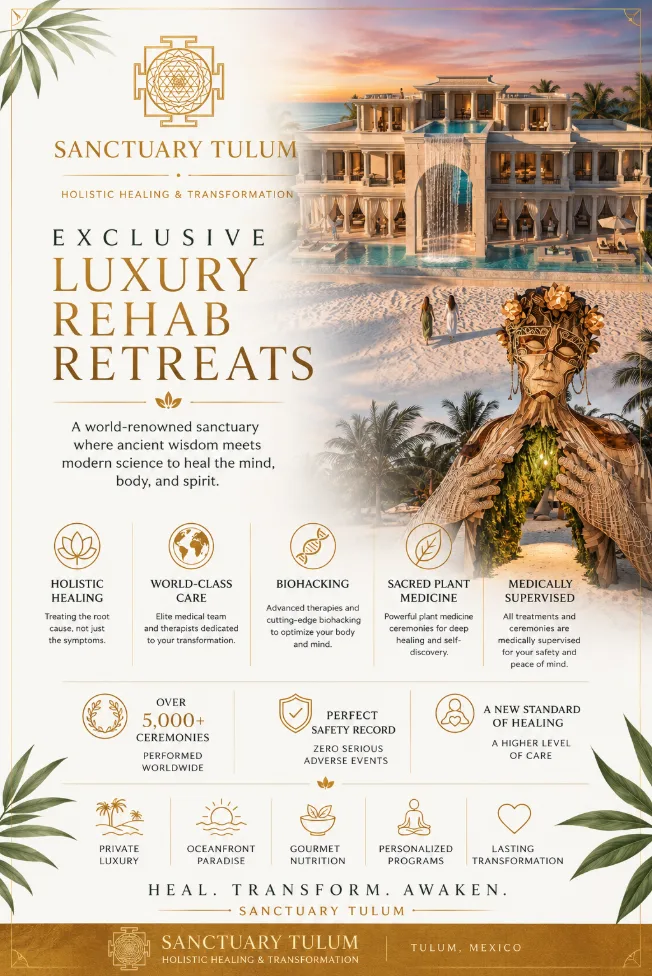
Traditional rehab programs typically follow a standardized approach: group therapy, 12-step programs, and pharmaceutical management. While these methods help some people, relapse rates remain high because they often treat symptoms rather than root causes. Luxury rehab centers like Sanctuary Tulum take a fundamentally different approach — treating the whole person through personalized, integrative protocols that address the biochemical, emotional, and spiritual dimensions of addiction and mental health.
Personalization vs. One-Size-Fits-All
In traditional rehab, you might share a room with multiple people and attend the same group sessions regardless of your specific condition. At a luxury rehab center, every aspect of treatment is tailored to you. Your protocol might include ibogaine therapy, stem cell treatments, ayahuasca ceremonies, or specialized medical detox — chosen specifically for your needs.
Staff-to-Patient Ratio
Traditional facilities often have dozens of patients per therapist. At Sanctuary Tulum, the ratio is essentially one-to-one. You have a dedicated team of doctors, therapists, and healers focused entirely on your recovery. This level of attention is simply impossible in a conventional setting.
Environment and Healing
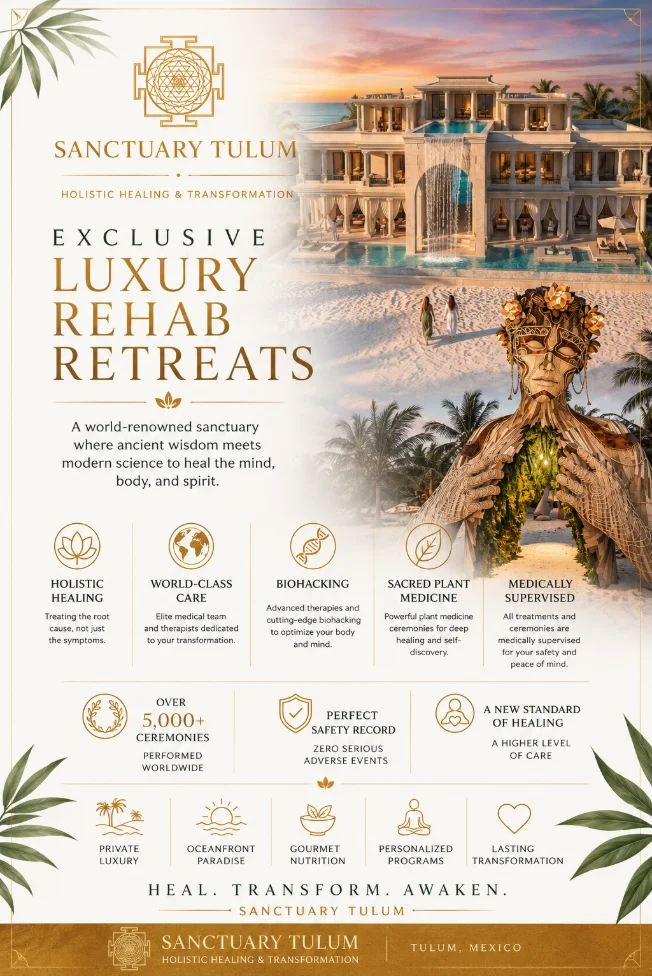
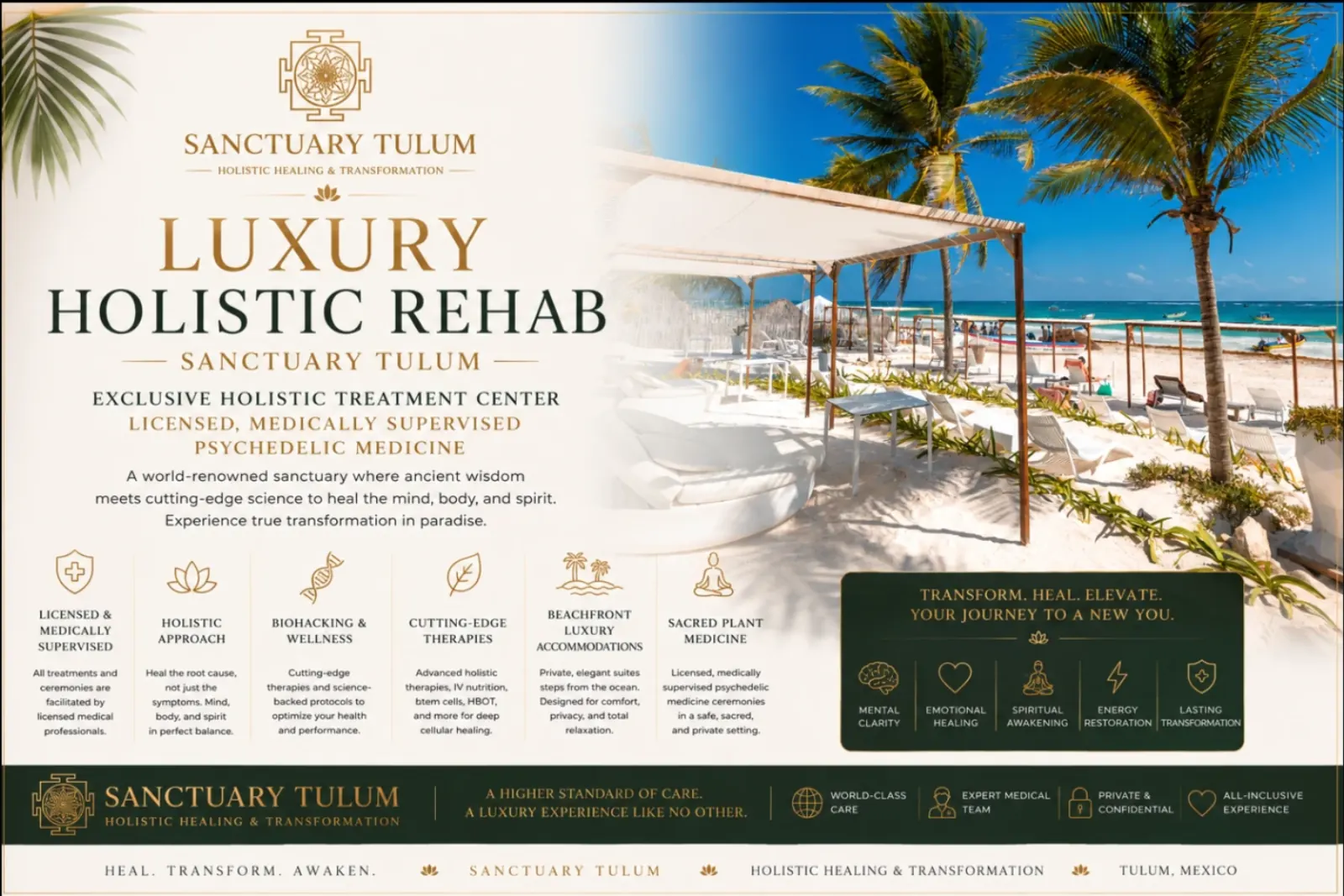
Research consistently shows that environment plays a crucial role in recovery. Traditional facilities are often clinical and institutional. Luxury rehab provides a healing environment — private suites, natural beauty, organic nutrition, and an atmosphere designed to support transformation rather than simply contain patients.
Long-Term Outcomes
The most important difference is results. By addressing root causes through advanced therapies and personalized care, luxury rehab programs produce significantly better long-term outcomes. Guests leave not just sober, but transformed — with the tools, insights, and biochemical balance to sustain their recovery.
Clinical Screening Before Any Protocol
Every prospective guest completes a confidential clinical intake and full medical screening before any ceremony, high-dose IV, or regenerative protocol is scheduled. The intake reviews current medications, medical history, cardiovascular status, and mental health history. Where a client is currently prescribed SSRIs, SNRIs, MAO inhibitors, benzodiazepines, opioids, or lithium, the medical team plans a documented taper or pause window with the treating physician before luxury rehab vs. traditional rehab work begins. Sanctuary Tulum never advises guests to discontinue prescribed medication on their own.
On-Site Medical Oversight
A physician is on site, supported by registered nurses, IV therapy specialists, and integrative practitioners. Vitals are monitored across every physician-supervised session — blood pressure, oxygen saturation, and cardiac rhythm where clinically indicated — with emergency medications and airway equipment on hand. Credentialing detail lives on the Medical Review Board page, and a broader description of the safety approach is on the safest psychedelic facility page. Guests are welcome to review both before deciding whether the program fits them.
How Luxury rehab vs. traditional rehab Fits the Full Program
The luxury rehab center integrates biological, neurological, and psychological work rather than isolating one modality. That means medical stabilization first, followed by a physician-scheduled combination of IV therapy, HBOT, nutrition, and — where clinically appropriate — medically supervised ibogaine treatment center, ayahuasca ceremony program, 5-MeO-DMT, or psilocybin therapy. The exact sequence is set individually — one guest's program rarely looks identical to another's.
Integration and Aftercare
A stay is only useful if it holds. Every program ends with a written integration and aftercare plan — continued one-on-one check-ins with the integration team, referral to trauma-informed practitioners at home when appropriate, and lifestyle protocols covering nutrition, sleep, movement, and nervous-system regulation. Guests are encouraged to keep their existing relationships with a treating physician and to return for booster stays when a specific life transition benefits from it. For a full overview of the sanctuary philosophy, read about the proprietary Pouyan Method™.
For a side-by-side look at how programs at this level actually compare, see our editorial review of the the world’s best luxury rehabs breaks down clinical staffing, privacy, program length, and what the price actually buys.