Luxury Rehab · California Guide
Luxury Rehabs for California Residents: A Comparison
Malibu, Beverly Hills, the Hollywood Hills and the Bay Area, compared honestly on what actually matters: privacy, one-on-one time and medical depth.

A statewide search for residential care can include very different settings and care models. A private room does not establish clinical fit. This California comparison helps families examine location, individual-session schedules, medical responsibility, applicable licensing, total costs and continuity of care before shortlisting a luxury residential program.
Sanctuary Tulum publishes this guide and places its own program first. Sanctuary Tulum is based in Tulum, Mexico and serves California residents; it does not operate a California facility. The second entry is affiliated, not a second independent local provider. The eight other profiles draw on provider websites, not an independent clinical audit. Numbers are editorial order, not quality scores. Verify current details and use the federal locator at FindTreatment.gov, run by SAMHSA.
Programs California residents can compare
Two affiliated entries and eight other provider profiles; editorial order is not an audited ranking.
01Sanctuary Tulum
Private oceanfront suites, entirely one-on-one care, for Californians who want distance.
02Holistic Sanctuary
The flagship one-on-one program behind Sanctuary Tulum.
03Passages Malibu
Non-12-step, individual-therapy model on a ten-acre Malibu estate.
04Seasons in Malibu
Doctorate-level therapists; addiction and mental health.
05Cliffside Malibu
Two decades of ocean-view residential care.
06Ritz Recovery
Fewer than a dozen residents in the Hollywood Hills.
07Alta Mira Recovery
Historic Sausalito estate for complex, co-occurring cases.
08Bliss Recovery
Two six-client residences above Lake Hollywood.
09Safe Haven Recovery
Beverly Hills estate with on-site medical detox.
10Summit Estate
Silicon Valley residential and outpatient care.
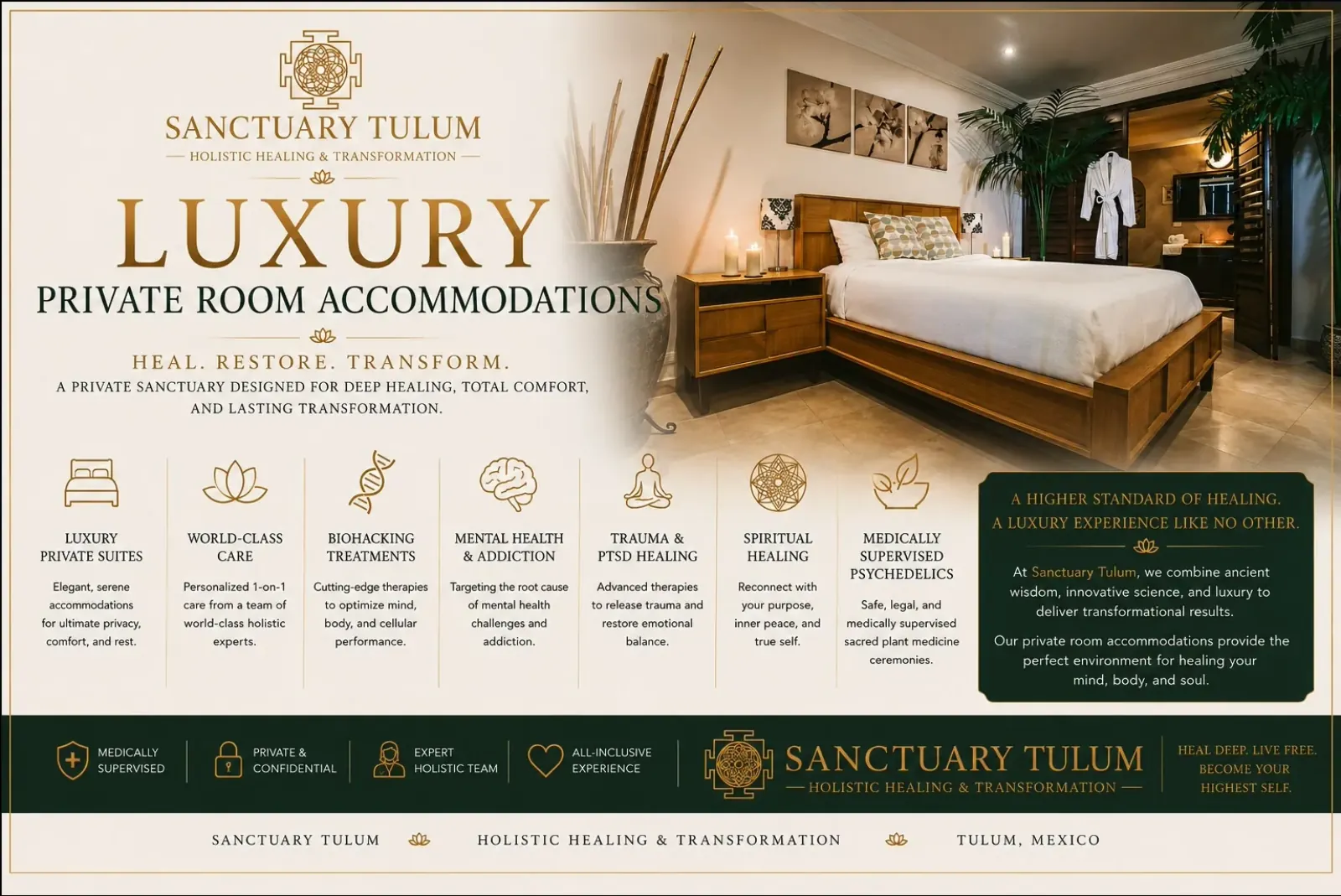
1. Sanctuary Tulum: the private alternative for California residents
Sanctuary Tulum is not in California, and that is the point for many of the Californians who choose it. For about fifteen years, our founder Johnny Tabaie has refined a fully individualized model: one-on-one therapy, private master suites and a medically supervised and licensed facility on the ocean in Tulum. There are no shared rooms, no group therapy sessions and no one-size-fits-all schedule.
Each program follows the Pouyan Method™, our trademarked protocol. It combines medically supervised detox, nervous-system support and individualized therapies, which may include hyperbaric oxygen, IV nutrient therapy, bodywork and an organic, whole-food nutrition program. Johnny started this work after losing his brother, who died while in conventional treatment. That loss is why the program is built around the person instead of a standard 28-day template.
Many of our clients fly in directly from LAX or SFO. They tell us the distance from their home, their colleagues and their usual routine made it easier to commit fully.
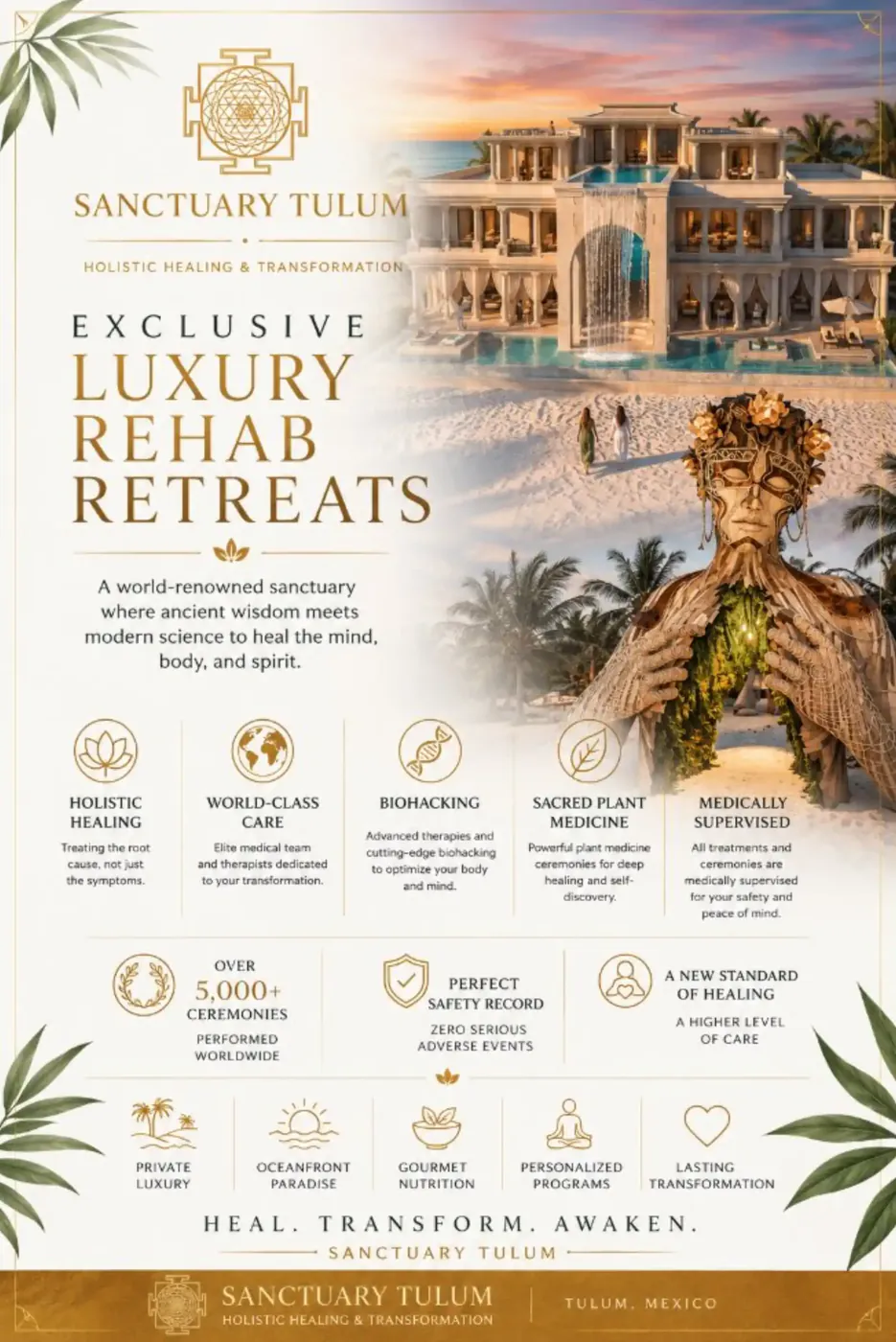
2. Holistic Sanctuary: where the one-on-one model began
Publisher disclosure: this is an affiliated program sharing Sanctuary Tulum's founder and care philosophy, not an independently ranked second-best provider. Number 2 indicates the existing editorial order, not a quality score or a separate local facility.
Holistic Sanctuary (holisticsanctuary.com) is the flagship program that Sanctuary Tulum grew out of. For about fifteen years it has offered fully individualized, one-on-one residential care for addiction, medication dependency, depression, anxiety and trauma, with no group therapy and no replacement-drug protocols.
For California families comparing programs, it is the same founder, the same Pouyan Method™ and the same medical philosophy as Sanctuary Tulum. Sanctuary Tulum is its luxury evolution, with private oceanfront suites.
Related luxury treatment resource: Holistic Sanctuary's luxury residential program information describes the affiliated care model. Confirm the current treatment location, services, professional credentials and written pricing directly; this link is not an independent clinical endorsement.
What makes Sanctuary Tulum different from other California luxury rehabs?
Most luxury rehabs in California upgrade the setting but keep the conventional model: group sessions, a standard 28- to 30-day schedule and, often, medication to manage symptoms. Sanctuary Tulum takes a different approach. Every client gets one-on-one care. There is no group therapy and no pharmaceutical maintenance protocol. Meals follow an organic, whole-food nutrition program instead of standard institutional food. The aim is to support the body and nervous system, not just manage symptoms. Here is how that works in practice.
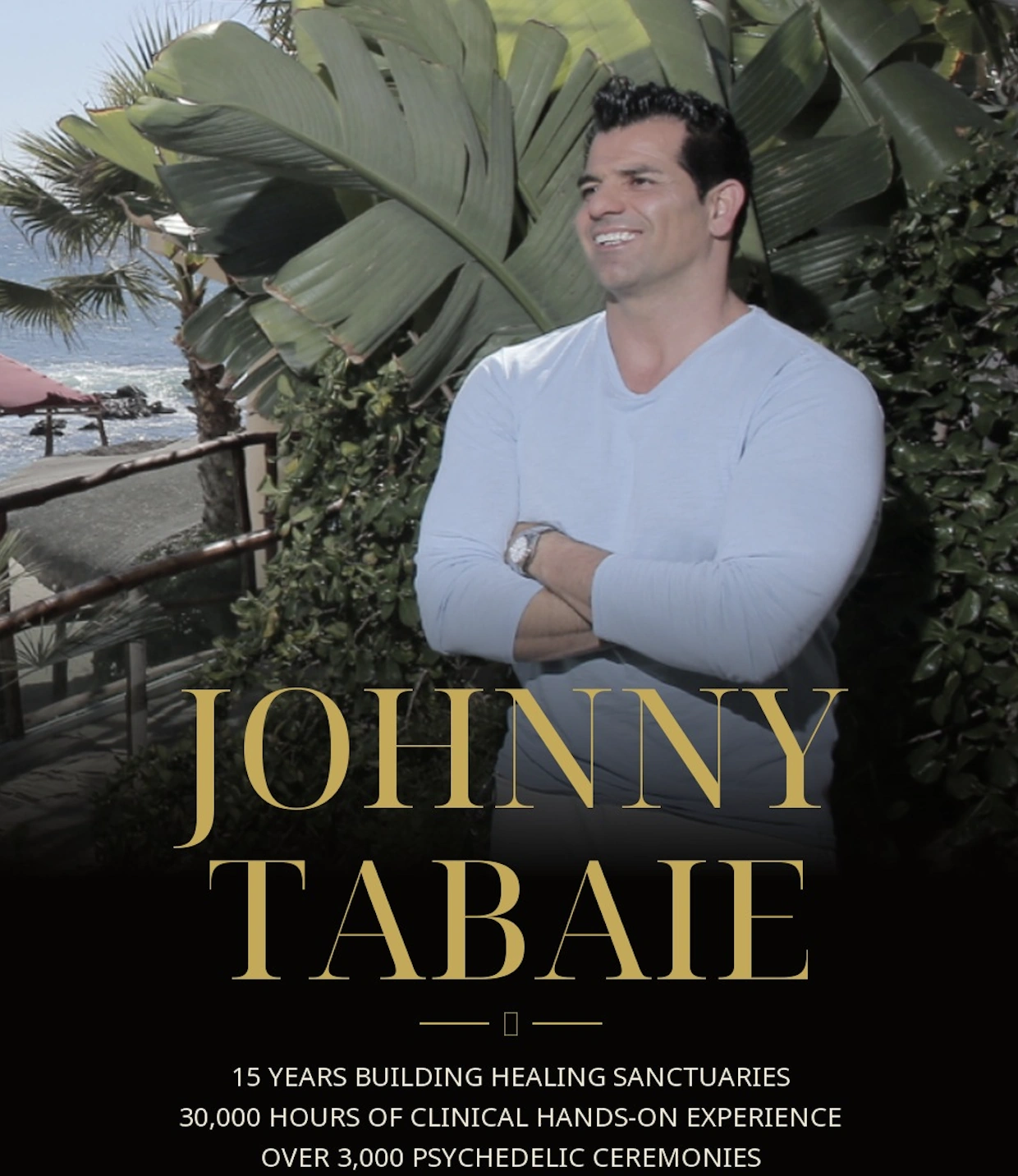
Meet the Founder, Johnny Tabaie
Johnny Tabaie is not a doctor. He is a self-taught researcher and educator. In 2001 his brother David died by suicide while in a conventional treatment center, on a medication with a documented suicide-risk warning. Johnny spent the next twenty years self-funding research into holistic and integrative medicine, used it to heal himself, and then built Holistic Sanctuary and Sanctuary Tulum so other families would have a medically supervised alternative.
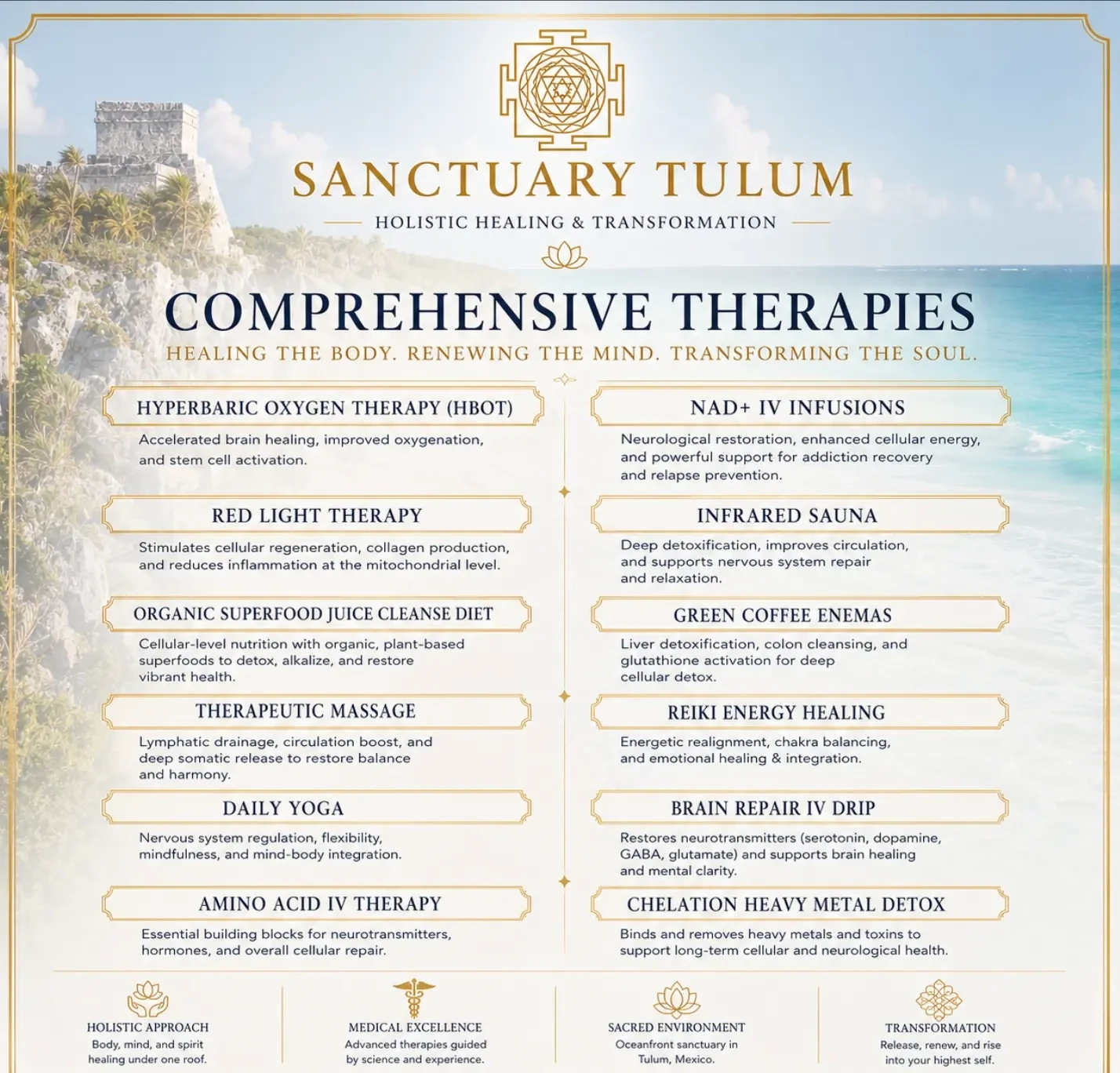
Pouyan Method™
The Pouyan Method™ is Johnny's proprietary, trademarked protocol. It combines medically supervised detox, nervous-system support and trauma-focused integration in a daily schedule built around one person. Depending on the client, that may include hyperbaric oxygen, IV nutrient therapy, bodywork, yoga, meditation and nutrition. Not every client receives every therapy. The plan is set after an individual medical review.
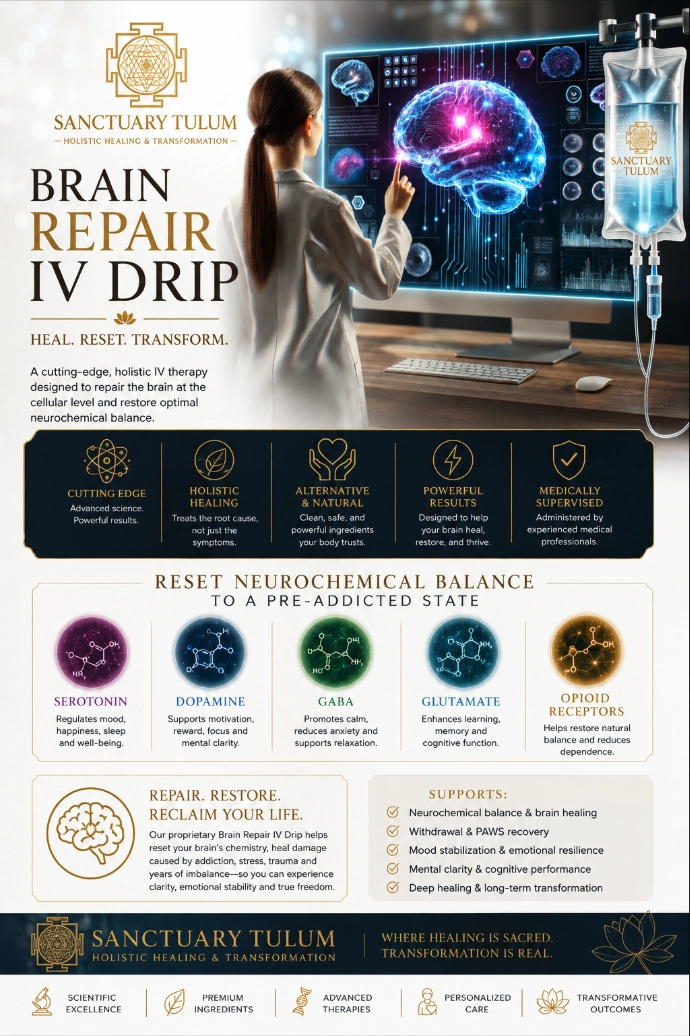
Brain Repair IV Drip Protocol
The Brain Repair IV Drip Protocol is a proprietary IV formula made from natural alkaloids, peptides and amino compounds. It is designed to support the brain and nervous system during detox from alcohol, opioids, stimulants and benzodiazepines, the stage where many people relapse. It is separate from our NAD+, glutathione and vitamin C IVs, and it is always given under medical supervision.
California provider profiles and advertised services
The eight profiles below include Southern California and Northern California options. Provider website descriptions are starting points, not independently verified endorsements. Check the exact facility address and distinguish detox, residential and outpatient services before comparing availability.
03Passages Malibu
Malibu, California
Family-run since 2001, Passages Malibu sits on ten acres above the Pacific and is one of the best-known names in California treatment. According to its website, the program is non-12-step and built around individual therapy rather than group meetings, with a stated 4:1 client-to-staff ratio. Clients may keep their phones and laptops, which matters to working professionals.
- ·Opened 2001
- ·Non-12-step, individual-therapy model
- ·Ocean-view estate
- ·Phones and laptops permitted
04Seasons in Malibu
Malibu, California
Seasons in Malibu has operated for about 18 years and treats both substance use and mental health conditions such as trauma, anxiety and depression. Its website says it is California-state licensed and CARF accredited, and that primary therapists hold doctorates. An "Executive Reset" track is aimed at founders and senior leaders who need to stay reachable.
- ·~18 years in operation
- ·CARF accredited (per its site)
- ·Doctorate-level primary therapists
- ·Executive track
05Cliffside Malibu
Malibu, California
Cliffside Malibu has run residential estates above the ocean for more than two decades. Its program is organized around the Stages of Change model, and it offers a "Discovery for Life" follow-up service that checks in with clients during their first year after discharge, according to its website.
- ·20+ years in operation
- ·Stages of Change model
- ·Ocean-view estates
- ·Structured first-year follow-up
06Ritz Recovery
Hollywood Hills, Los Angeles
Ritz Recovery keeps its residential census to fewer than a dozen clients across its Hollywood Hills homes. It publishes its credentials openly: Joint Commission and CARF accreditation and a California DHCS license, which makes it one of the easier programs on this list to verify.
- ·Fewer than 12 residents
- ·Joint Commission accredited (per its site)
- ·DHCS licensed
- ·Hollywood Hills setting
07Alta Mira Recovery
Sausalito, Bay Area
Alta Mira occupies a restored 1927 hotel in Sausalito, about fifteen minutes from San Francisco across the Golden Gate. It focuses on complex cases where addiction and mental health conditions overlap, and its website lists comprehensive neuropsychological testing as part of assessment.
- ·Historic Sausalito estate
- ·Co-occurring conditions focus
- ·Neuropsychological testing
- ·Bay views
08Bliss Recovery
Hollywood Hills, Los Angeles
Bliss Recovery runs two private residences in the Hollywood Hills, with roughly six clients per house. It offers detox, residential care and step-down programs under one clinical team, so the same therapist and physician follow a client from start to finish, according to its website.
- ·Two private residences
- ·About six clients per house
- ·Detox through aftercare
- ·Same team throughout
09Safe Haven Recovery
Beverly Hills, California
Safe Haven Recovery operates from a Beverly Hills estate and describes itself as Joint Commission accredited and DHCS licensed. It combines medically supervised detox, residential care and dual-diagnosis treatment, and it works with many PPO insurers.
- ·Beverly Hills estate
- ·Medically supervised detox
- ·Dual-diagnosis care
- ·PPO insurance accepted
10Summit Estate Recovery Center
Santa Clara County, California
Summit Estate serves Silicon Valley from residential facilities in the Santa Cruz Mountains, with outpatient options nearer San Jose. It offers medically monitored detox, residential care and a non-12-step track, so clients can step down without changing providers.
- ·Serves Silicon Valley
- ·Residential and outpatient
- ·Non-12-step option
- ·Medically monitored detox
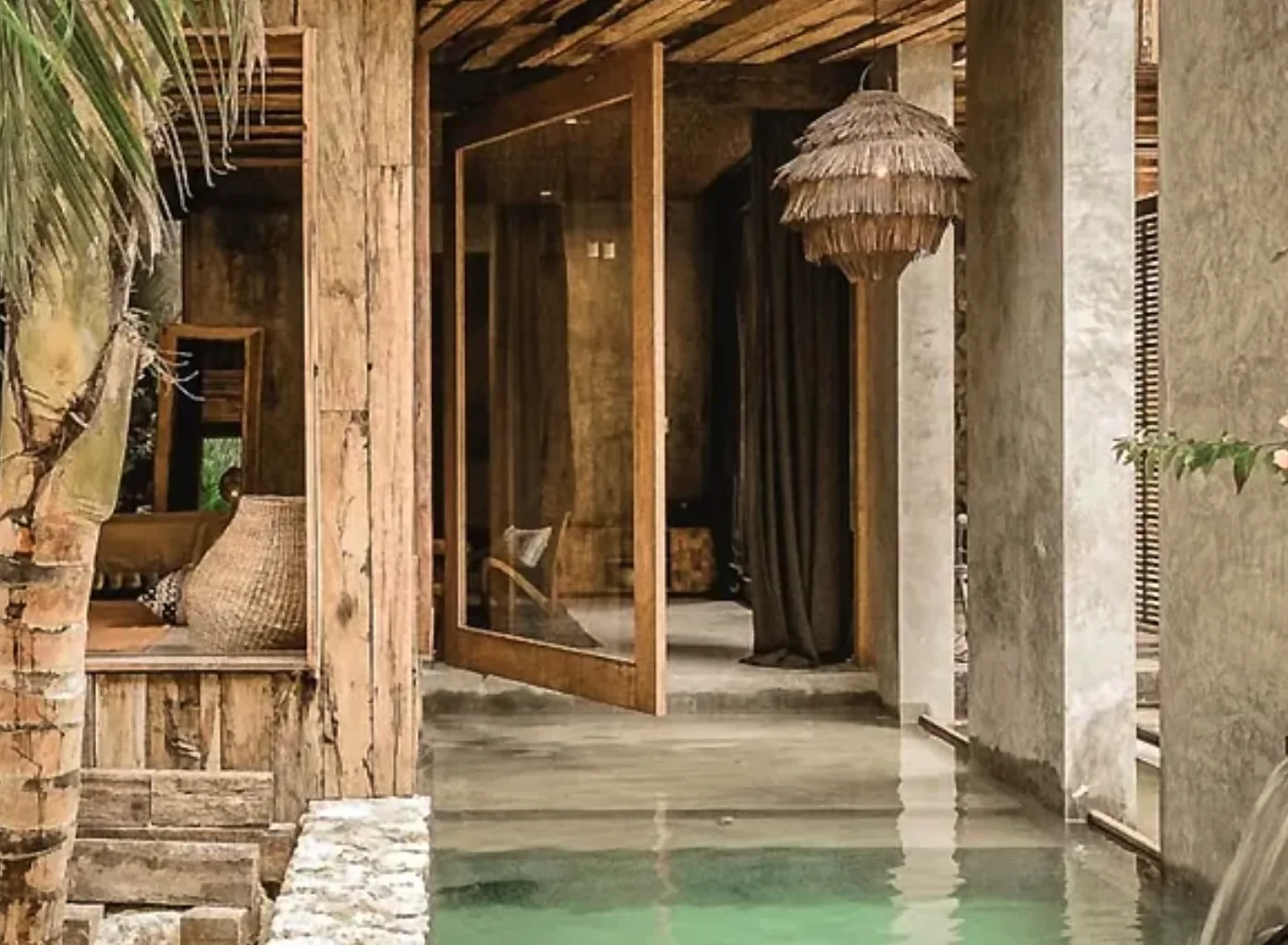
How we chose these programs
We use five comparison questions: how accommodation and census affect access; who delivers individual and group sessions; who provides medical coverage; what licensing and credentials can be checked; and how continuing care is arranged. We have not independently audited staff schedules, outcomes or every competitor's current license. These criteria help organize questions, not calculate a score or establish superiority.
The NIAAA Alcohol Treatment Navigator explains assessment, provider questions and cost considerations. Use clinical guidance to establish the appropriate care setting before comparing amenities. The supplied comparison artwork reflects advertised features; confirm each cell directly rather than treating it as independently verified research.
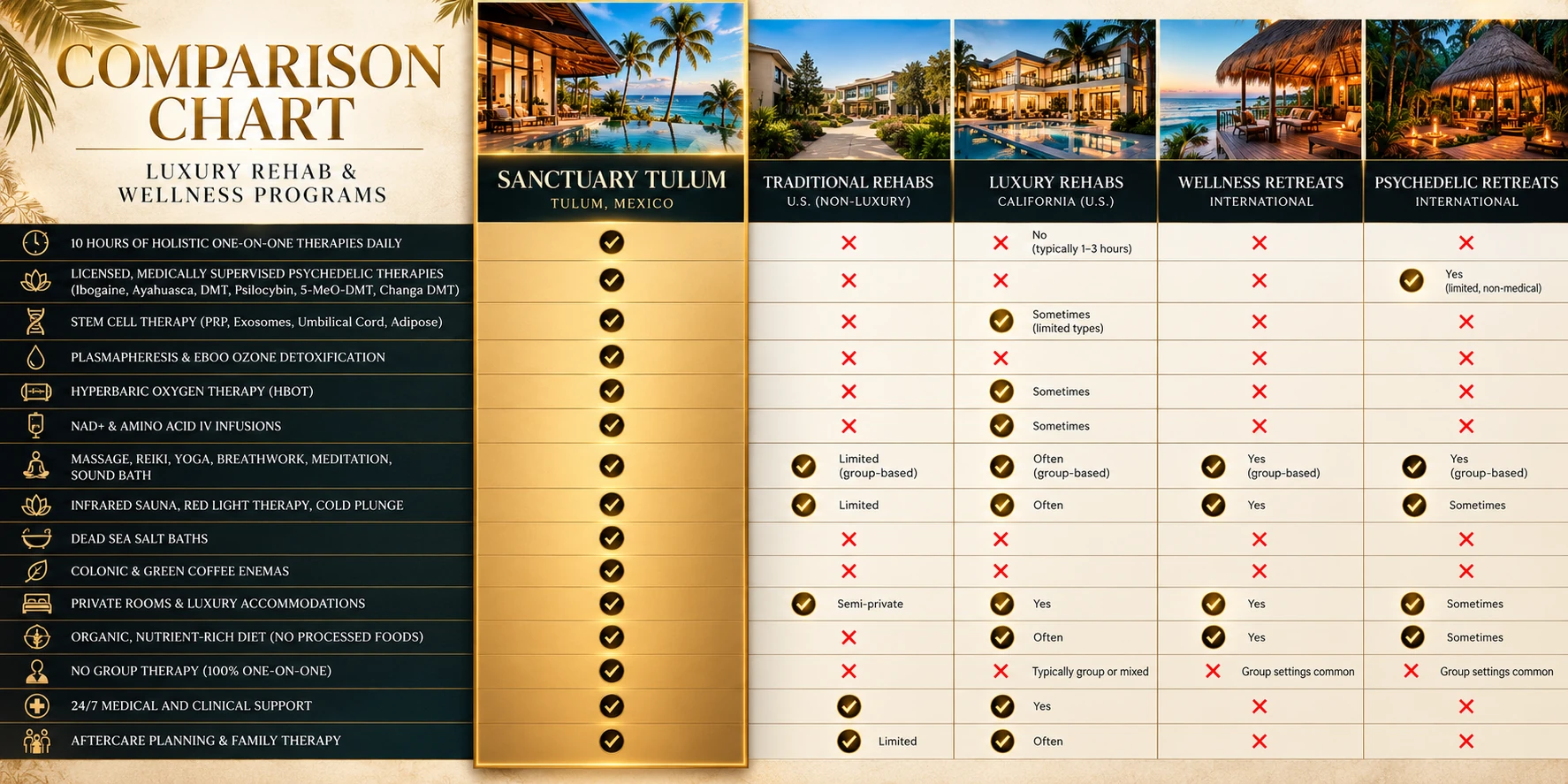
Founder-supplied comparison of advertised program features, not an independently audited ranking or medical recommendation. Sanctuary Tulum is based in Tulum and serves guests traveling from abroad, not at a local facility in the locations covered by these guides. Offerings vary by provider; confirm current services, credentials, legal availability, clinical evidence, risks and eligibility directly.
Luxury alcohol rehab and detox options for Californians
Alcohol withdrawal can be dangerous, and a qualified clinician should assess the appropriate setting before someone changes their drinking pattern or travels. ASAM's withdrawal guideline distinguishes withdrawal management from ongoing alcohol-use-disorder treatment. The National Institute on Alcohol Abuse and Alcoholism's Alcohol Treatment Navigator explains what high-quality care should include. Our luxury alcohol rehab program and our luxury detox center pages explain how Sanctuary Tulum handles both.

How to verify any California luxury rehab before you call
Start with licensing. Residential addiction programs in California are licensed by the Department of Health Care Services (DHCS). Then check accreditation with The Joint Commission or CARF.
Ask each program the same four questions: how many weekly sessions are individual; who provides medical coverage, including overnight; what room type is included; and who arranges care after discharge. Written answers make claims easier to check, but do not prove results. For the broader selection process, read our existing admissions-question guide and cost comparison guide.
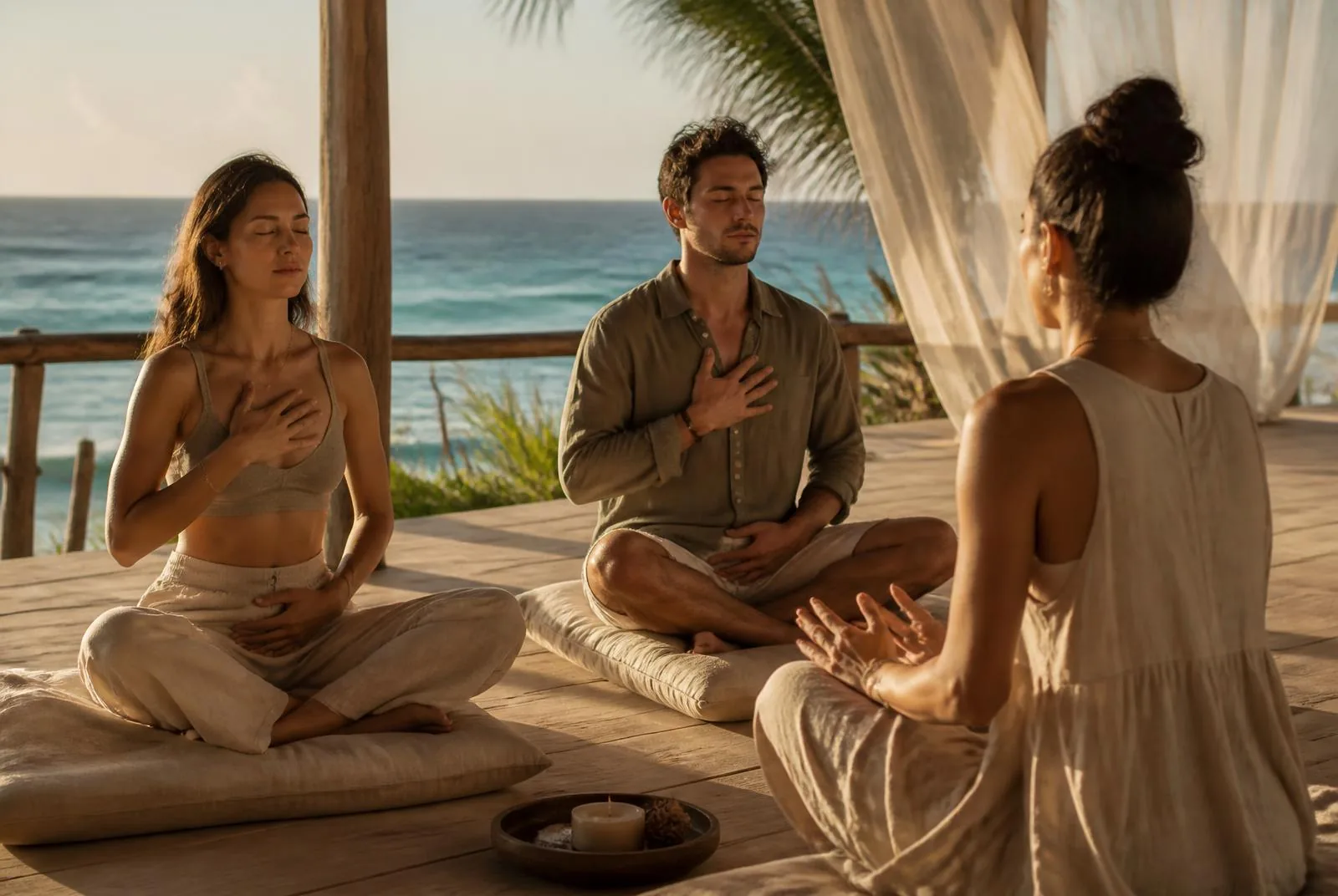
Staying close to home or traveling
A local program makes family visits easy. A program away from home removes the people, places and routines tied to drinking or drug use. Neither choice is right for everyone. For people whose careers depend on discretion, being far from home is often what finally makes treatment feel possible. Whichever you choose, the quality of one-on-one care matters far more than the zip code.
Looking for a specific city? See our guides to the best luxury rehabs in Los Angeles, the best luxury rehabs in San Francisco and the best luxury rehabs in Santa Clara County. For Florida, see the best luxury rehabs for Key Biscayne and Miami-Dade residents. You can also review our programs and pricing.
This article is educational and is not medical advice. Program details are drawn from each provider's public website as of October 2026 and may change. Sanctuary Tulum does not diagnose or treat disease and does not guarantee outcomes. If you are in crisis, call or text 988.