Depression at Global Scale
Depression is the single largest contributor to non-fatal disability worldwide. The World Health Organization estimates that approximately 280 million people are currently living with a depressive disorder, and the condition is a major driver of the roughly 720,000 suicides recorded globally each year1. In the United States alone, the National Institute of Mental Health reports that around 21 million adults — 8.4% of the adult population — experience at least one major depressive episode annually, with prevalence highest among adults aged 18 to 252.
This page is an overview of what the current evidence supports and where it is genuinely uncertain. It is not a promise of healing. It is meant to help a reader — or a family member trying to help someone — understand the actual state of depression treatment in 2026, and where structured psychedelic-assisted care fits inside that landscape. If you want a broader look at the modality itself, the psilocybin therapy program overview covers protocol structure in more depth.
These are not statistics that describe a fringe condition. They describe a public-health emergency that current first-line treatments have plainly not resolved. Prescribing rates for antidepressants have climbed steadily for two decades in most high-income countries, yet population-level indicators of depression, anxiety, and suicidality have moved in the opposite direction. That divergence is what drives serious clinical interest in mechanistically different interventions.

Why SSRIs Are Not Enough on Their Own
Selective serotonin reuptake inhibitors — Prozac, Zoloft, Lexapro, and their generics — became the standard-of-care intervention for major depressive disorder in the 1990s. They work by blocking the reuptake of serotonin in the synaptic cleft, gradually increasing available serotonin over weeks. For a meaningful minority of patients they produce clear benefit. For many others they produce partial response, tolerable but persistent symptoms, or side effects (sexual dysfunction, weight gain, emotional blunting, sleep disruption) that eventually drive discontinuation.
The most important dataset on real-world SSRI performance remains the NIMH-funded STAR*D trial, still the largest prospective depression treatment study ever conducted. STAR*D followed more than 4,000 patients through up to four sequential treatment steps. Only about one-third of patients achieved remission after the first medication trial, and cumulative remission across all four steps plateaued near 67%3. In other words, after multiple medications, medication combinations, and augmentation strategies, roughly one in three participants was still not in remission. Subsequent independent reanalyses of the STAR*D data have argued that even those numbers were optimistic.
The clinical picture worsens when patients try to come off these medications. A 2015 systematic review by Fava and colleagues catalogued a wide spectrum of discontinuation phenomena — including flu-like symptoms, sensory disturbances ("brain zaps"), anxiety, insomnia, and rebound depression — and concluded that SSRI withdrawal syndromes are more common, more severe, and more prolonged than pharmaceutical labeling suggested4. This is the reason a slow, medically supervised taper is a prerequisite for any psychedelic-assisted protocol, and the reason SSRI and antidepressant withdrawal requires its own clinical framework.
How Psilocybin-Assisted Therapy Is Structured
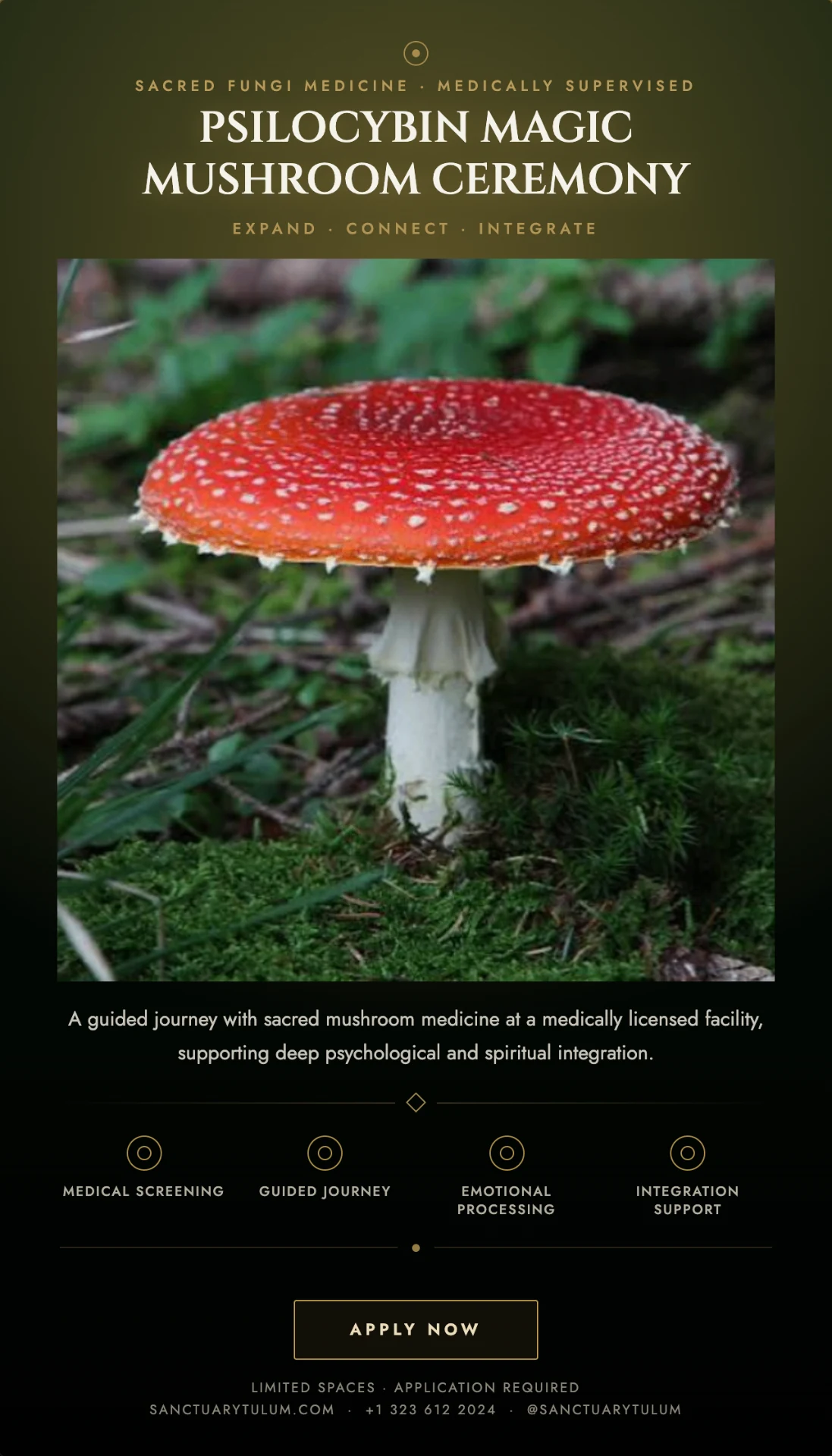
Psilocybin-assisted therapy is not a standalone drug treatment. It is a structured, three-phase process that combines a psilocybin session with preparatory psychotherapy and post-session integration. Clinical trials at Johns Hopkins, Imperial College London, and NYU have consistently shown rapid, sustained reductions in depression scores when this full arc — preparation, experience, integration — is delivered in a controlled setting.
- Preparation: medical screening, intention-setting, and therapeutic alliance built before dosing.
- Dosing session: supervised psilocybin administration in a calm, monitored environment with eye shades and curated music.
- Integration: follow-up sessions that help patients translate insights into durable behavioral change.
This model differs fundamentally from daily medication management. For a deeper look at the protocol, visit our psilocybin therapy program overview.
Treatment-Resistant Depression: The Population That Drives This Field
The clinical term "treatment-resistant depression" (TRD) is typically defined as major depressive disorder that has not responded to at least two adequate trials of different antidepressants. Estimates place TRD prevalence at roughly 30% of patients with MDD — a figure that maps closely to the STAR*D non-remission tail. These are the patients for whom the standard algorithm has already been exhausted, and they are also the population in which every recent psilocybin trial has produced its most striking effect sizes.
It matters that this is where the clearest evidence lives. Novel treatments in psychiatry historically get their first robust signal precisely in the treatment-resistant population, because ceiling effects and placebo response are lower. The fact that psilocybin has produced replicated effects in TRD — not just in mildly depressed or subclinical samples — is what has moved regulators, academic centers, and pharmaceutical developers to take the modality seriously. For a plain-English comparison against standard antidepressants, the psilocybin vs SSRIs breakdown summarizes the head-to-head data.
How Psilocybin Appears to Act on the Depressed Brain
Psilocybin is a naturally occurring tryptamine found in several fungal species. In the body it is rapidly dephosphorylated to psilocin, which crosses the blood-brain barrier and acts as a partial agonist at the serotonin 5-HT2A receptor, densely expressed on cortical pyramidal neurons. The subjective effects are well known. What is more interesting for depression is what happens at the network and cellular level.
Functional MRI studies from the Imperial College London group have shown that a single moderate-to-high dose of psilocybin decouples activity within the Default Mode Network — the constellation of brain regions (medial prefrontal cortex, posterior cingulate, angular gyri) implicated in self-referential thought, autobiographical memory, and rumination. DMN hyperconnectivity is one of the more reproducible neuroimaging findings in major depression. Psilocybin transiently flattens that hyperconnectivity and, in follow-up scans conducted days later, the DMN reorganizes into a state that correlates with symptomatic improvement.
At the cellular level, animal work — including preclinical studies from Yale and UC Davis groups — has demonstrated that a single dose of psilocybin can rapidly increase dendritic spine density in prefrontal cortex and upregulate Brain-Derived Neurotrophic Factor (BDNF). These are the same downstream markers implicated in ketamine's rapid antidepressant effect. Neuroplasticity, in this framing, is not a metaphor. It is a measurable biological event that appears to open a time-limited window during which experience — including therapeutic integration — can more readily reshape entrenched patterns.
This mechanistic picture is why every credible protocol pairs the pharmacological session with dedicated psychological support before and after. The window opens; what enters it matters.
The Clinical Trial Record
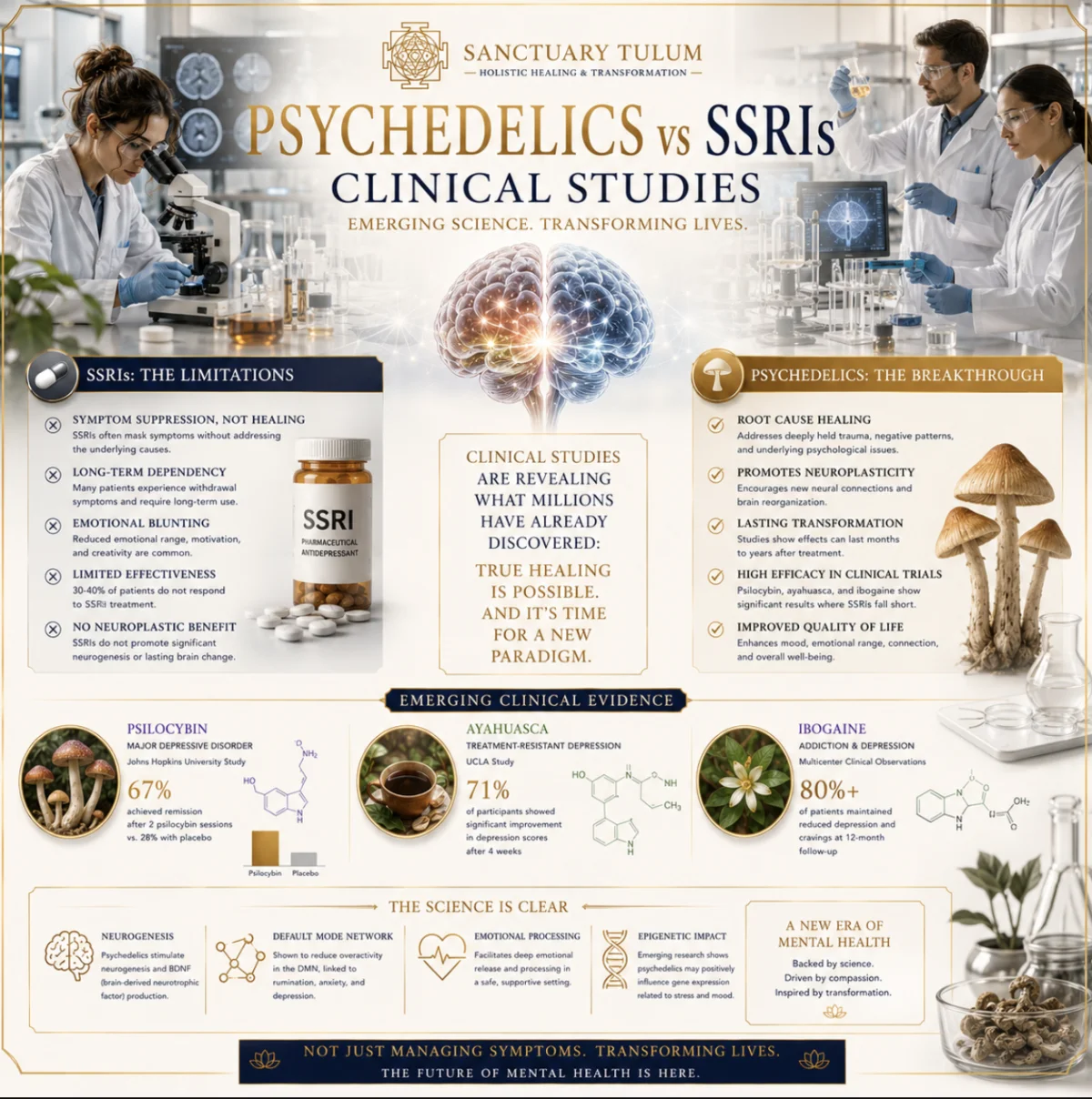
The modern era of psilocybin depression research began at Johns Hopkins and NYU in the mid-2010s, with initial trials in cancer-related depression and anxiety showing large, durable reductions in depressive symptoms after one or two sessions. Roland Griffiths and colleagues at Johns Hopkins subsequently extended this work into major depressive disorder proper. Their 2020 randomized trial reported that 71% of participants met the criterion for clinically significant response at four weeks and 54% met criteria for remission — magnitudes rarely seen in conventional antidepressant trials5.
The 2021 Carhart-Harris trial in the New England Journal of Medicine took a further step and ran psilocybin head-to-head against escitalopram, a widely prescribed SSRI, in patients with moderate-to-severe MDD6. Over six weeks, both arms produced comparable reductions on the primary QIDS-SR-16 outcome. On secondary outcomes — remission rate, well-being, work and social adjustment, anhedonia — psilocybin generally outperformed. The trial was not powered to prove superiority and does not license the claim that psilocybin is "better than SSRIs." It does firmly establish that a two-session psilocybin protocol is competitive with six weeks of daily SSRI pharmacotherapy on efficacy, and superior on tolerability metrics.
The largest randomized controlled trial to date was published by COMPASS Pathways in NEJM in November 20227. Two hundred thirty-three participants with treatment-resistant depression received a single dose of the company's synthetic psilocybin (COMP360) at 25 mg, 10 mg, or 1 mg (active control). At the three-week primary endpoint, the 25 mg arm showed a statistically significant reduction in MADRS depression scores compared with control, with response rates approximately doubled. Effect sizes attenuated by week twelve, and the trial documented adverse events including suicidal ideation and self-injurious behavior in a subset of participants. This is the honest reading: an efficacy signal in a difficult population, with real risks that argue for structured medical settings rather than casual or unsupervised use. A longer-form summary of these findings appears in the psilocybin for depression research review.
Independent teams have published converging results. A JAMA Psychiatry paper from Davis and colleagues reported large and rapid antidepressant effects in MDD, and multiple open-label follow-up datasets have found response persisting at six and twelve months in a subset of participants8. The signal is not driven by a single lab.
Durability, Relapse, and the Limits of a Single Session
One of the more interesting questions in the depression literature is how long the antidepressant response actually lasts. Traditional antidepressants are conceptualized as chronic-use medications: stop taking them and symptoms typically return within weeks. The psilocybin data pattern is different. In the Johns Hopkins 2020 trial, the majority of responders were still classified as responders at four weeks, and long-term follow-up published in 2022 found roughly three-quarters of the original responder group maintained clinically significant improvement at twelve months without any additional dosing. That is a fundamentally different pharmacological profile from a daily-dose model.
The COMPASS phase 2b data is more sobering on durability. The three-week efficacy signal at 25 mg attenuated by week twelve, and roughly a third of participants met criteria for sustained response at the later endpoint. Two interpretations coexist in the field. The first is that single-dose designs are underdosing the intervention — that the neuroplasticity window benefits from repeat exposure or a booster session, as the MDMA-PTSD program has shown. The second is that the amount and quality of integration work delivered after dosing is the primary determinant of durability, and that trials optimized for regulatory endpoints under-invest in that piece. Both hypotheses are actively being tested.
Measurement-Based Care in Depression Programs
One methodological improvement that separates serious modern depression protocols — psychedelic or otherwise — from older models is measurement-based care. Depression severity is tracked with validated instruments (PHQ-9, MADRS, QIDS, HAM-D) at admission and at multiple follow-up points, rather than relying on subjective clinical impression. This matters for two reasons. It gives a clinician real signal about whether an intervention is actually moving the needle for a given patient rather than trending on general expectations, and it lets programs report outcomes honestly rather than anecdotally.
Any depression program worth engaging with should be able to describe what instruments it uses, at what intervals, and what its aggregate outcome distribution looks like. Programs that market only testimonial-based success rates without validated measurement should be treated with the same skepticism warranted for any medical claim without data.
Neurochemical Reset as a Foundation for Mood Recovery
Depression is not only a psychological state. Long-term stress, medication exposure, substance use, and poor sleep all deplete the substrates the brain needs to regulate mood, energy, and cognition. The Brain Repair IV drip protocol is designed to restore those substrates — amino acids, NAD+, glutathione, vitamin C, and chelation support — while the therapeutic work addresses the patterns that maintain depression.
- Amino acid IV therapy: supplies precursors for dopamine, serotonin, and GABA to support balanced neurotransmitter production.
- NAD+ IV therapy: supports cellular energy repair and has been observed to reduce cravings, fatigue, and cognitive fog in addiction and mood disorders.
- Glutathione and vitamin C: provide antioxidant support during detoxification and reduce oxidative stress linked to depression.
- Chelation support: addresses heavy-metal burden that can impair neurological function and contribute to treatment resistance.
This biological layer does not replace psilocybin-assisted therapy or integration; it prepares the nervous system to respond to them. For a full breakdown of the protocol, see the Brain Repair IV Therapy page.
Depression Rarely Travels Alone
A significant fraction of adults meeting criteria for major depressive disorder also carry a trauma history that meets, or nearly meets, criteria for post-traumatic stress disorder. Longitudinal data suggest that unresolved trauma is one of the more reliable predictors of both depression onset and non-response to antidepressants. Any depression program that treats mood in isolation from trauma is engaging with only part of the clinical picture. This is why depression care at Sanctuary Tulum overlaps substantially with PTSD and trauma treatment in both assessment and protocol design.
Comorbidity also runs in the direction of substance use. Depression frequently drives self-medication with alcohol, benzodiazepines, or opioids, and prolonged substance exposure in turn drives neurochemical changes that deepen depression. A comprehensive assessment considers whether a patient's depression sits on top of an active substance-use disorder, medication dependency, or the tail end of a poorly managed taper — and sequences intervention accordingly. Attempting a psilocybin protocol while someone is still actively using alcohol daily, or in the acute phase of a benzodiazepine taper, is clinically unsound; those biological events need to be stabilized before neuroplasticity-based work can plausibly help. Program design therefore has to be sequenced, not parallel, when substances are in the picture, and admissions decisions reflect that hierarchy.
For a broader argument about why integrated biological and psychological work tends to outperform medication-only pathways in the comorbid depression-plus-substance population, the holistic vs medication-first comparison is a reasonable starting point.
How Sanctuary Tulum Approaches Depression Care
Sanctuary Tulum operates as a licensed medical facility in Mexico, delivering psilocybin sessions and adjunctive care under physician supervision. The framing is deliberately conservative: guests undergo medical and psychiatric screening, complete a supervised taper from serotonergic medications where indicated, engage in preparatory sessions with a dedicated clinical team, receive one or more dosing sessions in a controlled setting, and then work through weeks of structured integration. Biological support — nutritional IV protocols, sleep and metabolic optimization, movement, and nutrition — runs in parallel with the psychological work rather than in place of it.
The evidence for this modality does not support marketing claims like "guaranteed cure" or "100% success rate," and this page will not make them. What the data supports is that, for the right candidates, medically supervised psilocybin-assisted therapy produces meaningful reductions in depression that persist beyond the dosing event in a substantial subset — larger than the effects typically reported for standard antidepressants and achieved on a fundamentally different timescale. Program logistics, medical screening, and admissions are covered in more detail on the broader medically supervised luxury rehab page, and an index of every condition addressed within the program is available on our issues we treat overview.
References
- 1. World Health Organization. Depressive disorder (depression) — fact sheet. who.int/news-room/fact-sheets/detail/depression
- 2. National Institute of Mental Health. Major Depression — statistics. nimh.nih.gov/health/statistics/major-depression
- 3. National Institute of Mental Health. Sequenced Treatment Alternatives to Relieve Depression (STAR*D) study. nimh.nih.gov/funding/clinical-research/practical/stard
- 4. Fava GA, Gatti A, Belaise C, Guidi J, Offidani E. Withdrawal symptoms after selective serotonin reuptake inhibitor discontinuation: a systematic review. Psychotherapy and Psychosomatics, 2015. PubMed: pubmed.ncbi.nlm.nih.gov/25721705
- 5. Johns Hopkins Center for Psychedelic and Consciousness Research. Depression research program. hopkinspsychedelic.org/depression
- 6. Carhart-Harris R, Giribaldi B, Watts R, et al. Trial of Psilocybin versus Escitalopram for Depression. New England Journal of Medicine, 2021;384:1402-1411. nejm.org/doi/full/10.1056/NEJMoa2032994
- 7. Goodwin GM, Aaronson ST, Alvarez O, et al. Single-Dose Psilocybin for a Treatment-Resistant Episode of Major Depression. New England Journal of Medicine, 2022;387:1637-1648. COMPASS Pathways trial summary: compasspathways.com/our-work/comp360-psilocybin-treatment-in-trd
- 8. Davis AK, Barrett FS, May DG, et al. Effects of Psilocybin-Assisted Therapy on Major Depressive Disorder: A Randomized Clinical Trial. JAMA Psychiatry, 2021. jamanetwork.com/journals/jamapsychiatry/fullarticle/2777389
- 9. Nature Medicine, 2022. Neural correlates of the psychedelic experience and antidepressant response. nature.com/articles/s41591-022-01744-z
This page summarizes published clinical evidence for educational purposes. It is not medical advice and does not replace evaluation by a qualified physician.