Immersive Healing
Trauma Retreat: Immersive Healing on the Tulum Coast
A retreat format built for people whose trauma has outlasted the weekly therapy hour — somatic, nature-based, and medically supervised.
Why the Weekly Hour Isn't Enough
Conventional trauma care is delivered in fifty-minute increments, once a week, wedged between the commute and the school run. For many people that structure is sufficient. It fails a specific group: those whose nervous systems never leave a state of alert long enough to process anything at all. By the time the session begins, the guard is up; by the time the guard comes down, the hour is over and the drive home starts the cycle again.
A retreat inverts that ratio. Instead of one protected hour surrounded by an unprotected week, the entire environment becomes protected for a period of weeks, and care becomes continuous rather than episodic. At Sanctuary Tulum — operating since 2011 — that means one-to-one work only, no group therapy, and a small number of clients on the property at any time. If your primary need is diagnosis-led clinical care, our PTSD treatment page covers formal assessment and symptom-targeted protocols in more depth; many clients ultimately combine both approaches inside the retreat format.
How Trauma Persists in the Nervous System
Trauma is not simply a memory that a person carries; it is a pattern the nervous system adopts and then struggles to switch off. The National Institute of Mental Health describes hyperarousal — an ongoing state of physiological alert — as one of the core symptom clusters of trauma-related conditions, alongside intrusive re-experiencing and avoidance. In practice this shows up as an exaggerated startle response, difficulty falling or staying asleep, irritability, and a baseline sense that something is about to go wrong even in objectively safe settings.
Sleep is often the clearest marker. The VA/DoD National Center for PTSD notes that disrupted sleep architecture — fragmented REM sleep, nightmares, frequent waking — is both a symptom of trauma and a factor that keeps the threat-detection system switched on the following day. A body that never gets uninterrupted rest cannot down-regulate, and a nervous system that never down-regulates cannot process material that requires calm to metabolize. This is the mechanical reason a retreat's first task is rarely the trauma itself; it is sleep, food, movement, and a physical environment that no longer requires vigilance.
What Makes Traumatic Stress Different from Ordinary Stress
Ordinary stress has an off switch. A stressful deadline, a difficult conversation, a bad week — the autonomic nervous system mobilizes the sympathetic branch, the body does what it needs to do, and once the demand passes, the parasympathetic system brings heart rate, blood pressure, and muscle tension back to baseline. Traumatic stress interrupts that return. The threat-detection circuitry, centered on the amygdala and its connections to the brainstem, keeps firing long after the danger has passed, and the prefrontal regions that would normally down-regulate that alarm signal are, under chronic threat, less able to do so. The result is a nervous system stuck in one of two states: sympathetic dominance, where the body runs hot — racing heart, shallow breathing, irritability, a body that startles at ordinary sounds — or dorsal-vagal shutdown, a lower-energy collapse marked by numbness, fatigue, dissociation, and a kind of flat withdrawal from the world. Many people who have lived with trauma for years cycle between the two rather than settling into either, which is part of why the condition is so exhausting to live inside.
The Mayo Clinic describes how this dysregulation also distorts memory and threat appraisal: intrusive memories intrude with the same physiological urgency as the original event, while ordinary, safe stimuli — a smell, a tone of voice, a crowded room — can be misread by a hypervigilant system as danger. The American Psychological Association notes that this recalibration of the threat-appraisal system is a defining feature of trauma rather than a character flaw or an overreaction, which matters clinically: the work is not to convince someone their alarm is irrational, but to help the nervous system itself recalibrate what counts as safe.
Chronic activation also has a body cost that outlasts the psychological symptoms. Sustained sympathetic arousal is associated with elevated inflammatory markers, and many people carrying long-term trauma report somatic pain — tension headaches, jaw clenching, gut symptoms, chronic back and neck pain — that has no clear orthopedic cause and does not resolve with conventional pain management alone. None of this is presented here as a diagnosis; it is context for why a program built only around talk, without addressing sleep, inflammation, and the body's baseline arousal level, tends to plateau.
Why This Is Not a Group Process
Group-based trauma processing has a long history in outpatient and inpatient psychiatry, and it works well for people who are ready to be witnessed by peers. It is not the model here. Retelling a traumatic history in front of others, on a schedule set by a facilitator rather than by the client's own regulation, can retraumatize before it heals — particularly for people whose trauma involves betrayal, exploitation, or humiliation in front of a group in the first place.
Sanctuary Tulum's model is one-to-one across every clinical and somatic modality. There is no shared timetable, no cohort moving through the same curriculum, and no requirement to disclose anything to anyone but the clinician or practitioner directly in the room. Pacing is set by the individual nervous system rather than by a group's slowest or fastest member. This is slower to scale and more expensive to run than a cohort model — it is also, for this population, the more defensible clinical choice.
Trauma Rarely Travels Alone
Very few clients arrive with trauma symptoms in isolation. Depression, generalized anxiety, and insomnia commonly develop alongside prolonged traumatic stress, and each one tends to reinforce the others: sleeplessness worsens mood and concentration, low mood reduces the energy needed to regulate anxiety, and anxiety itself keeps the nervous system too activated to sleep. Where mood symptoms are prominent, care is coordinated with the approach described on our depression treatment page rather than treated as an afterthought to the trauma work.
Substance use and medication dependency are the other pattern seen repeatedly. Alcohol, cannabis, benzodiazepines, and sleep medication are common self-management strategies for a nervous system that will not settle on its own, and by the time someone reaches a retreat, the substance itself has often become a second problem layered on the first. Where benzodiazepine dependence is present, any tapering is planned and supervised medically — this is not something a retreat schedule can safely accelerate — and our benzodiazepine withdrawal page describes what a medically supervised taper actually involves. Naming these overlapping conditions honestly, rather than treating trauma as the only variable in the room, is part of what an accurate intake process looks like.
Time, safety, and continuous individualized attention are the three things trauma work most often lacks. A retreat is built to supply exactly those.
Sanctuary Tulum
Somatic Work: Ocean, Cenote, and the Body's Own Signals
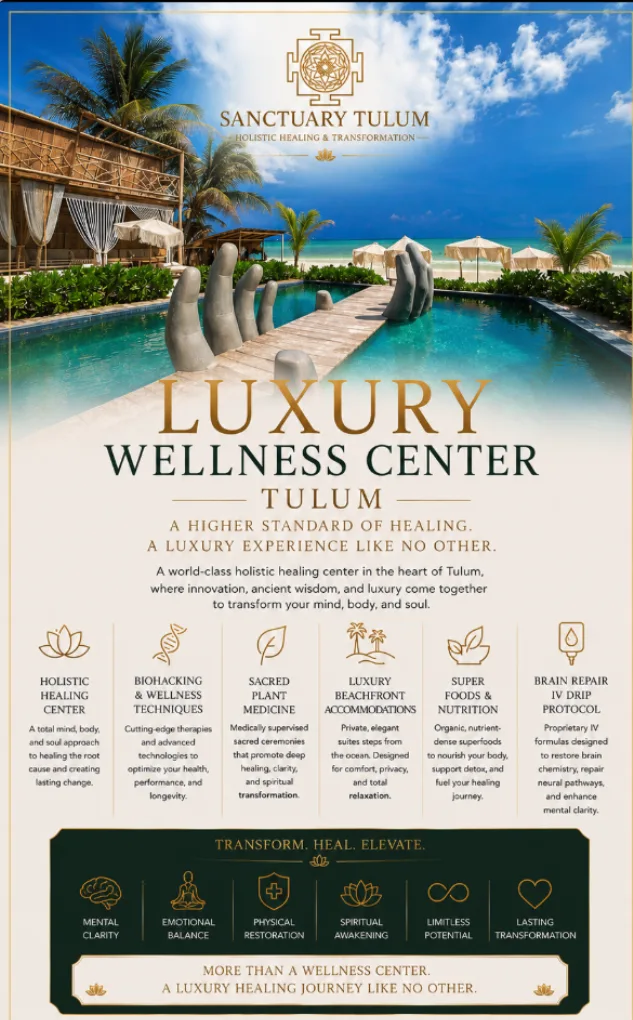
Trauma is stored and expressed in the body, so a substantial part of the program works there directly rather than through conversation alone. Days are structured around water: early swims, cenote immersion, cold exposure, and long unstructured hours where the only requirement is to be present. Clients repeatedly describe the freshwater cenotes — cool, silent, entirely enclosed — as a point where the body finally registers safety. That is a description of what the setting reliably does to arousal levels, not a clinical claim about cure.
SAMHSA's framework for trauma-informed care places physical and emotional safety as the first condition of any effective intervention. Daily practice adds breathwork, one-to-one yoga therapy, therapeutic massage and bodywork, and guided meditation. Controlled breathing practice in particular has been studied in randomized trials — a 2023 trial published in Cell Reports Medicine found brief daily breathwork produced measurable improvements in mood and reductions in respiratory rate compared with mindfulness meditation alone.
Medically Supervised Plant Medicine Work, Where Appropriate
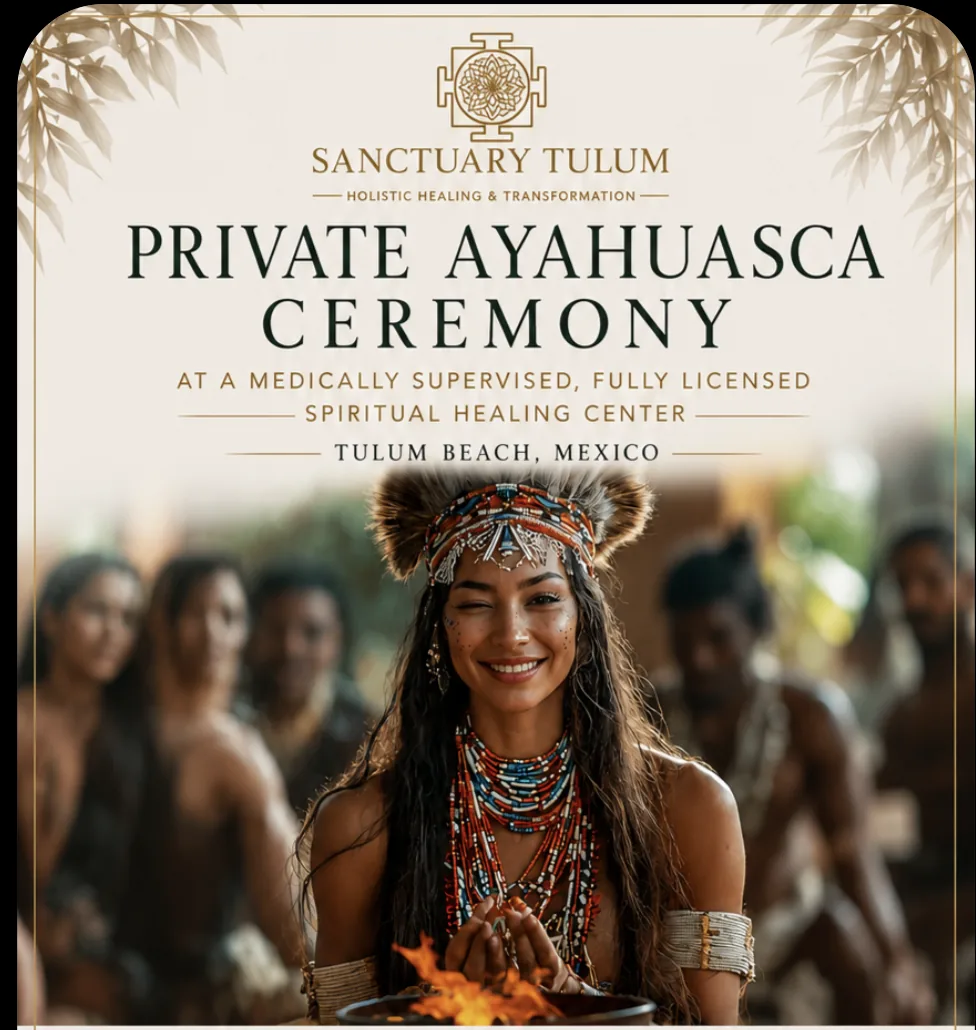
Some clients also work with medically supervised sacred plant medicine as part of their stay; others do not, and it is never a precondition of admission. That decision follows cardiac screening, medication review, and psychological assessment conducted by licensed medical staff, and it can be declined by the medical team even where a client requests it, if the history makes it unsuitable. Founder Johnny Tabaie developed the Pouyan Method™, a self-taught practitioner's framework for integrating this kind of work with medical oversight and structured integration — it is a trademarked approach, not a patented medical treatment, and it does not replace licensed psychiatric or medical care.
If you want to understand the ceremony format and its safety protocols in full before deciding whether it belongs in your plan, our ayahuasca retreat page walks through screening criteria, contraindications, and what a ceremony night actually involves.
What Screening Actually Covers
Screening for plant medicine work is deliberately conservative, and it is treated as a medical decision rather than a formality. A cardiac history is reviewed because several plant compounds place demands on the cardiovascular system that are unsafe for people with certain pre-existing conditions. Current and recent medications are reviewed with particular attention to SSRIs, SNRIs, and MAOIs: combining these classes with certain plant medicines carries a documented risk of serotonin syndrome, and in many cases a supervised medication washout period — planned by a physician, never self-managed — is required before any ceremony can be considered safe. Psychiatric history matters equally: a personal or family history of psychosis, bipolar disorder with mania, or certain dissociative conditions can make this work inappropriate regardless of how motivated a client is to proceed.
None of this screening is designed to be an obstacle for its own sake. It exists because the honest answer, for a meaningful number of people who ask about plant medicine work, is that it is not the right modality for them — and the rest of the program, built around somatic work, clinical therapy, and integrative medicine, still stands on its own without it.
The Supporting Therapy Stack: What Each Modality Is Designed to Support
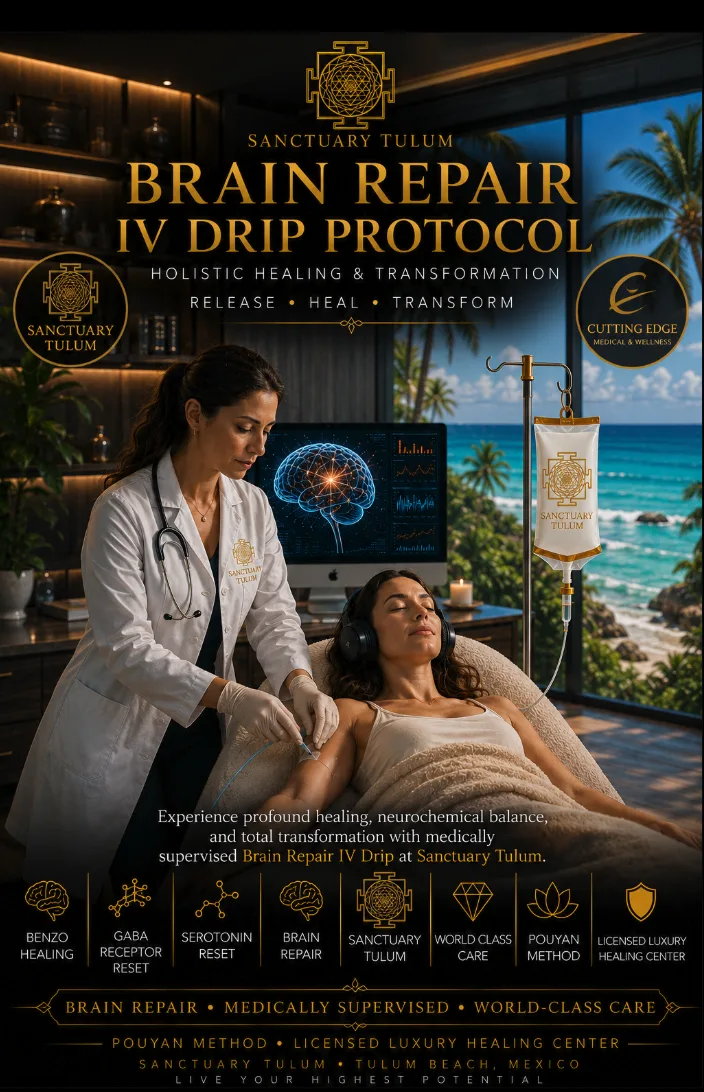
Every integrative therapy offered at Sanctuary Tulum is prescribed for a reason connected to what trauma does to the body, and none is offered as a stand-alone cure. The Brain Repair Protocol IV is a proprietary, nature-derived formula — distinct from NAD+ IV therapy — designed to support cognitive and nervous-system recovery alongside the rest of the protocol. NAD+ IV therapy is offered separately and is used to support cellular energy and general recovery during an intensive stay. Hyperbaric oxygen therapy delivers pressurized oxygen under medical supervision to support tissue and cognitive recovery, and physician-supervised ozone therapy is offered where screening supports its use.
Structured cold exposure and infrared sauna sessions are used alongside somatic work to give clients a controlled, repeatable experience of activating and then settling the nervous system — useful practice for a body that has forgotten what safe deactivation feels like. One-to-one massage and bodywork, private yoga therapy, and daily meditation and breathwork are paced to the individual rather than delivered on a class schedule. Whole-food, anti-inflammatory nutrition supports a body under physiological strain throughout the stay. None of these modalities is applied universally, and licensed medical staff determine which belong in a given client's plan.
The Supporting Therapy Stack
Licensed medical staff oversee each of these where clinically appropriate. No modality is applied universally, and every client's plan is different.
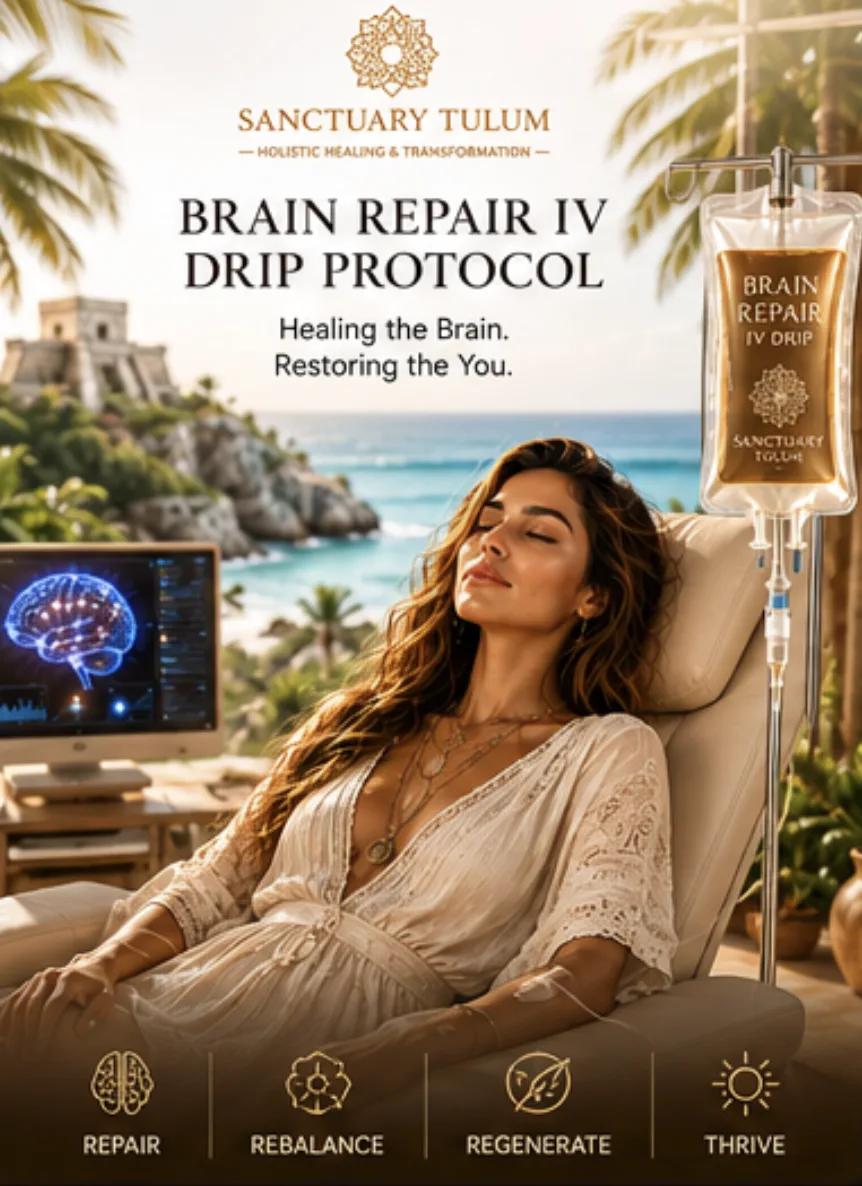
Brain Repair Protocol IV
A proprietary, nature-derived IV formula designed to support cognitive and nervous-system recovery alongside the rest of the protocol.
NAD+ IV Therapy
A separate IV protocol used to support cellular energy and recovery during intensive stays.
Hyperbaric Oxygen Therapy
Pressurized oxygen sessions used under medical supervision to support tissue and cognitive recovery.
Ozone Therapy
Physician-supervised ozone protocols offered where screening supports their use.
Cold Plunge & Infrared Sauna
Structured contrast exposure used alongside somatic work to shift arousal and breathing patterns.
Massage & Bodywork
One-to-one therapeutic bodywork integrated into the daily rhythm.
Yoga Therapy
Private, trauma-aware movement practice paced to the individual.
Meditation & Breathwork
Daily guided practice supporting nervous-system regulation.
Superfood Nutrition
Clean, whole-food, anti-inflammatory meals designed to support the body through an intensive stay.
The Arc of a Stay: Week by Week
The first days are about baseline, not breakthrough. Arrival includes medical intake, a review of history and current medication, and simply letting travel fatigue and hypervigilance settle. Most clients notice, without being told to expect it, that the first uninterrupted sleep in months happens somewhere in this window — the byproduct of a genuinely safe environment rather than of any specific technique.
Stabilization follows: consistent sleep and meal rhythms, daily movement and breathwork, and the first one-to-one clinical sessions, which at this stage focus on building the working relationship and understanding the full history rather than confronting the most difficult material. Only once sleep, mood, and daily regulation have improved does the program move into the deepening phase — longer clinical sessions, more intensive somatic work, and, for clients whose screening supports it, medically supervised plant medicine work. This is deliberately the slowest phase to schedule and the one most protected from interruption.
The final phase is integration and return planning: structured sessions to process what surfaced, a concrete plan for sleep, movement, and support once home, and honest conversation about which professionals — a therapist, a psychiatrist, a primary care physician — need to be in place before departure rather than arranged afterward. Length of stay is set individually rather than as a fixed package, and this arc can extend or compress depending on what the first weeks reveal.
Integration and Aftercare
Integration is the part most retreats underweight. Insight that arrives during an intense session tends to fade unless it is written down, spoken through, and translated into something concrete about how a person lives afterward. Each phase of a stay closes with structured integration work: sessions to process what surfaced, practical planning for the return home, and honest conversation about what will need continued support afterward.
Aftercare planning is deliberately unglamorous and specific: a realistic sleep schedule, a movement practice that survives contact with an ordinary week, nutrition that does not depend on a private chef, and a plan for talking to the people closest to the client about what has changed and what hasn't. Relationships often need their own adjustment period — partners and family members build expectations around a "fixed" version of someone that a single stay, however intensive, rarely delivers. Healing from trauma is not linear; setbacks, flat weeks, and the return of old symptoms under stress are normal rather than evidence that the work failed, and clients are told this plainly before they leave rather than discovering it alone.
Stays generally run from four weeks to several months, set during medical and psychological screening rather than sold as a fixed package, and adjusted as needed. Clients returning to demanding professional lives sometimes structure this alongside our executive rehab track, and those whose trauma sits alongside substance use often combine this work with holistic addiction treatment or a broader functional medicine retreat approach. Mood symptoms that persist alongside trauma are addressed directly — see our depression treatment page for how that work is structured.
Safety, Medical Oversight, and Who This Is Not For
Immersive work is only appropriate when it is supervised. Intake includes medical screening, a review of current medications, and a cardiac and psychiatric history, and licensed medical staff oversee every therapy delivered on the property. Medication history is reviewed before admission, and some medications are contraindicated for specific modalities; nothing is changed, tapered, or discontinued without physician oversight, and clients should never adjust prescribed medication on their own in preparation for a stay. Certain histories — active psychosis, some cardiac conditions, particular medication combinations — make specific modalities unsuitable, and in those cases the plan is adjusted or admission is declined rather than proceeding regardless.
This program is not appropriate for someone in acute crisis, experiencing a medical emergency, or in an active psychiatric emergency, including active psychosis or acute suicidality — that need should go to local emergency services or a crisis line immediately, and to a personal physician for any ongoing medical condition that requires urgent management. A retreat is also not a substitute for an existing treatment relationship; clients under active psychiatric or medical care are encouraged to keep their own physician and therapist informed before and after a stay, and admissions staff coordinate with those providers wherever a client consents to it.
Founder Johnny Tabaie is a self-taught practitioner and educator, not a physician; all medical care on the property is administered by licensed clinicians. A retreat is not a holiday with a therapist attached. For clients who are stable enough for immersive work, admissions begins with a confidential conversation, moves to medical and psychological screening, and results in an individualized plan and length of stay; pricing and package structures are outlined on our packages and pricing page, and next steps can be started through our contact page.
To see how a trauma-focused stay fits into the wider range of programs offered at Sanctuary Tulum, or to compare this format against a broader residential model, our luxury residential rehab overview is a useful starting point.