Why Traditional Alcohol Rehab Fails
Conventional alcohol rehabilitation programs have notoriously low success rates. Most facilities rely on group therapy, 12-step models, and pharmaceutical interventions that manage symptoms without addressing the underlying causes of alcohol dependency. At Sanctuary Tulum, our luxury alcohol rehab takes a fundamentally different approach.
Alcohol addiction is rarely just about alcohol. It's typically rooted in unresolved trauma, biochemical imbalances, nutritional deficiencies, and emotional pain. Our Pouyan Method addresses all of these layers simultaneously, creating the conditions for genuine, lasting recovery without reliance on substitute medications.
Our Approach to Luxury Alcohol Rehab
Our luxury alcohol rehab program begins with a comprehensive medical detox overseen by experienced physicians. From there, we implement a personalized healing protocol:
- • Brain Repair IV Drip — proprietary neurochemical reset protocol to reset GABA and glutamate receptors damaged by alcohol
- • NAD+ IV therapy for cellular energy and metabolic repair (separate therapy from Brain Repair IV)
- • Stem cell therapy for liver and brain cellular regeneration
- • Medically supervised ibogaine treatment to reset addiction patterns at the neurological level
- • Medically supervised ayahuasca ceremonies for deep emotional trauma release
- • Amino acid and vitamin IV protocols for nutritional support
- • Breathwork, cold plunge, and energy healing for nervous system regulation
The Private Alcohol Recovery Experience
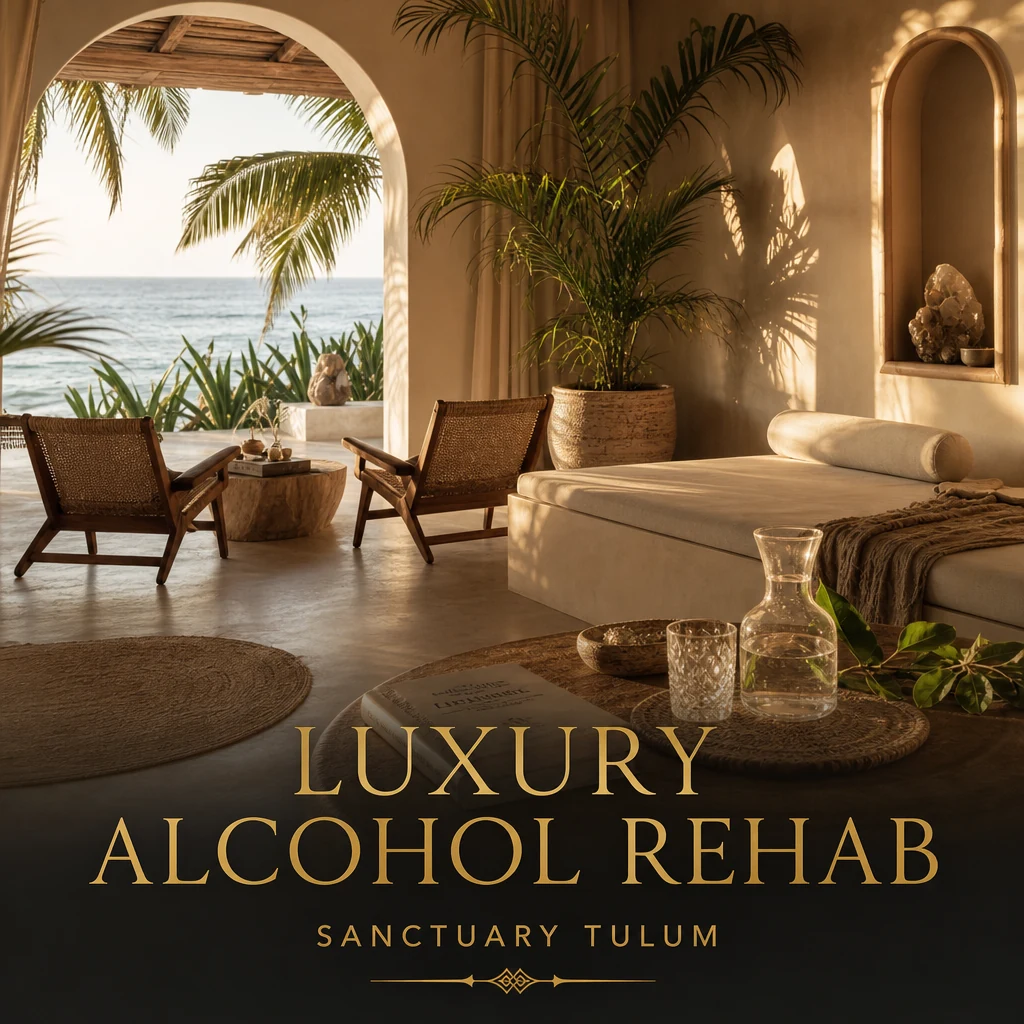
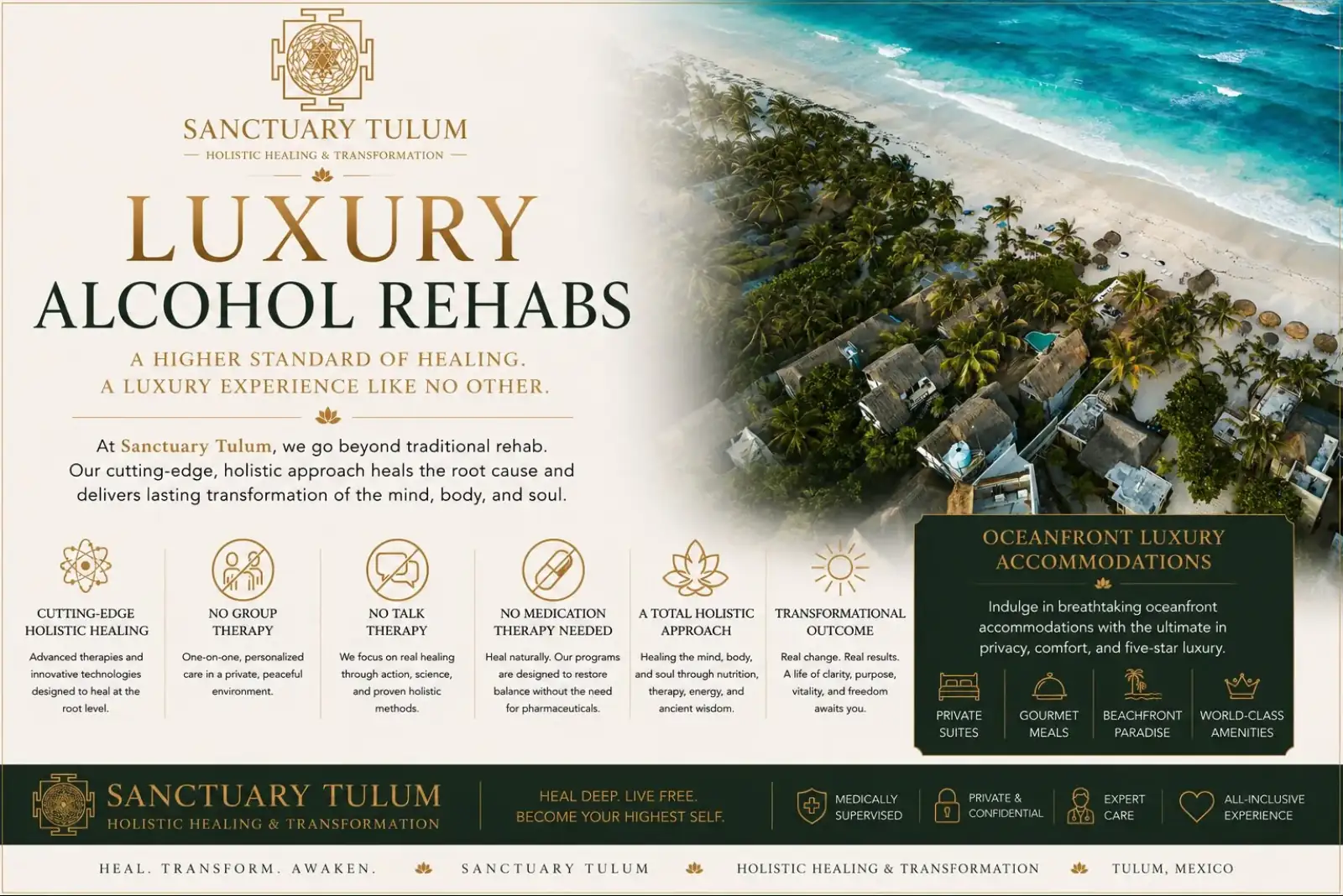
Sanctuary Tulum delivers a private oceanfront healing environment with dedicated one-on-one care, organic nutrition, and physician-supervised detox — structured around recovery from alcohol dependency rather than symptom suppression.
Unlike conventional 28-day programs, our luxury alcohol rehab protocols are tailored to your biology and history. Most guests choose programs between 4 and 16 weeks. Sanctuary Tulum integrates Brain Repair IV, regenerative therapies, and the Pouyan Method™; plant-medicine options are considered separately after medical screening.
Understanding Alcohol Use Disorder at the Biochemical Level
Chronic alcohol consumption progressively damages the central nervous system by downregulating GABA receptors (the brain's primary calming neurotransmitter system) while upregulating glutamate activity (the excitatory system). This neurochemical imbalance is the reason acute alcohol withdrawal produces tremors, seizures, and — in severe cases — delirium tremens, a medical emergency with meaningful mortality when unsupervised. Long-term drinking also depletes B-vitamins (particularly thiamine), disrupts liver enzyme function, drives systemic inflammation, and damages the gut microbiome, which in turn perpetuates cravings and mood disturbance through the gut-brain axis.
A luxury alcohol recovery program that only addresses behavior — through talk therapy, group meetings, or "sober coaching" — leaves the underlying neurobiology unhealed. That is why relapse remains the norm across the industry. Sanctuary Tulum's protocol is designed to physiologically repair what alcohol damaged: reset the GABA/glutamate axis, restore mitochondrial function through NAD+ and amino acid infusions, replete micronutrients, and support liver regeneration through medical-grade nutrition and IV therapies. Only once the biology is stabilized can the emotional and spiritual dimensions of dependency be meaningfully addressed.
The 24/7 Medically Supervised Alcohol Detox
Alcohol is one of the few substances where unsupervised withdrawal can be fatal. For that reason, our luxury alcohol rehab begins with a physician-directed medical detox conducted on-site at our licensed facility. Vital signs, hydration, electrolytes, and CIWA-Ar withdrawal scoring are monitored continuously by our medical team. Rather than defaulting to long-term benzodiazepine substitution, we use targeted IV amino acid protocols, magnesium and thiamine repletion, natural GABAergic support, and Brain Repair IV to stabilize the nervous system while the body clears alcohol safely.
Guests who arrive on benzodiazepines prescribed for alcohol-related anxiety are transitioned carefully under supervision — we do not force abrupt discontinuation of dangerous medications. For a detailed look at that process, see our benzodiazepine withdrawal protocol.
Who This Program Is For
Our luxury alcohol rehab serves U.S. residents who have tried conventional 30-, 60-, or 90-day rehabs, outpatient programs, or medication-assisted treatment and continue to relapse — as well as high-functioning professionals, executives, and public figures who require complete privacy, single-occupancy accommodations, and an environment free from group processing. It is also appropriate for guests whose alcohol use is layered with co-occurring depression, anxiety, PTSD, insomnia, or unresolved trauma, since our integrated protocol addresses these factors together rather than referring them out to separate providers.
Guests with active suicidal ideation, unstable psychiatric conditions requiring inpatient hospitalization, or medical conditions that contraindicate travel are directed to appropriate stateside crisis care first. Our clinical intake team reviews every applicant individually to confirm the program is a genuine clinical fit before admission.
What a Week in Our Luxury Alcohol Rehab Actually Looks Like
The first 72 hours are dedicated to physician-directed medical detox with continuous vitals, hydration, electrolyte management, and CIWA-Ar withdrawal scoring. Once acute-phase risk stabilizes, the daily rhythm expands to include a morning IV protocol (typically Brain Repair IV, amino acids, magnesium, or B-vitamin repletion), mid-morning hyperbaric oxygen therapy (HBOT) or infrared sauna, one-on-one clinical time, and afternoon NAD+ infusions or glutathione support. Late afternoons integrate restorative yoga, breathwork, or ocean-side walking. Evenings are quiet by design — nutrient-dense meals prepared to the guest's specific metabolic needs, red-light therapy, magnesium and mineral protocols, and uninterrupted rest in a private suite.
Weeks two through four introduce the deeper psychospiritual work. Medically supervised ibogaine therapy program — administered as an isolated, standardized alkaloid, not a raw plant preparation — is scheduled only after cardiac clearance (EKG, echocardiogram, comprehensive metabolic panel) and 24/7 telemetry monitoring. Subsequent weeks may include medically supervised ayahuasca ceremonies, psilocybin ceremonies, and integrative bodywork calibrated to the guest's stability, sleep, mood, and cravings. Nothing is scheduled by default; the medical and clinical teams titrate the week to how the guest is actually responding.
Why "Rapid" Alcohol Programs Fail and 4–12 Weeks Works
The standard American residential model — 28 days, group-based, medication-assisted — was designed around insurance reimbursement, not neurobiology. Independent longitudinal analyses reported in JAMA and the Journal of Substance Abuse Treatment have found that treatment duration is one of the strongest predictors of sustained remission from alcohol use disorder — with longer, individualized programs consistently outperforming brief episodes of care. Twenty-eight days is enough to complete the acute withdrawal curve; it is not enough to repair the downstream neurochemical, mitochondrial, and inflammatory damage that chronic alcohol use imprints on the brain and body.
Our 4-to-12 week window is not marketing. It is the biological floor for meaningful GABA-A receptor upregulation, glutamate normalization, mitochondrial recovery, and micronutrient repletion — with an additional runway for the psychological and spiritual work that lasting recovery actually requires. Guests with layered polydrug use, long-standing benzodiazepine co-prescription (see our luxury benzo detox program), or protracted post-acute withdrawal frequently benefit from the full 12–16 week Platinum program described in our packages and pricing.
The Clinical Rationale for a Medication-Free Recovery Model
Medication-assisted treatment (MAT) — naltrexone, acamprosate, disulfiram, chronic benzodiazepine substitution — remains the default of stateside alcohol rehab. Each of these agents has an evidence base, and each has meaningful trade-offs: naltrexone blunts endogenous opioid tone that also mediates reward, connection, and motivation; acamprosate produces modest effect sizes and requires strict daily adherence; disulfiram is a deterrent rather than a repair; and long-term benzodiazepine substitution creates a second dependency (see the benzo kindling effect). Our model replaces pharmaceutical management with biological repair: amino acid IVs restore neurotransmitter precursors, NAD+ therapy re-energizes the mitochondrial machinery alcohol suppresses, glutathione and vitamin C infusions restore antioxidant capacity, and the Pouyan Method™ integrates plant medicine and somatic modalities around this biochemical foundation.
This model is not appropriate for every guest — active severe alcohol withdrawal always begins under physician-directed medical stabilization, and short-term pharmacologic tools remain available where clinically indicated. What we do not do is discharge a guest onto a maintenance benzodiazepine or antidepressant and call the alcohol dependence "treated." For the deeper clinical rationale behind the plant-medicine component, see our safest psychedelic facility page.
Screening, Safety, and What Disqualifies an Admission
Every prospective guest completes a full pre-arrival medical review before travel. That review includes recent bloodwork (CBC, comprehensive metabolic panel, LFTs, lipid panel, HbA1c where indicated), a 12-lead EKG, and — for guests with cardiac risk factors, complex polypharmacy, or prior cardiac events — an echocardiogram and cardiology consult. Every medication currently prescribed is reviewed by our medical team, cross-referenced against the ibogaine safety exclusion list, and either continued, tapered, or bridged under supervision before any plant-medicine work is scheduled.
Applicants with untreated long QT syndrome or clinically significant QTc prolongation, unstable cardiac disease, active suicidal intent requiring inpatient hospitalization, decompensated liver disease, or medical conditions that contraindicate international travel are directed to appropriate stateside care first. This is not a marketing exclusion — it is the reason our medically supervised safety record has held for more than a decade. Guests interested in the full framework can review the ibogaine safety and cardiac screening deep-dive.
Life After the Program: Integration and Long-Term Support
The most fragile window of recovery is not the residential program itself — it is the first 90 to 180 days after discharge, when the guest re-enters the environment, relationships, and stressors that originally shaped their drinking. Every departing guest leaves with a written integration plan that covers sleep architecture, dietary support, movement, breathwork practice, red-light and sauna protocols, ongoing nutritional supplementation, and structured check-ins with our clinical team. Guests with high-visibility roles frequently coordinate a phased re-entry with our team through one-on-one integration coaching.
Integration is not a support group. It is the deliberate re-scaffolding of daily life around the biochemistry the program restored. When a guest treats the post-program window with the same seriousness as the acute detox phase, the durability of recovery increases substantially — and the risk of the cascading relapse patterns documented across the addiction literature drops sharply.
The Role of Plant Medicine in a Modern Alcohol Recovery Model
Peer-reviewed work published in JAMA Psychiatry, Nature Medicine, and the Journal of Psychopharmacology has documented durable reductions in heavy drinking days following supervised psilocybin-assisted therapy for alcohol use disorder. Independent observational work on standardized ibogaine has documented sustained interruption of craving states in opioid and polysubstance dependence. Neither line of evidence positions these medicines as a shortcut — they position them as neurobiologically active tools that, when embedded in a comprehensive recovery program with medical screening and integration, address the mesolimbic and default-mode-network dysregulation that chronic alcohol use produces. Our medically supervised psilocybin therapy, ibogaine treatment, and ayahuasca ceremonies are administered inside this exact framework — never as standalone events.
Guests are pre-screened for cardiac risk, medication interactions, and psychiatric stability before any plant-medicine session, and the sessions themselves occur under physician supervision with continuous telemetry where clinically indicated. This is the difference between a jungle "ceremony" arranged around a marketing timeline and a medically supervised session designed around an individual guest's clinical picture.
Nutritional and Metabolic Recovery in Alcohol Use Disorder
Chronic alcohol use is one of the most reliable ways to produce clinically significant deficiencies in thiamine, folate, magnesium, zinc, and multiple B-vitamins, along with disruption of the gut microbiome and the gut-brain axis that regulates mood, cravings, and sleep. Wernicke encephalopathy — a preventable neurologic emergency driven by thiamine depletion — remains under-recognized and under-treated in conventional inpatient settings. Our medical team screens for these deficiencies on admission and repletes them aggressively through IV thiamine, magnesium, B-complex, and targeted amino-acid protocols, then reinforces the repair through 100% organic superfood nutrition, bone broth, lion's mane, spirulina, and structured hydration.
Because the liver is the primary site of alcohol metabolism, hepatic recovery is treated as a core clinical goal rather than an afterthought. Liver function is monitored throughout the program, and guests receive glutathione infusions, N-acetylcysteine support, and dietary interventions calibrated to their baseline labs. This nutritional and metabolic layer is not a luxury add-on — it is the biochemical scaffolding on top of which the neurochemical and psychospiritual work becomes durable. Guests who want a fuller picture of the biological recovery model can review the Pouyan Method™ page.
Who This Program Is Not For
Responsible clinical practice requires being explicit about who the program does not fit. Adults in acute alcohol-related medical crisis — active severe hepatic encephalopathy, unstable cardiac disease, active delirium tremens — need stateside emergency care, not international travel. Applicants with active suicidal intent requiring inpatient psychiatric hospitalization are directed to a higher acuity setting first. Guests looking for a 7-day "rapid detox" or a group-based 12-step program will find neither here. And applicants seeking pure medication maintenance without any biological or psychospiritual work will not be a fit either. When these edges are honored honestly at intake, the guests who are admitted are the guests the program is genuinely built for — and the outcomes reflect that discipline.
The corollary of that honesty is that the guests who are admitted receive an unusual quality of clinical attention: continuous physician oversight during the acute phase, one-on-one time with senior clinical staff rather than a rotating group facilitator, individualized IV and nutritional protocols calibrated to their labs rather than a facility-wide template, and a written integration plan built around their specific home environment, family system, and professional responsibilities. That is what "personalized" actually means in a residential program — not a marketing adjective, but a set of decisions repeated every single day of a guest's stay.
Related Resources
- → Complete Guide to Luxury Alcohol Rehab
- → Holistic Alcohol Treatment: Beyond the 12 Steps
- → What Alcohol Detox Looks Like in a Luxury Setting
- → Luxury Alcohol Treatment Center
- → Luxury detox program
- → Holistic Rehab Program
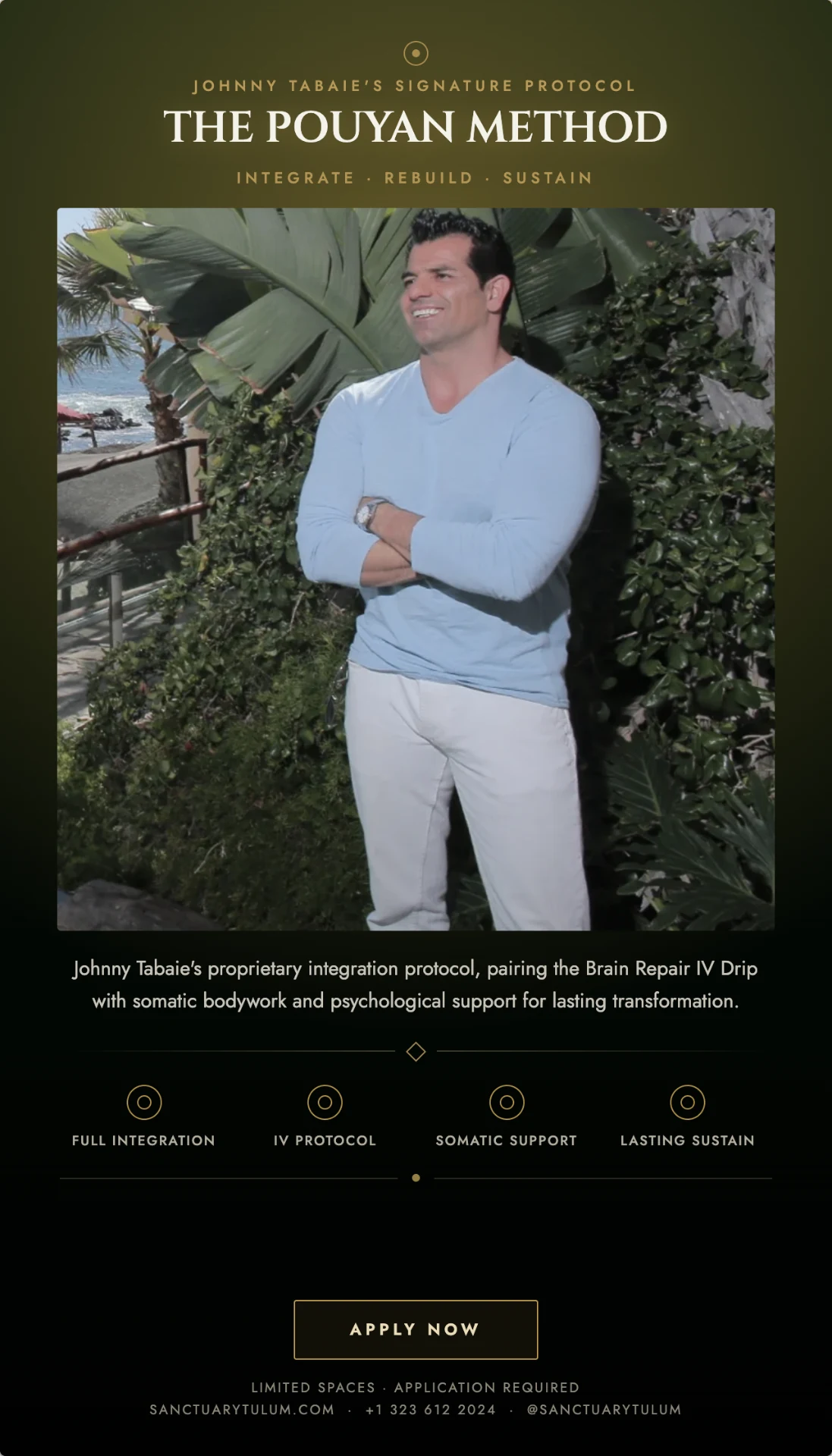
- → The Pouyan Method™
- → Ayahuasca retreat
- → All Conditions We Treat
Alcohol, Trauma, and the Case for Integration Work
Chronic alcohol use rarely exists in isolation from unresolved trauma, chronic anxiety, or long-standing sleep disruption. Peer-reviewed work in the Journal of Traumatic Stress, American Journal of Psychiatry, and Addiction has documented the tight coupling between trauma exposure, autonomic dysregulation, and alcohol use as a self-regulation strategy. A recovery program that removes the alcohol but leaves the underlying dysregulation untouched is a program that ends in reinstatement. Our model addresses both layers simultaneously: biological detox and receptor recovery on one axis, and structured trauma integration through medically supervised plant-medicine sessions, one-on-one coaching, breathwork, and nervous-system-calming modalities on the other. Guests who want the deeper trauma-recovery picture can review our PTSD program and depression treatment page.
Frequently Asked Clinical Questions
How is a physician-supervised residential program different from an outpatient one? Outpatient models are designed around a guest returning to their home environment between sessions, which is appropriate for stable, low-severity cases but insufficient for the complex, high-severity presentations our program is built for. Residential care under continuous physician supervision allows for real-time medication adjustment, 24-hour observation during sensitive taper phases, and immediate response to autonomic instability — variables that cannot be reproduced in an outpatient setting.
What does a typical intake process look like? Intake begins with a confidential clinical consultation to establish medication history, substance-use history, medical history, prior treatment attempts, and current goals. A pre-arrival medical workup is coordinated — labs, EKG, and where indicated, echocardiogram and cardiology consult. Every current prescription is reviewed against interaction and cardiac-risk lists. When the clinical picture confirms fit, admission is scheduled; when it does not, guests are referred to a more appropriate level of care.
What is the family's role during the program? Family members are often as depleted as the guest by the time admission occurs. Our program offers structured family communication, phased re-engagement, and — where indicated — family integration sessions that address the systemic dynamics that recovery inevitably surfaces. This is coordinated through one-on-one integration coaching.
What happens after the program ends? Guests leave with a written integration plan — sleep architecture, nutrition, movement, breathwork, supplementation, environmental design, and structured clinical check-ins. Guests with high-visibility responsibilities frequently coordinate a phased re-entry through ongoing coaching. The most durable outcomes come from guests who treat the post-program window with the same seriousness as the acute phase.
How is confidentiality protected? Privacy is architected into the program at every layer — private accommodations, one-on-one clinical sessions, no group settings, and structured protocols for guests with public profiles or high-visibility responsibilities. This is a core reason the program has served executives, artists, and public figures continuously for more than a decade.
Sleep Architecture Repair in Post-Alcohol Recovery
One of the most consistently under-treated dimensions of alcohol recovery is sleep. Chronic alcohol use fragments slow-wave sleep, suppresses REM cycles, and drives the reactive rebound insomnia that emerges in the first weeks of sobriety — a rebound that is one of the strongest independent predictors of relapse in the peer-reviewed sleep-medicine literature. Guests entering our program almost universally arrive with disrupted circadian rhythm, blunted melatonin secretion, and elevated evening cortisol. Our clinical team addresses this with structured light exposure at defined intervals, magnesium and glycine protocols, evening red-light therapy, temperature-controlled private suites, and — where clinically indicated — targeted amino acid support such as L-tryptophan and 5-HTP rather than long-term hypnotic prescriptions. As slow-wave and REM architecture normalize over the first four to six weeks, guests consistently report the return of dream recall, deeper morning alertness, and a measurable drop in evening cravings.
This is a deliberately non-pharmacologic sleep-recovery model. Long-term hypnotic use — Ambien, Lunesta, or chronic benzodiazepine substitution — is one of the most common ways stateside alcohol rehab converts one dependency into another. Our position, consistent with the NIAAA guidance cited below, is that sustainable sleep repair in the post-alcohol window is a physiological rebuild, not a prescription. When the underlying circadian and neurotransmitter systems are supported, sleep normalizes on its own timeline. That is the biological floor on which everything else — mood stability, craving reduction, executive function, and the deeper psychospiritual work — is built.
Executive Recovery and the Reality of Public-Facing Roles
A meaningful percentage of guests arrive with responsibilities that cannot be paused — public companies, creative careers, family offices, medical practices, or high-visibility roles where a group-based stateside residential episode is simply not survivable. For those guests, the program is structured around complete discretion: private arrival coordination, single-occupancy oceanfront suites, one-on-one clinical time (never group), secure communication protocols, and a written re-entry plan calibrated to the specific demands of their role. Our clinical position is that privacy is a treatment variable — a guest who is genuinely protected from exposure is a guest who can drop the vigilance that alcohol was self-medicating in the first place.
This does not mean the clinical work is compromised. Executive-track guests receive the same physician-supervised detox, the same Brain Repair IV protocol, the same medically screened plant-medicine sessions, and the same integration coaching as every other admission. What is added is the operational scaffolding that makes a discreet 4-to-12 week residential episode compatible with a public-facing life — including phased re-entry, structured board or family communication where indicated, and long-tail integration support in the first 90–180 days after discharge.