A New Standard in Mental Health Care
Conventional psychiatry treats mental illness as a lifelong condition to be managed with pharmaceuticals — SSRIs, benzodiazepines, mood stabilizers, and antipsychotics. But mental health disorders are not character flaws or permanent brain defects. They are neurochemical, inflammatory, and trauma-based dysregulations that can be reversed when the root cause is addressed.
At Sanctuary Tulum, our holistic treatment program for mental health uses a completely different model: no pharmaceuticals, no group therapy, no 12-step ideology. Instead, we apply the proprietary Pouyan Method™, integrating sacred plant medicine with regenerative science and one-on-one integration work.
Mental Health Conditions We Treat
- • Treatment-resistant depression
- • PTSD, C-PTSD, and complex childhood trauma
- • Anxiety, panic disorders, and OCD-spectrum symptoms
- • Bipolar-spectrum mood dysregulation
- • Executive burnout and existential crisis
- • Chronic insomnia and nervous system dysregulation
- • SSRI and antidepressant dependency
- • Benzodiazepine withdrawal and post-acute withdrawal
- • Grief, emotional exhaustion, and spiritual disconnection
Our Holistic Mental Health Modalities
Sacred Plant Medicine (Medically Supervised)
- • Ibogaine — receptor reset for trauma, depression, and dependency
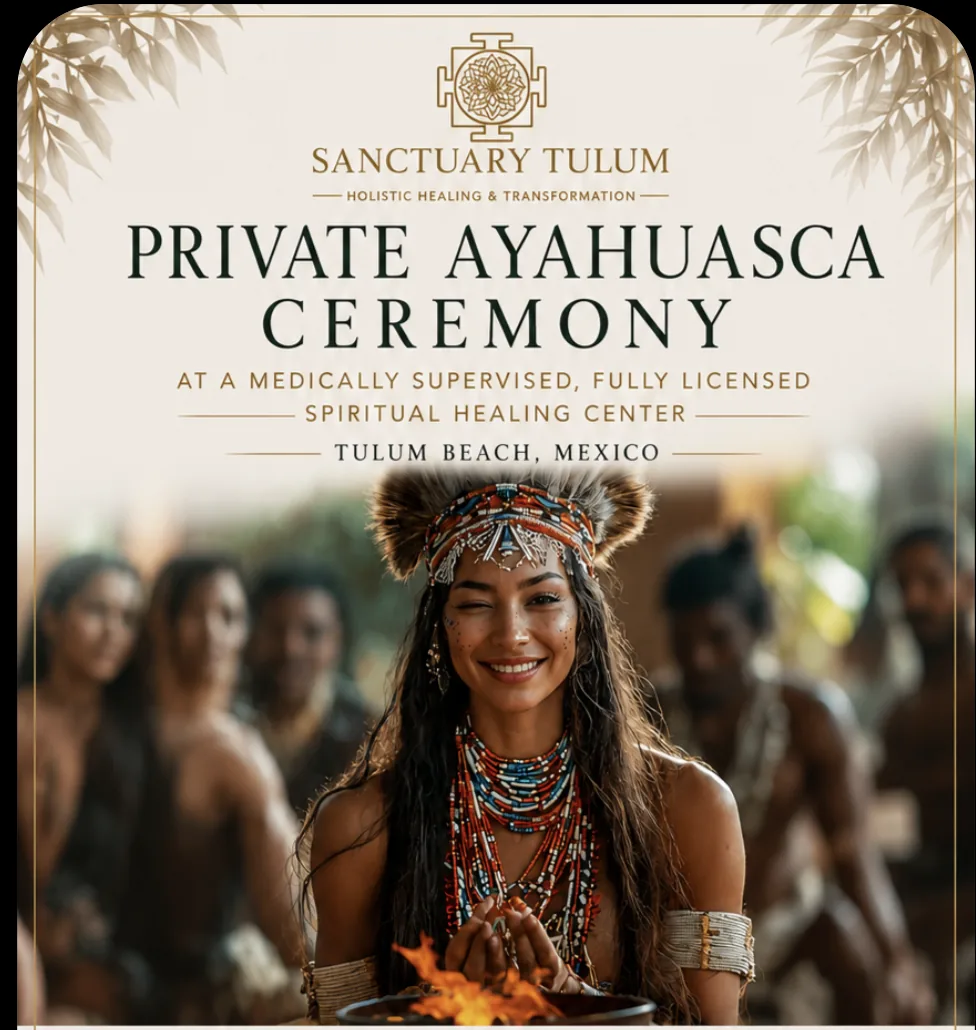
- • Private ayahuasca ceremonies — emotional purging and trauma release
- • Psilocybin therapy — neuroplasticity, depression breakthrough
- • 5-MeO-DMT — ego dissolution for PTSD and existential distress
Regenerative Brain & Body Therapies
- • Brain Repair IV Drip — proprietary neurochemical reset
- • NAD+ IV therapy — mitochondrial and cognitive restoration
- • Stem cell therapy — neuroinflammation and immune repair
- • HBOT, EBOO, and plasmapheresis
- • Amino acid, glutathione, chelation, and vitamin IVs
Nervous System & Integration Work
- • Daily yoga, breathwork, and meditation
- • Cold plunge, infrared sauna, red light
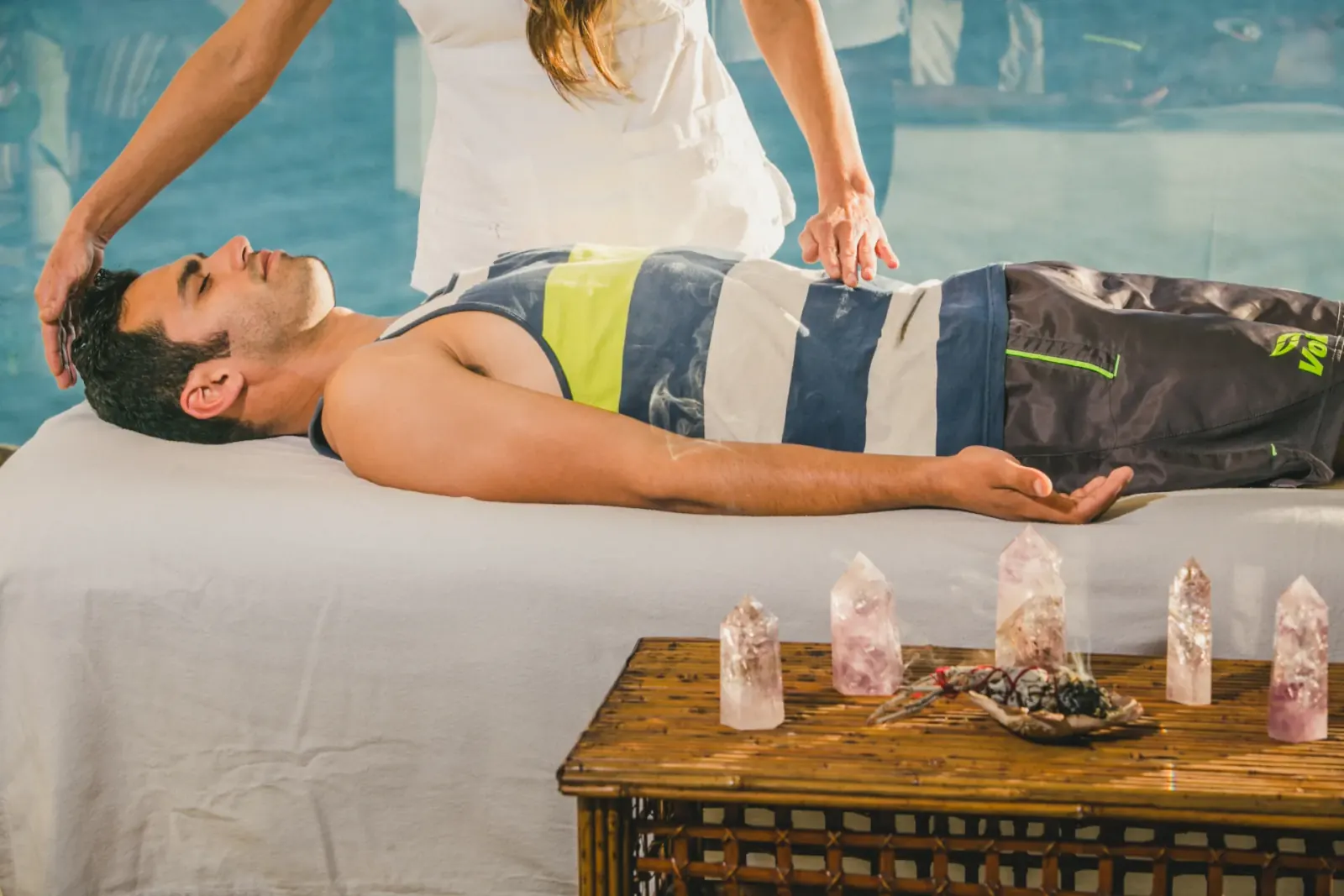
- • Therapeutic massage and energy healing
- • One-on-one integration coaching (35+ hrs/week)
- • 100% organic anti-inflammatory nutrition

Why Sanctuary Tulum Works Where Conventional Care Fails
- • Licensed medical facility, not a retreat
- • Only holistic center offering all four sacred plant medicines under one roof
- • 35+ hours of one-on-one integration per week
- • Zero pharmaceuticals — plus medically supervised medication tapering
- • Private oceanfront suites, no group settings
- • Individualized one-on-one care and a documented, fatality-free safety record since 2011
What the Clinical Literature Shows
A growing body of peer-reviewed research supports individual components of our medication-free model. Naturalistic and open-label studies of ibogaine report reductions in withdrawal symptoms and drug cravings in opioid-dependent participants, with some cohorts showing sustained abstinence at follow-up. Randomized controlled trials of psilocybin-assisted therapy for treatment-resistant depression have shown clinically meaningful reductions in depressive symptoms that, in some participants, persist for weeks after a single or double dosing session. Research on 5-MeO-DMT in naturalistic settings has similarly reported rapid decreases in depression and anxiety scores alongside increases in measures of psychological well-being.
Ayahuasca research points in a similar direction: controlled and open-label studies describe rapid antidepressant effects and reductions in trauma-related symptoms following supervised ceremonial use, with effect sizes in several trials comparable to or exceeding those reported for standard antidepressants. None of these substances are approved by the FDA as standalone cures, and no legitimate clinic can promise a guaranteed outcome — but the direction and consistency of the evidence is why Sanctuary Tulum built its Pouyan Method™ around supervised plant medicine rather than long-term pharmaceutical management.
The Neurobiology of Trauma and Mood Disorders
Depression, anxiety, and PTSD are increasingly understood as disorders of network connectivity and neuroplasticity rather than a simple deficit of serotonin or dopamine. Chronic stress and unresolved trauma keep the amygdala and default mode network in a hyperreactive loop, while chronically elevated cortisol can suppress hippocampal neurogenesis and blunt the prefrontal cortex's ability to regulate fear responses. This is one reason SSRIs, which primarily modulate serotonin reuptake, help some people but leave a substantial percentage of patients with treatment-resistant symptoms.
Classic and atypical psychedelics are of particular research interest because they appear to transiently increase cortical neuroplasticity — supporting the growth of new dendritic connections — while quieting default mode network activity long enough for a person to process traumatic memories from a different vantage point. Pairing that window of neuroplasticity with structured, one-on-one integration work is the central premise behind combining plant medicine with talk-based integration rather than offering either therapy in isolation. Regenerative therapies such as NAD+ IV therapy and hyperbaric oxygen are designed to support the same underlying biology — mitochondrial function, neuroinflammation, and cerebral blood flow — rather than acting as independent cures.
Medically Supervised Tapering, Not Abrupt Discontinuation
Guests currently taking SSRIs, benzodiazepines, or other psychiatric medications are never instructed to stop abruptly. Abrupt discontinuation of benzodiazepines in particular carries a documented risk of rebound anxiety, insomnia, and in some cases seizure, so any tapering schedule at Sanctuary Tulum is designed collaboratively with the guest's prescribing physician and monitored daily by our on-site medical team. The pace of a taper depends on dose, duration of use, and the individual's neurological history, and our clinicians build in buffer time so no guest is asked to make a plant medicine decision while acutely destabilized from a medication change.
A Day in a Holistic Mental Health Program
Mornings typically begin with gentle movement — yoga or a guided breathwork session — followed by a medical check-in and, depending on the day's protocol, an IV therapy session such as Brain Repair IV. One-on-one integration coaching is scheduled daily, not weekly, so insights from a ceremony the previous night are processed while they are still fresh rather than left to fade. Afternoons rotate between therapeutic massage, nutrition consultations, and rest. Ceremony days are scheduled with a full day of preparation beforehand and at least one full day of integration afterward — plant medicine work is never rushed or stacked back-to-back.
Who This Program Is — and Is Not — Designed For
This model is designed to support adults with treatment-resistant depression, anxiety, PTSD, complex trauma, burnout, and dependency on psychiatric medications who want an alternative to long-term pharmaceutical management. It is not appropriate for guests in acute psychiatric crisis requiring inpatient hospitalization, active psychosis, or unstabilized bipolar I with recent manic episodes — plant medicine work can destabilize these presentations further. Our intake team conducts a clinical screening call before any guest is accepted, reviewing medication history, cardiac health, and psychiatric history to confirm the program is a responsible fit.
Related Programs
- → Luxury Treatment Center for Mental Health
- → Holistic addiction rehab
- → Luxury Wellness Center
- → Luxury rehab program
- → The Pouyan Method™
- → About Founder Johnny Tabaie
References
- 1. Brown TK, Alper K. Treatment of opioid use disorder with ibogaine: detoxification and drug use outcomes. Am J Drug Alcohol Abuse. 2018;44(1):24-36.
- 2. Carhart-Harris RL, Bolstridge M, Rucker J, et al. Psilocybin with psychological support for treatment-resistant depression. Lancet Psychiatry. 2016;3(7):619-627.
- 3. Davis AK, Barsuglia JP, Windham-Herman AM, et al. Subjective effects of 5-MeO-DMT and its relationship to affective and psychedelic outcomes. J Psychopharmacol. 2018;32(7):779-792.
- 4. Palhano-Fontes F, Barreto D, Onias H, et al. Rapid antidepressant effects of the psychedelic ayahuasca in treatment-resistant depression. Psychol Med. 2019;49(4):655-663.
- 5. Krystal JH, Davis LL, Neylan TC, et al. It is time to address the crisis in the pharmacotherapy of PTSD. Am J Psychiatry. 2017;174(9):827-836.
- 6. Kalmoe MC, Chapman MP, Gudjonsson G, et al. Ketamine and serotonergic psychedelics: an update on the mechanisms and biosignatures underlying rapid-acting antidepressant treatment. Neuropsychopharmacology. 2020.
- 7. Ashton H. Benzodiazepine withdrawal: outcome in 50 patients. Br J Addict. 1991;86(11):1425-1439.
- 8. Nutt DJ, King LA, Nichols DE. Effects of schedule I drug laws on neuroscience research and treatment innovation. Nat Rev Neurosci. 2013.