Holistic Addiction Treatment
A Whole-Person Model for Addiction, Not a Substitute for One Habit With Another
One-to-one clinical care, physician-supervised medicine, and nervous-system repair — built around the person carrying the dependency, not the label attached to it.
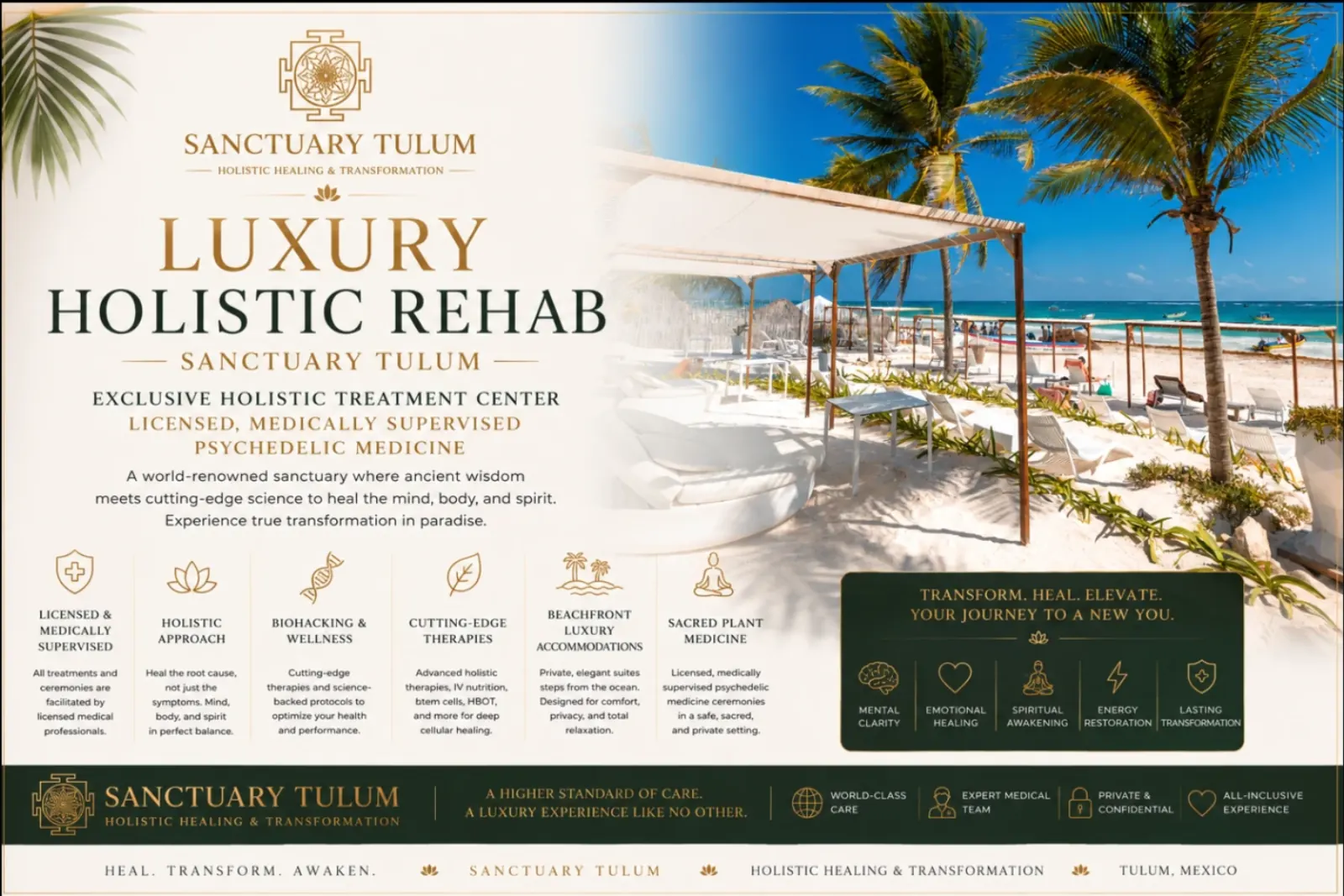
"Holistic" gets used loosely enough in the wellness industry that it has started to mean almost nothing — candles, affirmations, a green juice on the way to group. At Sanctuary Tulum, operating since 2011, the word is doing specific clinical work. It means treating the biological and neurological reality of dependency — the circuitry, the chemistry, the sleep architecture, the nervous system — at the same time as the psychological and relational history that put someone in front of a substance or a behavior in the first place. It does not mean incense instead of medicine. Every plan here sits inside licensed medical oversight, one client at a time, with no group therapy and no pharmaceutical replacement protocol standing in for the underlying work.
This page is a broader map of that model — how it applies across substances such as alcohol, opioids, stimulants, and benzodiazepines, and process addictions such as gambling, sex, and compulsive spending, and where medically supervised plant medicine work fits into it. For the behavioral addictions specifically, five dedicated program pages linked further down carry the detail. For substance use, the luxury residential rehab, luxury alcohol rehab program, and medically supervised luxury detox pages describe the physical side of stabilization in more depth.
What Dependency Actually Does to the Brain
Addiction is not a moral failure and it is not simply a habit that has gotten out of hand. The National Institute on Drug Abuse describes it as a chronic, relapsing condition that changes the brain's reward circuitry, particularly the dopamine pathways running through the ventral tegmental area, nucleus accumbens, and prefrontal cortex. Repeated exposure — to a substance or, in process addictions, to a compulsive behavior — recalibrates that circuitry so the reward threshold rises. That is tolerance: the same dose or the same behavior stops producing the same relief, so more is needed.
That recalibration does not stay confined to the reward pathway. The hypothalamic-pituitary-adrenal (HPA) axis — the body's central stress-response system — becomes sensitized alongside it, so ordinary stressors that a person once shrugged off start producing outsized anxiety, irritability, and craving. Environmental cues that were present during use — a place, a time of day, a person, a particular stress — get wired into that same circuitry through associative learning, which is why a craving can appear seemingly out of nowhere months into recovery when one of those cues resurfaces. Understanding this is not an academic exercise; it is the reason cue exposure, stress-reduction practice, and a predictable daily rhythm are treated as clinical tools here rather than lifestyle extras.
When the substance or behavior is removed, the same circuitry produces withdrawal — and for many substances, a longer tail known as protracted withdrawal, in which sleep, mood, and stress regulation stay disrupted for weeks or months after the acute phase ends. The Substance Abuse and Mental Health Services Administration frames recovery as a long process precisely because of this tail — it is a large part of why relapse risk does not disappear the moment acute withdrawal ends. Any honest treatment model has to plan for that stretch, not just the first difficult week.
This is also why willpower framing fails so often. Deciding to stop does not, by itself, restore a reward system that has spent months or years recalibrated around a substance or behavior. Sleep is frequently the first casualty and the slowest to return; the National Institute on Drug Abuse and other federal research bodies note that disrupted sleep architecture during recovery can persist well beyond acute withdrawal, feeding the irritability, low mood, and craving that most often precede a lapse. Addressing sleep directly — through circadian structure, nutrition, and reduced stimulant load rather than a sedative prescription — is one of the more overlooked parts of physiological repair, and one reason the daily schedule here is built around consistent sleep and wake times rather than left to chance.
Medically Supervised Detox Comes First
Nothing described further down this page — nervous-system work, integrative IV therapy, movement, plant medicine — begins before physician-supervised medical screening and, where the substance involved carries withdrawal risk, a supervised detox. Alcohol and benzodiazepine withdrawal in particular can be medically dangerous, and detox from either is managed by licensed medical staff with appropriate monitoring, not run as a wellness activity. Opioid withdrawal is rarely life-threatening in the same acute way but is severe enough that unsupervised attempts frequently fail; our opioid recovery and benzo withdrawal pages describe how each is staged.
Sanctuary Tulum does not use methadone or suboxone as an ongoing replacement model — that is a legitimate, evidence-supported approach used elsewhere in medicine, and we are not suggesting it is harmful for people who are stabilized on it. It is simply not the model this property runs. Existing prescriptions are reviewed by licensed medical staff, and any change in medication is a physician decision, made gradually and only when clinically appropriate.
What Monitoring Actually Involves
Medical supervision is not a single check-in on arrival. For alcohol and benzodiazepine withdrawal in particular, licensed medical staff track vital signs, hydration, and withdrawal-scale scoring at regular intervals through the highest-risk window, with a physician reachable to adjust the plan if symptoms escalate. The National Institute on Alcohol Abuse and Alcoholism notes that abrupt cessation after heavy, prolonged alcohol use can produce seizures and, in severe cases, delirium tremens — which is precisely why alcohol detox is treated as a medical event with monitoring, not a matter of willpower or a supervised rest.
Lab work at intake — bloodwork, cardiac screening where indicated, a review of current medications and psychiatric history — is what allows the physician to set a realistic taper schedule rather than a generic one, and to flag anything that changes the plan, from liver function after years of heavy drinking to a heart finding that changes whether a later plant medicine session is appropriate at all. None of the therapies described further down this page are scheduled until that picture is complete.
The goal was never to replace one dependency with another, or to treat the body without treating the story underneath it. It was to build a place where both happen under one roof, one person at a time.
Johnny Tabaie, Founder, Sanctuary Tulum

The Pouyan Method™ and the Brain Repair Protocol IV
The Pouyan Method™ is Johnny Tabaie's trademarked framework for sequencing recovery so that each phase supports the next instead of competing with it: medically supervised detox and stabilization first, then nervous-system and physiological support once the acute phase has passed, then structured integration work as the person prepares to leave. It is a protocol for ordering care, not a single product or a promised outcome, and it is delivered by licensed medical and therapeutic staff — Johnny Tabaie is a self-taught educator and practitioner who contributes the framework, not a physician, and medical decisions are made by licensed clinical staff throughout.
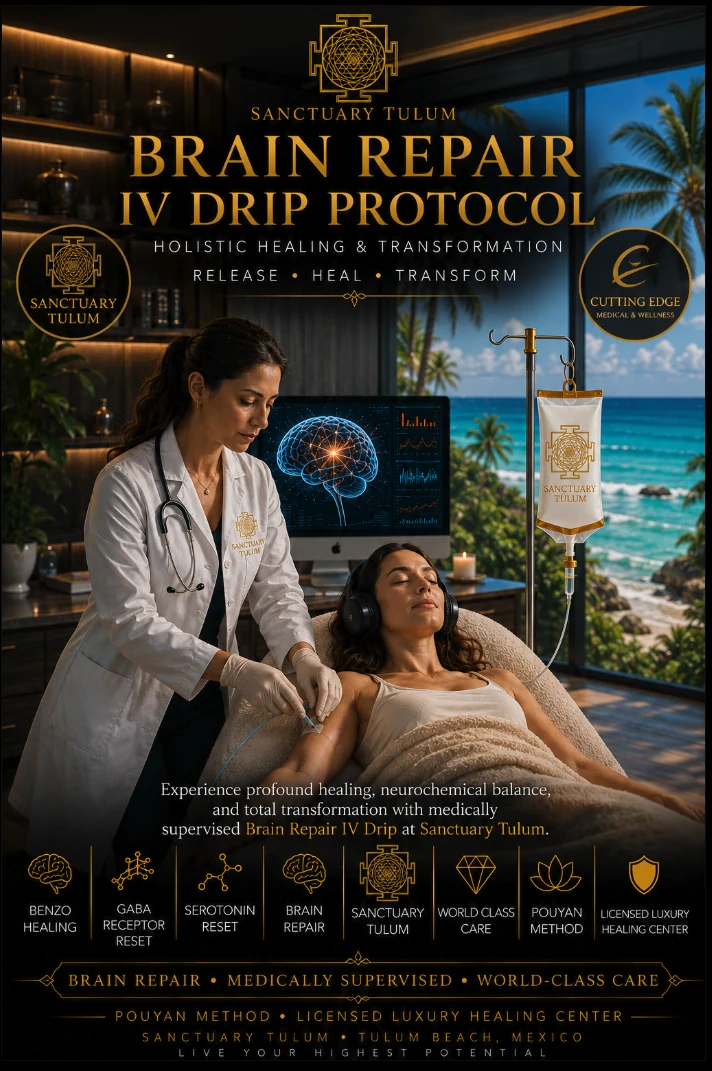
Within that sequence, physician-supervised integrative therapies are selected from lab work and clinical assessment, not applied as a blanket menu. One of them is the Brain Repair Protocol IV, a proprietary, nature-derived formulation of natural alkaloids, peptides, and amino compounds intended to support neurological recovery during and after withdrawal. It is administered separately from other IV protocols such as NAD+ IV therapy, which supports cellular energy metabolism during detox — the two are distinct offerings, not components folded into one formula.
The Integrative Layer
Around the core protocol sits a broader set of physician-supervised and wellness-based therapies, each selected on clinical grounds rather than offered universally: hyperbaric oxygen therapy for tissue oxygenation, ozone and extracorporeal blood oxygenation and ozonation (EBOO) where indicated, stem cell therapy under physician supervision, cold plunge and infrared sauna for autonomic nervous system regulation, therapeutic massage and bodywork, daily yoga and guided meditation, and an organic, superfood-forward nutrition program built around gut and metabolic repair. The National Center for Complementary and Integrative Health notes measurable benefits from mindfulness-based practice for stress, anxiety, and depression — the states most reliably associated with relapse risk — which is why breathwork and meditation are built into the daily schedule rather than offered as an occasional extra.
None of these therapies are described here as a cure, and none carry a claimed success rate. They are supportive, individualized, and layered around the core clinical work of detox, therapy, and integration — not a replacement for any of it.
Depression, Anxiety, Trauma, and Medication Dependency
Dependency rarely arrives alone. Depression, anxiety, unresolved trauma, and chronic stress are common alongside substance and behavioral addiction, and treating the addiction while ignoring what sits underneath it tends to produce short-lived results. One-to-one therapeutic work here runs the full length of a stay specifically because those conditions need more than a single intake assessment — they need ongoing attention from the same clinician, not a rotating group format.
A related and often overlooked pattern is dependency on prescribed psychiatric medication itself — benzodiazepines prescribed for anxiety, or long-term use of other sedatives — where the original condition and the medication dependency have become entangled. Any change to an existing prescription is a physician decision made gradually, in coordination with the prescribing psychiatrist where possible, and never an abrupt stop. The goal is to treat the underlying anxiety or trauma directly enough that the medication's role can be honestly reassessed, not to remove a prescription and leave the original condition unaddressed.

Medically Supervised Sacred Plant Medicine Work
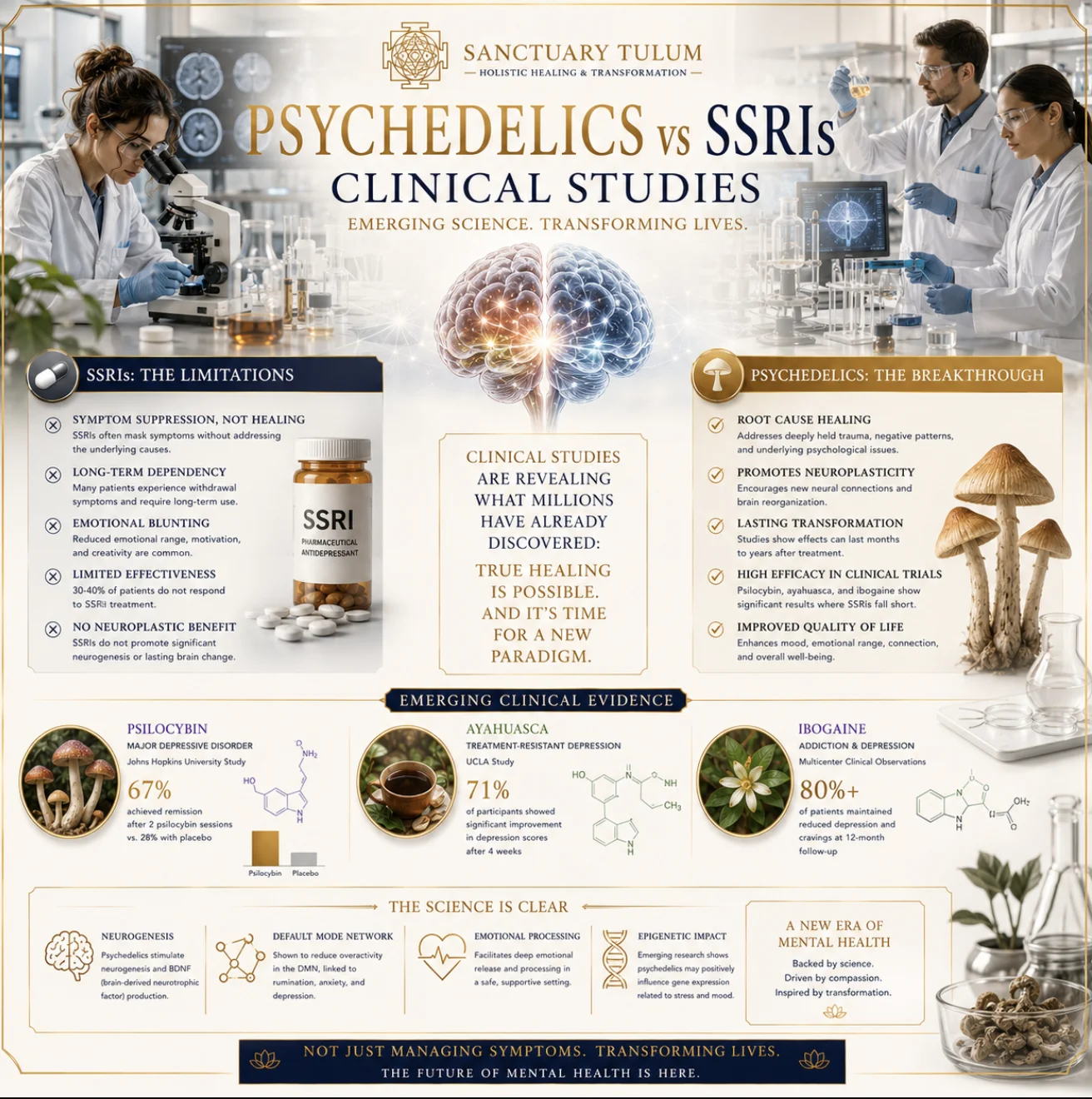
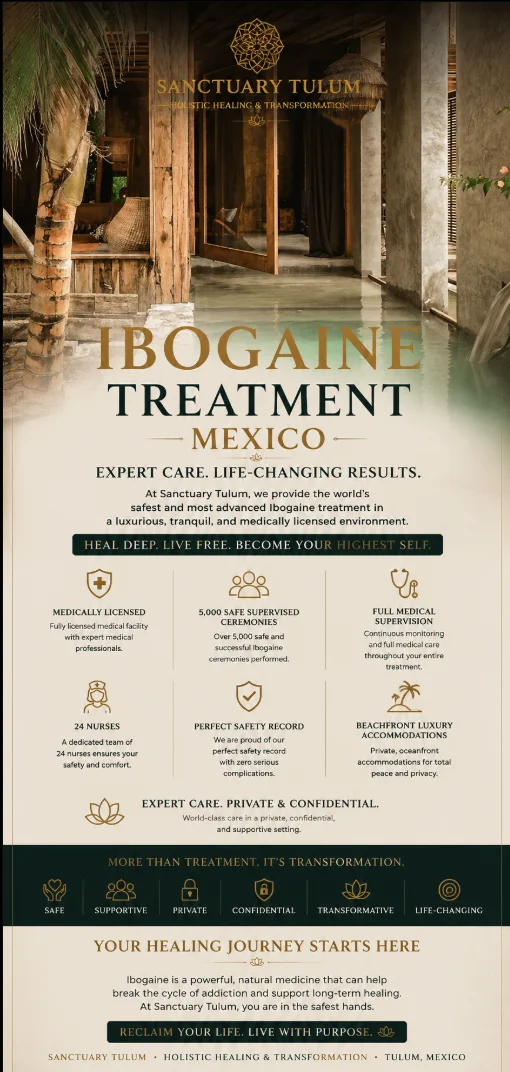
For clients whose plan includes it, and only after thorough medical screening, Sanctuary Tulum offers medically supervised ibogaine, ayahuasca, and psilocybin work, along with 5-MeO-DMT in select cases. These are administered with real caution, not as a headline attraction. Ibogaine carries known cardiac risk, so every candidate undergoes an EKG and echocardiogram before any session, with continuous monitoring during administration; the program has operated for over a decade of medically supervised ibogaine administration with a zero-fatality record under that screening protocol, and we say that specifically about our own program rather than as a claim about ibogaine use in general, which carries documented risk elsewhere without equivalent screening. Ayahuasca requires a review of current medications for MAOI interaction risk before it is ever considered, since certain antidepressants and other drugs interact dangerously with the brew's monoamine oxidase inhibitors.
None of this work is appropriate for everyone, it is never used as a first step, and it is never presented as a guaranteed breakthrough. It sits inside the integration phase of a longer plan, chosen deliberately and screened for, not offered by default.
What the Holistic Model Is Built to Address
The clinical structure — medical screening, one-to-one therapy, nervous-system repair, physician-supervised integrative care — is shared across substance and process addictions. What changes is emphasis.
Alcohol
Medically supervised withdrawal given cardiac and seizure risk, followed by nervous-system and liver-supportive nutrition work.
Opioids
Physician-managed withdrawal staging without a methadone or suboxone replacement model.
Stimulants
Sleep and dopamine-pathway restoration after the crash phase, with close mood monitoring.
Benzodiazepines
Slow, physician-directed tapering given seizure risk from abrupt discontinuation.
Process addictions
Gambling, sex, porn, shopping, and compulsive trading, treated as reward-circuitry and impulse-control conditions.
Co-occurring trauma
Underlying trauma and mental health history addressed one-to-one throughout, not treated as a separate track.
Substance-Specific Realities
The grid above is a summary; the realities underneath it differ enough by substance that treating them identically would be a mistake. Alcohol withdrawal carries genuine medical risk — the World Health Organization identifies harmful alcohol use as a major contributor to disease burden worldwide, and abrupt cessation after sustained heavy use can trigger seizures, so tapering or medically managed withdrawal is standard, not optional. Opioid withdrawal, covered by NIDA's opioid overview, is rarely life-threatening in the same acute way but produces intense physical discomfort that leads many people to relapse within days without support — which is why staged, supervised withdrawal matters more than raw endurance.
Stimulant dependency — cocaine, methamphetamine, and prescription stimulant misuse — behaves differently again. There is usually no dangerous acute withdrawal in the way alcohol or benzodiazepines carry it, but the "crash" phase brings a sharp drop in mood, energy, and motivation as dopamine signaling readjusts, and NIDA's methamphetamine drug facts describe mood and cognitive effects that can persist well past the initial crash, which is why close mood monitoring is built into stimulant-focused stays rather than assumed unnecessary because the withdrawal is not classically dangerous. Benzodiazepines are the opposite case: discontinuation can cause seizures if it happens too quickly, and protracted symptoms — anxiety, insomnia, sensory disturbance — can persist for months after the last dose, so tapering schedules here are set in small increments and adjusted individually rather than followed on a fixed calendar; our benzo withdrawal page goes into that timeline in more detail.
Process and behavioral patterns — gambling, compulsive sexual behavior, compulsive spending, and compulsive trading — do not carry a pharmacological withdrawal at all, but the Mayo Clinic notes that behavioral addictions engage overlapping reward-circuitry mechanisms, which is why the same core structure — sleep, nutrition, nervous-system regulation, and one-to-one therapy — is the right starting point even when there is no substance to detox from.
Compulsive sexual behavior addressed through trauma work and nervous-system repair.
Porn Addiction TreatmentReward-system recovery and one-to-one therapeutic work without group programming.
Gambling Addiction TreatmentImpulse-control and dopamine-pathway support for compulsive gambling.
Shopping Addiction TreatmentCompulsive spending treated as a behavioral and emotional regulation issue.
Crypto Addiction TreatmentCompulsive trading and speculation, including sleep and stress collapse.
Relapse, Realistically
Relapse is common enough across addiction recovery, substance and behavioral alike, that treating it as evidence of failure is neither accurate nor useful. Protracted withdrawal, unresolved trauma triggers, and the ordinary stress of returning to a life that has not changed as fast as the person has are all real risk factors, and a serious program plans for them rather than pretending completion equals immunity. That planning includes structured aftercare conversations before departure, direct family or partner communication where the client wants it, and a realistic view of what the weeks immediately after a stay tend to look like — usually the highest-risk window of the whole process.
Integration is the work of carrying insight and physiological stability back into daily life without the structure of a small, supervised property around it. It is not a single session at the end; it is built into the plan from early on, particularly where plant medicine work has been part of treatment, since the value of those experiences depends heavily on what happens with them afterward.
Concretely, integration work includes identifying the specific situations, relationships, and emotional states most likely to trigger a return to the substance or behavior, building a written plan for each one rather than a general intention to "do better," and setting up outside support — a therapist, a psychiatrist, a trusted family member — before departure rather than searching for one under stress afterward. None of this eliminates risk. It reduces the number of moments where a person is facing a craving with no plan and no one to call.
A Week-by-Week Arc, in General Terms
Every plan is individualized and program length varies with severity, so the following is a general shape rather than a fixed itinerary. The first days are arrival and baseline: physician intake, lab work, a psychiatric and substance-history review, and — where applicable — the start of a medically supervised detox or taper. Little else is scheduled during this window beyond rest, nutrition, and monitoring, because a nervous system in acute withdrawal is not in a position to do deep therapeutic work yet.
Once acute symptoms have stabilized, the middle stretch shifts toward nervous-system support and daily one-to-one therapy — this is typically when physician-supervised integrative therapies such as the Brain Repair Protocol IV, HBOT, or bodywork are introduced, alongside a consistent sleep and meal schedule. Where a client's plan includes medically supervised plant medicine work, that sits later still, after screening is complete and the nervous system has had time to settle, not in the first week.
The final stretch turns toward integration and return planning: identifying trigger situations, building a written relapse-prevention plan, arranging outside psychiatric or therapeutic support before departure, and — for clients who want it — direct conversations with family or a partner about what continued support looks like at home. None of this is compressed into a single exit session; it is built across the last several days so the plan is tested and adjusted before anyone leaves.
Family Involvement, When It's Wanted
Some clients want family or a partner involved throughout; others want the work kept entirely private, at least at first. Both are respected. Where a client chooses to involve family, that can include scheduled calls, family therapy sessions with the treating clinician, and structured conversations near the end of a stay about what support at home should look like — realistic boundaries, what to expect during the early weeks back, and how to respond if a warning sign appears rather than waiting for a crisis. Where a client prefers to keep treatment private, that preference shapes communication and is not treated as a red flag in itself; confidentiality is part of the clinical relationship, not a courtesy extended only when convenient.
Who This Is Not For, and How Admissions Works
Sanctuary Tulum is not equipped for acute medical emergencies. If someone is in active overdose, experiencing severe withdrawal symptoms such as seizures outside a monitored setting, or in immediate danger to themselves or others, the right first call is local emergency services, not a retreat program. Screening at intake exists partly to catch situations that need a higher level of acute care than a boutique clinical setting can safely provide.
For everyone else, admissions starts with a confidential conversation covering substance or behavioral history, current medications, and relevant medical and psychiatric background, used to build an individualized plan before arrival. Program length varies with severity and co-occurring conditions rather than following a fixed calendar. Details on stays, suites, and investment are on the packages and pricing page, and the contact page is the direct route to start that conversation. Executives and public-facing clients weighing discretion alongside clinical need may also want the executive rehab page, which covers privacy and scheduling considerations specific to that group.

Start With the Program That Fits
This page is the map; the program pages are the terrain. If a specific process addiction brought you here, the five links above go into far more detail than a shared overview can. If a substance is the more pressing concern, the luxury rehab and detox pages linked earlier cover the physical side of stabilization, and the homepage carries the full index of what Sanctuary Tulum treats.
Recovery from any dependency — chemical or behavioral — is rarely a straight line, and no serious program pretends otherwise. What can be offered honestly is a structure: medical screening first, one-to-one clinical care throughout, physician-supervised support layered in where it is indicated, and a plan for the return home that starts well before departure day. That structure is what "holistic" is meant to describe here, and it is the same structure whether the dependency in question is alcohol, an opioid, a benzodiazepine, or a compulsive behavior with no substance involved at all.