
In brief: Alcohol is the one common dependence where withdrawal itself can kill, which changes the order in which a family should evaluate programs. Medical capability comes first; everything else — setting, therapies, philosophy — comes after. This guide covers what luxury alcohol recovery centers should provide at each stage and how to verify it. Educational only; not medical advice.

Why Alcohol Is Evaluated Differently
Most comparisons of private treatment programs treat alcohol as one item on a list of substances. Clinically it belongs in its own category, for a reason that should shape the entire decision: alcohol withdrawal can be fatal. Severe cases can progress to withdrawal seizures and to delirium tremens, a state involving profound confusion, autonomic instability, and a documented mortality risk that rises sharply without medical management.
Risk is not evenly distributed. It is elevated in people drinking heavily every day over long periods, in anyone who has had a prior withdrawal seizure or an episode of delirium tremens, in older clients, and in anyone with significant liver disease, cardiac disease, electrolyte disturbance, or malnutrition. It is also elevated where alcohol is combined with benzodiazepines — a common pattern, and one that requires two overlapping withdrawal protocols managed simultaneously by a physician.
The practical consequence is a reordering of priorities. For alcohol, the first question to any luxury program is not what its philosophy is or what its property looks like. It is whether it can medically manage a complicated withdrawal at three in the morning, with a named physician, appropriate monitoring, and a defined pathway to a hospital. Programs that cannot answer that concretely are the wrong programs regardless of how impressive everything else is.

What Medically Supervised Alcohol Detox Should Involve
Medically managed alcohol withdrawal is a well-established clinical process, which makes it straightforward to check whether a program is actually equipped for it. There are a small number of concrete things to ask about.
Assessment before anything else. A defensible program establishes drinking pattern and duration, prior withdrawal history, concurrent substance and medication use, and baseline medical status including liver function, electrolytes, and cardiac history. Withdrawal severity is then tracked with a structured, repeated assessment rather than by impression.
Symptom monitoring on a schedule. Vital signs and withdrawal severity should be reassessed at defined intervals through the highest-risk window — typically the first 24 to 72 hours, with seizure risk concentrated early and delirium tremens generally presenting later in that period.
Nutritional and electrolyte correction. Thiamine repletion and correction of magnesium, potassium, and fluid status are standard parts of alcohol withdrawal care, not optional wellness extras. Chronic heavy drinking reliably produces deficiencies that carry their own neurological consequences.
An escalation pathway that exists on paper. Ask what happens if a client seizes, what monitoring is available, who is physically present overnight, and how far the nearest hospital is. A program should be able to answer without hesitating.
Our own medically supervised detox is described on the luxury detox center page, and clinical oversight is published on our medical review board.
Detox Is Not Treatment — and Conflating Them Is the Costliest Mistake
Once acute withdrawal resolves, a client is medically stable. They are not treated. That distinction is where a large share of expensive treatment episodes quietly fail, because the stabilization phase is the most visible, most photographed, and most easily sold part of the process — while the work that determines whether anything holds happens afterward.
What follows stabilization, in a program that has thought about it, is a physiological restoration phase and then an integration phase. The restoration phase addresses what long-term alcohol use reliably damages: sleep architecture, nutritional status, inflammatory load, liver and metabolic function, and autonomic regulation. This is where the wider medical toolkit at this tier is applied, and where most clients first notice they feel materially different rather than merely no longer in withdrawal.
The integration phase addresses why the drinking was doing something for the person in the first place — the trauma, the anxiety, the professional pressure, the sleep problem, the relationship pattern — and builds a specific plan for the first difficult weeks after discharge. Programs that under-resource this phase produce clients who leave feeling better than they have in years and encounter their original life unchanged. Our own phased structure is set out in the Pouyan Method™, and the broader program is described on the luxury alcohol rehab page.
What the Setting Does and Doesn't Contribute
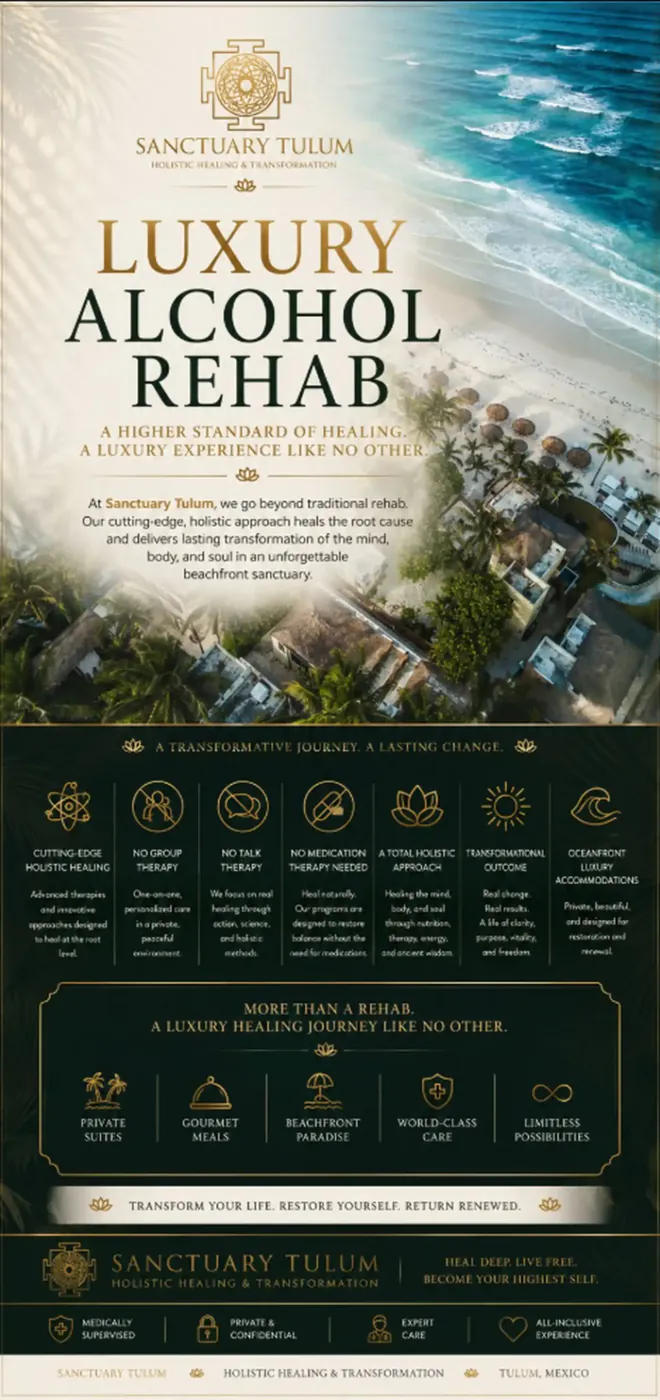
It is worth being precise about what a beautiful environment actually contributes, because both the marketing and the backlash tend to overstate their case. The environment does not treat alcohol dependence. What it does is reduce the friction that stops people entering and staying in treatment — and retention is one of the better-supported predictors of durable outcomes in the addiction literature.
Three mechanisms are plausible and worth naming plainly. First, willingness: a meaningful number of people who have refused institutional settings for years will accept a private, dignified one, and treatment that happens beats treatment that is declined. Second, retention: clients who are sleeping properly, eating well, and not sharing a room with strangers during the most physically miserable week of their lives are less likely to leave against advice. Third, nervous-system load: quiet, light, space, and daily movement are not clinical interventions, but they are not neutral either during a period when the autonomic system is recalibrating.
None of that justifies choosing a program on its photographs. It justifies not dismissing the setting as pure indulgence — while keeping it firmly behind medical capability, staffing ratio, and aftercare in the order of evaluation.
The Restoration Toolkit for Alcohol Specifically
Long-term alcohol use leaves a fairly predictable physiological signature: micronutrient depletion, disrupted sleep, elevated inflammatory markers, impaired liver and metabolic function, and a nervous system that has spent years being chemically sedated. Restoration-phase therapies at this tier are aimed at that signature. They are designed to support recovery of function — not, in any responsible framing, guaranteed to produce a particular result.
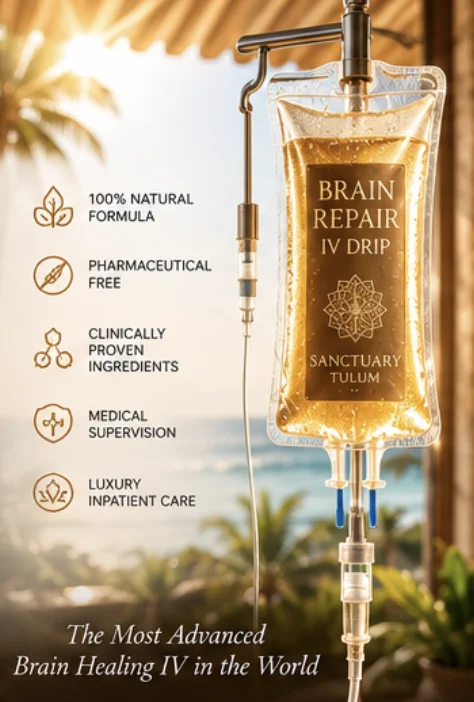
Common components include intravenous nutrient repletion; NAD+ IV therapy; glutathione and vitamin C IVs; hyperbaric oxygen therapy; ozone and blood-oxygenation protocols; an organic, non-GMO nutrition program built around repletion and inflammation; and daily yoga, meditation, and bodywork as nervous-system support. Our proprietary Brain Repair Protocol is a nature-derived IV formula of natural alkaloids, peptides, and amino compounds, distinct from the standalone NAD+, amino acid, glutathione, vitamin C, and chelation IVs offered alongside it.
Two things are worth insisting on when a program presents therapies like these. The evidence base differs substantially from one modality to the next, and a serious program will say so rather than presenting a uniform wall of certainty. And none of them substitute for the medical management of withdrawal or for the psychological work that follows it. The complete list of what we offer is on the treatments page.

Medication Philosophy, Stated Plainly
Programs differ on medication in ways that materially change a client's year, and the difference is often unstated until after admission. Some manage clients on ongoing prescriptions indefinitely. Others taper under supervision with the explicit intention that the client leaves without a maintenance prescription. Some have no articulated position at all and default to whatever the client arrived on.
Two things are true simultaneously here, and both should be said. Certain medications are genuinely dangerous to stop abruptly — benzodiazepines above all, where abrupt discontinuation carries seizure risk and is specifically contraindicated — so any reduction must be physician-managed on a deliberate timeline. And a client is entitled to know, before admission, whether the program's intention is maintenance or supervised tapering, because that is a decision about their life rather than a technical detail.
Sanctuary Tulum operates a no-pharmaceutical-maintenance model: we do not substitute one long-term prescription for another, and any reduction of an existing medication is done under physician supervision on a timeline set by the client's medical picture. We treat the conventional medication-first model as a model worth questioning — not as something to demonize, and never as a reason for anyone to stop a prescription without a physician. That reasoning, and the story behind it, is on our founder's page.
Eight Questions to Ask a Luxury Alcohol Recovery Center
These are ordered deliberately: medical capability first, then staffing, then everything else.
- Who manages alcohol withdrawal medically, what are their credentials, and are they on site overnight?
- How is withdrawal severity assessed and how frequently, and what is the escalation pathway and distance to hospital?
- Can the program manage concurrent alcohol and benzodiazepine withdrawal, and how?
- How many clients are in residence at once, and how many individual clinical hours are scheduled per day?
- Is the program one-on-one, group-based, or mixed — and in what proportion?
- What is the stated position on maintenance prescriptions and on tapering existing psychiatric medication?
- What length of stay is recommended for this specific presentation, and how can the plan change mid-stay?
- What aftercare is included, delivered by whom, for how long, and at what additional cost?
Answers with names, numbers, and timelines indicate a program that has actually built the thing it advertises. Answers made of adjectives indicate the opposite, and are worth taking seriously as information.

Who This Tier Suits, and Who It Doesn't
Private alcohol programs at this tier fit a particular set of circumstances especially well. Executives and business owners whose absence and disclosure both carry organizational consequences. Licensed professionals with boards to answer to. People who have completed one or more conventional programs and need something structurally different rather than a fourth repetition. Clients with complex medical presentations alongside the drinking — liver disease, cardiac history, long-term benzodiazepine use — where physician attention needs to be continuous rather than occasional. And clients for whom group settings have already been tried and have reliably prevented candor.
It fits other situations poorly, and saying so is more useful than pretending otherwise. Someone in acute psychiatric crisis needs a hospital first. Someone whose primary obstacle is that they do not yet want to stop drinking is unlikely to be moved by a better view. And a family stretching dangerously beyond its means for a premium program would in most cases be better served putting those resources into a longer stay at a competent program than a shorter stay at a spectacular one — because length of stay, not thread count, is the variable the research actually associates with durability.
Related reading: luxury rehab centers, luxury recovery centers, and our executive rehab program.
A Closing Note
With alcohol, the evaluation order matters more than it does anywhere else: medical capability, then staffing density, then the clinical model, then aftercare, then the setting. A program that is excellent on the last item and vague on the first is not a luxury program in any sense worth paying for. If you want to talk through a specific situation — including whether this tier is the right fit at all — you can speak with our clinical team, review our luxury alcohol rehab program, or see which programs rank among the top luxury rehabs worldwide.
Editorial note: This article is educational and does not constitute medical advice, diagnosis, or a treatment recommendation, and makes no claims about outcomes for any individual. Alcohol withdrawal can be life-threatening and should be managed by a licensed physician. Do not stop or reduce any prescribed medication without medical supervision. Anyone with questions about their own health should consult a qualified clinician.
References
- StatPearls / NCBI Bookshelf. Alcohol Withdrawal — clinical course, seizure risk, and delirium tremens.
- Substance Abuse and Mental Health Services Administration. TIP 45: Detoxification and Substance Abuse Treatment.
- National Institute on Drug Abuse. Principles of Drug Addiction Treatment: A Research-Based Guide (Third Edition) — on retention, length of stay, and continuity of care.
- National Institute on Alcohol Abuse and Alcoholism. Understanding Alcohol Use Disorder.
- Clinical reviews of benzodiazepine discontinuation and supervised tapering, including the contraindication of abrupt cessation. PubMed.
- COFEPRIS (Comisión Federal para la Protección contra Riesgos Sanitarios) — Mexico's federal health regulatory agency.