Licensed · Physician-Supervised · Private
Psychedelic Retreats
Licensed psychedelic retreats in Mexico — ibogaine treatment, ayahuasca, 5-MeO-DMT and psilocybin ceremonies held inside a COFEPRIS-licensed medical facility on the Tulum coast.
Psychedelic retreats have become one of the fastest-growing categories in wellness travel, and one of the least standardized. Under the same phrase you will find jungle ceremony camps with no medical staff, festival-adjacent weekend intensives, boutique villas renting facilitators by the night, and a small number of licensed medical facilities where the medicine is one part of a supervised clinical program. The word "retreat" tells you nothing about which of those you are booking.
What Psychedelic Retreats Are — And What They Are Not
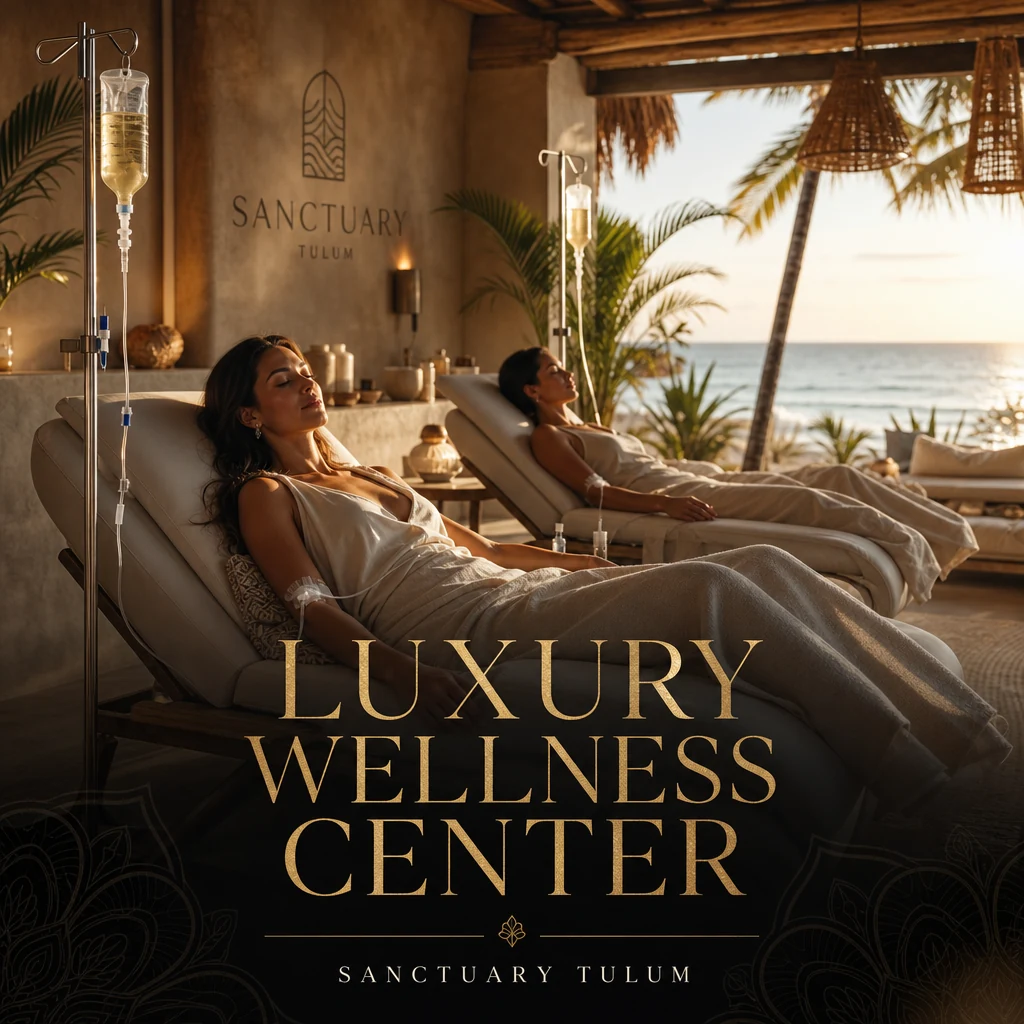
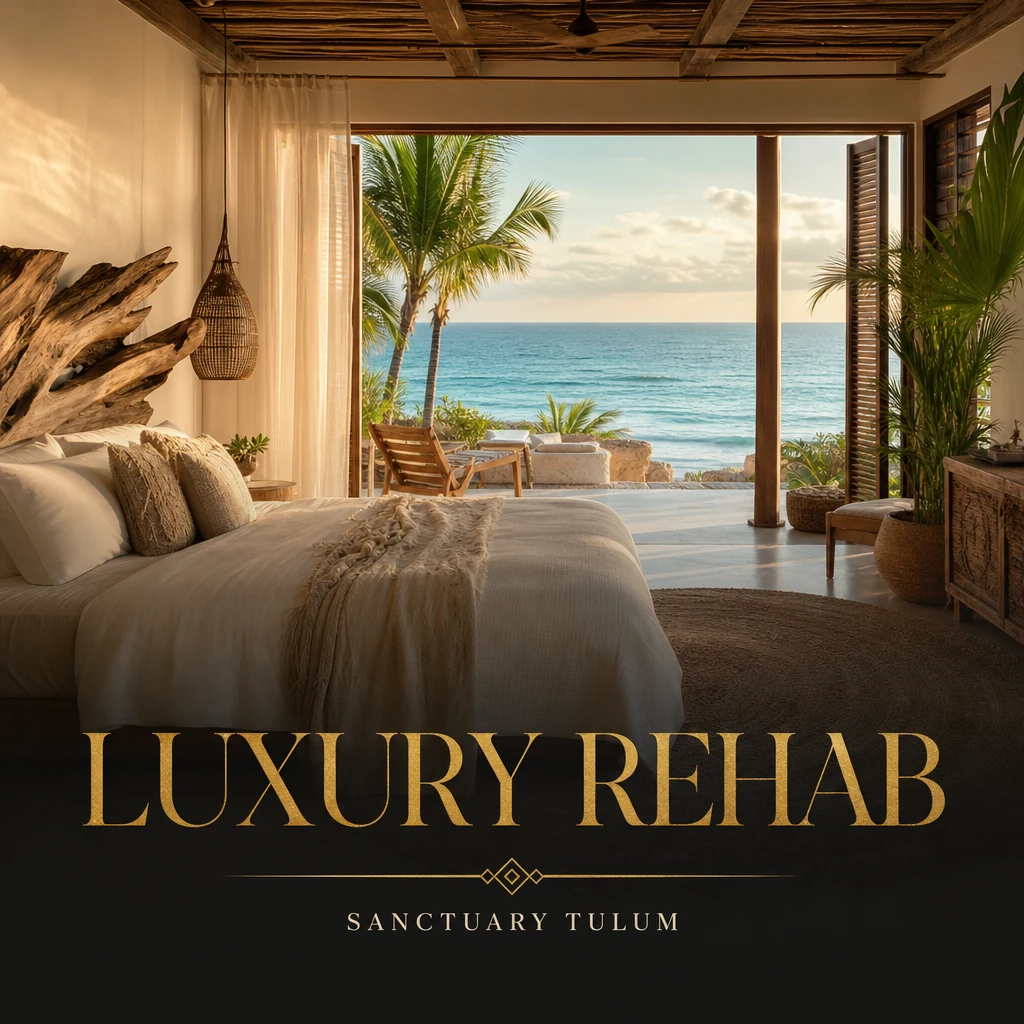
Sanctuary Tulum — operating since 2011 — sits at the clinical end of that range. It is a medical facility licensed by COFEPRIS, Mexico's federal health regulator, with physicians on site, private oceanfront suites, one-to-one care, and no group ceremony formats. Guests do not share medicine sessions with strangers, and no medicine is administered before medical screening clears it.
This page is the practical guide to the category: how the different medicines are used, what separates licensed psychedelic retreats from unlicensed ones, how to evaluate the best psychedelic retreats without relying on marketing language, and why so many of the world's psychedelic retreats in Mexico operate here in the first place.
The Four Medicines, and What Each Is Actually For
Most retreats specialize in one medicine because one medicine is what their facilitator knows. A clinical program starts from the opposite direction: what does this guest's history, medication load, and nervous system need, and which modality — if any — is indicated? Sanctuary Tulum offers four under one licensed roof.
- • Ibogaine treatment — an extracted, isolated alkaloid administered by physicians after cardiac clearance, with continuous EKG monitoring throughout. Used clinically for opioid use disorder, long-term benzodiazepine and SSRI dependence, and stalled recovery. Ibogaine is a medical treatment, not a ceremony, and any retreat that presents it as one should be treated as a warning sign. See also ibogaine treatment in Mexico.
- • Ayahuasca ceremonies — private ceremonies held in a medically supervised setting, screened for SSRI and MAOI contraindications, most often indicated for trauma, PTSD, and depression that has not moved under conventional care.
- • 5-MeO-DMT (bufo) ceremonies — short-duration, high-intensity sessions held under supervision and sequenced deliberately inside a broader program rather than sold as a standalone weekend.
- • Psilocybin ceremonies — supervised psilocybin sessions used for depression, end-of-life distress, and the emotional layer that tends to surface once physical detox is complete.
Around the medicine sits the rest of the protocol: the Brain Repair Protocol IV, hyperbaric oxygen therapy, ozone therapy, an organic non-GMO nutrition program, daily bodywork, yoga, and meditation — sequenced through the Pouyan Method™, our founder's proprietary, trademarked protocol. No pharmaceutical replacement drugs, no group therapy, no talk-therapy-only model.
Licensed Psychedelic Retreats: What the License Actually Buys You
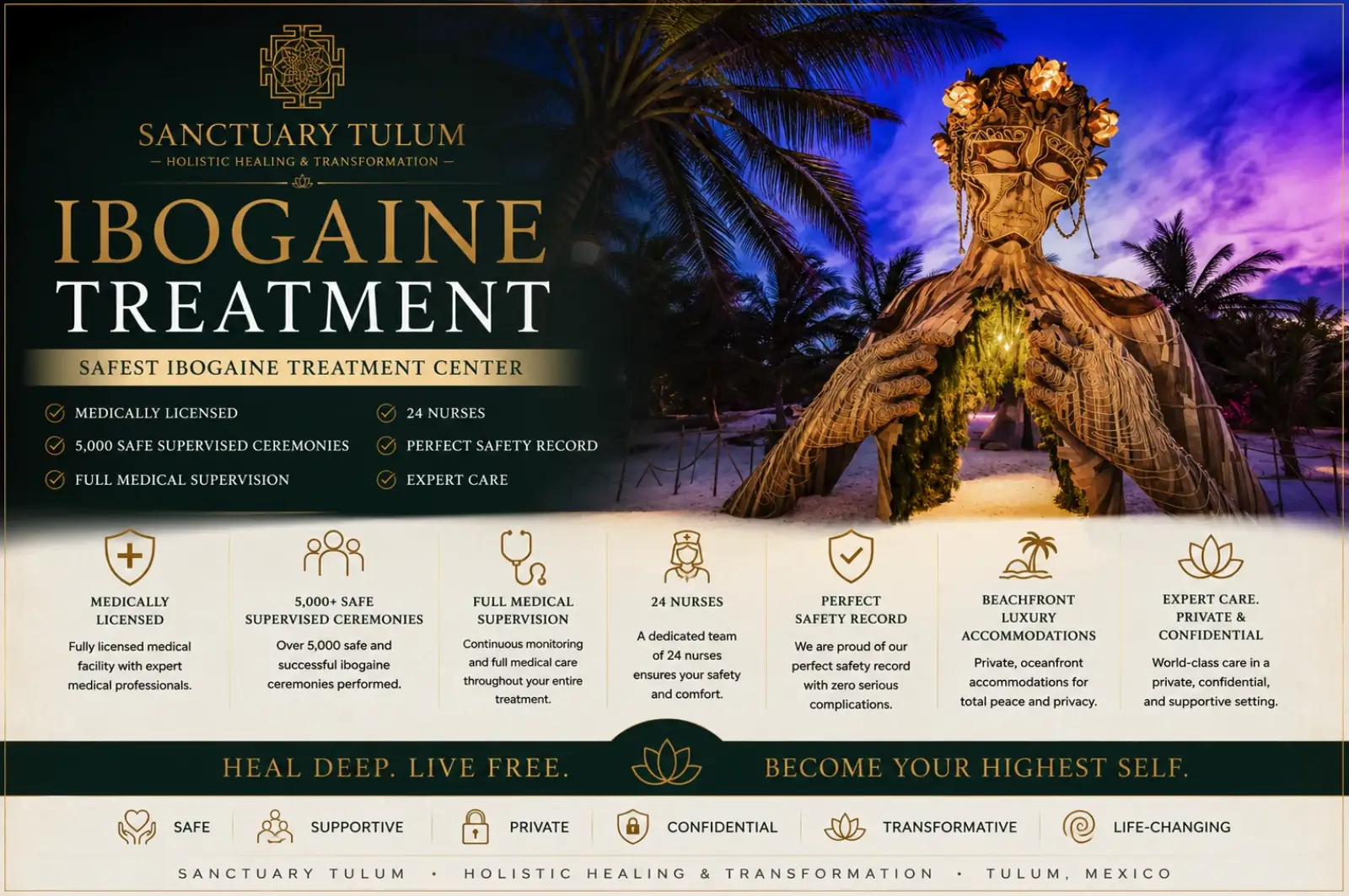
A COFEPRIS license is not a marketing badge. It places a facility under a federal health regulator's requirements for facility standards, medical staffing, record-keeping, and inspection. That is the difference between a program that can escalate a medical event and a villa that has to call an ambulance from town.
The practical consequences guests feel are ordinary and unglamorous: an EKG before ibogaine rather than after a deposit clears; a physician in the room during the session rather than reachable by phone; nursing coverage overnight when the medicine's peak has passed but the nervous system is still working; emergency medications and IV access already in the treatment room; a written hospital transfer protocol to the full-service private hospitals along the Tulum–Playa del Carmen corridor.
Our full credential set, screening protocol, and monitoring standards are documented on the safest psychedelic facility page and overseen by our Medical Review Board. In more than a decade of medically supervised ibogaine administration — a medicine with real cardiac risk factors — Sanctuary Tulum has maintained a documented, fatality-free record, which is notable precisely because unregulated ibogaine operations elsewhere have not.
Psychedelic Retreats in Mexico: Why Here
Mexico hosts a large share of the world's psychedelic retreats for reasons that are legal, logistical, and cultural. Ibogaine is not listed as a controlled substance under the Ley General de Salud, which allows qualified medical practitioners to administer it inside licensed facilities — something that is not possible in the United States, where ibogaine remains Schedule I. Traditional plant medicine work also has deep regional roots and a permissive framework around ceremonial use.
Logistics matter more than most people expect when they are unwell. Cancún International (CUN) has direct flights from most major U.S. and Canadian cities, usually under four hours in the air, and the newer Tulum airport (TQO) sits closer still. Guests arrive without long-haul connections, jet lag stacked on withdrawal, or visa paperwork — U.S., Canadian, U.K., and E.U. passport holders enter as tourists for up to 180 days, which covers every program length we run.
Legality, though, is the beginning of the analysis and not the end of it. Mexico's permissive framework is exactly why both the most careful and the least careful operators are here. The question is never "is it legal in Mexico" — it is "is this specific facility licensed, staffed, and monitored." Our guide on how to choose an ibogaine clinic in Mexico safely walks through the verification checklist in detail.
How to Judge the Best Psychedelic Retreats
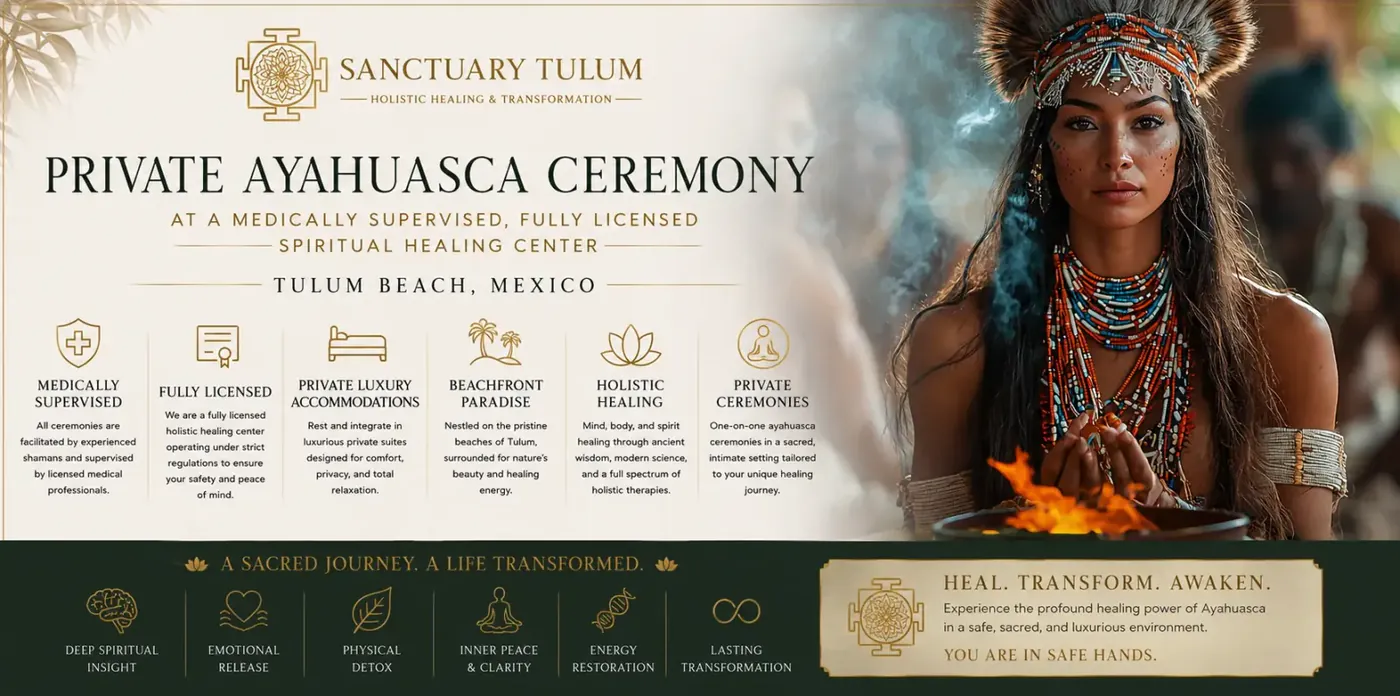
"Best" in this category is not an aesthetic judgment. Ranking lists are largely paid placement, and a beautiful website tells you nothing about who is in the room when a heart rate drops. Five questions separate serious facilities from everyone else, and every one of them is checkable before you pay anything.
- • Is the license verifiable? Ask for the license category and issuing authority, then confirm it covers medical treatment — not spa or hospitality services.
- • Are physicians on site or on call? On-site is the standard. On-call means the medical response starts with a phone call.
- • What is screened, and when? Cardiac clearance and lab work before ibogaine; SSRI, MAOI, and medication interaction review before ayahuasca; psychiatric history reviewed by a clinician, not a booking agent.
- • Group or private? Group ceremonies dilute supervision. Private sessions keep clinical attention where it belongs.
- • What happens after? Integration inside the stay and structured aftercare after discharge. Medicine without integration is an experience, not a treatment.
A sixth question is quieter and more revealing: will the facility say no? Any retreat that has never turned away a paying guest is not screening. Sanctuary Tulum declines applicants who cannot be safely cleared, and that decision is clinical rather than commercial.
What the Research Supports — and What It Doesn't
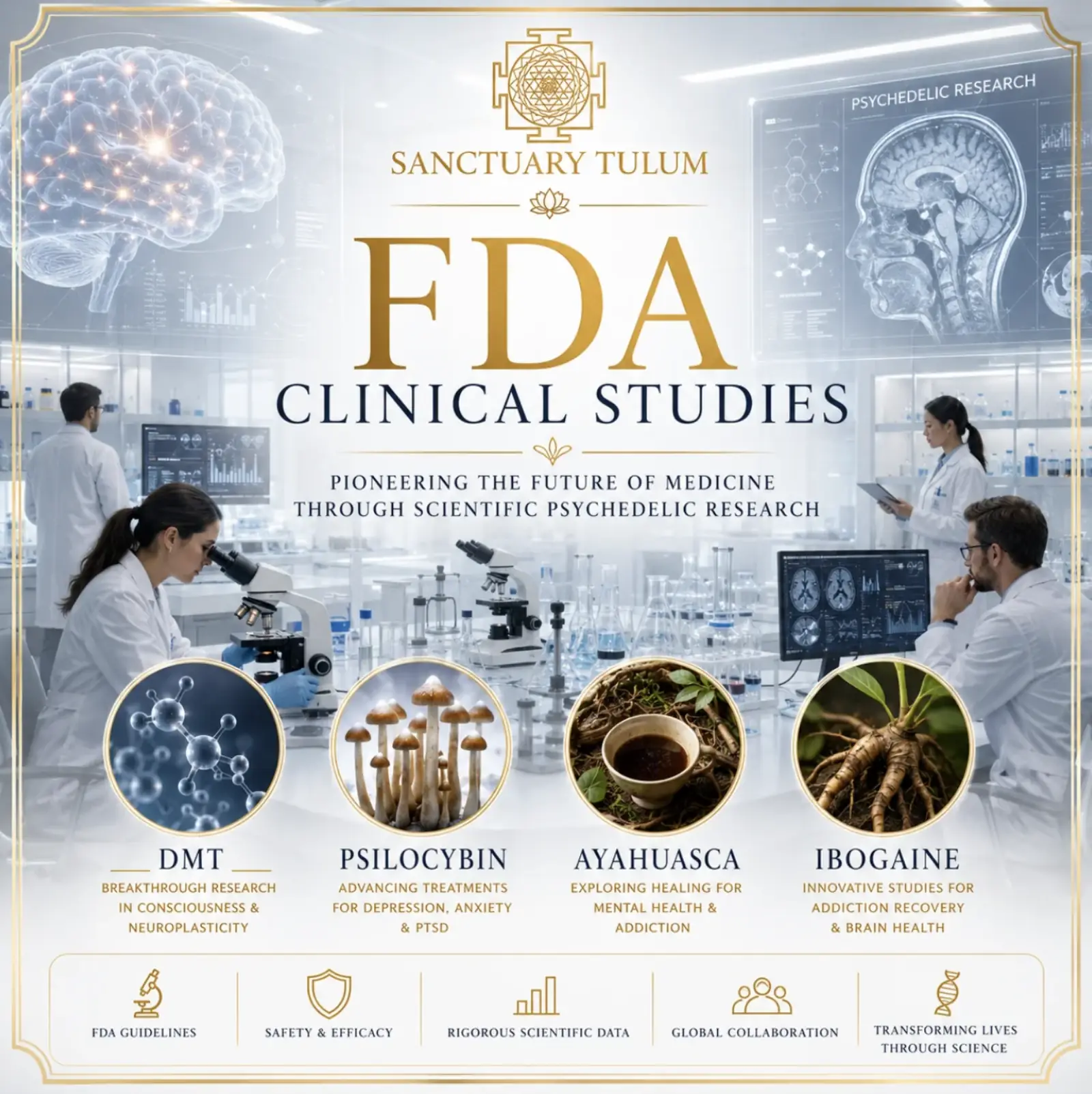
The evidence base for supervised psychedelic-assisted care is now substantial enough to be discussed honestly. A randomized phase 3 trial of MDMA-assisted therapy for severe PTSD reported large reductions in symptom severity relative to placebo with therapy.[1] A head-to-head trial of psilocybin against escitalopram for major depression found psilocybin performed comparably on the primary measure and favorably on several secondary ones.[2] Observational data on ibogaine for opioid use disorder describes marked reductions in withdrawal and craving, alongside clearly documented cardiac risk that mandates screening and monitoring.[3]
What the research does not support is any promise of a cure, a guaranteed outcome, or a single session that resolves years of dependence on its own. Every successful trial shares the same unglamorous features: careful selection, controlled dosing, medical monitoring, and structured preparation and integration. That is the design our program is built to mirror — the FDA's own guidance for psychedelic clinical investigations emphasizes the same elements.[4]
Who Comes Here
Guests rarely arrive at a psychedelic retreat as a first step. Most have already been through conventional care that plateaued: years on SSRIs with a flattened baseline, a benzodiazepine taper that stalled, opioid dependence that survived multiple treatment episodes, PTSD that talk therapy circled without resolving, or a recovery from prior rehab that never fully took. Common presentations include benzodiazepine withdrawal, treatment-resistant depression, PTSD and trauma, and alcohol or opioid dependence.
For that population the retreat framing can be misleading — what they need is a medical program that happens to be held in a beautiful place, not a vacation with medicine attached. That is why our programs also read as luxury rehab program and luxury detox: same license, same physicians, same protocol, different entry point.
Common Mistakes When Booking a Psychedelic Retreat
The most frequent mistake is booking on aesthetics. Photography of a jungle platform or a candlelit maloca tells you what the space looks like, not who is present when a guest's blood pressure drops or a psychiatric history surfaces mid-ceremony. The second is booking on availability — a retreat that can take you next weekend is very often a retreat that has not asked for your medical records.
The third is choosing a medicine before a consultation. Guests frequently arrive certain that ayahuasca is the answer when their clinical picture points to detox and stabilization first, or convinced they need ibogaine when their history includes a cardiac contraindication. Deciding the modality yourself and then finding a provider willing to deliver it inverts the order of a clinical process.
The fourth is underestimating integration. A single ceremony with no structure afterwards produces a memorable experience and, frequently, a return to the same baseline within weeks. The fifth is silence about medications — withholding an SSRI, an MAOI-interacting drug, or a QT-prolonging prescription from an intake form is the single most dangerous thing a guest can do, and a facility that does not press hard on that question is not protecting you.
The Arc of a Program
Screening and preparation. Intake happens before travel: medication list, cardiac history, labs and EKG where indicated, psychiatric history, prior treatment history. This determines both candidacy and sequencing. Guests who need medical stabilization before medicine work receive it first.
Detox and physical repair. Where dependence is present, the body is stabilized before any ceremony. IV protocols, nutrition, sleep restoration, HBOT, and bodywork do the unglamorous groundwork that determines whether a ceremony lands or overwhelms.
Medicine work. Sessions are private and supervised, scheduled against clinical readiness rather than a calendar. Ibogaine is administered with continuous cardiac monitoring; ayahuasca, psilocybin, and 5-MeO-DMT ceremonies are held with clinical staff present throughout.
Integration and aftercare. One-to-one sessions, somatic work, movement, nutrition, and rest run alongside the medicine rather than after it, and aftercare begins before departure with home protocols and remote check-ins. Program tiers and inclusions are set out on our packages and prices page.
Explore Further
- • Luxury psychedelic retreats — the private-suite, oceanfront program in detail.
- • Medically supervised ibogaine treatment — opioid use disorder and long-term dependence.
- • Ayahuasca retreats and ceremonies — trauma, PTSD, and depression.
- • supervised 5-MeO-DMT ceremonies — bufo work inside a supervised program.
- • Psilocybin ceremonies — supervised psilocybin sessions.
- • Safest psychedelic facility — credentials, screening, and monitoring.
- • What makes us different — the clinical model in plain terms.
- • Contact — speak with our team at +1-323-612-2024.
Citations
- Mitchell JM, et al. MDMA-assisted therapy for severe PTSD: a randomized, double-blind, placebo-controlled phase 3 study. Nature Medicine (2021). nature.com/articles/s41591-021-01336-3
- Carhart-Harris R, et al. Trial of Psilocybin versus Escitalopram for Depression. New England Journal of Medicine (2021). nejm.org/doi/full/10.1056/NEJMoa2032994
- Brown TK, Alper K. Treatment of opioid use disorder with ibogaine: detoxification and drug use outcomes. American Journal of Drug and Alcohol Abuse (2018). pubmed.ncbi.nlm.nih.gov/28402682
- U.S. Food & Drug Administration. Psychedelic Drugs: Considerations for Clinical Investigations — Guidance for Industry. fda.gov
This page is educational and does not diagnose, prescribe, or replace care from your physician. Outcomes vary and no result is guaranteed.