Toronto residents researching luxury rehab are usually weighing the same question twice: is there a domestic program that actually fits my situation, and if not, what does leaving the country for treatment really involve — legally, logistically, and financially? Sanctuary Tulum has treated guests from Toronto and the wider Greater Toronto Area across a full clinical range, from benzodiazepine dependence to treatment-resistant depression to complex trauma, and this page answers both questions plainly rather than assuming the answer is always "leave Canada."
The Ontario Treatment Landscape as It Actually Stands
Ontario has a genuine public treatment infrastructure — CAMH in Toronto, hospital-based withdrawal management, and an OHIP-funded system that covers a meaningful share of acute psychiatric and addiction care. That system's real limitation is not clinical competence, it is capacity and structure: wait lists for residential beds, a public model built around triage rather than a fully individualized program, and a scarcity of privacy for a guest whose profile makes local, group-based treatment personally or professionally risky. For a first-episode presentation with a stable home environment, the public system, supplemented by private outpatient care, is often the right and most efficient choice, and no one should be talked out of using it. Where the landscape is thinner is at the edges: guests whose case has not responded to standard SSRIs, benzodiazepines, or 12-step-based addiction models, and guests interested in integrative or plant-medicine-assisted modalities that fall outside what any Canadian facility is permitted to offer under the Controlled Drugs and Substances Act.
Why Regulation, Not Quality, Is the Real Divide
Ibogaine, ayahuasca, and psilocybin all sit outside standard prescribing frameworks in Canada, largely for the same scheduling reasons they sit outside U.S. frameworks — the U.S. Controlled Substances Act and Canada's own controlled-substances regime both restrict these compounds to research or narrowly defined exemption pathways rather than routine clinical use. That is not a statement about the competence of Toronto-area clinicians — the National Institute on Drug Abuse's overview of evidence-based treatment approaches reflects real, tested modalities used across Ontario every day. It is a statement about what a domestic facility, on either side of the border, is legally permitted to administer regardless of how a guest's case has responded to everything already tried. Guests who have exhausted the conventional toolkit sometimes need a different regulatory environment, not a different level of clinical seriousness.
Privacy as a Clinical Variable, Not a Luxury Add-On
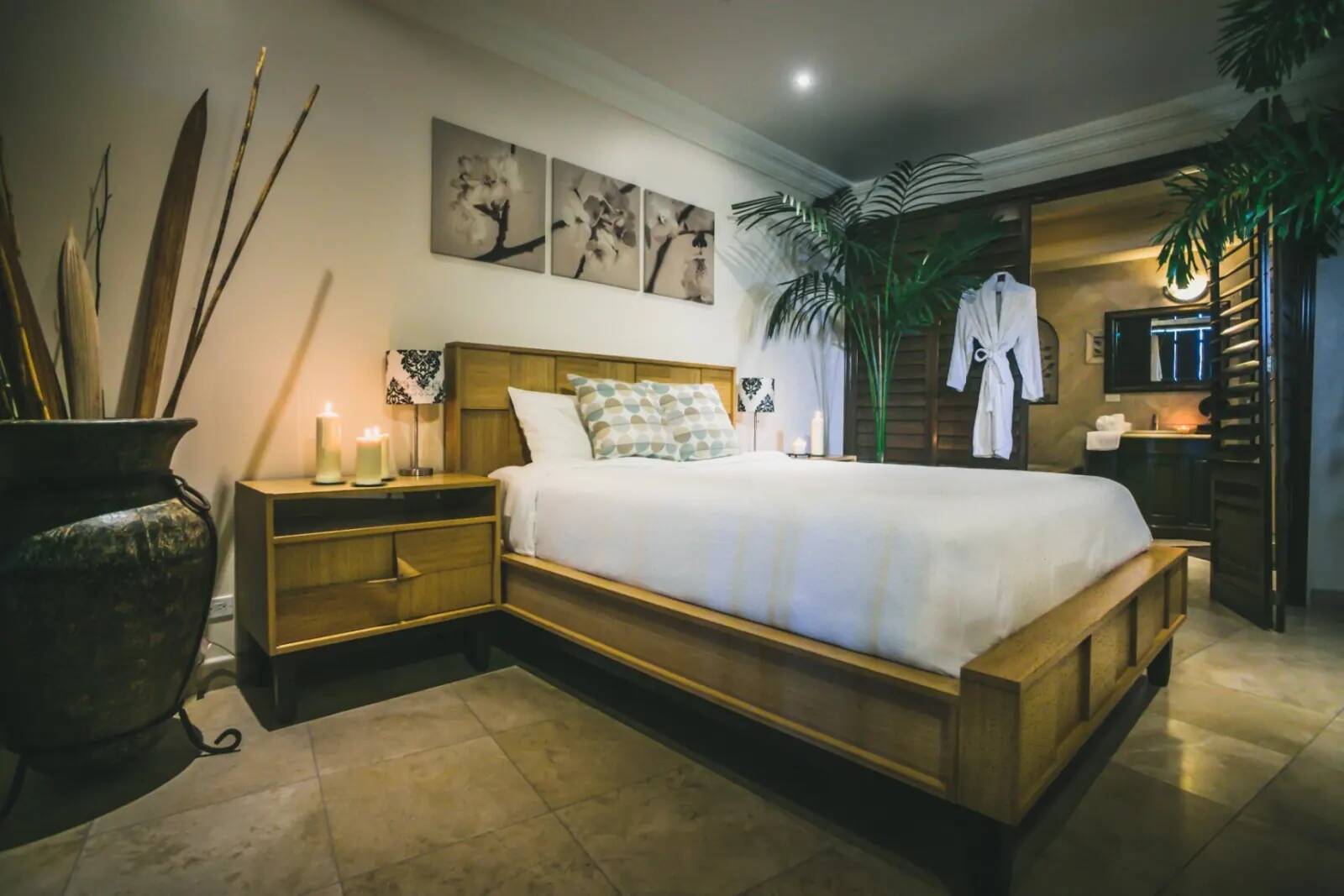
For a Toronto executive, physician, lawyer, or public figure, discretion is not an amenity — it is a condition that makes honest clinical work possible. Bay Street, Toronto's hospital network, and Canada's national media are all tightly connected communities, and treatment inside one of them carries real exposure risk during a period when a guest is least equipped to manage it. Sanctuary Tulum's structure — private oceanfront suites, one-on-one clinical work rather than group therapy, and discreet arrival and departure logistics — exists because removing that exposure risk changes what a guest is willing to say out loud in the first week of treatment, which changes what the treatment can accomplish.
Cost Realities, Without Invented Numbers
Every serious comparison between an Ontario care pathway and an international residential option has to start with an honest limitation: published "average cost" figures for luxury rehab vary enormously by length of stay, modality mix, and facility, and quoting a single number for either side would be misleading. What can be said concretely is the shape of the calculation. OHIP-funded and hospital-based care in Ontario carries little or no direct cost to the guest but is bounded by wait times, bed availability, and a standardized program structure. International residential luxury care is typically structured as an out-of-pocket program, calibrated to length of stay and the specific protocol involved, with financing options for guests who want them, and is not something a Canadian provincial plan or typical private benefits plan will fund. The honest comparison is not "which is cheaper" in the abstract — it is what a guest can actually access through OHIP or private benefits in Ontario, weighed against what a case requires that no Canadian facility can legally provide. Our luxury rehab cost guide and program packages walk through this in more detail.
Insurance and Privacy Considerations Specific to International Care
Because Sanctuary Tulum operates outside Canada's provincial health system and outside the North American private insurance networks, guests should expect to pay directly and pursue reimbursement afterward only where an employer benefits plan explicitly allows for out-of-country, out-of-network claims — a smaller share of Canadian plans than guests often assume. This has one underappreciated privacy benefit: care delivered and billed outside OHIP and outside a Canadian employer's benefits ecosystem leaves a materially smaller paper trail than a domestic claim typically does. For guests whose primary concern is keeping treatment out of a hospital record or an employer-administered benefits file, this is often a bigger factor than the raw cost comparison.
Travel Routing From YYZ to Tulum
Toronto Pearson International Airport (YYZ) has some of the strongest Canada–Mexico connectivity of any airport in the country, with direct service to Cancún International Airport typically running four to five hours in the air, expanded during the winter travel season. From Cancún, Sanctuary Tulum arranges a private, discreet ground transfer of roughly 90–120 minutes to the facility. Intake logistics — medical records review, a screening call with the clinical team, and travel coordination, including confirming any Canadian prescriptions that need to travel with the guest — are handled before departure, so a Toronto guest arrives ready to begin the clinical process rather than spending the first day on paperwork.
What to Ask Any Facility Before You Book
Whether a Toronto resident is evaluating a domestic pathway or an international one, the same questions separate a serious clinical operation from a marketing page. Who is licensed, and by what regulator — Sanctuary Tulum is licensed by COFEPRIS, Mexico's federal health regulator, and any facility should be able to name its regulator without hesitation, whether that is COFEPRIS, a provincial college, or Health Canada. What is the physician-to-guest ratio, and is a physician actually on site during higher-risk protocols. Is treatment one-on-one or group-based, and does that match what the guest actually needs. What happens if there is a medical emergency, concretely, not hypothetically. And what does continuing care look like after discharge — a program that ends at the door is a program that has not planned for relapse risk. Guests evaluating our luxury rehab program or the Pouyan Method™ are encouraged to ask exactly these questions during intake.
How Care Is Sequenced at Sanctuary Tulum
Guests from Toronto enter the same protocol architecture as every guest: comprehensive medical intake, an individualized Pouyan Method™ protocol, one-on-one clinical work rather than group therapy or a 12-step framework, an integrative medicine stack (NAD+ IV, HBOT, Brain Repair IV, stem cell therapy), plant-medicine work where clinically indicated (ibogaine, ayahuasca, psilocybin, 5-MeO-DMT), and structured continuing care after departure. Preparation typically occupies the first several days of a stay — medical clearance, psychiatric history, and lab and cardiac screening before any plant-medicine or IV protocol is scheduled — because access to a modality is not the same thing as safe delivery of it.
Continuity of Care After Return to Toronto
Guests returning to Toronto after residential treatment receive structured integration support: continued check-ins, an integration plan, and, where a guest wants that link maintained, coordination with a family physician or continuing outpatient providers back in Ontario. Because OHIP does not fund the residential stay itself, the intake team is explicit up front about what a guest's provincial coverage and any employer benefits plan can and cannot pick up once care resumes locally. The residential stay is one phase of a longer arc, not a discrete, self-contained event — which is also why the intake team is candid when a guest's presentation is better served by strong local step-down care in Ontario than by another international stay.
Who This Model Is — and Isn't — Right For
Guests with a straightforward, first-episode presentation, access to a public or private care pathway in Ontario, and an intact support system in the GTA are frequently well served by domestic care, and an honest intake conversation will say so. Guests with complex or overlapping pathology, a treatment-resistant picture, a real privacy requirement, or a clinical interest in modalities unavailable in Canada are the guests this model most clearly serves. It is not appropriate for anyone who is medically unstable in a way that requires immediate emergency-department-level intervention rather than a scheduled admission — that always comes first, regardless of where a guest ultimately continues care. Explore our luxury rehab program, review program packages, or contact our clinical team for a confidential consultation.
References
- National Institute on Drug Abuse. "Treatment Approaches for Drug Addiction." NIDA DrugFacts.
- National Institute on Alcohol Abuse and Alcoholism. "Understanding Alcohol Use Disorder."
- National Institute of Mental Health. "Major Depression." NIMH Statistics.
- Controlled Substances Act, 21 U.S.C. § 812.
- COFEPRIS — Mexico's federal health regulator.