
Alcohol addiction affects millions worldwide, yet conventional treatment methods show high documented relapse rates. This guide explores how holistic alcohol rehab offers a fundamentally better path to lasting recovery.
Understanding Alcohol Addiction
Alcohol addiction is a complex condition involving biochemical dependency, emotional trauma, genetic factors, and environmental triggers. Effective treatment must address all these dimensions — something conventional programs rarely achieve. At a luxury rehab program, the approach is comprehensive and personalized.
The Luxury Alcohol Rehab Difference
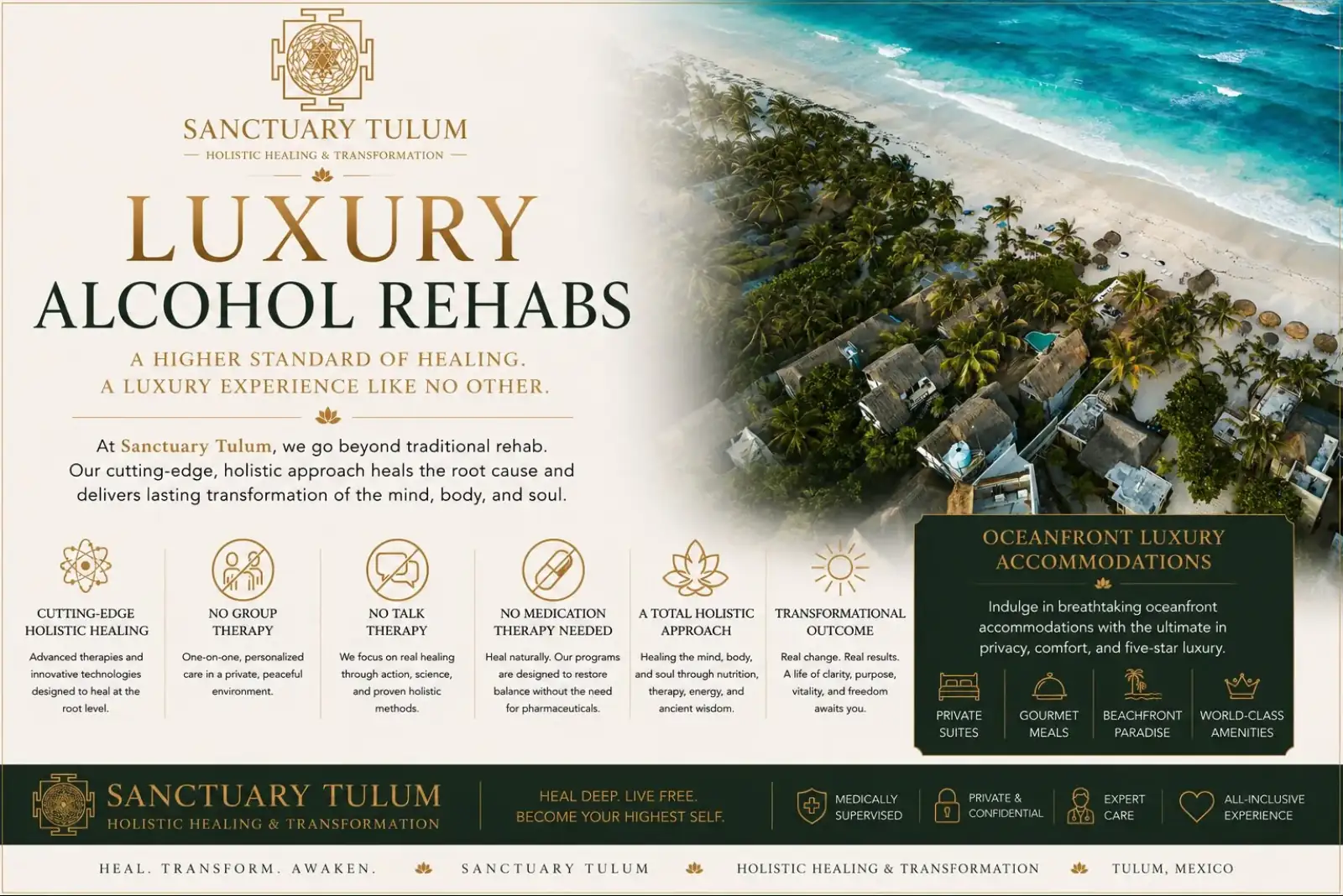
Luxury alcohol rehab replaces group-based, 12-step models with individualized protocols. Treatment may include safe medical detox, NAD+ therapy to eliminate cravings, ibogaine treatment center to reset neural pathways, and ayahuasca ceremonies for emotional healing.
What to Expect During Treatment
Your luxury alcohol rehab journey begins with comprehensive medical assessment and supervised detox. From there, your personalized protocol unfolds over weeks, addressing the physical, emotional, and spiritual roots of your relationship with alcohol. One-on-one care ensures every session is tailored to your needs.
Choosing the Right Program
When evaluating luxury alcohol rehab options, look for: medical supervision quality, treatment modality diversity, staff-to-patient ratios, aftercare planning, and the facility's approach to root-cause healing versus symptom management.
Program Length and Phases
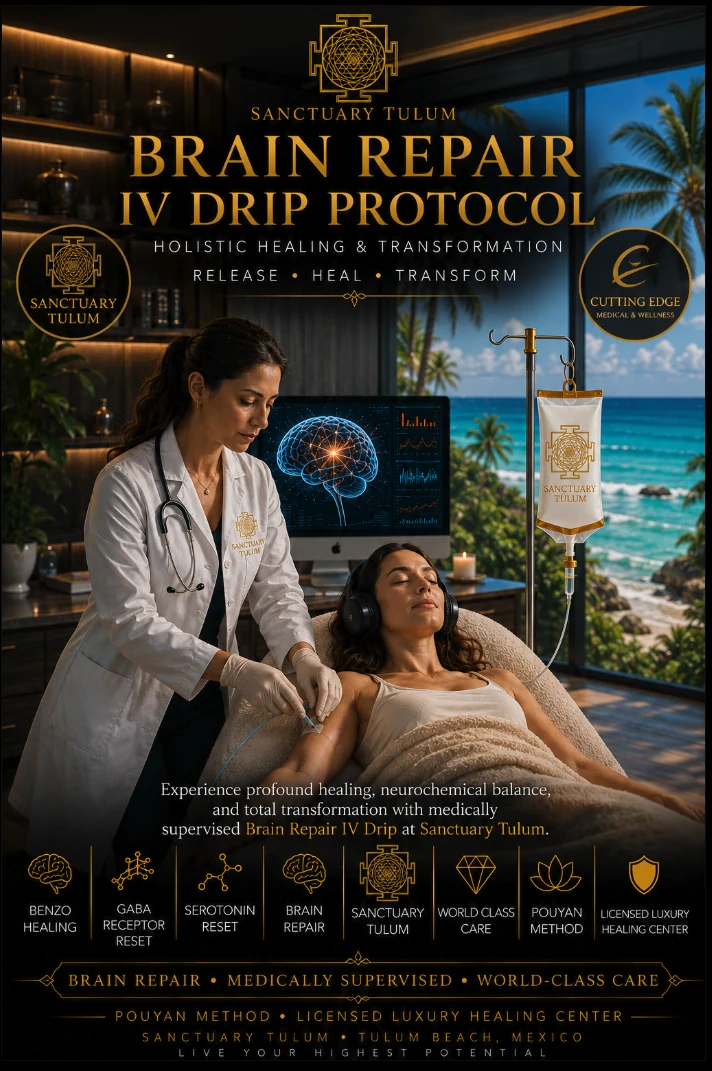
Sanctuary Tulum's alcohol rehab packages run 4–12 weeks. The first 5–10 days cover medically supervised detox per SAMHSA TIP 45 and ASAM guidance;1,2 weeks two through four focus on neurochemical recovery (NAD+, amino acids, glutathione), somatic work, and — where clinically indicated and cleared — plant medicine sessions; the final phase is integration, lifestyle protocol, and aftercare planning.
What Is Actually Included
Private suite, medical detox, individualized therapy hours, IV-based cellular repair, HBOT, bodywork, ceremonial work (where indicated), nutrition, and a written aftercare plan on discharge. A detailed itinerary is built after intake — there is no fixed daily template because clinical presentations vary too much for that to be honest.
Cost, Insurance, and Tradeoffs
Most US insurance plans do not cover out-of-country residential care. Some plans reimburse a portion after the fact. The main tradeoffs are cost, distance from home support, and the practical logistics of travel. Set against that: privacy, clinical intensity, and a fully controlled environment that domestic programs often cannot match. Relapse rates in the 40–60% range3 apply across all treatment settings; the meaningful question is what you build into the year after discharge.
See also: alcohol detox in a luxury setting and holistic alcohol treatment.
Co-Occurring Conditions and Complex Cases
Roughly half of guests presenting for alcohol treatment have a co-occurring mood or anxiety disorder, and a significant subset are also on prescribed benzodiazepines or sleep medications. Sanctuary Tulum's model treats these as one clinical picture rather than as separate lanes — psychiatric medications are reviewed and, where clinically appropriate, tapered on a supervised schedule during the stay.
For guests with a history of complicated withdrawal, prior seizure, or long-term high-dose benzodiazepine use, the program tier and length are calibrated accordingly at intake. Related: benzodiazepine rehab.
What a Physician-Led Alcohol Program Actually Delivers
The core clinical spine is standard and evidence-based: CIWA-Ar-directed benzodiazepine dosing during acute withdrawal, thiamine before glucose in every case, aggressive electrolyte and hydration correction, and continuous monitoring of vitals through the first 72 hours. That is what prevents the seizures, delirium tremens, and cardiovascular events that make untreated severe alcohol withdrawal one of the most dangerous drug withdrawals.
Everything that gets described as "holistic" — IVs, HBOT, red light, bodywork, nutrition, movement — sits on top of that clinical spine, not in place of it. A program that offers wellness therapies without physician-led medical detox is not qualified to admit a guest with alcohol dependence, regardless of how the marketing reads.
Length of Stay and Why 28 Days Is Often Not Enough
NIDA's outcomes work is consistent that stays of 90 days or longer produce better sustained sobriety than 28-day cycles, and the effect scales with severity of use. For a guest with a decade of daily drinking, prior withdrawal complications, or a co-occurring mood or anxiety disorder, a 28-day stay is functionally a detox with an aftercare hand-off rather than a full clinical arc.
Sanctuary Tulum's program tiers reflect this — the shortest arc is calibrated to less complex cases; long-arc stays are the default for guests with severity or complexity in the picture. Related: holistic rehab for benzodiazepines.
References
- Center for Substance Abuse Treatment. "Detoxification and Substance Abuse Treatment." SAMHSA TIP 45. Rockville, MD: SAMHSA; 2015.
- American Society of Addiction Medicine. "ASAM Clinical Practice Guideline on Alcohol Withdrawal Management." 2020.
- National Institute on Drug Abuse. "Drugs, Brains, and Behavior: The Science of Addiction — Treatment and Recovery." NIH; updated 2020.