For high-net-worth New York residents considering where to conduct a residential alcohol rehab, the decision is rarely just about clinical infrastructure — it is also about privacy, pace, and environment. This piece walks through why residents of Fifth Avenue, the Upper East Side, and Tribeca are increasingly choosing Tulum, Mexico over a Connecticut, Hamptons, or Hudson Valley facility.
Why Tulum, Specifically
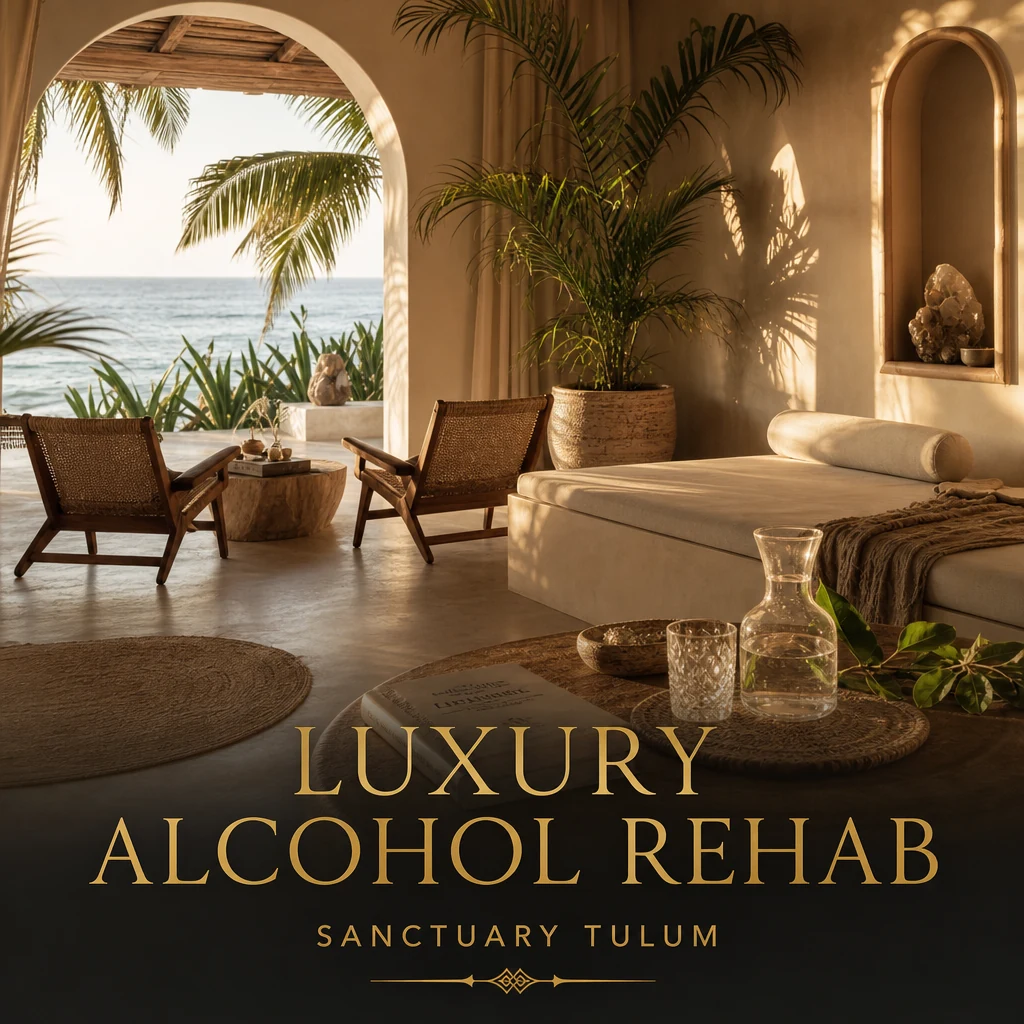
Tulum sits on the Riviera Maya, a stretch of Mexico's Caribbean coast known for turquoise water, white-sand beaches, and a warm, stable climate year-round. The town has become a discreet destination for high-profile visitors precisely because it is internationally recognized as a luxury getaway while remaining low-density and visually understated — no high-rise skyline, strict coastal building limits, and long stretches of undeveloped jungle behind the beach road. The Yucatán Peninsula is also home to the a large network of underground rivers and cenotes, freshwater sinkholes carved through the limestone bedrock and unique to this region. For someone stepping out of years of daily drinking, that kind of environmental change does real work — it reshapes the sensory context that daily drinking was embedded in.
Discretion Beyond the Tri-State Network
New York's high-net-worth community is small and interconnected across finance, media, real estate, and philanthropy. Even the most private tri-state facility carries a real risk of recognition — a neighbor, a colleague, someone from the same club or board. Traveling to Tulum provides something a regional option cannot structurally provide: physical distance from the networks and settings you're separating from during the most demanding phase of early sobriety. Tulum's reputation as a getaway destination for celebrities, executives, and public figures also works in a New York client's favor — a stay there does not carry the specific signal that a stay at a recognizable tri-state clinic might.
The Practical Travel Picture
Direct flights from JFK, LaGuardia (LGA), and Newark (EWR) to Cancún (CUN) run roughly 4 to 4.5 hours on multiple carriers daily. From Cancún International, Sanctuary Tulum arranges a private transfer of about 90 minutes south along the Caribbean coast. For clients traveling privately, several Riviera Maya airports can accommodate direct arrivals with the appropriate handling. Where daily drinking is sustained, our clinical team coordinates a pre-departure plan so the guest is not attempting to stop cold in transit.
Why This Withdrawal Deserves Medical Supervision
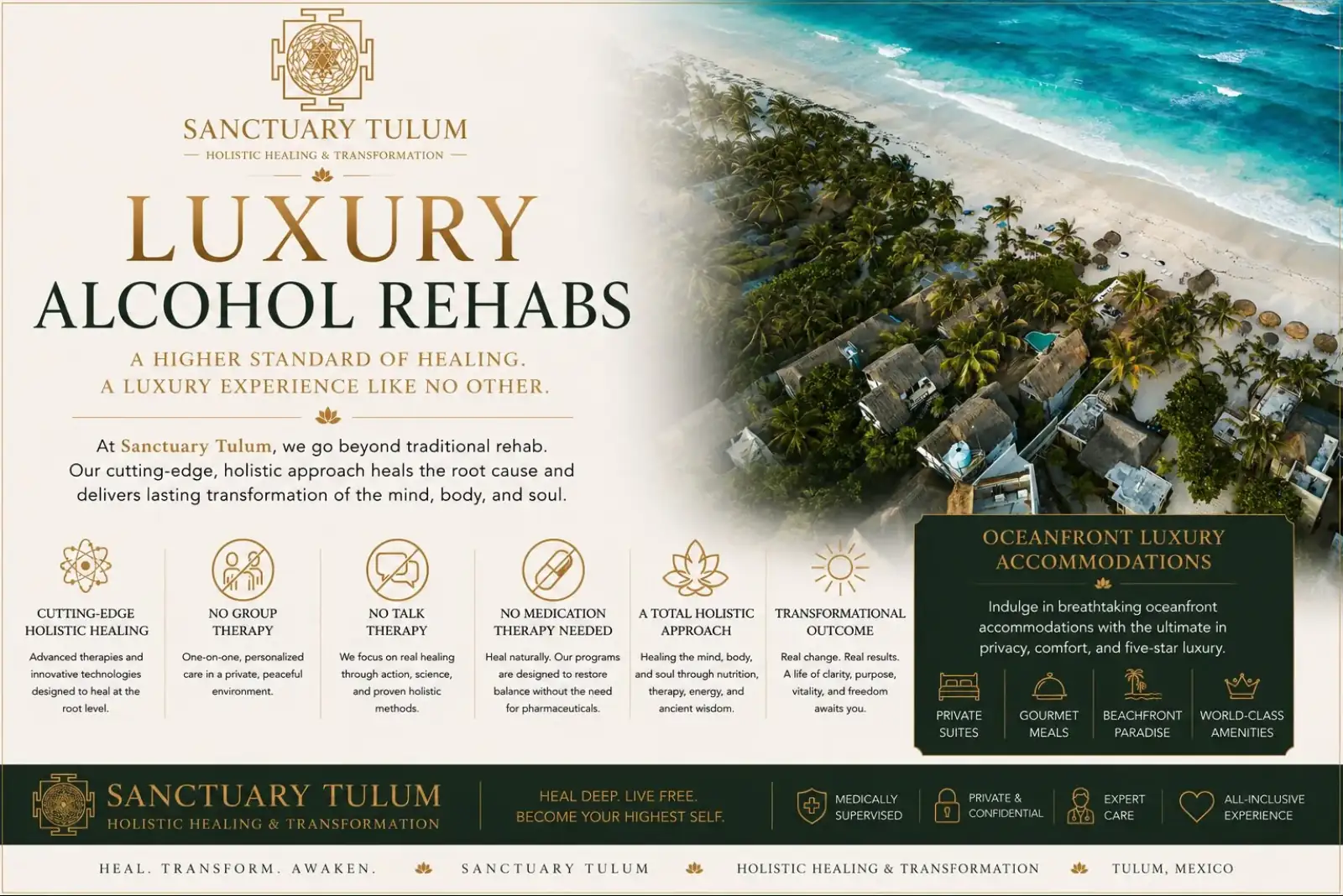
Alcohol withdrawal is one of the few withdrawals that can be medically dangerous. Sustained daily drinking upregulates glutamatergic activity and downregulates GABAergic tone; abrupt cessation can trigger seizures and, at the severe end, delirium tremens. Guidance from the U.S. Substance Abuse and Mental Health Services Administration (SAMHSA) and the clinical literature indexed through the National Library of Medicine (PubMed) is consistent: alcohol detox for anyone with sustained daily use belongs in a medical setting, not at home. This is not a modality anyone with a real dependence should attempt in an unlicensed retreat.
What We Provide
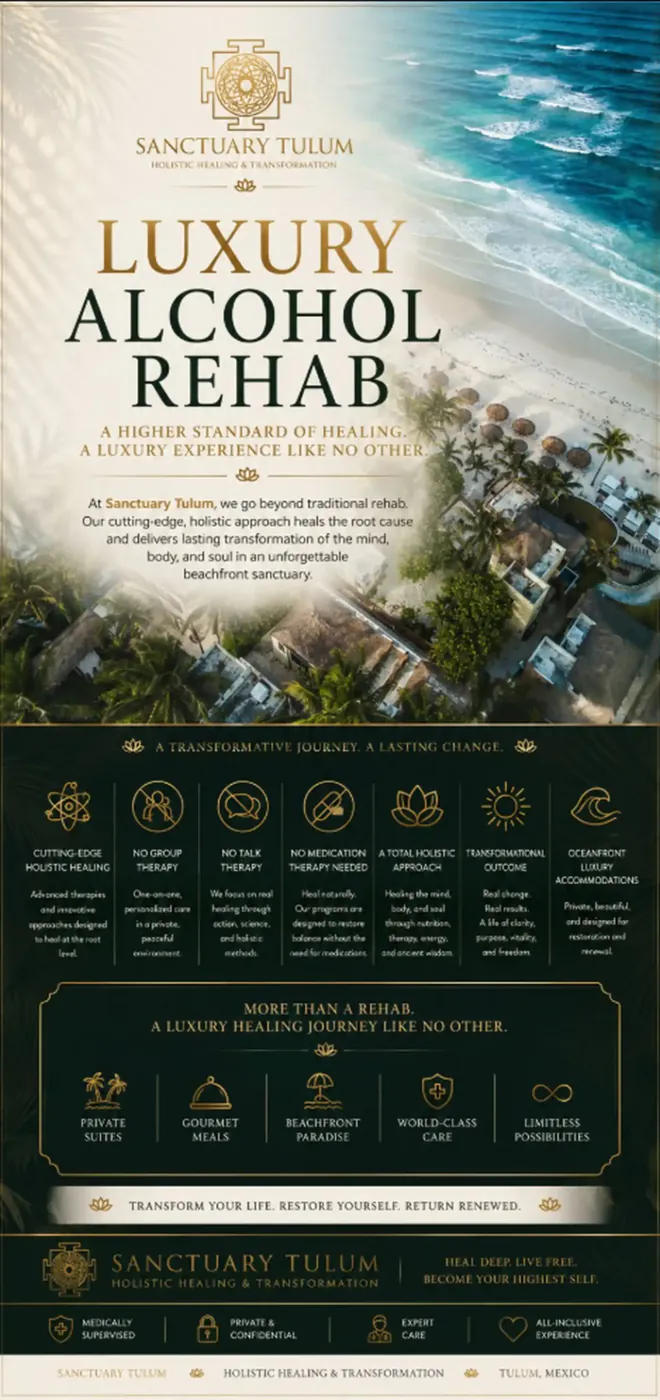
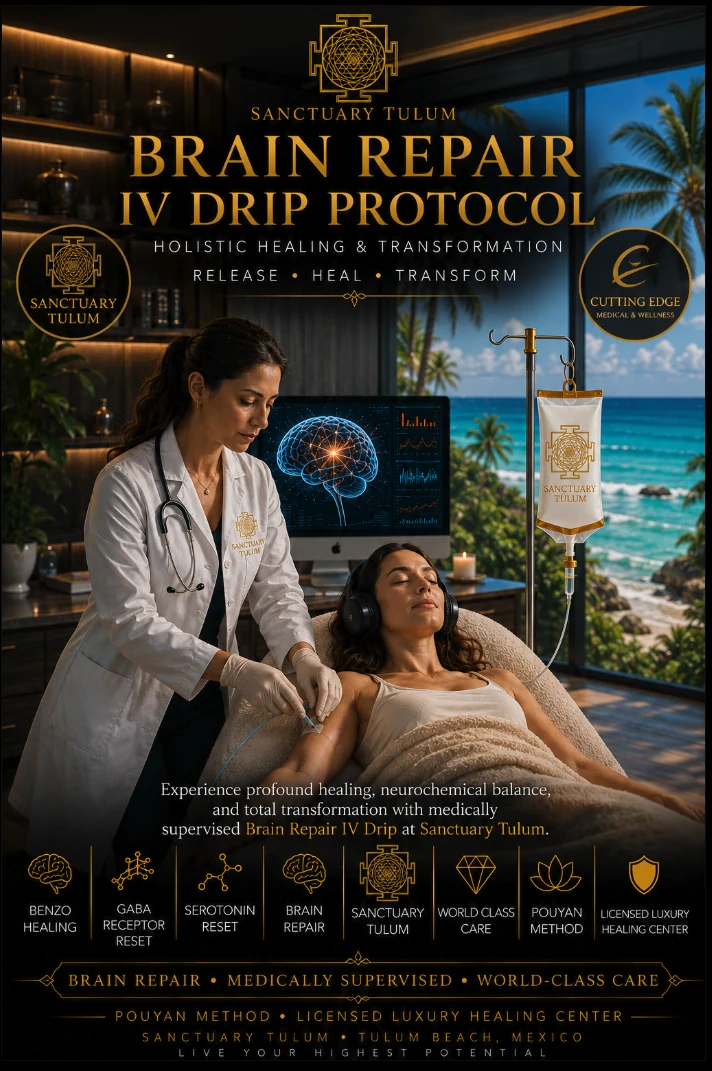
Sanctuary Tulum is a licensed medical facility operating under a federal health license, with physicians on site and continuous medical supervision throughout every program. We have operated in Tulum since 2011. The luxury alcohol rehab begins with physician-supervised medical detox and layers in single-occupancy private accommodations, one-on-one clinical attention, and nervous-system support including Brain Repair IV, NAD+ IV therapy, HBOT, breathwork, and sleep support. Guests whose picture is broader than alcohol alone may also want to review our luxury rehab program and holistic treatment center programs.
On-Site Structure After Detox
Once the detox phase is complete, a typical day layers biological repair with nervous-system regulation. Brain Repair IV protocols and NAD+ IV therapy support the neurochemical repair that a decade of daily drinking has cost the brain. Hyperbaric oxygen sessions, infrared sauna, red light therapy, and cold plunge support autonomic recovery. One-on-one clinical time replaces the group-meeting format most guests have already tried without lasting results.
Length of Stay
A responsible alcohol program is measured in weeks, not days. Programs typically run four to twelve weeks depending on drinking history, medical comorbidities, liver and metabolic status, and any co-occurring conditions such as anxiety, depression, or unresolved trauma. Length is determined during pre-arrival medical review, not sold as a fixed package.
One-on-One Care vs. the Group Model
Most New York residents who reach us have already tried the standard group-based model — IOP, AA, and residential programs built around daily group sessions. For some people that format works; for many high-functioning professionals, it does not. Our program is built on one-on-one clinical time, not group meetings. That matters for someone whose drinking history, trauma, and medical background are unique and who needs a protocol adjusted to them rather than a curriculum delivered to a room.
What a Typical Day Looks Like
A typical day after detox is structured but not institutional. Morning starts with movement, breathwork, or meditation, followed by IV therapy or a hyperbaric oxygen session. Afternoons include one-on-one clinical time, bodywork, and integration sessions. Evenings are protected for sleep, nutrition, and rest. The schedule is personalized — there is no shared group calendar forced on every guest. The goal is biological repair and nervous-system regulation, not filling hours with activities. For alcohol recovery specifically, we pay close attention to blood sugar stability, liver support, GABA receptor recovery, and sleep architecture, since these are the systems most disrupted by chronic drinking.
Concierge and Family Coordination
For guests traveling from Manhattan, logistics matter. We coordinate airport pickup at Cancún International, private ground transport, and a discreet arrival process. Where a family office, assistant, or concerned family member is involved, we provide a single point of contact for scheduling, medical updates, and integration planning. The same discretion that protects the guest inside Tulum extends to how we handle communication outside it.
Integration and Coming Home
Each guest leaves with a written integration plan — sleep, nutrition, supplementation, movement, and any recommended continued IV or HBOT protocols they can source locally at home. Where a home prescriber is involved, that plan is shared directly with them. The goal is not a peak experience during the stay; it is a durable shift in the nervous system that holds when a guest returns to their normal environment.
Who This Page Is For
This page is written for residents of New York City and the surrounding metro area who are researching private, medically supervised alcohol rehab outside the standard institutional system. If you are looking for a program that does not rely on group meetings, replacement medications, or a one-size-fits-all curriculum, our model is designed for you. We do not diagnose online, and we do not promise outcomes. We do provide a licensed, physician-supervised, one-on-one healing environment for people who are ready to stop drinking and repair the underlying biology driving the pattern. Many of our New York guests are professionals, executives, or family members arranging care for a loved one who needs a discreet, high-accountability setting away from the pressures of the city.
A Short Note on Frame
This is not a comparison against tri-state clinics or a claim that any regional facility is inadequate. It is a description of what Tulum genuinely offers as a destination — climate, coastline, cenotes, distance, and discretion — for people who want physician-supervised alcohol rehab conducted in an environment that is structurally separated from their daily life.