Alcohol · Program
Luxury Alcohol Rehab: A Comprehensive Approach
A program is only as good as the sequence it follows. Here is the sequence, phase by phase, and what each is for.

Comprehensive is another overused word. In practice it should mean that a program addresses four things in order: the medical risk of stopping, the physiological toll of prolonged drinking, the reasons a person drank, and the conditions they return to. Skip any one and the others tend not to hold.
What follows is how that sequence is structured at Sanctuary Tulum. It is not the only defensible structure, but it makes the logic visible, which is what you should ask of any program you are considering.
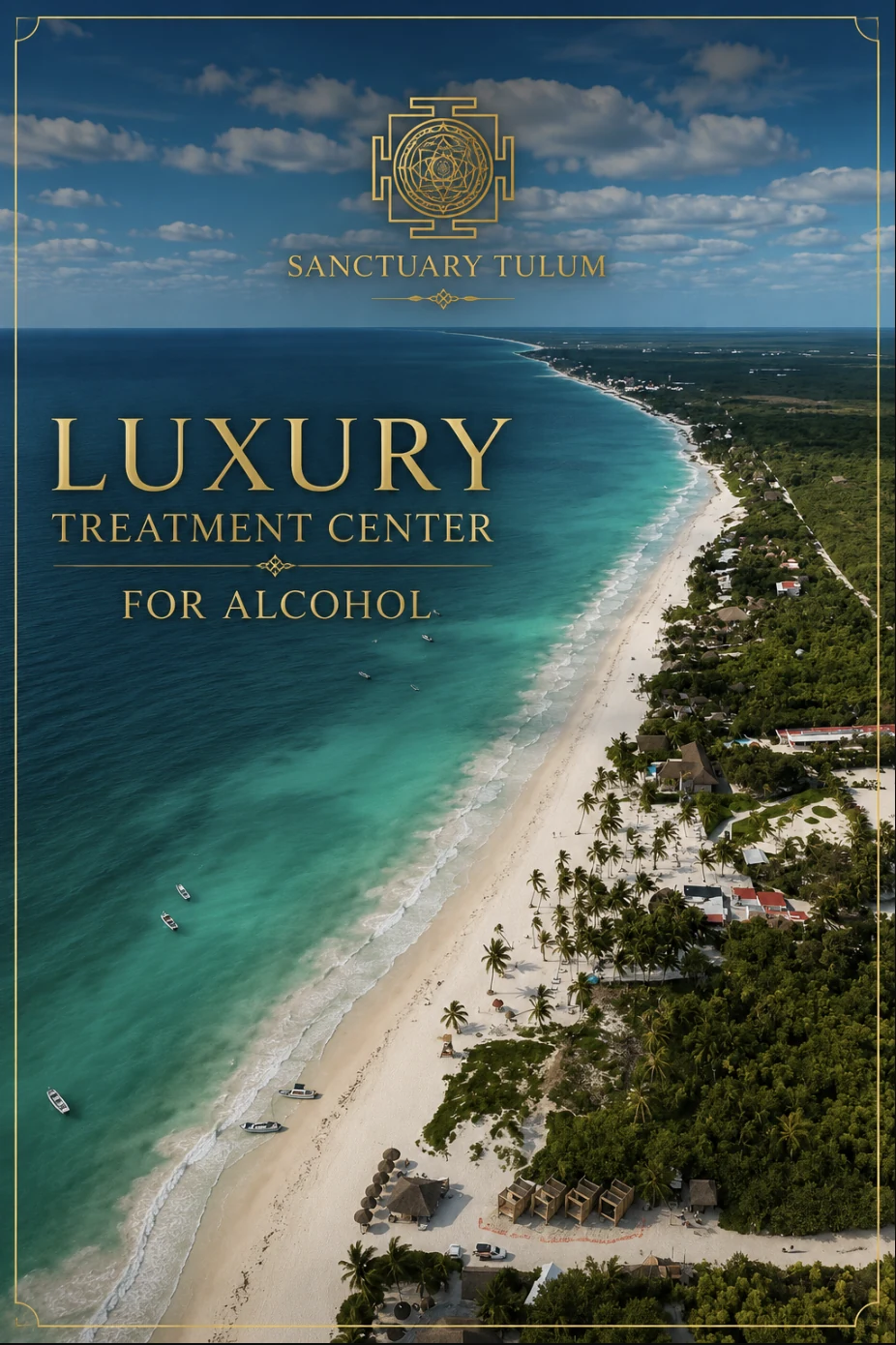
Phase one — medical stabilisation
The first phase is about safety and comfort. Withdrawal is monitored continuously, hydration and electrolytes are corrected, and nutritional deficiencies common in heavy drinkers — thiamine in particular — are addressed. The National Institute on Alcohol Abuse and Alcoholism treats alcohol use disorder as a medical condition, and this phase is straightforwardly medical.
Guests are frequently surprised by how much of the first ten days is simply sleep, fluids and food. That is appropriate. Very little therapeutic work is usable while the body is still in acute withdrawal.
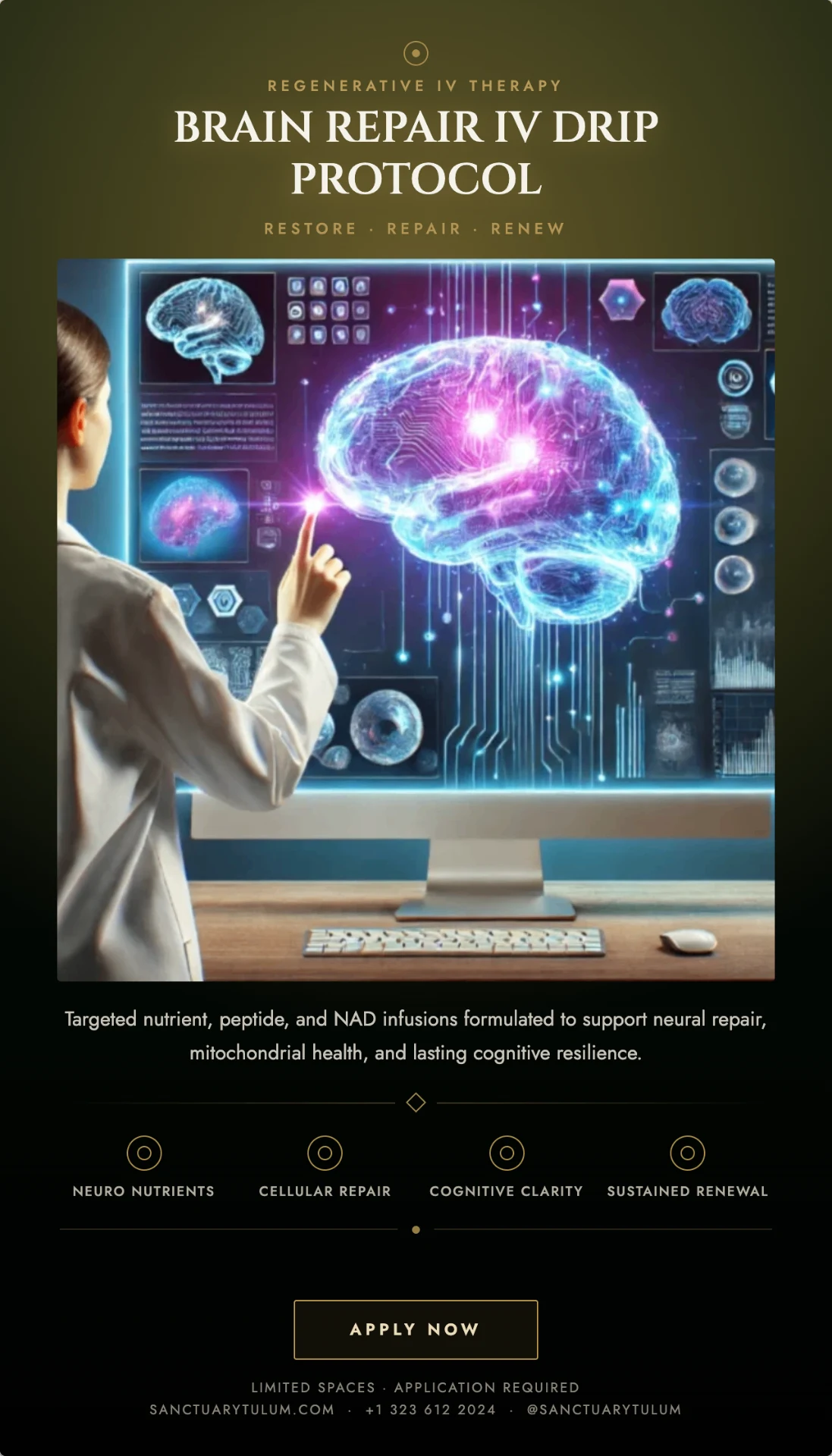
Phase two — physiological restoration
Prolonged alcohol use depletes nutrients, disrupts sleep architecture and alters stress-response regulation. The second phase focuses on rebuilding that substrate: Brain Repair IV and NAD+ IV protocols, hyperbaric oxygen therapy, an organic wholefood diet and consistent sleep.
These are supportive interventions, not cures, and responses vary between individuals. What guests most often report is a return of clarity and energy sufficient to engage in the work of the third phase — which is the point of doing them.
Nobody processes what happened to them while they are still in acute withdrawal. Sequence matters as much as content.
Sanctuary Tulum
The four phases at a glance
Each phase has an exit condition rather than a fixed date.
Stabilisation
Medical management of withdrawal, hydration, nutrition, sleep.
Restoration
IV protocols, hyperbaric therapy, diet, movement, bodywork.
Depth work
One-to-one sessions addressing trauma, grief and the function of drinking.
Integration
Written plan, home prescriber coordination, continuing structure.
Length
Four to sixteen weeks, set after assessment rather than sold as a package.
Census
Small, so the schedule can be genuinely individual.
Phase three — the work underneath the drinking
For most guests, alcohol was solving something — anxiety, insomnia, grief, unprocessed trauma, or the pressure of a life that never stops. If that function is not addressed, abstinence relies entirely on restraint. The third phase is where one-to-one sessions, bodywork, meditation and our wider program modalities do that work.
This is deliberately individual. Two guests with similar drinking histories often need entirely different things here, which is why a fixed group curriculum tends to fit neither of them well.
Phase four — going home
Phase four is integration, and it is the phase most programs treat as an afterthought. Every guest leaves with a written plan covering sleep, nutrition, movement, continuing support and any recommended follow-up, shared with their physician at home. Read the full luxury alcohol treatment center program, or the broader luxury rehab center model, for how the phases are staffed.
Sanctuary Tulum is a licensed luxury depression rehab and medical facility operating since 2011, with physicians present throughout. The measure of a comprehensive program is not the intensity of the stay but the stability of the year that follows it.
How long each phase takes
A reasonable question at this point is how long each phase takes. There is no fixed answer, and programs that publish one are describing a sales structure rather than a clinical one. Stabilisation is usually the shortest and most predictable phase. Restoration and depth work overlap and vary widely depending on how long the drinking went on, what physical damage accumulated and what else is in the history.
What can be described honestly is how the decision to move between phases is made. It is clinical, daily and collaborative: physicians reviewing physical markers and sleep, therapists reviewing whether a guest has the capacity to engage in harder material, and the guest themselves reporting what they can manage. Nobody is moved forward to keep to a timetable.
Families often ask what visiting looks like. Most guests do better with a period of protected separation at the start, followed by structured family contact once stabilisation is complete. Where family dynamics are part of what maintained the drinking, that contact becomes part of the therapeutic work rather than an interruption to it.
Finally, a note on language. We avoid describing any program as a cure, because alcohol use disorder does not work that way. What a good program produces is a person who is physically restored, who understands what the drinking was doing for them, and who leaves with a plan specific enough to follow. Our issues we treat page sets out the wider range of conditions this model is applied to.
The first month at home
One more practical point: the first month at home is the part of the plan that deserves the most attention and usually gets the least. Sleep timing, meal structure, movement, and a named person to call are more predictive of how the first month goes than any single therapy delivered during the stay.
We put that plan in writing before discharge, rehearse it with the guest, and send it to the physician at home with permission. It is unglamorous work, and it is where a comprehensive program either proves the word or does not.
What "luxury" should and should not mean in this context
The word luxury attracts skepticism in addiction treatment, and often for good reason — it can be used to describe amenities while saying nothing about clinical substance. Used honestly, it should describe two things: privacy (small census, private rooms, discretion around who else is present) and comfort during a period that is already difficult (a setting that does not add friction to an already hard process). It should not be a substitute for medical rigor, and a program that leads with the setting rather than the staffing is worth a second look.
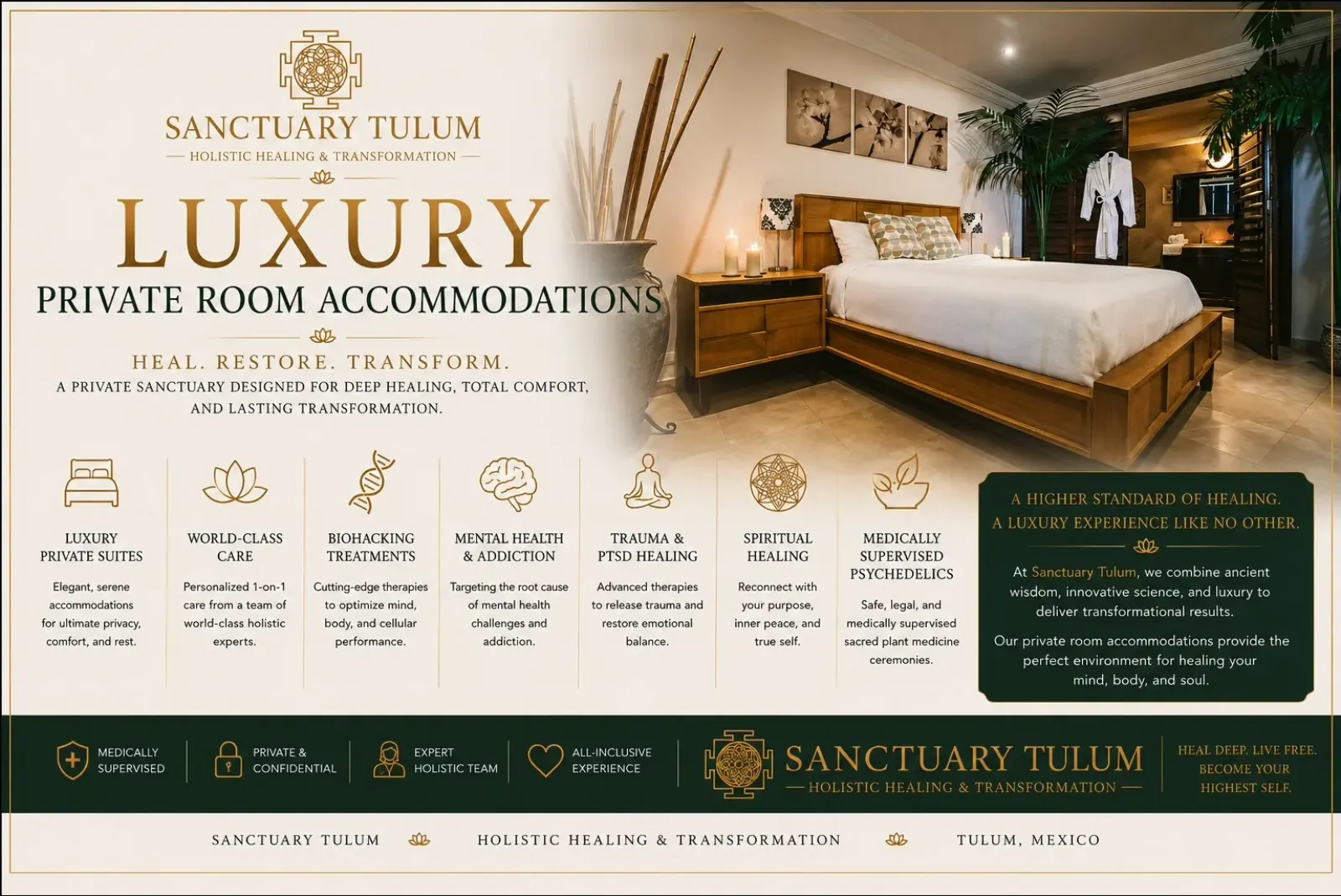
At Sanctuary Tulum, the oceanfront setting and small census exist alongside — not instead of — a licensed medical structure, physicians on site and individualized therapeutic planning. The setting affects how bearable the work is. It does not change what the work has to accomplish.
How progress is actually measured during a stay
Programs sold on outcomes alone should be read carefully, because addiction recovery does not lend itself to guaranteed results and any program claiming otherwise is overstating what is knowable. What can be tracked honestly, day to day, is more modest and more useful: sleep quality and duration, appetite and nutritional intake, mood stability, engagement in one-to-one sessions, and physical markers reviewed by physicians. These are the signals a clinical team uses to decide whether a guest is ready to move from one phase to the next.
Guests and families sometimes want a single number — a percentage, a success rate — and it is worth saying plainly that we do not report one, because self-reported outcomes over multi-year timeframes are not reliably measurable and any figure would be more marketing than fact. What we can describe, and do describe throughout this program, is the structure, the staffing and the sequence, which are the things within a facility's control.