
Ibogaine has a genuine clinical signal for interrupting opioid dependence and, for a subset of people, meaningful longer-term benefit. It also has a genuine safety concern that cannot be waved away: it prolongs the cardiac QT interval, and fatalities have been reported. The distance between a safe ibogaine session and a dangerous one is largely a function of screening and monitoring.
The Cardiac Pharmacology
Ibogaine and its long-lived active metabolite noribogaine block the hERG potassium channel (KCNH2), which is responsible for the rapid component of cardiac repolarization. hERG blockade prolongs the QT interval on the surface ECG, and sufficient QT prolongation creates the substrate for torsades de pointes — a polymorphic ventricular tachycardia that can degenerate into ventricular fibrillation.
Related: our ibogaine heart safety protocol.
Koenig and Hilber, "The Anti-Addiction Drug Ibogaine and the Heart: A Delicate Relation," published in Molecules in 2015, is the reference review of the mechanism. The effect is dose-dependent, and because noribogaine has a much longer half-life than ibogaine itself, QT prolongation persists well beyond the acute session — often over several days.
What the Fatality Data Show
Alper, Stajić, and Gill, "Fatalities Temporally Associated with the Ingestion of Ibogaine," published in the Journal of Forensic Sciences in 2012, reviewed 19 deaths temporally associated with ibogaine ingestion between 1990 and 2008. In cases with adequate autopsy findings, pre-existing cardiovascular disease and/or evidence of cardiac events were the most commonly identified proximal contributors. A separate frequent finding was concurrent opioid or other CNS-depressant use at the time of ingestion.
Two operational implications follow directly from that data: (1) people with pre-existing cardiac disease should not receive ibogaine outside of tightly controlled research, and (2) concurrent opioids and other QT-prolonging or CNS-depressant substances have to be screened for and, where possible, cleared.
What Responsible Pre-Treatment Screening Includes
- 12-lead ECG with QTc measurement (using Bazett and Fridericia corrections). Baseline QTc thresholds vary by program; many exclude at QTc > 450 ms in men or > 470 ms in women.
- Comprehensive metabolic panel including serum potassium, magnesium, and calcium. Low potassium and low magnesium meaningfully worsen QT prolongation and are correctable pre-treatment.
- Echocardiogram to rule out structural heart disease, reduced ejection fraction, and clinically significant valvular disease.
- Liver and renal function testing, given that ibogaine is metabolized by CYP2D6 and cleared through hepatobiliary routes.
- Medication and supplement reconciliation to identify QT-prolonging medications (many antibiotics, antipsychotics, antiarrhythmics, some antidepressants) and CYP2D6 inhibitors that can raise ibogaine plasma levels unexpectedly.
- Substance-use disclosure including current opioid dose, benzodiazepines, stimulants, alcohol, and any recent psychoactive substance use.
- Cardiology consultation for anyone with borderline or ambiguous findings.

What In-Session Monitoring Should Include
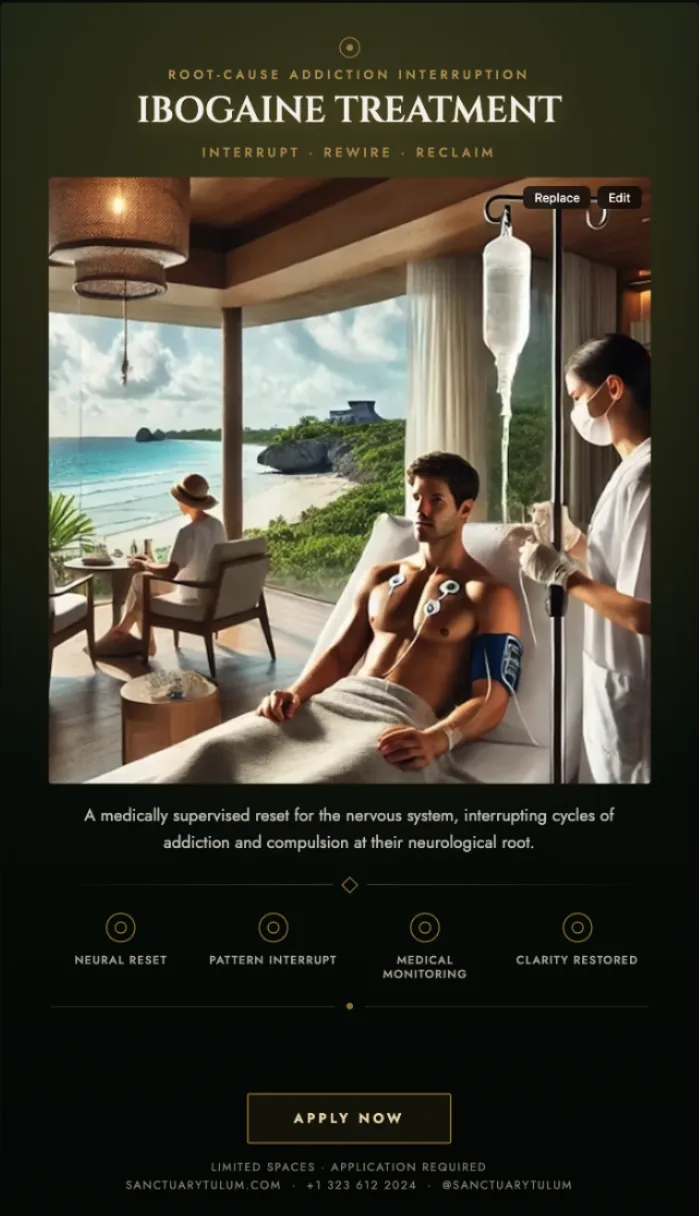
- Continuous cardiac telemetry throughout the acute and post-acute window.
- A clinician physically present who is able to interpret arrhythmia and intervene.
- IV access established before dosing.
- Magnesium sulfate and defibrillation capability immediately available.
- Blood pressure and pulse oximetry monitoring.
- Ongoing observation for at least 24–48 hours post-dose, because QT prolongation persists on the noribogaine timeline.
Opioid Washout Before Dosing
A specific technical point that gets lost in general safety writing: patients on long-acting opioids — particularly methadone — should not be dosed with ibogaine at peak opioid plasma level. Methadone itself prolongs QT and has a long half-life, and the combined QT burden is meaningfully greater than either drug alone. Responsible protocols transition patients from long-acting to short-acting opioids and then wait for an appropriate washout before ibogaine administration. The exact interval depends on the specific opioid, dose, and patient pharmacokinetics — this is a clinician's decision, not a heuristic. Programs that dose patients through active methadone maintenance without transition are outside accepted safety practice.
Who Should Not Receive Ibogaine
Widely-cited exclusions across published protocols include: prolonged baseline QTc, structural heart disease, prior arrhythmia, uncorrected electrolyte abnormalities, significant hepatic impairment, active use of QT-prolonging medications that cannot be washed out, current opioid intoxication (as opposed to controlled tapering), and pregnancy. Programs that do not screen for these exclusions are not operating within accepted safety practice.

Red Flags When Evaluating a Program
If you are evaluating an ibogaine program on behalf of yourself or a family member, specific questions have straightforward correct answers. A responsible program will readily produce: a licensed medical facility credential; the specific pre-treatment tests required (12-lead ECG, comprehensive metabolic panel, echocardiogram); the exclusion criteria the program applies; the exact monitoring during and after dosing; and the emergency-response capability on site. Programs that will not answer these questions concretely, that dose people without recent ECG data, that operate outside a licensed medical facility, or that describe screening as a "consultation" rather than testing should not be used. This is not an aesthetic preference — it is what the published fatality data recommend.
Legal Status
Ibogaine is a Schedule I controlled substance in the United States and is not available as a prescription medicine. It is legal in some jurisdictions, including Mexico, where it is not a scheduled substance and can be administered within licensed medical facilities.
The Bradycardia Signal, Specifically
Beyond QT prolongation, ibogaine consistently produces bradycardia — a slowing of heart rate — during and after dosing. In most patients this is well tolerated, but combined with QT prolongation and low serum potassium or magnesium, bradycardia meaningfully increases the risk substrate for torsades. This is one of the reasons continuous telemetry (not intermittent pulse checks) is the standard, and one of the reasons IV magnesium is kept immediately available: correcting electrolytes and, where necessary, treating bradycardia pharmacologically are both time-critical actions.
Why Home or Ceremonial-Only Settings Are Not Adequate
A recurring failure mode in the fatality literature is administration in non-medical settings — private residences, retreat centers without licensed medical staff, or ceremonial contexts without cardiac monitoring capability. These settings can screen for psychological readiness and hold intentional space for the experience, but they cannot detect an evolving arrhythmia in real time or intervene when one occurs. Ibogaine's cardiac window is not a hypothetical concern that can be managed with prayer and preparation. It is a specific pharmacological property that requires specific medical infrastructure. Any program that omits the infrastructure while retaining the compound is substituting hope for capability.
Post-Session Cardiac Follow-up
Because noribogaine's half-life extends the QT effect over several days after a single session, cardiac monitoring should not end when the acute experience ends. Standard practice includes a repeat 12-lead ECG at 24 and 48–72 hours post-dose, continued telemetry through the highest-risk window, and restrictions on introducing QT-prolonging medications during the post-treatment period. Patients returning home should be instructed on medication and supplement interactions during that window and given a concrete point of contact if symptoms emerge. This is not aftercare in a general wellness sense — it is cardiovascular pharmacology follow-through.
A Note on Sanctuary Tulum
Sanctuary Tulum operates a licensed facility in Tulum, Mexico under federal health license and applies pre-treatment cardiac screening and continuous in-session monitoring for ibogaine therapy program. See our safety credentials for the medical protocol in full.
References
- Alper KR, Stajić M, Gill JR. "Fatalities Temporally Associated with the Ingestion of Ibogaine." Journal of Forensic Sciences, 2012;57(2):398–412.
- Koenig X, Hilber K. "The Anti-Addiction Drug Ibogaine and the Heart: A Delicate Relation." Molecules, 2015;20(2):2208–2228.
- Mash DC, Duque L, Page B, Allen-Ferdinand K. "Ibogaine Detoxification Transitions Opioid and Cocaine Abusers Between Dependence and Abstinence." Frontiers in Pharmacology, 2018;9:529.
- US Drug Enforcement Administration. Controlled Substances Act — Schedule I listing for ibogaine.
Ready to take the next step? Learn about our ibogaine treatment at Sanctuary Tulum.