Published prices for an ayahuasca retreat span a genuinely startling range — from a few hundred dollars for an informal weekend ceremony to more than $20,000 for a multi-week luxury healing program. That spread confuses almost everyone shopping for the first time. The medicine itself is inexpensive to prepare; what you are actually paying for is the human and clinical infrastructure around it. Understanding the specific drivers of cost is the difference between choosing a safe, appropriate program and paying either too much for what you get or too little for what you need.
The Real Cost Drivers (Ranked by Impact)
Four variables move the price more than anything else: program length, level of medical infrastructure, accommodation type, and whether ceremonies are group or individual. Everything else — the flights, the food, the meditation classes — is comparatively small.
1. Program Length
A single ceremony night is a fundamentally different product from a two- or four-week program that includes preparation, multiple ceremonies, and structured integration. Length drives cost roughly linearly for staff time, meals, and accommodations. Short retreats (2–4 nights) reduce dose exposure and often skip pre-arrival medical clearance because there is not time to obtain it. Longer programs (2–12 weeks) allow the facility to space ceremonies safely, run bloodwork, and layer in adjunctive therapies. A single-night ceremony at $400 and a four-week clinical program at $18,000 are not the same product priced differently — they are different products.
2. Medical Infrastructure
This is the single largest driver of cost variation between otherwise similar-looking programs. On the low end, "medical screening" is a self-report health questionnaire and a facilitator who has read about MAOI interactions. On the higher end, screening includes a full medication review by a clinician, a psychiatric intake, an ECG for anyone with cardiac risk, and an on-site physician who is physically present during ceremony. The staffing cost gap between those two models is significant — one on-call physician can add tens of thousands of dollars per month to a facility's overhead — and that cost is passed through to the guest. A retreat charging $1,200 for a week rarely has a licensed physician on site during ceremony because the unit economics do not support one.
3. Accommodation Type
Shared dorm-style rooms in a jungle center cost the operator a fraction of what oceanfront private suites cost. That difference is visible in the retail price, but it does not by itself determine safety. Accommodation drives comfort, privacy during difficult processing, and sleep quality — all of which matter for integration — but it is not a proxy for clinical rigor. Do not confuse luxury with medical supervision; some of the most beautifully appointed properties in the space run large group ceremonies with limited screening, and some clinically excellent programs occupy relatively modest facilities. Evaluate each independently.
4. Group vs. Individual Ceremonies
A ceremony with 20 participants and two facilitators is a fundamentally different experience from a one-on-one ceremony with a physician present. Group formats spread facility cost across many guests and are therefore cheaper. They also mean less individual attention if someone has a difficult experience or a physiological reaction. Individual or very small-group formats cost more because staff hours per guest are much higher. Neither is universally better; the right format depends on your medical profile and what you are hoping to work through.
Broad Price Ranges (Directional, Not Prescriptive)
- Informal weekend ceremonies ($200–$1,500): Typically peer-facilitated, minimal to no medical screening, large group format, no formal integration. Widely available and correspondingly variable in quality and safety.
- Mid-range retreats ($2,000–$6,000): Comfortable settings, smaller groups, some clinician oversight, some integration support. This is the most common tier and quality varies enormously within it — ask specific questions.
- Licensed clinical programs ($8,000–$25,000+): Multi-week programs at licensed facilities with on-site physician supervision, pre-arrival medical clearance, private or very small-group ceremonies, and structured integration. Priced accordingly because the staffing costs are real.

What "Included" Should Actually Mean
Before you compare prices, normalize what each program includes. A properly complete package covers pre-arrival medical and psychiatric screening, an MAOI-interaction review of your current medications, all ceremonies and the preparation days between them, on-site physician availability during ceremony, accommodations and dieta-appropriate meals, and structured integration sessions after the ceremony arc. If any of these are quoted as add-ons, the sticker price is not the real price. See our explainer on what ayahuasca is for the medical and pharmacological context that makes screening non-optional.
Why Cheap Retreats Carry Real Risk
Ayahuasca is pharmacologically active in a way that most retreat marketing does not communicate clearly. The brew contains monoamine oxidase inhibitors (harmine and harmaline) that interact with SSRIs, SNRIs, tramadol, certain migraine medications, and tyramine-rich foods. A facility that has not reviewed your medication list before you arrive is not in a position to keep you safe if an interaction develops. The savings on a budget retreat are real; the trade-off is a meaningfully higher probability of an avoidable adverse event. Our overview of what a safe psychedelic facility looks like lists the specific screening steps to ask about.
Is a Multi-Week Program "Worth It"?
Whether a longer, more expensive program is worth the cost depends on why you are seeking ayahuasca in the first place. For someone curious about the experience, a single supervised ceremony at a reputable facility is often sufficient. For someone using ayahuasca as part of treatment for trauma, depression, or substance dependence, a program that includes preparation, multiple ceremonies, and structured integration typically produces more durable results than a single-night exposure. That is a function of integration bandwidth, not of dose. Compare programs by what happens in the weeks after ceremony, not just during it.
One under-priced variable in this comparison is preparation. Programs that include a formal pre-arrival ayahuasca preparation protocol — dietary restrictions, medication tapers coordinated with a physician, and a mental preparation window — produce meaningfully better outcomes than programs that hand you a PDF the week before you fly. That preparation costs staff time, which is why the more thorough programs charge for it and the cheapest ones skip it. For a Mexico-specific view of what to verify, see our companion piece on the best ayahuasca retreat in Mexico.
Sanctuary Tulum's Position
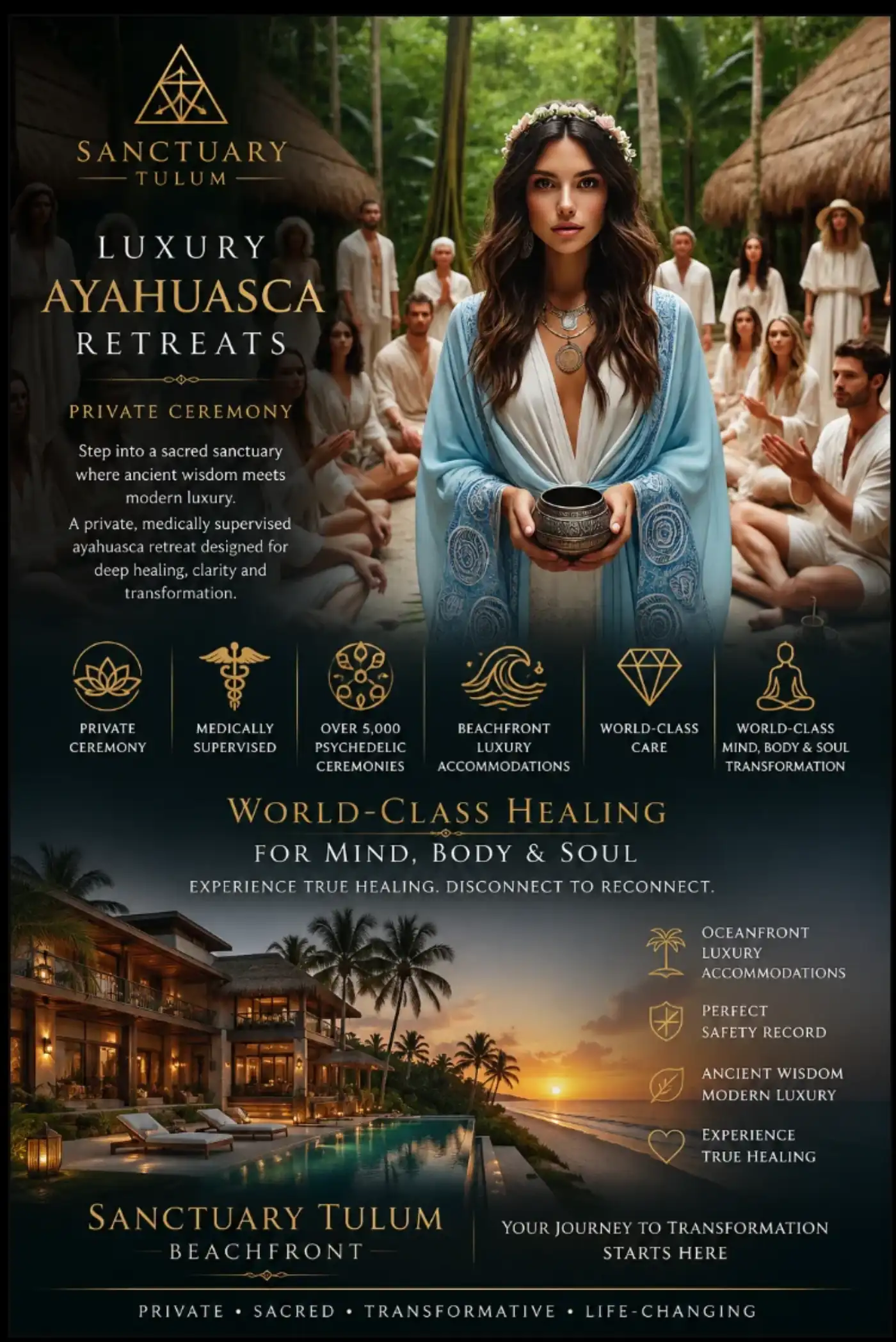
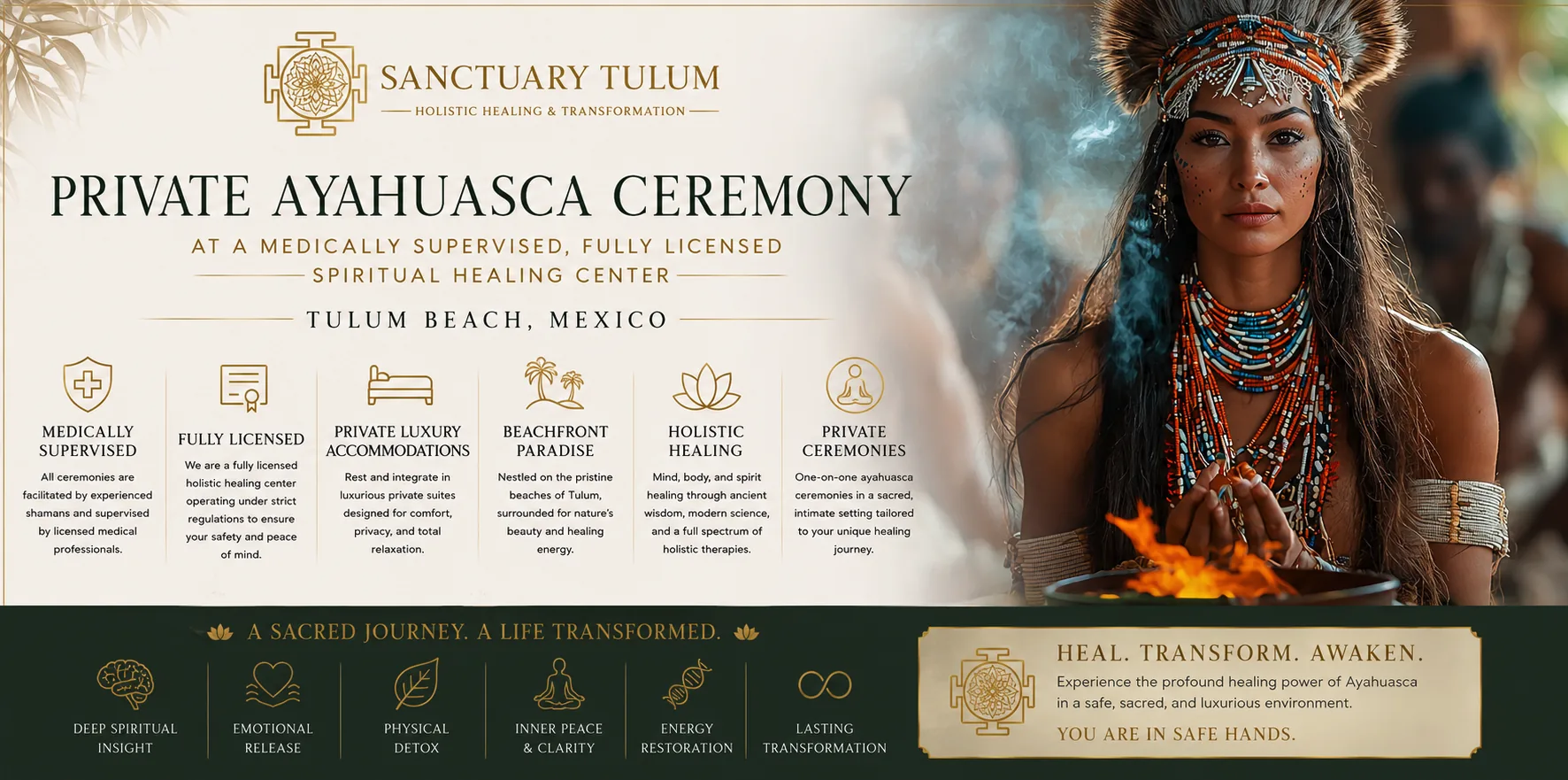
Sanctuary Tulum operates in Tulum, Mexico under a federal health license as a hospital and clinic. Programs include pre-arrival medical clearance, on-site physician supervision during ceremony, one-on-one ceremony format, and structured integration. Pricing reflects those inputs. Whether that is the right fit depends on your medical profile and goals — the same questions we suggest asking any facility apply to us. See the full ayahuasca retreat program for the specifics of what is included at each program length.
Bottom Line
Ayahuasca retreat cost is a proxy for staffing, screening, and setting — not for the medicine itself. Normalize what is included, ask specifically about medical infrastructure, and compare on the clinical model rather than the marketing photography. That is the only way to know whether the price you are quoted is fair for the product you are actually buying.
US-based readers evaluating travel logistics can also review our detailed guide on luxury ayahuasca retreats for a NYC-focused breakdown of the legal landscape and licensed Mexico alternative.