Ibogaine Treatment in Mexico: The Complete Clinical Guide
Ibogaine treatment in Mexico explained: legality, cardiac screening, costs and clinic vetting from a COFEPRIS-licensed, physician-supervised facility.
Ibogaine treatment in Mexico is the practical answer to a legal problem. The medicine with the most documented effect on opioid withdrawal and craving cannot legally be administered in the United States, so Americans, Canadians, and Europeans travel — and Mexico, with a permissive legal framework and direct flights from nearly every major North American city, has become the destination. That accessibility has produced two very different kinds of provider: licensed medical facilities and unregulated houses that call themselves clinics. This guide explains the legal position, the screening that makes ibogaine survivable, what treatment actually costs, how to vet a facility, and how the logistics work.
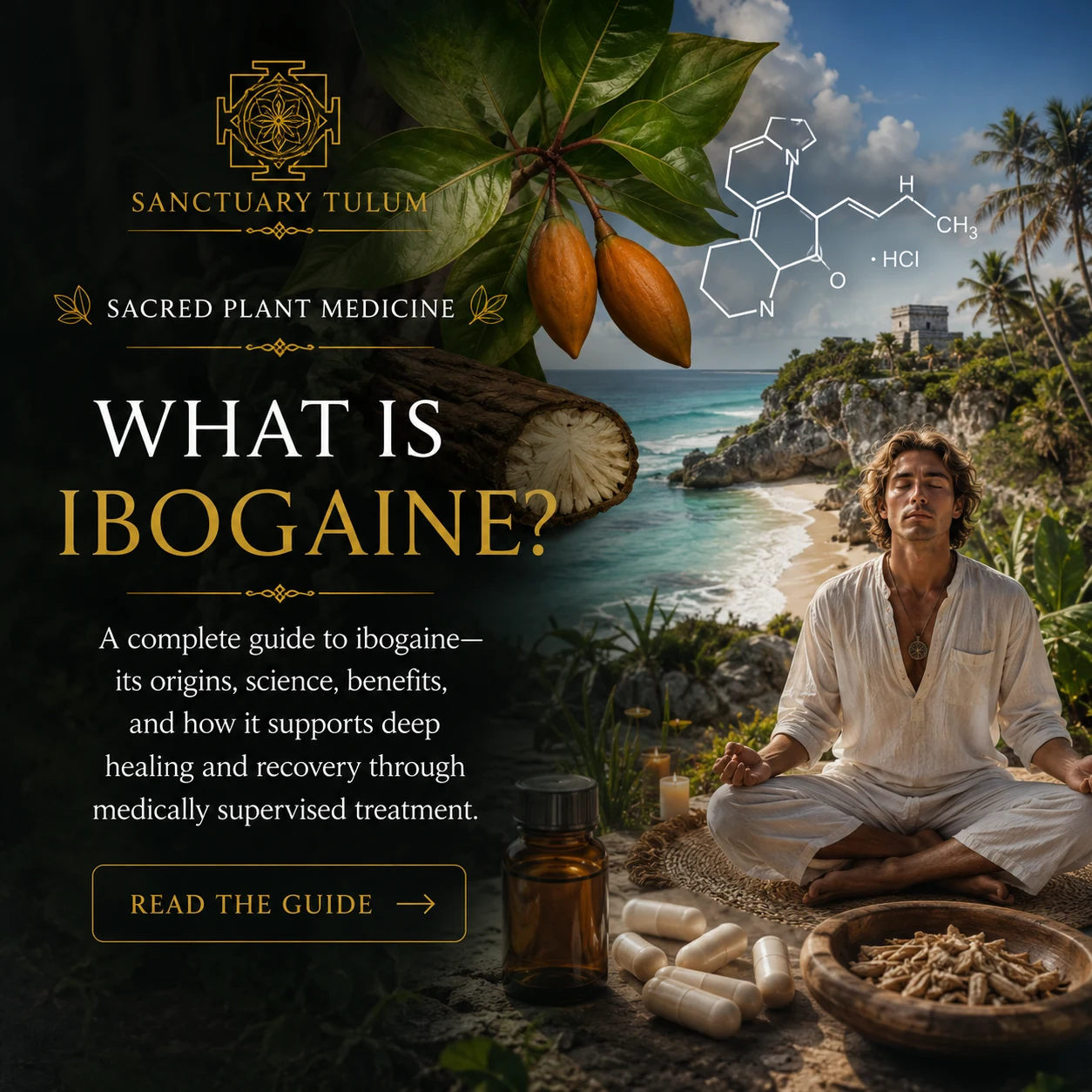
What Ibogaine Is
Ibogaine is an indole alkaloid derived from the root bark of the West African shrub Tabernanthe iboga. It is not a sedative and not a substitute opioid: a single supervised administration appears to interrupt opioid withdrawal and reduce craving for a period afterwards, which is why the observational literature describes it as an interruption therapy rather than maintenance. It also carries real cardiac risk, which is precisely why screening and monitoring — not atmosphere — decide whether a facility is safe. Background reading: ibogaine treatment.

Why Ibogaine Is Illegal in the United States
In 1970 the United States placed ibogaine in Schedule I under the Controlled Substances Act — the most restrictive category, reserved for substances deemed to have no accepted medical use. The scheduling decision predated most of the research describing ibogaine's effect on opioid dependence, and it effectively froze domestic clinical work for decades.
The consequence is a policy contradiction that anyone reading this page has probably already run into. The United States records more than 80,000 opioid overdose deaths in a typical recent year, while the compound with the largest documented single-session effect on withdrawal and craving sits legally out of reach. Research interest has returned — observational studies have reported substantial reductions in opioid withdrawal and use following a single supervised administration[1] — but a Schedule I listing still means no legal clinical access outside of approved research.
Canada, the United Kingdom, and most of the European Union impose comparable or stricter restrictions. For someone who wants supervised ibogaine therapy now rather than in a decade, international travel is the only lawful route.
Why Mexico Became the Center of Ibogaine Treatment
Mexico's role is not accidental. Five factors converge here.
- Legal status. Ibogaine is not listed as a controlled substance under Mexico's Ley General de Salud. Qualified medical practitioners may administer it inside licensed medical facilities without the prohibition that applies in the U.S., Canada, or the U.K. That legal clarity is what allows a facility to operate openly, with real medical infrastructure and a real license, rather than in secrecy.
- Medical infrastructure. The Riviera Maya corridor — Cancún, Playa del Carmen, Tulum — is served by private hospitals, diagnostic laboratories, and specialist physicians built to handle a large international patient population. Cardiac telemetry, lab turnaround, and hospital escalation are all locally available, which is the practical precondition for administering ibogaine safely.
- Proximity. Cancún International (CUN) has direct flights from New York, Los Angeles, Miami, Chicago, Dallas, Houston, Toronto, and dozens of other cities, typically under four hours in the air. Compared with alternative ibogaine jurisdictions in Europe, Africa, or the South Pacific, that difference matters enormously to someone traveling in withdrawal.
- Cost structure. Comparable medical care costs less to deliver in Mexico than in Switzerland or the Netherlands. Handled honestly, that means more clinical hours and longer programs for the same spend — not thinner staffing.
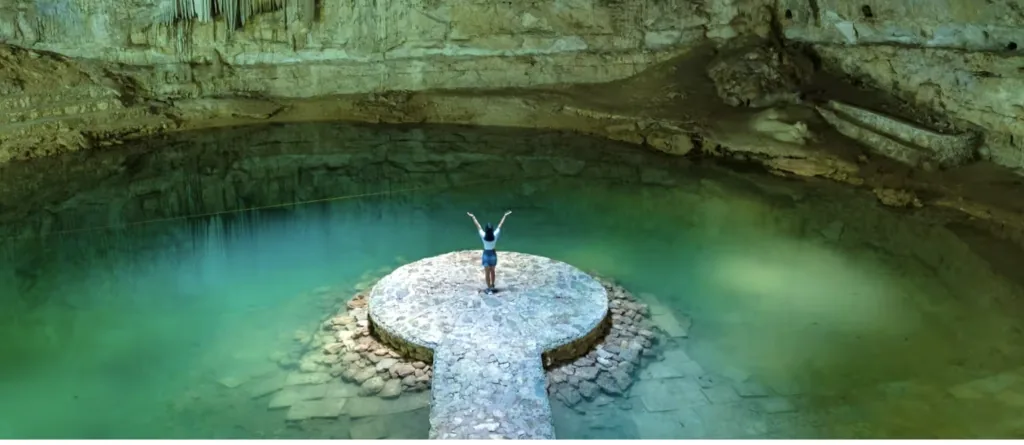
- Environment. Ibogaine opens a demanding introspective window, and the days after a session are as clinically important as the session itself. The Tulum coast — ocean, cenotes, jungle canopy, year-round warmth — supports recovery in a way a windowless clinic corridor does not.
The Mexican Regulatory Framework: COFEPRIS and the Ley General de Salud
COFEPRIS — the Comisión Federal para la Protección contra Riesgos Sanitarios — is Mexico's federal health regulator, broadly analogous in function to the U.S. FDA. Because ibogaine is unscheduled under the Ley General de Salud, the legal question for any Mexican provider is not whether ibogaine is permitted but whether the facility itself is licensed to deliver medical treatment.
In practice that distinction is the whole ballgame. A legitimate ibogaine provider in Mexico is a registered hospital, clinic, or specialty medical facility with a Federal License of Operation. An illegitimate one is a rented villa, a private residence, or a wellness business whose registration covers spa services and nothing clinical. Both can build the same website. Only one is under a regulator's obligations for staffing, records, equipment, and inspection.
Sanctuary Tulum — operating since 2011 — holds a Federal License of Operation for Hospital and Clinic issued by COFEPRIS. When you research any Mexican facility, ask two questions in writing: what is the license category, and does it authorize medical treatment? A facility that deflects either question has answered both.
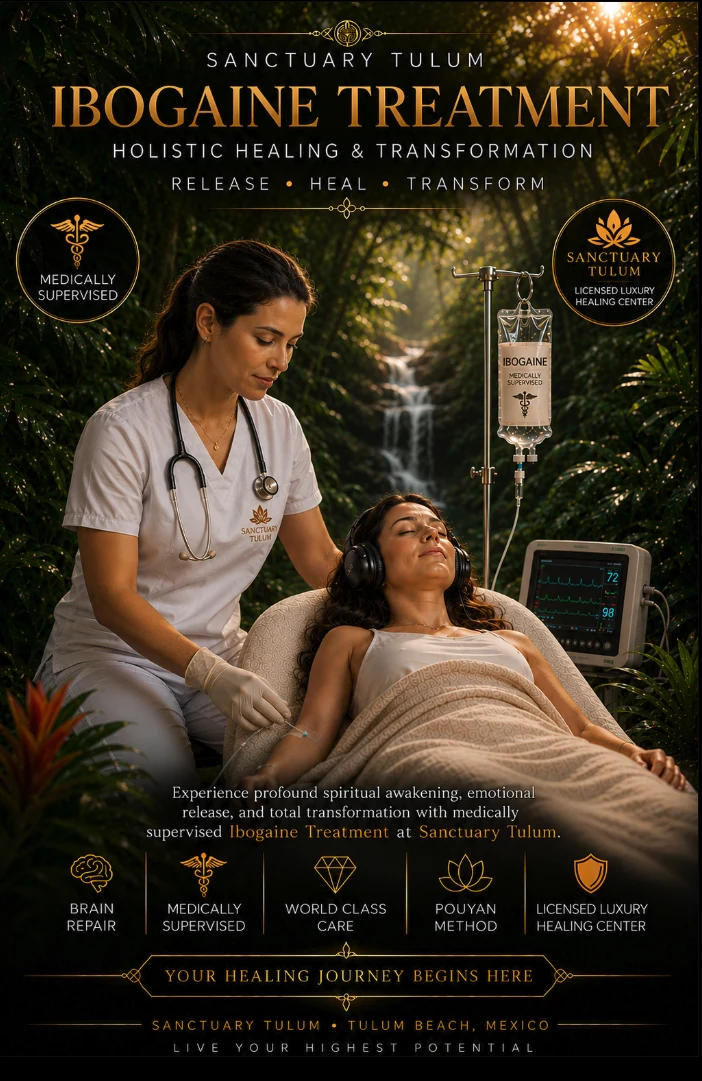
Cardiac Screening: The Non-Negotiable Part
Ibogaine has a genuine cardiac risk profile. It prolongs the QT interval, and the documented fatalities associated with ibogaine over the past two decades cluster overwhelmingly around unsupervised or unscreened administration — pre-existing cardiac disease, electrolyte disturbance, concurrent QT-prolonging medications, opioids taken alongside the dose, or no monitoring during the session.[2] Reviews of ibogaine-associated deaths consistently identify screening and monitoring failures rather than the compound behaving unpredictably in a properly prepared patient.[3]
A defensible protocol therefore looks the same at every serious facility, and it starts before you travel:
- 12-lead EKG with QTc measurement, reviewed by a physician, with a defined exclusion threshold rather than a case-by-case improvisation.
- Comprehensive blood work — electrolytes (particularly potassium and magnesium), liver panel, renal function, and complete blood count. Electrolyte correction before dosing is routine, not optional.
- Full medication reconciliation. QT-prolonging agents, certain antidepressants, methadone, and several antibiotics and antipsychotics require a taper, washout, or outright exclusion.
- Cardiac and psychiatric history review by a clinician with authority to decline the case.
- Continuous telemetry during the session, IV access in place, emergency medications in the room, and a physician physically present — not on call from town.
Our published protocol, including the monitoring standards and the exclusions we apply, is set out on the safest psychedelic facility page and overseen by our Medical Review Board. Across more than a decade of physician-supervised ibogaine administration, Sanctuary Tulum has maintained a documented, fatality-free record — a claim we make specifically because unregulated operations in this same country have not.
How to Vet an Ibogaine Clinic in Mexico
Mexico's reputation as an ibogaine destination has attracted excellent facilities and dangerous ones in roughly equal measure. Several ibogaine-related deaths in the country in recent years occurred in settings with no cardiac monitoring, no physician present, or ibogaine of unverified purity and unknown alkaloid content.
Price is not a proxy for safety. Some of the least safe operations charge premium rates, and some inexpensive programs are run by careful physicians. Ask specific questions instead, and insist on written answers:
- What is your COFEPRIS license category, and does it cover medical treatment?
- Who supervises the session, what are their credentials, and are they on site for its full duration?
- What cardiac screening do you require before dosing, and what disqualifies a candidate?
- What monitoring equipment is in the treatment room, and what emergency medications are stocked?
- What is the written emergency protocol, which hospital receives transfers, and how long is the transfer?
- Where does your ibogaine come from, and is it assayed for purity and alkaloid content?
- What does the integration and aftercare arc look like after the session?
- Have you ever declined a candidate, and on what basis?
Our detailed walkthrough of this process lives at how to choose an ibogaine clinic in Mexico safely, and the underlying pharmacology is covered in what is ibogaine.

What Ibogaine Treatment in Mexico Costs — and the Travel Logistics
The market spreads across an order of magnitude. A short stay at an unlicensed house may be quoted in the low thousands. A physician-staffed program at a licensed facility, with pre-travel screening, telemetry, IV protocols, private accommodation, nutrition, bodywork, and weeks of integration, costs considerably more because each of those line items is a real cost rather than a claim on a page.
When comparing quotes, compare what is inside them: physician hours, nursing coverage overnight, lab work and EKG, transfer arrangements, program length, whether integration is included or upsold, and whether accommodation is private. A cheap quote that excludes screening is not cheaper — it is a different, riskier product. Our tiers and inclusions are published on the packages and prices page, and the cost landscape more broadly is broken down in ibogaine treatment cost.
U.S., Canadian, U.K., and E.U. passport holders enter Mexico as tourists for up to 180 days without a pre-arranged visa, which comfortably covers every program length we offer. Two airports serve the corridor: Cancún International (CUN), the larger hub, roughly 90 minutes north; and Tulum's Felipe Carrillo Puerto International (TQO), opened in December 2023, around 30 minutes away. Sanctuary Tulum arranges private ground transfer from either airport as part of the program, so no one arrives in withdrawal negotiating a taxi.
Practical notes guests ask about most: bring original medication packaging and a physician's letter for any prescribed medicines; expect to hand over your medication list at intake rather than self-managing; plan flights with schedule flexibility, because dosing days are set by clinical readiness, not by a booking calendar; and do not plan to work during the program.
What the Program Actually Looks Like
Pre-arrival screening. Completed remotely. Our medical team reviews your EKG, blood work, medication history, and clinical background to confirm suitability and to plan any taper or washout needed before dosing. Candidates who cannot be cleared are declined — that decision is clinical, not commercial.
Stabilization. On arrival, the body is prepared: hydration and electrolyte correction, nutrition, sleep restoration, and IV protocols including the Brain Repair Protocol IV. Where dependence is present, physical stabilization comes before medicine work, which is also how our luxury detox program is sequenced.
The ibogaine session. Administered by a physician after final clearance, with continuous cardiac telemetry, IV access, and clinical staff present throughout. Ibogaine at Sanctuary Tulum is an extracted, isolated alkaloid administered as a medical treatment — not a ceremony, and not total-alkaloid root bark of unknown composition.
Integration. The days after a session are where the outcome is decided. One-to-one sessions, somatic work, hyperbaric oxygen therapy, movement, an organic non-GMO nutrition program, bodywork, and rest run daily, sequenced through the Pouyan Method™ — founder Johnny Tabaie's proprietary, trademarked protocol. Where the clinical picture supports it, ibogaine may be followed later in the program by private ayahuasca ceremonies, 5-MeO-DMT ceremonies, or psilocybin ceremonies — sequenced deliberately, never stacked automatically.
Aftercare. Home protocols, nutrition guidance, and remote check-ins begin before departure and continue for months, because the environment a guest returns to is usually the environment that produced the original stall.

Who Ibogaine Treatment Is For
The clearest indication is opioid dependence — heroin, fentanyl, prescription opioids, methadone, and buprenorphine, the last two requiring careful transition planning before dosing. Beyond opioids, guests come for long-term benzodiazepine withdrawal, alcohol dependence, stimulant use disorder, SSRI dependence with a flattened baseline, treatment-resistant depression, and PTSD and trauma that has not moved under conventional care.
Ibogaine is not a cure and is not appropriate for everyone. Significant cardiac disease, certain psychiatric presentations, and some medication regimens are contraindications we honor rather than work around. The honest framing is this: ibogaine can interrupt withdrawal and open a neurological window in which change becomes possible, and what happens inside that window is determined by the program built around it. Outcomes vary, and no result is guaranteed.
What Ibogaine Treatment in Mexico Costs
Pricing varies widely between providers, and the spread usually reflects what is actually staffed rather than luxury. A licensed program prices in pre-arrival cardiac and psychiatric screening, physician presence and continuous monitoring during dosing, nursing coverage, IV and nutritional support, accommodation, and structured integration in the weeks afterwards. Quotes that undercut that range are almost always removing clinical staffing rather than amenities. See packages and pricing for how our programs are structured.
Ibogaine Compared With Methadone and Buprenorphine
Most guests arriving for ibogaine treatment in Mexico have already been offered a maintenance approach at home — methadone or buprenorphine, prescribed indefinitely. Those medications save lives and reduce overdose mortality, and nothing here argues against anyone who is stable on them. But maintenance is designed to substitute a safer agonist for a dangerous one, and for a substantial group of people that is not the outcome they were looking for. They wanted to be off opioids entirely, and instead find themselves managing a second dependence with its own withdrawal syndrome, often a longer one.
Ibogaine works from a different premise. Rather than occupying the receptor continuously, a single supervised administration appears to interrupt withdrawal and reduce craving for a period afterwards, which is why the observational literature describes it as an interruption rather than a maintenance therapy.[1] The clinical catch is that transitioning off long-acting agonists before dosing takes planning: methadone in particular usually requires a supervised transition to a short-acting opioid before ibogaine can be given safely, and that planning happens during screening rather than on arrival. Our comparison of the two models is set out in ibogaine vs. methadone.
What the First Days Actually Feel Like
Marketing rarely describes this part honestly, so it is worth stating plainly. The acute phase of an ibogaine session lasts several hours and is physically demanding: ataxia is expected, nausea is common, light and sound sensitivity is normal, and the experience is introspective rather than pleasant. Guests remain in bed under monitoring for the duration. This is the reason a physician and nursing coverage matter — not because something is likely to go wrong, but because someone needs to be watching vitals while the guest is in no position to advocate for themselves.
In the day or two that follow, most people are exhausted, sleep poorly, and feel emotionally raw while also reporting that withdrawal symptoms have substantially lifted. From there the program becomes quiet and structured: hydration, IV support, food, bodywork, short walks, and one-to-one sessions. The window that opens in the following weeks is real but not self-sustaining — it responds to what is put into it, which is why our programs run for weeks rather than days and why aftercare is built in rather than sold separately.
Mexico vs. the Alternatives
Ibogaine is also available in a handful of other jurisdictions — parts of the Caribbean, South Africa, Costa Rica, New Zealand, and Portugal among them. Mexico's advantages are flight time from North America, the density of medical infrastructure along the Riviera Maya, and the existence of licensed facilities operating under a federal regulator rather than in a grey zone. Its disadvantage is the same permissiveness: the barrier to opening an unlicensed operation here is low, so the burden of verification falls on the person booking.
That burden is manageable. Ask for the license, ask who is in the room, ask what gets screened, and ask what happens if something goes wrong. Facilities that belong on your list will answer in writing without hesitation.
Next Steps
If you are considering ibogaine treatment in Mexico, the useful next step is a clinical conversation rather than a deposit. Our team reviews your medications, cardiac history, and treatment history before discussing program structure at all. Read the full ibogaine therapy program page for the clinical model, browse our licensed psychedelic retreats for the wider program arc, or contact us at +1-323-612-2024.
References
- Brown TK, Alper K. Treatment of opioid use disorder with ibogaine: detoxification and drug use outcomes. American Journal of Drug and Alcohol Abuse (2018). pubmed.ncbi.nlm.nih.gov/28402682
- Koenig X, Hilber K. The anti-addiction drug ibogaine and the heart: a delicate relation. Molecules (2015). pubmed.ncbi.nlm.nih.gov/25647579
- Alper KR, Stajić M, Gill JR. Fatalities temporally associated with the ingestion of ibogaine. Journal of Forensic Sciences (2012). pubmed.ncbi.nlm.nih.gov/22268458
- U.S. Drug Enforcement Administration. Controlled Substances Act schedules. deadiversion.usdoj.gov/schedules
This article is educational and does not diagnose, prescribe, or replace care from your physician. Ibogaine carries cardiac risk and requires medical screening and supervision.