
Opioid addiction has become one of the defining public health crises of our time. Heroin, fentanyl, oxycodone, hydrocodone — these substances kill tens of thousands of Americans every year, devastate families, and resist the most well-intentioned conventional treatments. The failure rate of standard addiction treatment for opioids is staggering. What is needed is not a better version of what has already failed. What is needed is something categorically different. That something is ibogaine.
Why Opioid Addiction Is So Hard to Treat
Opioid addiction is biologically brutal in a way that other addictions are not. Opioids — whether heroin, fentanyl, or prescription painkillers — bind to the brain's natural opioid receptor system with extraordinary affinity, flooding the brain with dopamine and rapidly establishing deep physical dependence. Within weeks of regular use, the brain has reorganized itself around opioid availability.
When opioids are removed, the result is withdrawal — one of the most physically and psychologically agonizing experiences a human being can endure. Sweating, vomiting, diarrhea, severe muscle pain, bone pain, insomnia, profound anxiety, and depression combine to create an experience so unbearable that most people in withdrawal return to opioid use simply to stop the suffering. This is not weakness. This is the biology of opioid dependence.
Conventional treatments for opioid addiction typically involve substitution medications: methadone and buprenorphine (Suboxone), which prevent withdrawal by acting on the same opioid receptors as heroin or fentanyl. These medications have a role — they save lives in acute crisis situations — but they do not provide a cure. They replace one form of opioid dependency with another, often for years or decades, with no clear pathway to true freedom.
How Ibogaine Treats Opioid Addiction Differently
Ibogaine's anti-addictive action for opioid dependency is the most clinically documented and compelling application of this medicine. Here is what happens neurologically when ibogaine is administered to someone with opioid dependence:
- Opioid Receptor Normalization: Ibogaine acts at mu and kappa opioid receptors in ways that normalize their sensitivity and function without producing the opioid "high" or reinforcing dependency. Withdrawal symptoms — which arise from the opioid receptors' desperate demand for stimulation — are dramatically reduced or eliminated within hours of ibogaine administration.
- Dopamine System Reset: Chronic opioid use severely dysregulates the dopamine reward system. Ibogaine modulates dopamine transporter function, initiating the restoration of natural dopamine signaling — which underlies the reduction in craving that follows ibogaine treatment.
- NMDA-Mediated Neuroplasticity: Ibogaine's antagonism at NMDA glutamate receptors initiates neuroplastic changes that sustain recovery beyond the acute treatment window. The brain continues to rewire itself toward health in the weeks following ibogaine.
- GDNF Upregulation: Research has demonstrated that ibogaine significantly increases levels of GDNF — a neurological growth factor that promotes the repair and survival of dopamine-producing neurons. This may be the key to why ibogaine's anti-craving effects last long after the medicine has left the system.
The Clinical Evidence for Ibogaine in Opioid Addiction
The clinical evidence for ibogaine in opioid addiction treatment is robust and growing. Key findings include:
- A landmark study published in the American Journal of Drug and Alcohol Abuse documented that a single ibogaine dose reduced opioid withdrawal symptoms by more than 50% and significantly reduced self-reported craving at one-month follow-up.
- A large observational study conducted in New Zealand — where ibogaine is legal for prescription — documented 14-month outcomes following ibogaine treatment, finding significant reductions in opioid use and improved quality of life measures.
- A 2021 retrospective study of veterans treated with ibogaine for PTSD and addiction reported dramatic reductions in suicidal ideation, PTSD symptoms, and alcohol and drug use — outcomes that standard VA treatments had failed to achieve.
- The FDA granted ibogaine Breakthrough Therapy designation for opioid use disorder in 2021, acknowledging that preliminary clinical evidence shows it may offer substantial improvement over existing therapies.
What Ibogaine for Opioid Addiction Looks Like at Sanctuary Tulum
At Sanctuary Tulum, our ibogaine opioid addiction treatment program begins well before arrival. The pre-treatment phase includes:
- • Comprehensive remote medical screening — cardiac evaluation, bloodwork, medication review
- • Opioid tapering guidance — carefully designed to minimize withdrawal severity and optimize ibogaine safety
- • Methadone taper protocol (for methadone-dependent clients — this requires 4–6 weeks of tapering before ibogaine)
- • Nutritional and supplement preparation to optimize receptor function before treatment
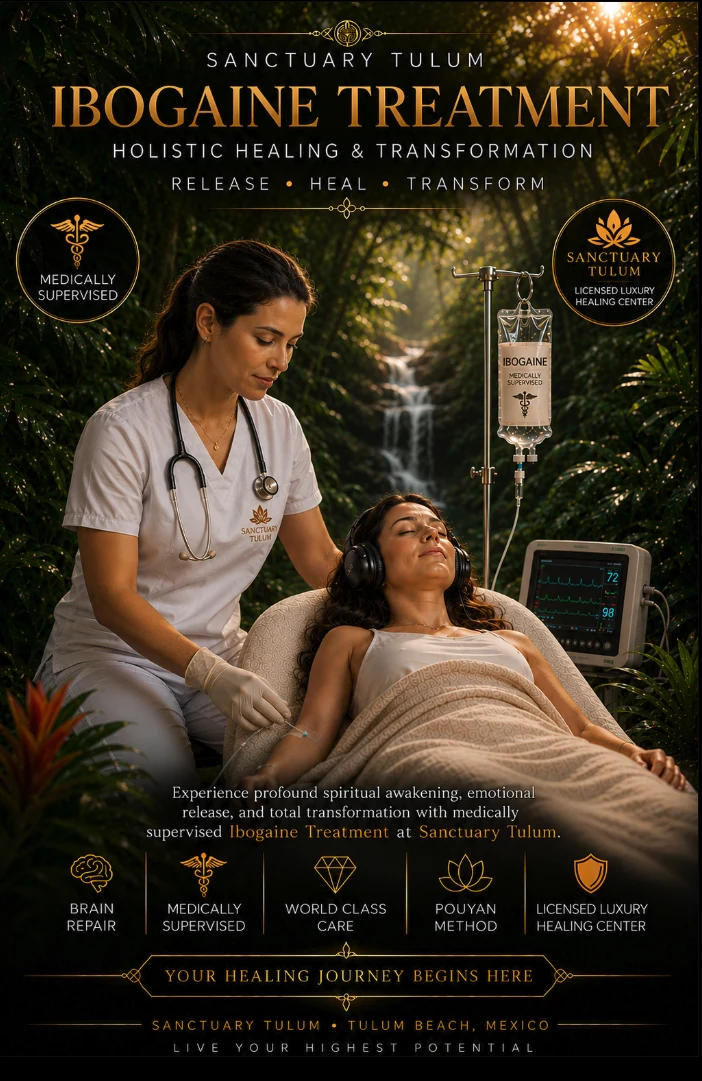
The ibogaine treatment itself is administered in our medically equipped treatment suite, with continuous cardiac telemetry, on-site physician supervision, and experienced nurses throughout the 24–36 hour window. Following the ibogaine session, the recovery program continues with:
- • NAD+ IV therapy — critical for opioid brain repair
- • Brain Repair IV Drip Therapy — amino acids and neurotransmitter precursors
- • Ayahuasca ceremonies — for deep trauma processing
- • Stem cell therapy — cellular repair and regeneration
- • Daily yoga, meditation, and somatic therapies
- • Integration sessions with experienced practitioners
A Word About Fentanyl
Fentanyl — now the predominant cause of opioid overdose deaths in the United States — presents specific challenges for ibogaine treatment due to its extraordinary potency and long metabolic half-life. Clients who are currently using fentanyl should begin tapering well before their ibogaine session. Our medical team provides specific, individualized guidance for fentanyl-dependent clients. We have successfully treated many fentanyl-dependent guests and have clear protocols for this population.
If you or someone you love is struggling with fentanyl addiction and seeking a way out, please contact us for a confidential consultation. The situation is not hopeless — and ibogaine treatment for opioid addiction at Sanctuary Tulum may be the breakthrough you have been waiting for.
Related: how ibogaine compares to methadone.
For the full program overview, read about our ibogaine treatment program.