
Unlike any addiction treatment that has come before it, ibogaine works at the deepest neurological level to interrupt the cycle of dependency. It doesn't substitute one substance for another, suppress symptoms indefinitely, or require a lifetime of medication management. It resets the brain itself. Here is the neuroscience behind why ibogaine treatment for addiction is categorically different — and why it works when nothing else has.
Understanding the Neuroscience of Addiction
Addiction is not a moral failing or a lack of willpower. It is a neurological disease. Chronic substance use — whether opioids, alcohol, cocaine, or methamphetamine — fundamentally alters brain structure and function. Here's what happens:
- Dopamine Receptor Downregulation: Repeated exposure to addictive substances floods the brain's reward system with dopamine. Over time, the brain compensates by reducing the number and sensitivity of dopamine receptors — meaning the person needs more and more of the substance to feel anything approaching normal, while losing the ability to experience natural pleasure.
- Opioid Receptor Adaptation: In opioid addiction specifically, the brain's natural opioid receptors (which regulate pain, pleasure, and stress) become dependent on external opioids to function. When the opioid is removed, the resulting withdrawal — sweating, vomiting, severe pain, anxiety, insomnia — is the brain's desperate attempt to re-establish homeostasis.
- Glutamate-Driven Cravings: The brain's glutamate system, which drives memory and associative learning, creates powerful conditioned responses to drug-related cues. This is why a smell, a location, or a specific person can trigger overwhelming cravings even years into recovery.
- Neuroinflammation: Chronic substance use drives neuroinflammation — brain inflammation that impairs cognition, mood regulation, and decision-making, further deepening the addiction cycle.
This is why willpower alone cannot overcome addiction. The brain itself has been structurally rewired. Conventional rehab — talk therapy, group meetings, willpower-based approaches — operates at a behavioral level. It cannot reverse the underlying neurological damage. This is the gap that ibogaine therapy fills.
Ibogaine's Multi-System Neurological Reset
Ibogaine is pharmacologically extraordinary because it acts on multiple neurotransmitter systems simultaneously — not just one or two. This is what enables it to address the full spectrum of neurological damage caused by addiction.
- Opioid Receptor Reset: Ibogaine acts as both an agonist and antagonist at mu and kappa opioid receptors, effectively normalizing their sensitivity. This is why patients with severe heroin or fentanyl addiction report zero withdrawal symptoms after ibogaine — the receptor systems have been reset. The desperate physical need for opioids is gone.
- Dopamine System Restoration: Ibogaine modulates dopamine transporter (DAT) function and receptor sensitivity, beginning the restoration of the brain's natural reward response. Patients frequently notice that food, music, connection, and natural experiences begin to feel pleasurable again — often for the first time in years.
- NMDA-Mediated Neuroplasticity: Ibogaine's antagonism at NMDA glutamate receptors triggers a cascade of neuroplastic changes — the brain's physical rewiring of its own circuits. This is the mechanism that sustains recovery beyond the acute ibogaine session, as the brain continues reorganizing toward healthier patterns in the weeks and months that follow.
- Serotonin Restoration: By inhibiting serotonin reuptake, ibogaine elevates serotonin availability — reducing depression, anxiety, and the emotional despair that so often drives substance use as self-medication.
- GDNF Upregulation: Research from pioneering ibogaine researcher Dorit Ron at UCSF suggests that ibogaine significantly upregulates GDNF (glial cell line-derived neurotrophic factor) — a protein that promotes the survival and repair of dopaminergic neurons. This may explain why ibogaine's anti-craving effects persist long after the medicine has cleared the system.

Beyond Physical Addiction: The Psychological Dimension
The neurological reset is only half of what makes ibogaine therapy for addiction so transformative. The other half is the profoundly unique psychological experience ibogaine induces.
During the acute ibogaine experience, patients often enter a visionary state in which they access and reprocess formative memories and unresolved emotional material. This is not random. Addiction researchers increasingly recognize that unresolved trauma is among the most powerful drivers of addictive behavior — and that healing trauma is essential to sustainable recovery. Conventional talk therapy can take years to make meaningful progress on deep trauma. Ibogaine can catalyze profound therapeutic breakthroughs in a single session.
Many of our guests at Sanctuary Tulum describe their ibogaine experience as watching a film of their own life — seeing their behavioral patterns with clarity and compassion, understanding the emotional pain that drove their substance use, and arriving at a sense of forgiveness and resolution that had seemed impossible before. This psychological transformation, combined with the neurological reset, is what makes ibogaine treatment so uniquely effective at producing lasting recovery.
Ibogaine and Specific Addictions: What the Evidence Shows
- Heroin and Fentanyl Addiction: The most extensively documented application of ibogaine. Multiple observational studies and large case series demonstrate that a single ibogaine treatment session dramatically reduces or eliminates opioid withdrawal symptoms and significantly reduces self-reported cravings at 1-month and 12-month follow-ups.
- Alcohol Dependence: Ibogaine's serotonergic and NMDA-modulating effects show particular promise for alcohol use disorder, with patients reporting reduced alcohol consumption and craving following treatment.
- Cocaine and Methamphetamine: While research is earlier-stage, ibogaine's dopaminergic restoration is theoretically well-suited to stimulant addiction, and our clinical experience at Sanctuary Tulum reflects meaningful outcomes in this population.
- Treatment-Resistant Depression: The serotonergic component of ibogaine — combined with the psychological insights of the visionary experience — makes it a compelling intervention for patients whose depression has not responded to SSRIs, SNRIs, or other conventional approaches.
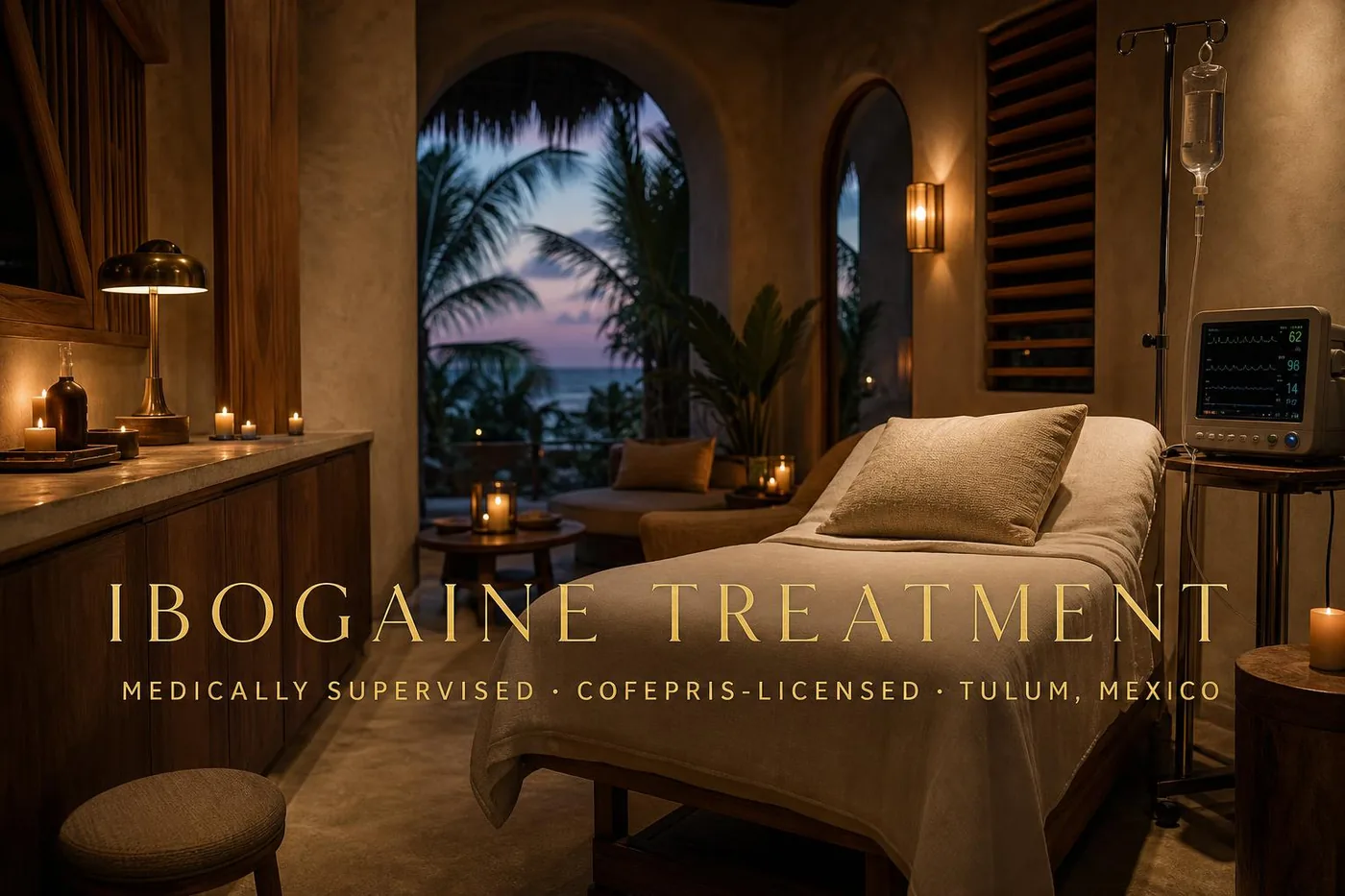
Why Ibogaine Must Be Part of a Comprehensive Program
At our luxury rehab, ibogaine is the centerpiece of the Pouyan Method™ — not a standalone intervention. The neurological reset ibogaine provides is a powerful foundation, but lasting recovery requires building on that foundation with:
- • NAD+ IV therapy — to continue brain repair and cellular energy restoration
- • Ayahuasca ceremonies — to deepen the psychological healing initiated by ibogaine
- • Stem cell therapy — to repair cellular and systemic damage from substance use
- • Hyperbaric oxygen therapy — to accelerate brain tissue repair
- • Daily yoga, meditation, and bodywork to rebuild nervous system regulation
- • Organic superfood nutrition to restore biochemical balance
This comprehensive, integrative approach is why our ibogaine addiction treatment program is built around the full arc of recovery rather than a single dosing event — with the majority of clients who complete the program reporting meaningful, lasting change. The neurological door that ibogaine opens must be walked through with intention, support, and a holistic program designed for complete healing.
To learn more about how we deliver ibogaine in a safe, medically supervised context, read our complete guide to safe ibogaine treatment. To understand the full spectrum of ibogaine's healing applications, explore ibogaine therapy and how it heals the mind, brain, and body.
🔬 Groundbreaking Research: The Hidden Biology Behind Addiction
Sanctuary Tulum founder Johnny Tabaie has spent 20+ years investigating a revolutionary hypothesis: that parasitic infections — including Toxoplasma gondii — may directly hijack the dopamine pathways that drive drug and opioid addiction. By upregulating tyrosine hydroxylase in brain tissue, these organisms may create the neurochemical substrate of addiction long before the first substance is ever taken. This self-funded research has produced observations across 1,500+ clients and offers a radical new biological explanation for why addiction is so resistant to conventional treatment.
The kynurenine pathway — activated by parasitic immune responses — also depletes serotonin and produces excitotoxic compounds associated with depression and suicidal ideation, compounding the neurological burden that ibogaine is uniquely positioned to reset.
Related: ibogaine versus methadone maintenance.
→ Deep-Dive: Parasites, Dopamine & Drug Addiction — Research Cluster 02|→ Full Research Page: Parasites, the Brain & the Hidden Biology of AddictionTo see how this fits into a complete program, explore our medically supervised ibogaine treatment.