Ibogaine is a naturally occurring psychoactive alkaloid extracted from the root bark of Tabernanthe iboga — a shrub indigenous to the rainforests of Gabon and Cameroon in Central West Africa. It is one of the most pharmacologically complex and powerful substances known to medicine, and it has attracted intense scientific and clinical interest for its extraordinary ability to interrupt addiction at the neurological level.
What separates ibogaine from every other addiction treatment is its mechanism: rather than managing withdrawal symptoms with substitute medications, ibogaine resets the brain's receptor systems directly — often eliminating withdrawal and craving in a single session. This is not anecdote. It is documented across decades of clinical observation and increasingly robust scientific research.
Origins and Sacred History
Long before Western medicine discovered ibogaine's addiction-interrupting properties, the Bwiti people of Gabon had been using iboga root bark for centuries in sacred initiation ceremonies. These ceremonies — some lasting multiple days — were understood to heal the initiate at a fundamental spiritual level, dissolving ego constructs, resolving ancestral trauma, and connecting the individual to a deeper sense of purpose and identity.
In the West, ibogaine's anti-addictive properties were discovered in 1962 when Howard Lotsof, a young heroin addict in New York, ingested ibogaine as a recreational experiment and found — to his astonishment — that his heroin withdrawal symptoms completely vanished. He had no cravings. He felt free. Lotsof spent the remainder of his life fighting to legitimize ibogaine research and make this medicine available to those suffering from addiction.
Today, ibogaine treatment centers like Sanctuary Tulum have built on decades of clinical experience to deliver this medicine in a medically rigorous, spiritually respectful, and deeply healing context.
How Ibogaine Works: The Neuroscience
Ibogaine's pharmacology is uniquely complex. Unlike single-target drugs, ibogaine is a "dirty" drug in the best possible sense — it interacts with numerous receptor systems simultaneously:
- Opioid Receptors (kappa and mu): Ibogaine binds to and modulates these receptors, which is why it so powerfully eliminates opioid withdrawal symptoms. Patients on heroin or fentanyl frequently report zero withdrawal symptoms after ibogaine treatment.
- NMDA Receptors: Ibogaine's action at NMDA glutamate receptors is believed to drive neuroplasticity — the brain's ability to rewire itself — which supports lasting recovery beyond the acute treatment window.
- Serotonin Transporters (SERT): By inhibiting serotonin reuptake, ibogaine produces mood elevation and emotional openness, contributing to the profound sense of peace and clarity many patients report after treatment.
- Sigma Receptors: These receptors are implicated in emotional regulation, learning, and memory — all critical components of the psychological healing process.
- Dopamine System: Ibogaine resets dopamine receptor sensitivity, which is severely disrupted by chronic substance use. This is the core mechanism behind the elimination of drug cravings.
The net result of this multi-system action is what researchers call a "neurological reboot" — the brain's chemistry is reset toward a pre-addicted baseline, and patients often awaken from their ibogaine experience feeling as though the physical compulsion toward their substance of addiction has simply been switched off.
The Ibogaine Experience: What Patients Report
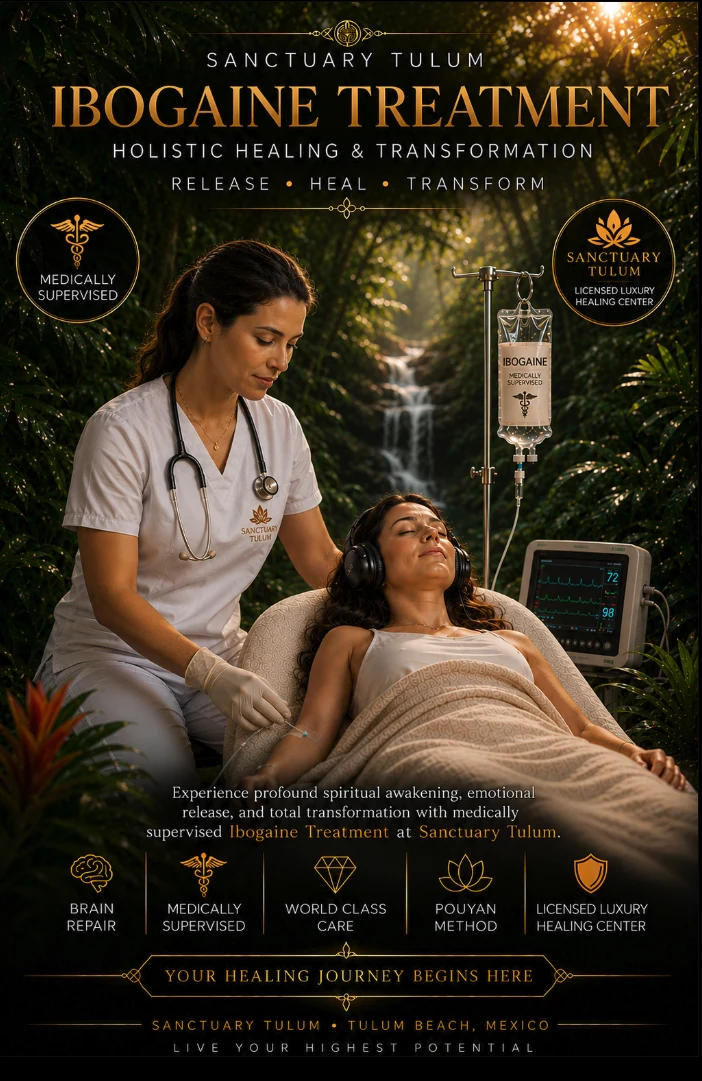
The ibogaine experience unfolds over approximately 24–36 hours and is typically described in three phases:
- The Visionary Phase (0–8 hours): Vivid, waking-dream imagery often involving biographical memories, symbolic landscapes, and encounters with aspects of the self. Patients frequently report accessing memories they had forgotten or suppressed — often early trauma that underlies their addiction. This is not merely hallucinatory: many describe it as the most meaningful experience of their life.
- The Reflective Phase (8–20 hours): The visionary intensity subsides into a deep state of introspection and clarity. Many patients report profound insights about their patterns, relationships, and sense of self. The experience integrates emotionally.
- Stabilization (20–36 hours): The patient returns to full waking awareness. Medical assessment confirms the neurological reset. Integration begins. Patients commonly describe this phase as waking up "free."
What Ibogaine Treats
Ibogaine is most clinically documented for opioid addiction (heroin, fentanyl, oxycodone, methadone), but its multi-system action makes it effective for:
- • Alcohol dependence
- • Cocaine and stimulant addiction
- • Methamphetamine dependency
- • Benzodiazepine withdrawal support
- • Treatment-resistant depression
- • PTSD and trauma
- • Existential distress and loss of life meaning
Safety Considerations
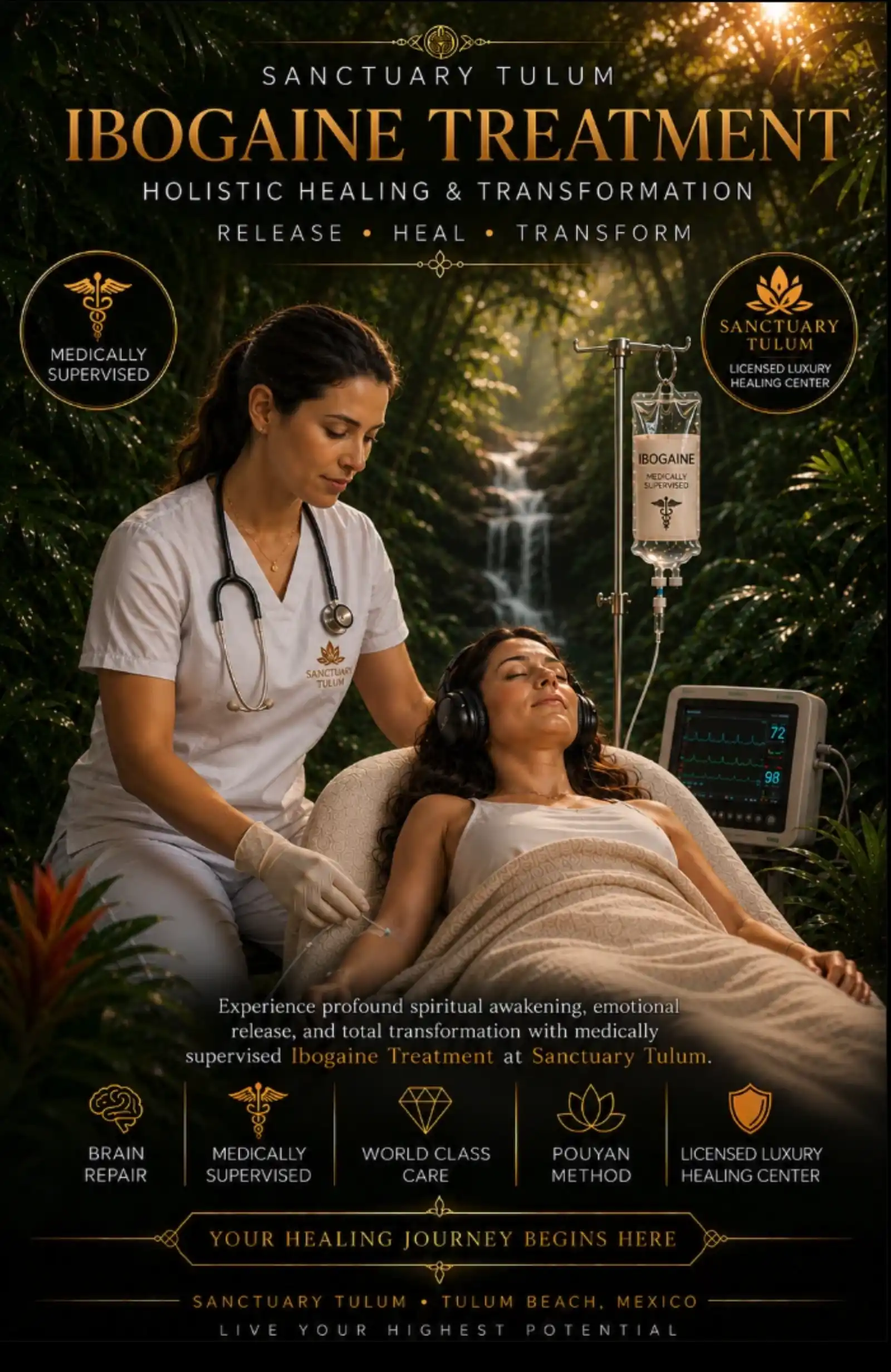
Ibogaine requires proper medical supervision. The most significant clinical risk is cardiac — ibogaine prolongs the QT interval, which can be dangerous in individuals with pre-existing cardiac conditions. This is precisely why every reputable ibogaine treatment center mandates a comprehensive cardiac screening before treatment.
At Sanctuary Tulum, we have maintained a documented, fatality-free safety record since 2011 — spanning thousands of ibogaine sessions — because we never compromise on pre-treatment screening, continuous cardiac monitoring, or on-site physician oversight. Choosing the right luxury rehab for ibogaine is not just about comfort — it is a matter of life and safety.
Is Ibogaine Legal?
Ibogaine is classified as a Schedule I substance in the United States, meaning it cannot be legally administered there. However, ibogaine is unregulated in Mexico — where it can be legally administered in licensed medical facilities — as well as in Canada, the Netherlands, Portugal, South Africa, and several other countries. This is why ibogaine treatment in Mexico, particularly in Tulum, has become the global hub for Americans and Canadians seeking this breakthrough therapy.
Sanctuary Tulum is a licensed, medical-grade healing facility. Our ibogaine treatment programs are conducted with full legal compliance in Mexico, by trained medical professionals, in a world-class facility. Read more in our detailed guide to choosing an ibogaine clinic in Mexico safely.
Ready to take the next step? Learn about our ibogaine treatment at Sanctuary Tulum.