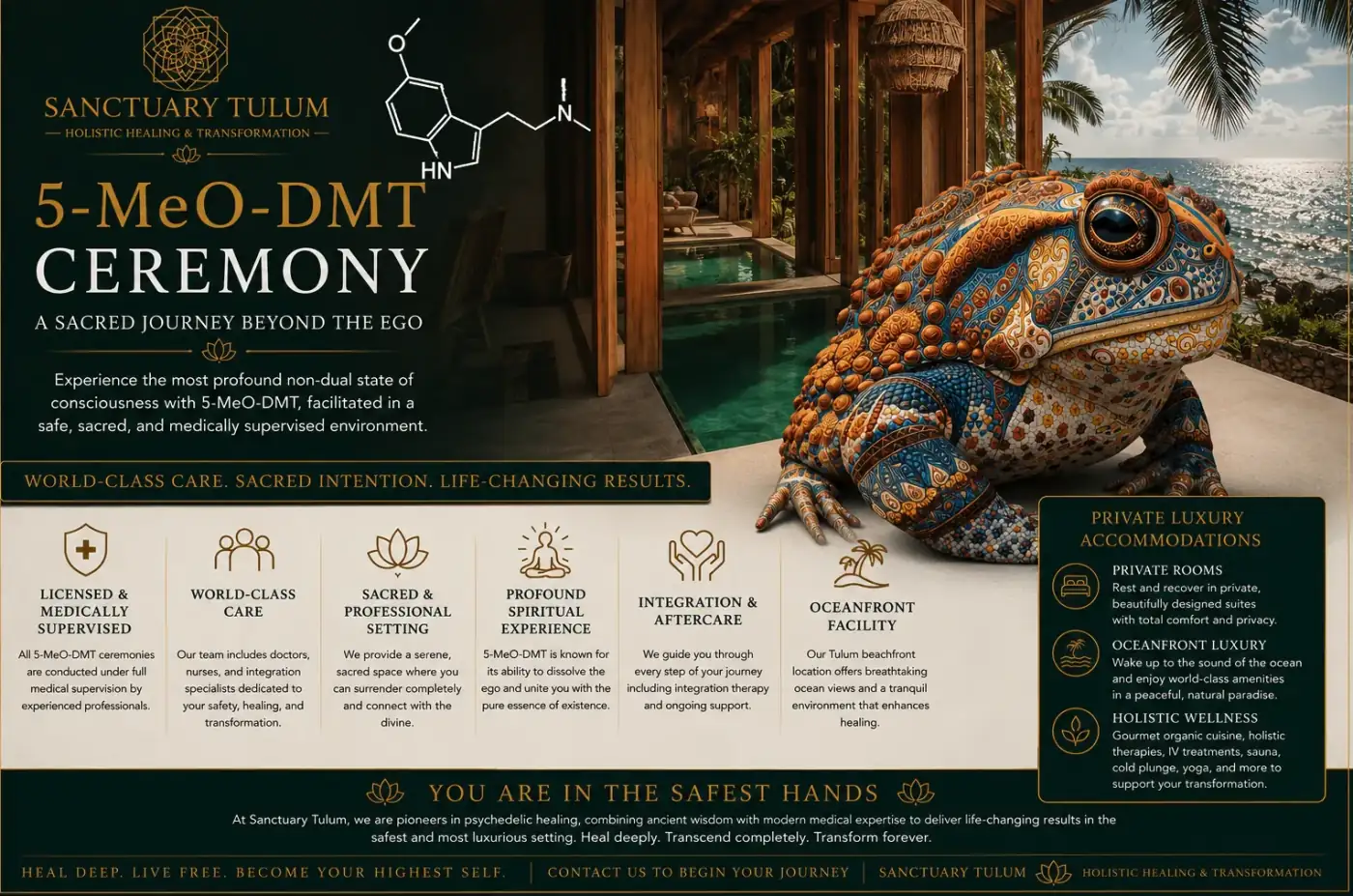
Post-traumatic stress disorder (PTSD) affects approximately 6% of the US population, with veterans, first responders, and trauma survivors facing particularly high rates. While conventional treatments — SSRIs, cognitive behavioral therapy, EMDR — help many, an estimated 30-50% of PTSD patients don't respond adequately to standard care. 5-MeO-DMT therapy is emerging as a powerful alternative for these treatment-resistant cases.
Why 5-MeO-DMT Works for PTSD
PTSD is characterized by a nervous system stuck in survival mode — hypervigilance, flashbacks, emotional numbing, and an inability to process traumatic memories. 5-MeO-DMT's mechanism of action is uniquely suited to addressing this:
- Ego dissolution — By temporarily dissolving the ego structure, 5-MeO-DMT allows trauma to be experienced from a place of safety rather than re-traumatization
- Nervous system reset — The experience can reset the autonomic nervous system from chronic fight-or-flight to a parasympathetic (rest-and-digest) state
- Perspective shift — Many PTSD sufferers report that 5-MeO-DMT helped them see their trauma from a transcendent perspective, reducing its emotional charge
- Somatic release — The body often releases stored trauma during the experience through movement, vocalization, and emotional expression
Veterans and 5-MeO-DMT
The veteran community has been at the forefront of psychedelic therapy for PTSD. Organizations like VETS (Veterans Exploring Treatment Solutions) have documented remarkable outcomes with 5-MeO-DMT. Many veterans who had exhausted every conventional treatment option — years of therapy, multiple medications, hospitalization — report profound and lasting relief after a single 5-MeO-DMT ceremony.
A 2020 observational study of veterans who received 5-MeO-DMT found significant reductions in PTSD symptoms, depression, and anxiety, with improvements maintained at one-month follow-up. Participants also reported increased cognitive flexibility, mindfulness, and sense of personal meaning.
The Experience of Processing Trauma
Unlike talk therapy, which processes trauma through narrative and language, 5-MeO-DMT works at a pre-verbal, somatic level. Trauma stored in the body — muscle tension, chronic pain, digestive issues — can release during the experience. Many PTSD sufferers describe feeling, for the first time in years, a profound sense of safety, peace, and wholeness.
The Sanctuary Tulum Protocol for PTSD
At Sanctuary Tulum, PTSD treatment follows a carefully designed protocol within the Pouyan Method:
- Phase 1: Medical stabilization and nutritional restoration
- Phase 2: Ibogaine therapy to reset neurological patterns
- Phase 3: Medically supervised ayahuasca ceremonies to process emotional trauma narratively
- Phase 4: Psilocybin therapy for perspective and neuroplasticity
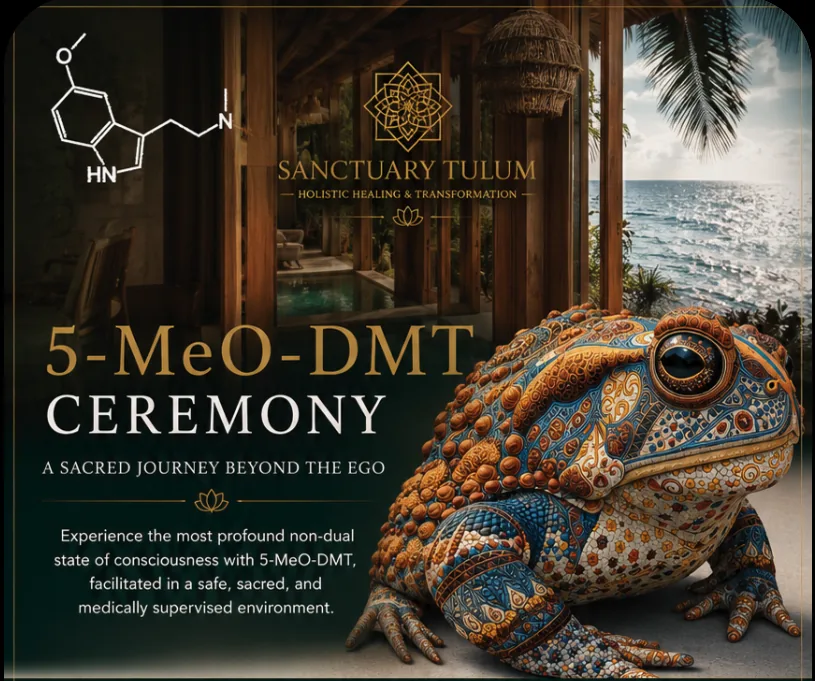
- Phase 5: medically supervised 5-MeO-DMT retreat for spiritual rebirth and nervous system reset
- Phase 6: Stem cell therapy for physical regeneration and ongoing integration
Is 5-MeO-DMT Right for Your PTSD?
5-MeO-DMT therapy is particularly promising for complex PTSD, treatment-resistant PTSD, and individuals who have not responded to conventional therapies. However, proper screening, experienced facilitation, and comprehensive integration support are essential. Contact Sanctuary Tulum for a confidential assessment of whether this approach is right for your healing journey.
References
- Davis AK, et al. "The Epidemiology of 5-Methoxy-N,N-Dimethyltryptamine (5-MeO-DMT) Use." J Psychopharmacol. 2018;32(7):779-792.
- Uthaug MV, et al. "A single inhalation of vapor from dried toad secretion containing 5-MeO-DMT in a naturalistic setting is related to sustained enhancement of satisfaction with life, mindfulness-related capacities, and a decrement of psychopathological symptoms." Psychopharmacology. 2019;236(9):2653-2666.
- Reiff CM, et al. "Psychedelics and Psychedelic-Assisted Psychotherapy." Am J Psychiatry. 2020;177(5):391-410.
Clinical Screening Before Any Protocol
Every prospective guest at Sanctuary Tulum completes a confidential clinical intake and full medical screening before any protocol is scheduled. The intake reviews current medications, medical history, cardiovascular status, mental health history, and where relevant, substance-use pattern. Where a client is currently prescribed SSRIs, SNRIs, MAO inhibitors, benzodiazepines, opioids, or lithium, our medical team plans a documented taper or pause window with the treating physician before any ceremony or high-dose infusion is scheduled. No client is cleared for plant-medicine or advanced regenerative protocols until that clearance is on file.
On-Site Medical Oversight
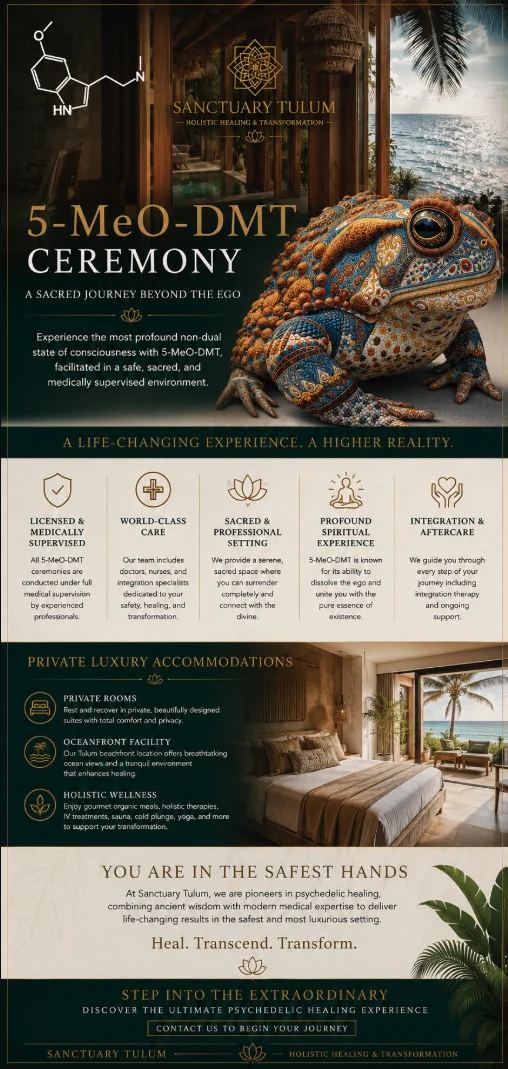
A physician is on site, supported by registered nurses, IV therapy specialists, and integrative practitioners. Vitals are monitored across every physician-supervised session — blood pressure, oxygen saturation, and cardiac rhythm where clinically indicated — with emergency medications and airway equipment on hand. Details of our credentialing process are on the Medical Review Board page, and a plain-language overview of our clinical safety approach is on the safest psychedelic facility page.
Where This Fits in the Full Program
This protocol is one component of Sanctuary Tulum's integrative residential program. For the broader treatment framework, see the Pouyan Method™ page. For the medically supervised detox side, see the medical detox center page. Plant-medicine components are described on the ibogaine treatment center, ayahuasca ceremony, and 5-MeO-DMT ceremony pages.
Realistic Expectations and Aftercare
Sanctuary Tulum does not guarantee outcomes and does not present any protocol as a cure. Response varies by diagnosis, medication history, adherence to the aftercare plan, and the client's overall clinical picture. Aftercare planning begins in the second half of every residential arc: nutrition and supplement protocols to carry home, a taper or continuation plan for any prescribed medications reviewed at intake, an integration schedule, and referrals to physicians or integrative practitioners in the client's home region.
Next Step
If this protocol is worth exploring for you or a family member, the next step is a confidential clinical intake. Start with the confidential intake form or reach the clinical team through the contact page. Nothing on this page constitutes medical advice or a clinical determination for any individual. All decisions are made in consultation with the on-site medical team after a full screening.