
Ibogaine therapy is unlike any other form of healing available in the modern world. It is simultaneously ancient and cutting-edge — a sacred plant medicine with centuries of use in West African spiritual tradition, now delivering outcomes that clinical science is only beginning to fully understand. For those suffering from addiction, PTSD, treatment-resistant depression, or deep psychological pain, ibogaine therapy at Sanctuary Tulum offers what conventional medicine has consistently failed to provide: the possibility of complete, lasting transformation.
What Ibogaine Therapy Actually Is
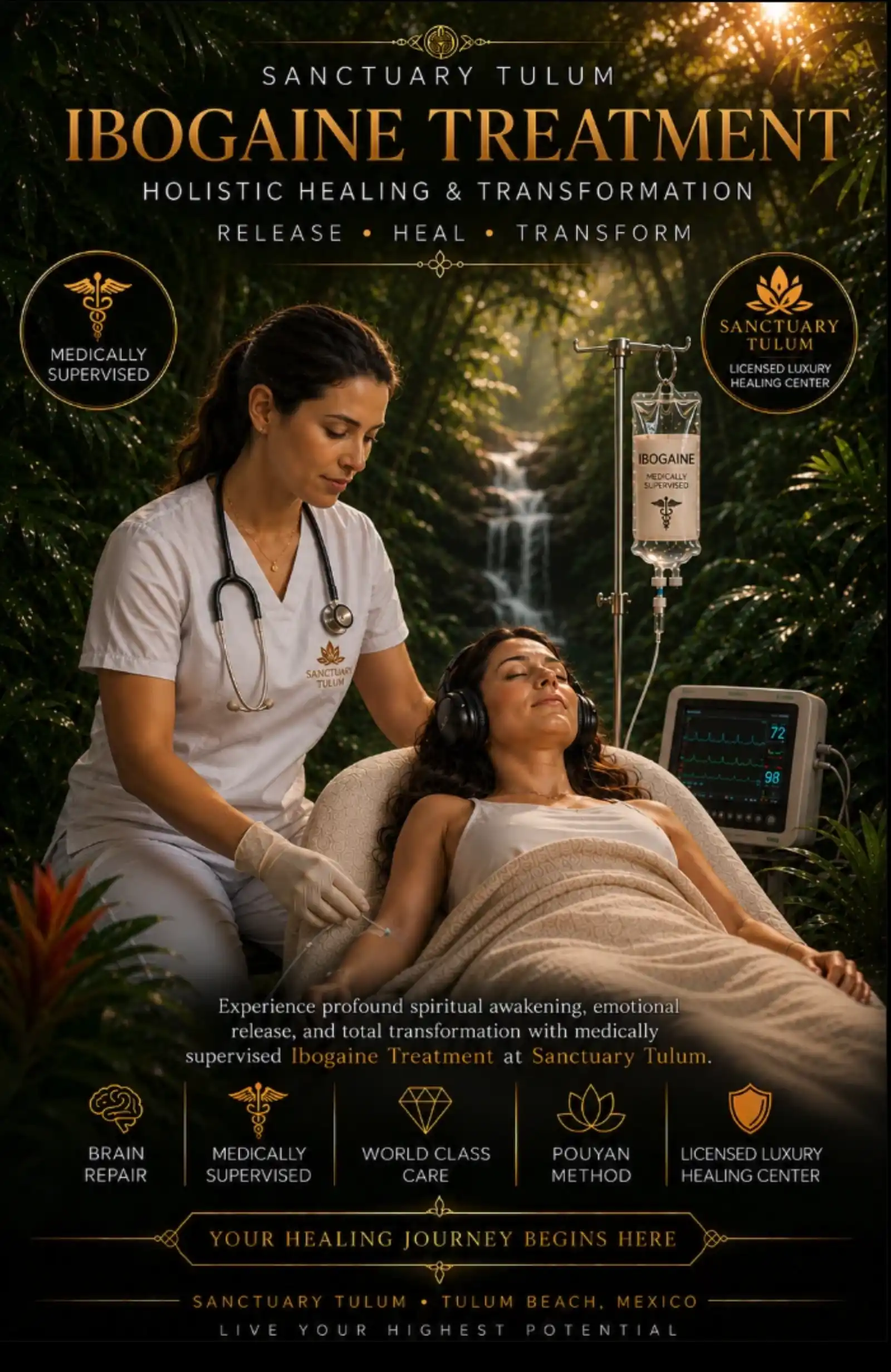
Ibogaine therapy is the medically supervised administration of ibogaine — a naturally occurring alkaloid from the African iboga plant — in a therapeutic context designed to catalyze profound healing. It is not recreational drug use. It is not a psychedelic experience for its own sake. It is a carefully prepared, medically monitored therapeutic intervention that works on three simultaneous levels: neurological, psychological, and spiritual.
At its core, ibogaine therapy is about restoring wholeness. The addiction, the depression, the PTSD — these are symptoms of a deeper fragmentation. Ibogaine addresses that fragmentation directly, in a way that few other intervention can replicate.
How Ibogaine Therapy Heals the Brain
The brain-healing dimension of ibogaine therapy is pharmacologically unprecedented. Ibogaine acts on at least five major neurotransmitter systems simultaneously — opioid receptors, dopamine transporters, NMDA receptors, serotonin transporters, and sigma receptors. This multi-system action produces what researchers describe as a comprehensive neurological reset.
For those struggling with addiction, this reset has concrete, measurable consequences: withdrawal symptoms frequently vanish within hours. Drug cravings — which can persist for months or years after conventional detox — are often dramatically reduced or eliminated. The brain's reward system, damaged by years of substance use, begins the process of restoration.
Beyond the acute reset, emerging research suggests that ibogaine upregulates GDNF (glial cell line-derived neurotrophic factor) — a brain growth factor that promotes the survival and regeneration of dopamine-producing neurons. This GDNF effect may explain why ibogaine's anti-craving benefits often persist for months or years after a single treatment session, and why ibogaine therapy produces durable outcomes that surpass any other addiction intervention.
How Ibogaine Therapy Heals the Mind
The psychological dimension of ibogaine therapy is equally transformative. During the acute experience — which typically lasts 8–12 hours — ibogaine induces a unique visionary state characterized by autobiographical memory recall, symbolic processing, and profound introspective clarity.
Unlike conventional psychedelics that produce mainly perceptual distortion, ibogaine tends to generate what patients describe as a "life review" — a panoramic, emotionally resonant re-experiencing of one's own history. Formative experiences, often painful or shameful ones, are encountered with a new quality of compassionate perspective. Patterns become visible. Wounds that have never been directly addressed surface and, with proper support, resolve.
This is particularly significant for addiction treatment, because the scientific evidence is now clear: unresolved trauma is among the most powerful drivers of addictive behavior. Conventional cognitive-behavioral therapy addresses trauma at a behavioral level and can take years to produce meaningful change. Ibogaine therapy can catalyze in hours what talk therapy cannot accomplish in years — not by bypassing the psychological work, but by creating a uniquely receptive state for it.
Patients commonly emerge from their ibogaine session reporting experiences of profound forgiveness — of themselves and others — and a clarity about their life's meaning and direction that feels radically new. This psychological shift is the foundation for the behavioral change that follows.
How Ibogaine Therapy Supports the Body
Addiction devastates the body — nutritionally, immunologically, and cellularly. At Sanctuary Tulum, ibogaine therapy is supported by a comprehensive physical restoration program designed to address this damage:
- NAD+ IV Therapy: Nicotinamide adenine dinucleotide is a critical coenzyme in cellular energy production and DNA repair. Chronic substance use severely depletes NAD+ levels. IV supplementation rapidly restores cellular energy, supports mitochondrial function, and accelerates brain repair — making it a powerful complement to ibogaine's neurological reset.
- Brain Repair IV Drip Therapy: Our proprietary amino acid and neurotransmitter precursor formulas flood the brain with the raw materials needed to rebuild depleted serotonin, dopamine, and GABA systems, accelerating the neurochemical restoration that ibogaine initiates.
- Stem Cell Therapy: Ethically sourced mesenchymal stem cells address systemic inflammation and cellular damage caused by years of substance use, supporting recovery at the deepest biological level.
- Hyperbaric Oxygen Therapy (HBOT): Increased atmospheric oxygen pressure dramatically improves oxygen delivery to healing brain tissue, reduces neuroinflammation, and stimulates stem cell production — accelerating the neurological repair initiated by ibogaine.
- Organic Superfood Nutrition: A 100% plant-based, non-GMO, nutrient-dense diet — including superfood juices, bone broth, lion's mane, spirulina, moringa, and black seed oil — provides the biochemical foundation for cellular healing.
Who Benefits Most from Ibogaine Therapy?
In our experience at Sanctuary Tulum, the candidates who benefit most from ibogaine therapy share a common profile: they are committed to genuine healing, not just symptom management. They have typically tried conventional approaches — multiple rehab programs, medication management, years of therapy — and found them insufficient. They are ready for something fundamentally different.
The conditions most consistently responsive to ibogaine therapy include opioid addiction, alcohol dependence, cocaine and stimulant addiction, PTSD, treatment-resistant depression, and complex trauma. We also see strong outcomes for individuals who are not necessarily addicted but are seeking deep psychological and spiritual breakthrough — often described as seeking a "reset" from patterns, relationships, or ways of being that no longer serve them.
Ibogaine Therapy at Sanctuary Tulum: The Difference
Since 2011, Sanctuary Tulum has administered more medically supervised ibogaine therapy sessions than almost any other licensed facility in the world. Our documented, fatality-free safety record is the result of uncompromising medical protocols, continuous investment in training and equipment, and a fundamental respect for the power of this medicine.
What sets our ibogaine therapy program apart is not just what we do — it is how we do it. Every guest is treated as a unique individual. There are no groups, no assembly-line protocols, no one-size-fits-all approaches. Each program is custom-designed around the specific needs, history, and goals of the person we are serving. Our guests receive more than 35 hours of holistic one-on-one therapy per week — a level of care that simply does not exist elsewhere.
To learn more about what to expect, read our detailed guide to safe ibogaine treatment, or reach out directly for a confidential consultation about whether ibogaine therapy is right for you.
To see how this fits into a complete program, explore our medically supervised ibogaine treatment.