
Safety is not just the most important factor when choosing ibogaine treatment center — it is the only factor that matters. Ibogaine is a profoundly powerful medicine that demands rigorous medical protocols. When these protocols are followed correctly, ibogaine can be life-changing. When they are not, the consequences can be fatal. This comprehensive guide walks you through everything you need to know to ensure a safe, successful ibogaine treatment experience.
Why Ibogaine Requires Medical Supervision
Ibogaine's primary clinical risk is cardiac. Specifically, ibogaine prolongs the QT interval — a measure of the heart's electrical cycle — which in susceptible individuals can lead to dangerous arrhythmias, including a potentially fatal arrhythmia called Torsades de Pointes. This risk is entirely manageable with proper screening and monitoring, but it is absolutely non-negotiable. Any clinic that does not conduct comprehensive cardiac screening before ibogaine administration is operating unsafely — full stop.
Beyond cardiac risk, ibogaine can have significant interactions with other medications, particularly opioids, benzodiazepines, SSRIs, and certain stimulants. A complete and accurate medication history is essential for safe ibogaine treatment planning.
Pre-Treatment Medical Screening: The Non-Negotiables
At Sanctuary Tulum, every guest completes a comprehensive pre-treatment evaluation before any ibogaine is administered:
- 12-Lead EKG: Assesses baseline cardiac rhythm and QT interval. A QTc greater than 450ms (men) or 470ms (women) is generally a contraindication to ibogaine administration.
- Echocardiogram: Evaluates cardiac structure and function, identifying any structural abnormalities that might pose risk.
- Complete Blood Panel: Full metabolic panel, liver function tests (ibogaine is hepatically metabolized), kidney function, electrolyte levels (especially potassium and magnesium, which affect cardiac rhythm), and complete blood count.
- Comprehensive Medication Review: Every medication, supplement, and substance must be disclosed. Certain medications must be tapered or discontinued before ibogaine treatment — your clinical team will provide a specific protocol.
- Psychological Assessment: History of psychiatric conditions, current mental health status, trauma history, and addiction timeline are all reviewed to inform the treatment plan.
- Medical History Review: Family cardiac history, personal cardiac history, liver disease, and any other relevant medical conditions are assessed.
This screening is conducted before your arrival, with our medical team available to review results and answer questions. Any guest who does not pass screening is not administered ibogaine — and we would rather have that difficult conversation than compromise anyone's safety.
Preparing for Ibogaine Treatment
Proper preparation significantly improves both safety and outcomes:
- Medication Tapering: Certain substances must be reduced before ibogaine treatment. Opioid users will receive guidance on tapering or may undergo a brief medical detox before ibogaine. Methadone users require an extended taper — often 4–6 weeks — before ibogaine is safe.
- Dietary Preparation: A clean, plant-based diet in the days leading up to treatment reduces system burden and improves liver function. Avoid alcohol, recreational drugs, and any non-prescribed supplements for at least 48 hours before treatment.
- Hydration: Adequate electrolyte balance before treatment supports cardiac safety.
- Intention Setting: Ibogaine is most powerful when approached with clear intention. What do you want to heal? What are you ready to let go of? These are not trivial questions — they meaningfully shape the ibogaine experience.
- Fasting: Typically, ibogaine is administered on an empty stomach (8–12 hours of fasting) to reduce nausea and support absorption.
During the Ibogaine Session: What to Expect
The ibogaine experience typically lasts 24–36 hours from initial administration. At Sanctuary Tulum, throughout this entire window, you are under continuous medical supervision:
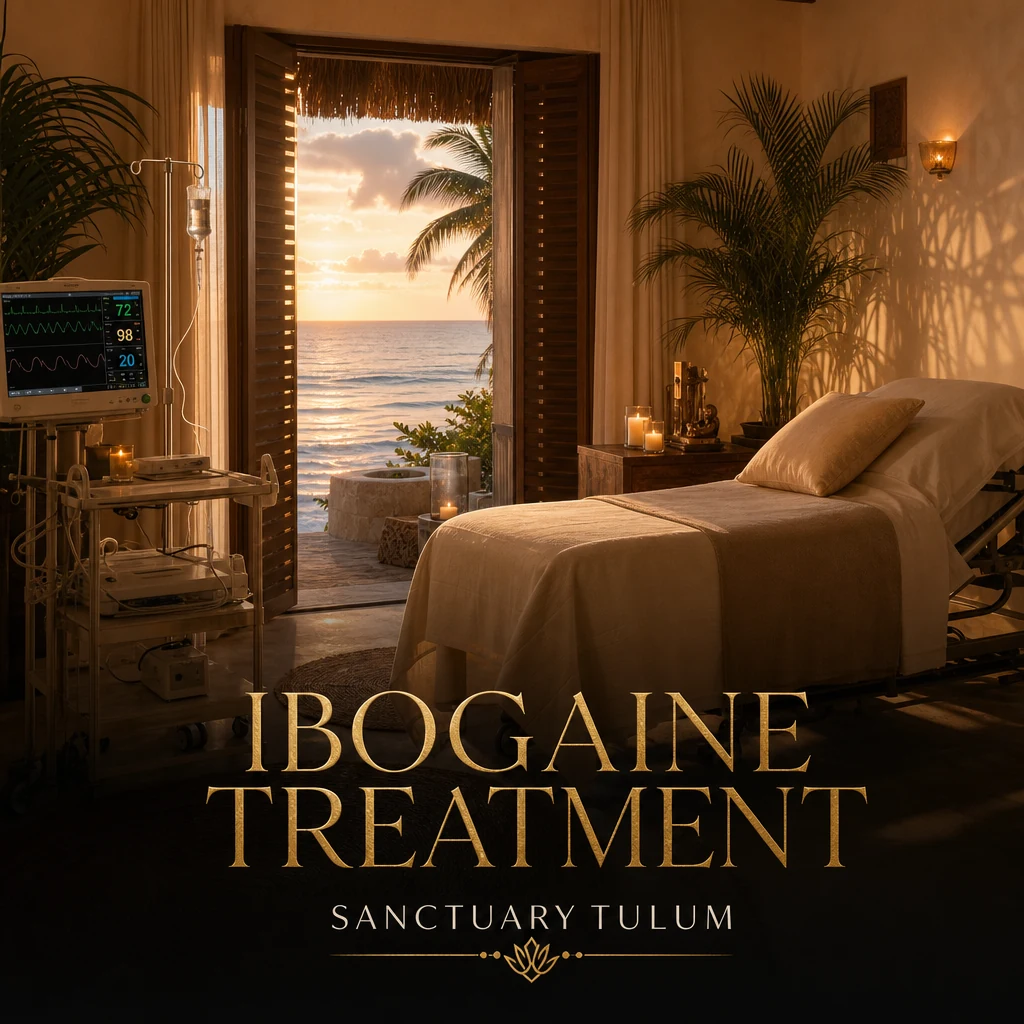
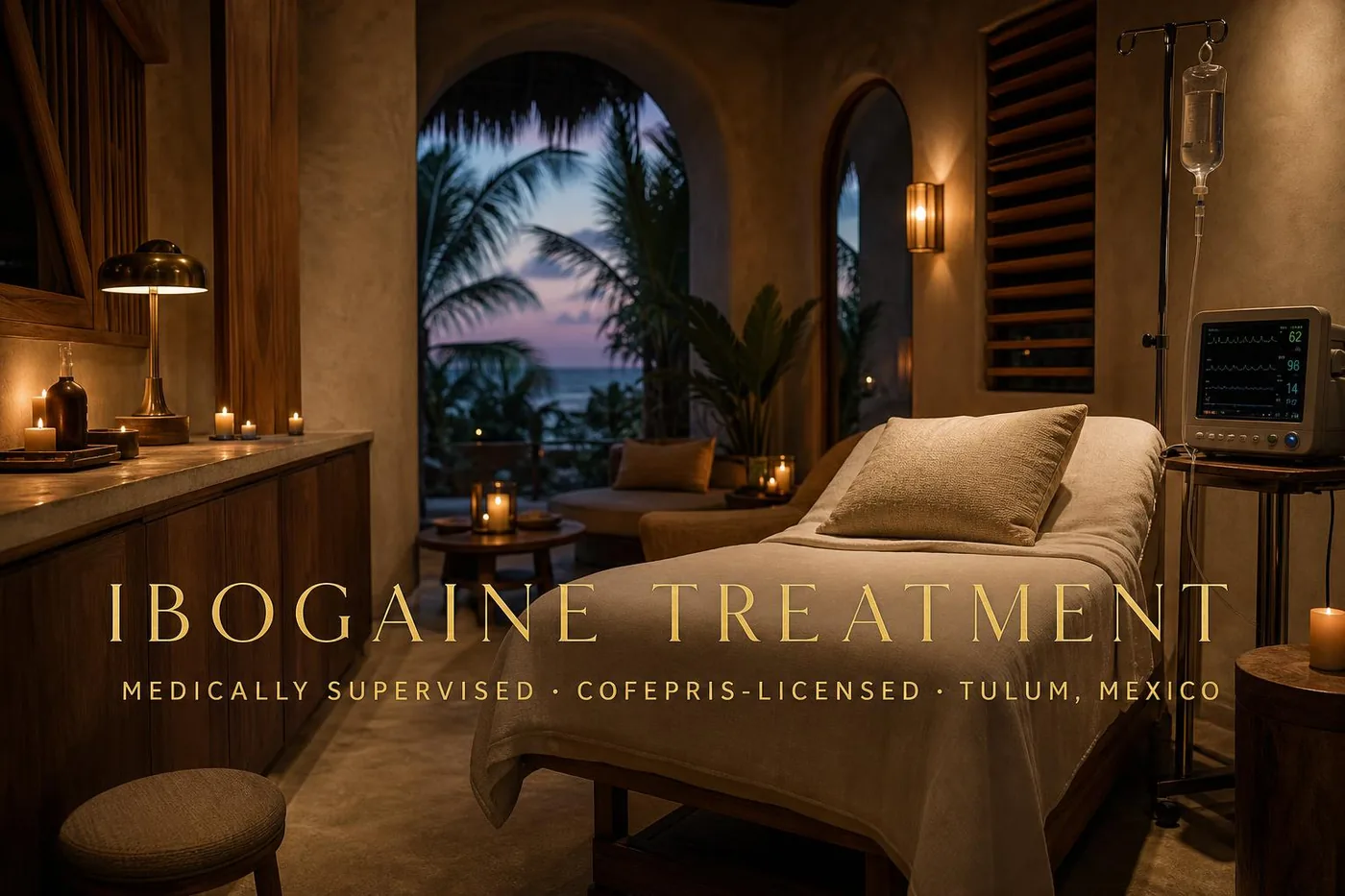
- Continuous Cardiac Telemetry: Your heart rhythm is monitored in real time throughout the entire treatment period. A physician or trained nurse is always present.
- The Visionary Phase (first 8–12 hours): Ibogaine-induced visionary imagery and deep introspective processing. Many patients describe vivid autobiographical scenes, symbolic encounters, and profound insights. Our team maintains a sacred, supportive presence without interfering with the process.
- The Reflective Phase (hours 12–20): The acute intensity gives way to a deep, peaceful reflective state. Integration begins to occur naturally. Patients often experience a profound sense of resolution, clarity, and emotional release.
- Stabilization (hours 20–36): Return to alert, waking consciousness. Medical assessment, vital signs monitoring, and initial integration conversation with your care team.
Integration and Aftercare: The Critical Bridge
The days, weeks, and months following ibogaine treatment are as important as the session itself. The neurological reset ibogaine provides is a foundation — lasting recovery requires building on it. At Sanctuary Tulum, the ibogaine experience is embedded within a comprehensive program that includes:
- • Ayahuasca ceremonies — to deepen and extend the psychological healing
- • NAD+ IV therapy — to accelerate brain repair and energy restoration
- • Daily one-on-one integration sessions with experienced practitioners
- • Yoga, meditation, breathwork, and somatic therapies
- • Organic superfood nutrition tailored to recovery
- • Ongoing lifestyle support and planning for re-entry
We strongly encourage a minimum program length of 4–6 weeks following ibogaine to allow thorough integration. For complex cases — long-term opioid dependency, significant trauma history, or multiple co-occurring conditions — longer programs (8–16 weeks) produce significantly better outcomes.
Choosing an Ibogaine Provider: The Critical Checklist
Before committing to any ibogaine clinic, verify the following:
- ✓ Mandatory cardiac screening before treatment (EKG minimum, echocardiogram preferred)
- ✓ On-site physician supervision during treatment — not "on call"
- ✓ Continuous cardiac monitoring throughout the treatment window
- ✓ Pharmaceutical-grade ibogaine HCL with verified purity
- ✓ Emergency protocols — crash cart, defibrillator, hospital transfer plan
- ✓ Clear medication tapering protocols provided in advance
- ✓ Verifiable track record and client outcomes
- ✓ Comprehensive aftercare and integration program
If a clinic cannot clearly answer all of these points — or if they pressure you to book before completing screening — walk away. Ibogaine's power is real, but so is its risk when protocols are ignored. Your life is worth doing this right.
Learn more about ibogaine treatment at Sanctuary Tulum, or explore our detailed guide on ibogaine safety and side effects.
Ready to take the next step? Learn about our ibogaine treatment at Sanctuary Tulum.