Educational Research Guide
The Light System™: Benefits of Advanced Light Therapy, Bioenergetic Wellness & Photobiomodulation
A careful, source-cited look at what The Light System™ actually measures, what the peer-reviewed photobiomodulation literature actually shows, and where the two should not be confused.
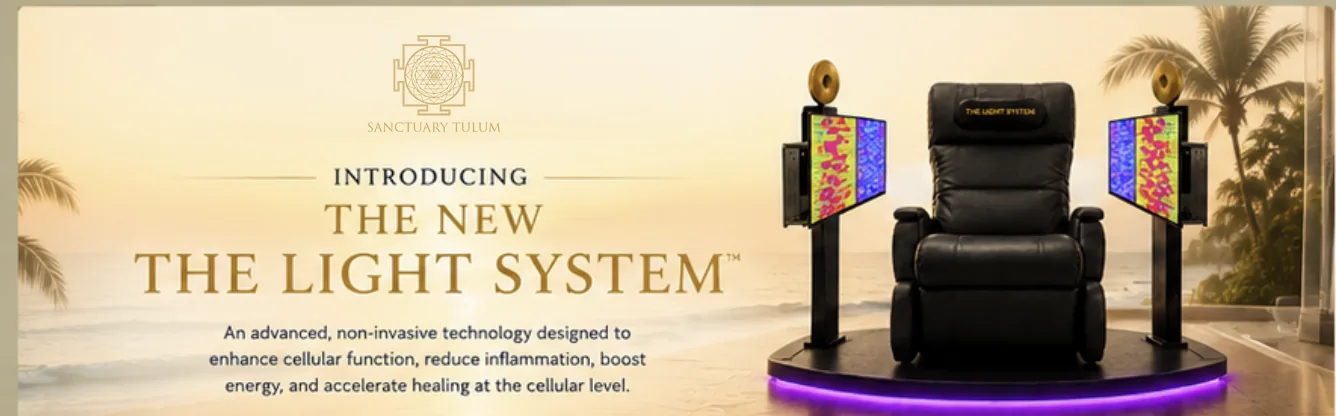
There are two very different conversations happening around light and human biology, and almost every article on the internet collapses them into one. The first is a marketing conversation about proprietary devices, bioenergetic fields and dramatic percentage increases. The second is a scientific conversation about photobiomodulation — the study of how specific non-ionizing red and near-infrared wavelengths interact with living tissue — carried out in randomized controlled trials and summarized in systematic reviews. This page keeps those conversations separate on purpose. That separation is not a rhetorical device; it is the only honest way to write about a technology like The Light System™ in a health context.
Sanctuary Tulum publishes this as educational content. The Light System is not part of our current program, and nothing here is an offer, a booking page or a clinical recommendation. Our own physician-supervised modalities — including red light therapy, infrared sauna therapy and hyperbaric oxygen therapy — are described on their own pages. What follows is a research guide for anyone trying to work out what is established, what is preliminary, and what is simply asserted.
What Is The Light System™?
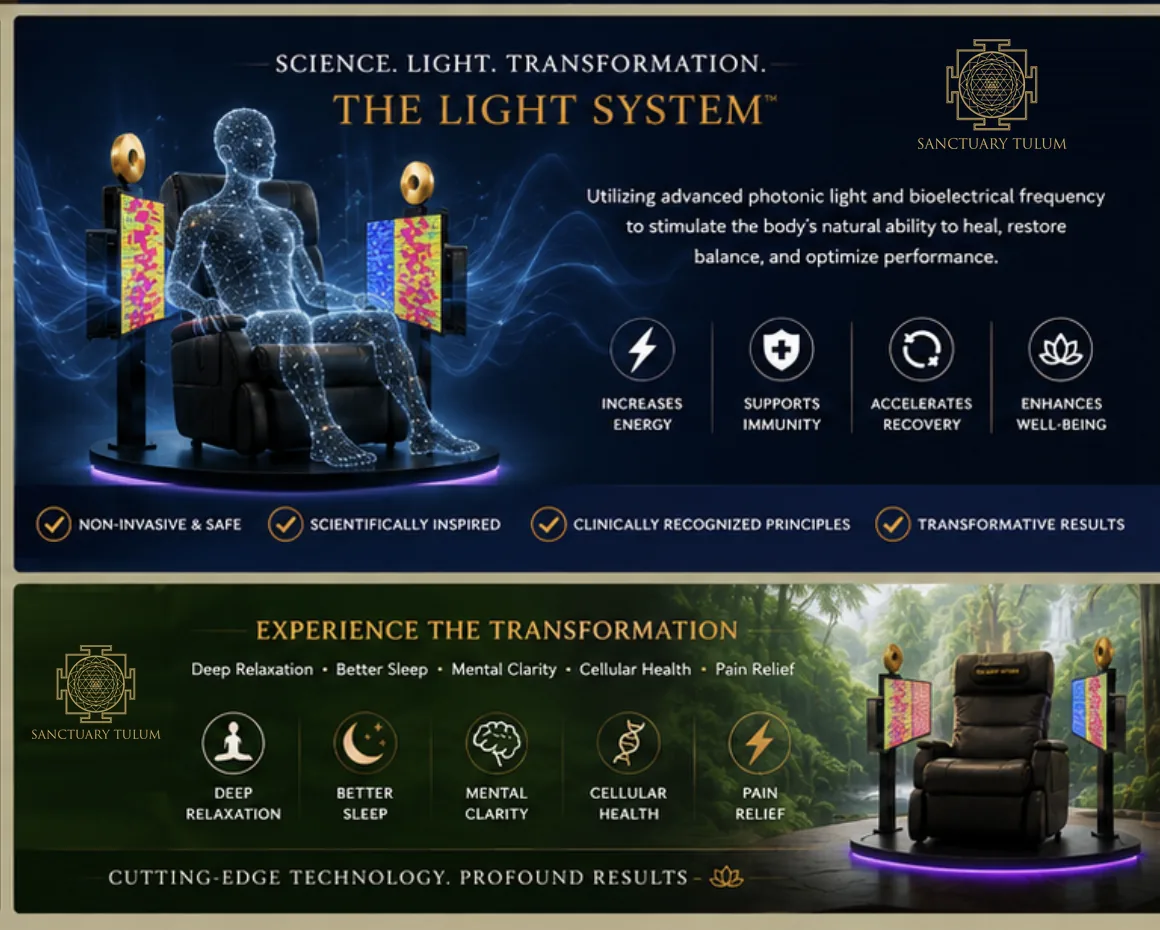
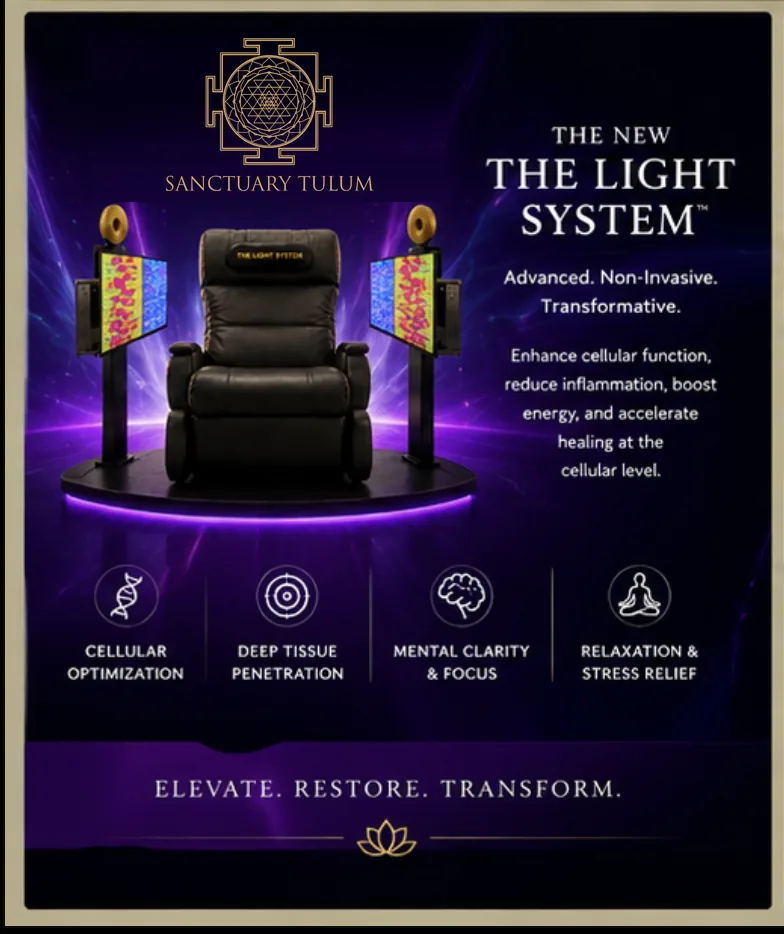
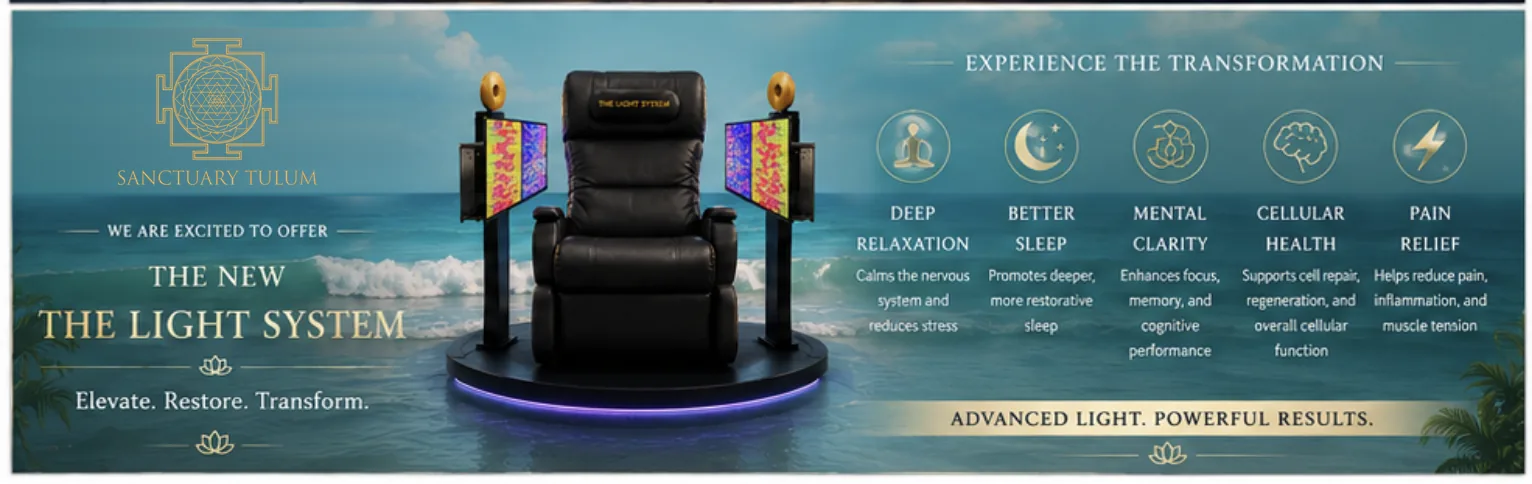
The Light System™, commonly referred to as TLS, is a proprietary light-based wellness technology designed around the idea that light, information and engineered energetic environments may influence biological systems and subjective human experience. It is not simply a rebranded red light panel. The system incorporates purpose-built light environments and proprietary programming, and its research program is oriented toward measurable changes in bioelectrical activity and cellular conductivity rather than conventional clinical endpoints such as symptom scales or disease markers.
The company currently presents research involving several devices, including the TLS Chair, the TLS Cube and a Supercharged Medallion. Its published research page reports laboratory measurements of bioelectrical activity and cellular conductivity — including an advertised increase of up to 80% in cellular conductivity following exposure to the TLS Chair, and a reported 283% increase in bioelectrical activity following extended exposure to a TLS Cube.
One distinction has to be made before any of that means anything. Research on TLS itself is not the same as research on photobiomodulation generally. TLS incorporates concepts that extend beyond conventional PBM, so evidence supporting PBM should not be read as proof that every claimed benefit of TLS has been clinically established. Stating that plainly is not a criticism of the technology. It is what makes a discussion of it credible.
How Does Light Therapy Affect the Body?
Light is not only something we see. Certain wavelengths interact directly with biological tissue. In photobiomodulation research, red and near-infrared wavelengths are studied specifically because they penetrate tissue and appear to influence cellular signalling rather than simply heating it.
The most discussed proposed mechanism involves mitochondria. Reviews of PBM mechanisms describe light absorption at the level of the mitochondrial respiratory chain, with downstream effects on cellular energy metabolism, reactive oxygen species signalling and pathways associated with inflammation and tissue repair. A widely cited review of mechanisms and mitochondrial redox signalling in photobiomodulation lays out that model and its limits.
Mechanism alone never settles anything, which is why outcome research matters more. The 2025 umbrella review of photobiomodulation analyzed 15 meta-analyses covering 204 randomized controlled trials and more than 9,000 participants across 35 health endpoints. The authors found statistically significant effects for 12 outcomes — while reporting that certainty of evidence varied considerably and that no outcome achieved high-certainty evidence.
That result cuts both ways, and both directions are useful. Therapeutic light exposure is not merely theoretical: there are real, replicated signals in the literature. At the same time, the field is still resolving the fundamentals — optimal wavelength, dose, session duration, treatment frequency and delivery method — which is exactly why identical-looking devices can produce very different results.
Potential Benefits, Stated Honestly
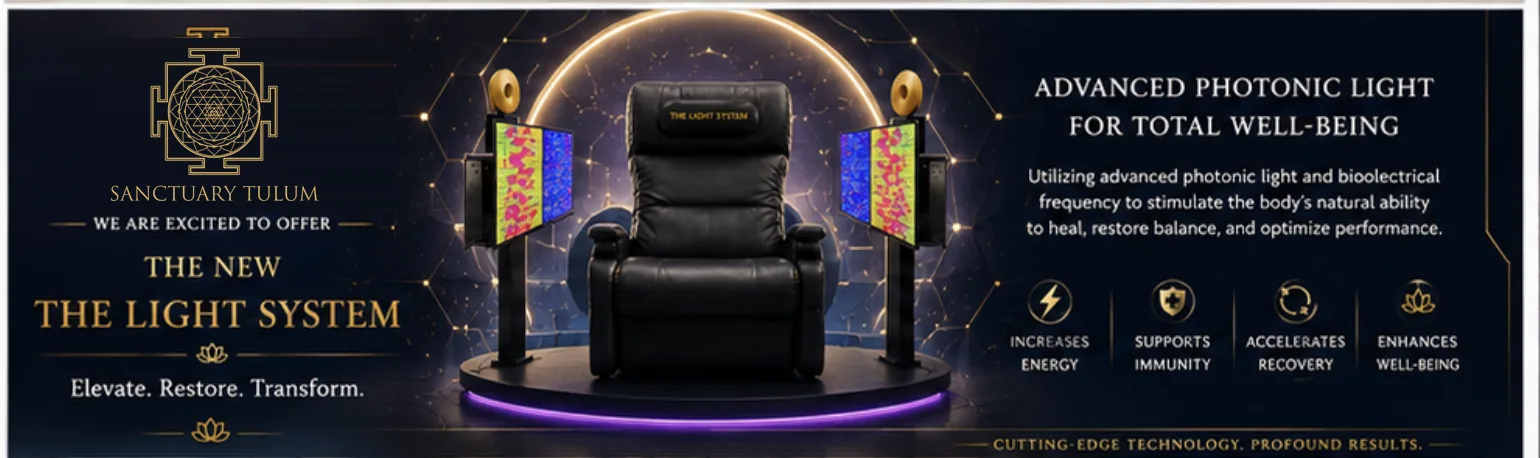
TLS is promoted as a wellness technology rather than a medical treatment, and the company's own handbook explicitly states that it makes no medical claims regarding the technology. Within that framework, the areas people explore fall into a small number of recognizable categories, each of which deserves its own level of confidence.
Relaxation and stress management. The most defensible use of a dedicated light environment is the simplest one: it creates a controlled sensory setting where attention can turn inward and the nervous system has an opportunity to shift out of constant stimulation. TLS's own materials include a 2025 Bio-Well/GDV report describing changes in stress and energy-related measurements after a three-hour session. Those findings are preliminary observational readings, not randomized trials against a validated clinical endpoint, and should be weighted accordingly.
Cognitive wellness and mental clarity. This is one of the most active areas of PBM research. A 2025 systematic review and meta-analysis of photobiomodulation and cognitive function examined randomized controlled trials and reported potential benefits on certain cognitive measures, while emphasizing protocol heterogeneity and the need for higher-quality studies. A separate 2025 review of transcranial photobiomodulation, sleep, wakefulness and cognition discussed possible relationships involving cerebral mitochondrial activity and blood flow. Reasonable wellness objectives here are mental clarity, focus, mental recovery and reduced subjective fatigue — not treatment of a neurological condition.
Sleep, Recovery and Pain
Sleep is foundational to both physical and cognitive recovery, and it is where some of the more interesting recent PBM work sits. A systematic review and meta-analysis of photobiomodulation and sleep quality identified five randomized controlled trials involving 240 participants; the pooled analysis suggested an improvement in Pittsburgh Sleep Quality Index scores compared with sham treatment, with the authors stressing limited precision given the small evidence base. Five trials is a signal worth following, not a conclusion worth selling.
Pain and physical recovery is where the broader literature is most substantial. The 2025 umbrella review reported moderate-certainty evidence for pain reduction in burning mouth syndrome and lower-certainty evidence across several other pain conditions. A systematic review and meta-analysis of photobiomodulation for knee osteoarthritis found reductions in pain and improvements in disability but rated certainty as low to very low for important outcomes and cautioned against using PBM as an isolated treatment. Research in tendinopathy — 17 randomized controlled trials with 835 participants — found greater improvements in pain and function when PBM was combined with exercise than with sham plus exercise, again with variable evidence quality.
The responsible summary is narrow and specific: photobiomodulation may support physical recovery and pain management in certain circumstances, and outcomes depend on the condition, device, wavelength, dose and protocol. Anyone with persistent pain or an injury needs medical evaluation first. Light is a possible adjunct, never a substitute for diagnosis.
Inflammation, Skin, Tissue and Hair
Inflammation is a favourite word in light-therapy marketing and one of the least useful. "Reduces inflammation" is not a claim that can be evaluated, because inflammation is not a single disease or a single biological process. The scientifically meaningful question is always: which inflammatory pathway, in which condition, at which wavelength and dose? Mechanistic reviews describe plausible effects on mitochondrial function, oxidative signalling, cellular communication and inflammatory mediators — which is a reason to investigate, not a licence to promise.
Skin and tissue recovery is one area where PBM has moved past pure theory. A 2026 scoping review of red and near-infrared photobiomodulation for burn, hypertrophic and post-surgical scars identified seven clinical studies involving 297 participants, reporting improvements in scar-related outcomes including thickness, pigmentation, elasticity, pain and pruritus in specific settings — while emphasizing that the studies were small and heterogeneous.
Hair and scalp wellness is the outlier where certainty is comparatively higher. The 2025 umbrella review identified moderate-certainty evidence for increased hair density in androgenetic alopecia following PBM, consistent with earlier waveband-specific meta-analyses of light therapy for hair loss. That does not transfer to every device. Wavelength, dose, frequency and hardware design all matter, and a device that has never been tested for an outcome has no evidence for it.
The Light System™ and Bioelectrical Activity
This is where TLS is genuinely distinctive. Rather than asking participants how they felt, its research program attempts to measure a physical response. The current research page reports up to 80% increased cellular conductivity following TLS Chair exposure, up to 283% increased bioelectrical activity after extended TLS Cube exposure, a reported 44-fold greater bioelectrical response from a supercharged medallion compared with an uncharged medallion, and increased conductivity in experiments involving opposing TLS Cubes.
Attempting objective measurement is a point in the technology's favour. But a measurable change in electrical conductivity does not, by itself, demonstrate that a person experienced improved health, repaired DNA, strengthened immunity or reversed a disease. Those are separate scientific questions that require separate clinical studies with human participants, control conditions and pre-registered endpoints. Until that work exists, the accurate description is that TLS research has reported measurable bioelectrical effects whose health significance remains under investigation.
The two failure modes here are symmetrical. It is wrong to reason "PBM works, therefore everything TLS claims works." It is equally wrong to reason "TLS is proprietary, therefore none of the underlying light research applies." The defensible position is in between: TLS is an emerging wellness technology operating within a broader scientific environment that includes photobiomodulation, light biology and bioelectrical research.
What Does the Science Actually Support?
The strongest available evidence comes from the broader PBM field rather than from large independent clinical trials validating each TLS claim. In the 2025 umbrella review covering more than 9,000 participants, moderate-certainty evidence was reported for a short list of outcomes including certain pain measures, knee osteoarthritis disability, fibromyalgia-related fatigue, hair density and cognitive function. Most other outcomes rested on low or very-low certainty evidence, and the authors called for additional high-quality trials and standardized protocols.
Read correctly, that is encouraging. The field has moved past the question of whether light can affect biology. Researchers are now asking sharper questions: which light, which wavelength, which dose, for which person, for which outcome, for how long. Those answers will determine where light-based wellness technologies eventually fit in mainstream care.
On safety, a 2025 evidence-based consensus on the clinical application of photobiomodulation concluded that PBM is generally safe for adult patients and identified applications with supporting evidence. That is not a universal clearance. People with photosensitivity, photosensitizing medications, eye conditions, active malignancy or pregnancy should consult an appropriate physician before using any light-based device — and TLS's own materials emphasize that the technology is not making medical claims.
Dose, Wavelength and the Biphasic Problem
The single most misunderstood variable in this field is dose. Photobiomodulation follows what researchers call a biphasic dose response: as delivered energy rises, measurable effects tend to increase up to a point, then plateau, then fall away — and at high enough exposures the response can reverse entirely. This is why two studies using the same wavelength can reach opposite conclusions. They were not testing the same intervention. They were testing different doses of it.
Dose in PBM is not a single number either. It is a combination of wavelength, irradiance at the tissue surface, total energy delivered per unit area, exposure duration, whether the light is continuous or pulsed, the distance from the emitter, and how many sessions are spaced across how many weeks. Change any one of those and the biological result may change with it. When a marketing page reports a benefit without reporting the protocol that produced it, the claim cannot be reproduced or checked — which, from a research standpoint, means it has not yet been established.
Wavelength matters for a separate reason: penetration. Shorter red wavelengths interact mostly with superficial tissue, which is why the skin, scar and wound literature is comparatively strong. Longer near-infrared wavelengths travel further, which is what makes deeper joint, muscle and transcranial applications plausible in principle. Plausible is the correct word. Depth of penetration is a physical property; therapeutic benefit at that depth is a clinical question that still requires trials in named conditions.
For anyone comparing devices, this is the practical filter. Ask which wavelengths are emitted, what irradiance is delivered at the distance you will actually sit, and what protocol the cited research used. A system that answers those questions precisely is easier to evaluate than one that answers them with adjectives.
How to Read a Light Therapy Claim
Most confusion in light-based wellness comes from a category error: treating laboratory measurements, mechanistic plausibility and clinical outcomes as though they were the same tier of evidence. They are not, and separating them is the whole skill.
A laboratory measurement — for instance a reported increase in cellular conductivity or bioelectrical activity after exposure — establishes that something changed under specific conditions in a specific setup. It does not establish that the change is durable, that it is beneficial, or that it produces any difference a person would notice. Mechanistic plausibility sits one step further along: there are well-described reasons, involving mitochondrial signalling and oxidative balance, to expect certain wavelengths to influence cell behaviour. Those reasons justify running trials. They do not substitute for them.
Clinical outcome evidence is the tier that answers the question people are really asking, and it comes with its own hierarchy. A single small unblinded study is weak. Multiple randomized controlled trials with sham comparators are stronger. Systematic reviews that pool those trials and grade certainty are stronger still, which is exactly why the certainty ratings in those reviews matter as much as the effect sizes. A statistically significant result rated very-low-certainty is an invitation to further research, not a finding to build a purchase decision on.
Four questions will assess almost any claim you encounter. Was there a sham or control group? Were participants and assessors blinded, given that light exposure is easy to notice? Was the reported outcome the one the study was designed to measure, or one found afterwards among many? And was the effect large enough to matter to a person, rather than merely large enough to reach statistical significance in a small sample? Claims that survive all four deserve attention. Most do not survive the first.
Where Light Fits Inside a Whole-Person Program
Across the strongest datasets in this field, one pattern repeats: light performs best as an addition to something that already works. In the tendinopathy trials, both groups exercised and light was the variable added on top. In the knee osteoarthritis reviews, the authors explicitly cautioned against using photobiomodulation as an isolated intervention. That is not a disappointing result. It is a usable one, because it tells you where the modality belongs in a sequence rather than leaving you guessing.
The fundamentals come first, and they are unglamorous. Sleep timing and duration. Consistent daylight exposure in the morning and reduced bright light at night. Protein and micronutrient intake sufficient to support tissue repair. Progressive loading and mobility work for musculoskeletal pain. Treatment of any underlying condition by an appropriate physician. Nothing in the light literature suggests a device substitutes for any of these, and no responsible reading of it implies otherwise.
Once those are in place, an adjunct can be evaluated honestly, because there is a stable baseline to compare against. That is how every modality is approached at Sanctuary Tulum — inside a structured residential environment of rest, individualized nutrition, movement, meditation, bodywork and one-to-one clinical attention. Any single technology is one input among many, and the environment around it usually accounts for more of the outcome than the device does.
It is worth restating plainly: this guide is educational. The Light System™ is discussed here as a technology under investigation, not as a service offered at Sanctuary Tulum, and nothing here is intended to diagnose, treat or replace care from a qualified physician.
Continue Reading: The Light System Research Cluster
Eight supporting articles, each examining one part of the light-therapy evidence base in more depth.
The Light System™ Benefits: What Does TLS Actually Do?
Separating TLS-specific measurements from PBM evidence.
Photobiomodulation vs. The Light System™
Why proprietary systems and studied wavelengths are not interchangeable.
Light Therapy for Sleep, Relaxation & Recovery
Five randomized trials, 240 participants, and what they suggest.
The Light System™ & Cognitive Wellness
Can controlled light exposure influence brain physiology?
Red & Near-Infrared Light for Pain & Physical Recovery
Knee osteoarthritis, tendinopathy and scar research reviewed.
The Light System™, Cellular Energy & Bioelectrical Wellness
What conductivity measurements do and do not demonstrate.
The Science of Light Therapy: What We Know & What's Next
Where the field stands and which questions remain open.
Is Light Therapy Safe? Contraindications & Sensible Precautions
Consensus safety findings, plus who should check with a physician first.
Light-Based Wellness in Context
The most interesting thing about TLS may not be any single claim. It is the convergence it sits inside: light, biology, neuroscience, recovery, bioelectrical measurement and personalized wellness arriving at the same table. Modern care increasingly recognizes that the body responds to environmental signals, and light is one of the most controllable signals available. The open question is how precisely those signals can be delivered, measured and individualized.
At Sanctuary Tulum, technology has never been the point on its own. Recovery happens inside an environment — rest, nutrition, movement, meditation, bodywork and one-to-one clinical attention — and any single modality is one component of that whole. The same logic applies to light. It is worth studying, worth discussing precisely, and not worth overselling. For now the responsible position is neither to dismiss the technology nor to inflate it: the evidence supports continued investigation.
What Would Change Our Assessment
A useful position states in advance what evidence would move it. For light-based wellness technologies, three developments would meaningfully strengthen the case. First, adequately powered randomized controlled trials with credible sham exposure, run by investigators independent of the manufacturer, reporting pre-registered primary outcomes. Second, published protocols specifying wavelength, irradiance, energy density, session length and spacing, so that a positive result can be reproduced rather than merely repeated. Third, follow-up long enough to show whether any benefit persists after exposure ends, since short-term change in a laboratory measurement tells you very little about durability.
Equally, some findings would weaken it: consistent null results in well-blinded trials, or evidence that reported laboratory changes in conductivity and bioelectrical activity do not track any outcome a person experiences. Stating both directions is what separates an assessment from a sales position.
Until those trials exist, the reasonable stance is the one taken throughout this guide. Photobiomodulation has a genuine and growing evidence base, concentrated in specific conditions and rated at low to moderate certainty. Proprietary systems built on top of it inherit the plausibility of the underlying science but not its evidence, and each set of claims has to be evaluated on the research supporting that system. Anyone considering light therapy for a diagnosed condition should discuss it with their physician first, especially in the presence of photosensitivity, photosensitizing medication, eye conditions, pregnancy or active malignancy.