Mindfulness & Regulation
Mindfulness at the Core of Luxury Wellness Retreats
Not an amenity beside treatment — a daily practice that changes how the nervous system responds to everything else.
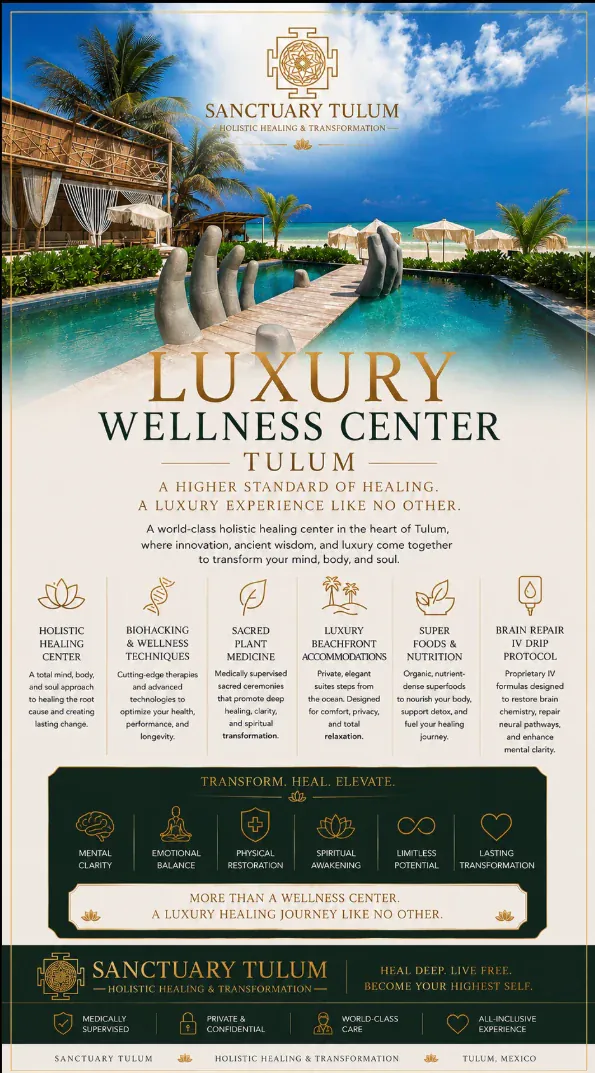
Mindfulness is one of the most researched, and most casually used, words in wellness. Stripped of marketing language, it refers to a specific and trainable skill: the capacity to notice a thought, sensation or urge without immediately acting on it. That skill sits at the center of how Sanctuary Tulum structures daily practice, not as a wellness extra but as a working clinical tool.
The reason it matters in recovery specifically is physiological. Chronic stress, trauma and substance use all tend to compress the gap between stimulus and reaction — a difficult emotion arrives and the body moves immediately toward the old coping response. Mindfulness practice widens that gap, incrementally, through repetition.
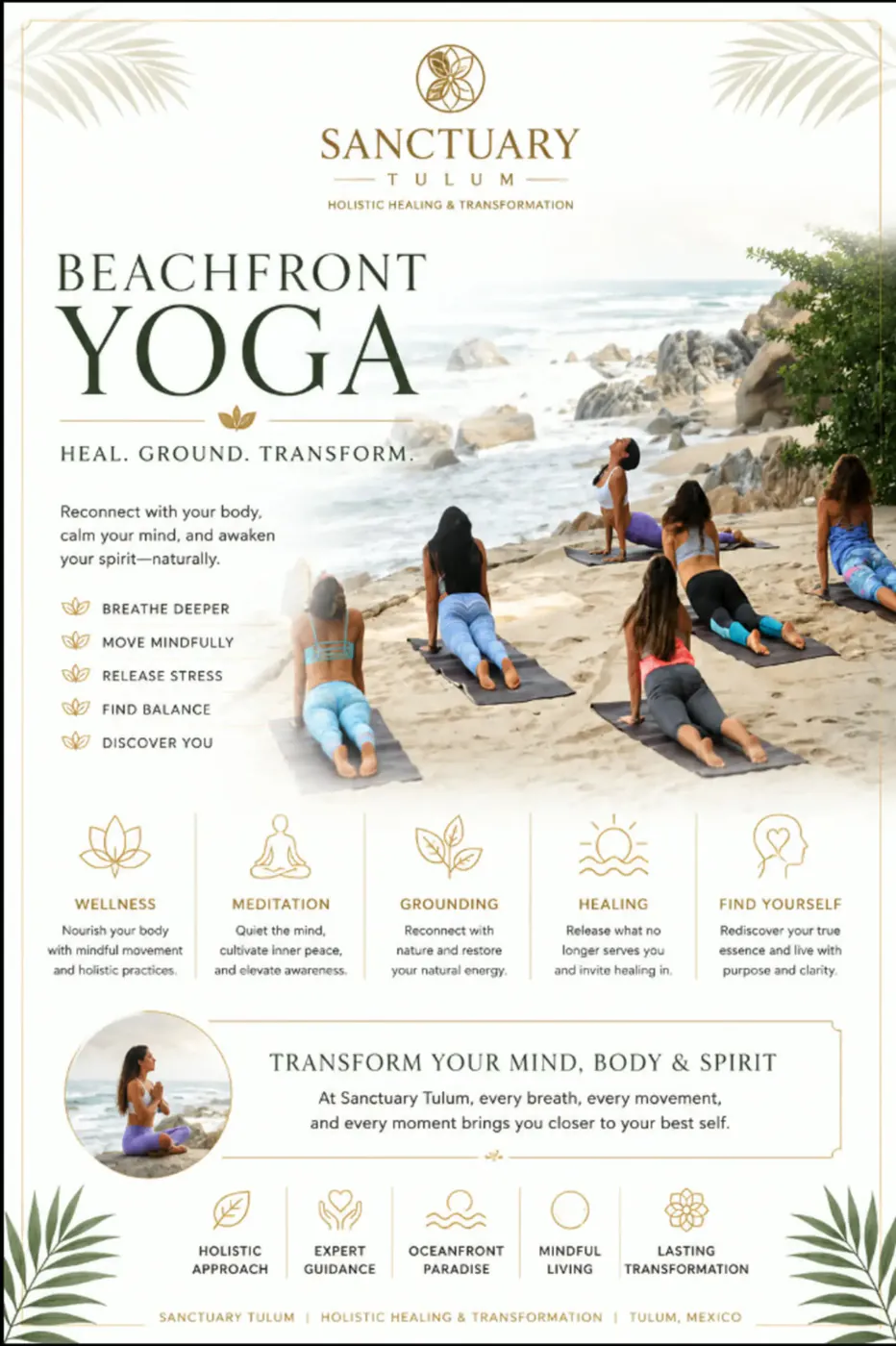
Meditation as daily infrastructure
Rather than a single optional class, meditation and movement are woven through the daily architecture at Sanctuary Tulum — morning practice, restorative sessions between clinical work, and evening wind-down. The consistency matters more than any single session; regulation is a trained response, built through repetition over weeks.
Research on psychedelic-assisted care shows a related mechanism at work: structural and functional neural plasticity that supports new patterns of response rather than simply suppressing old ones (Ly et al., 2018). Daily mindfulness practice builds the same underlying capacity — noticing a state and choosing a response — through repetition rather than a single intense session.
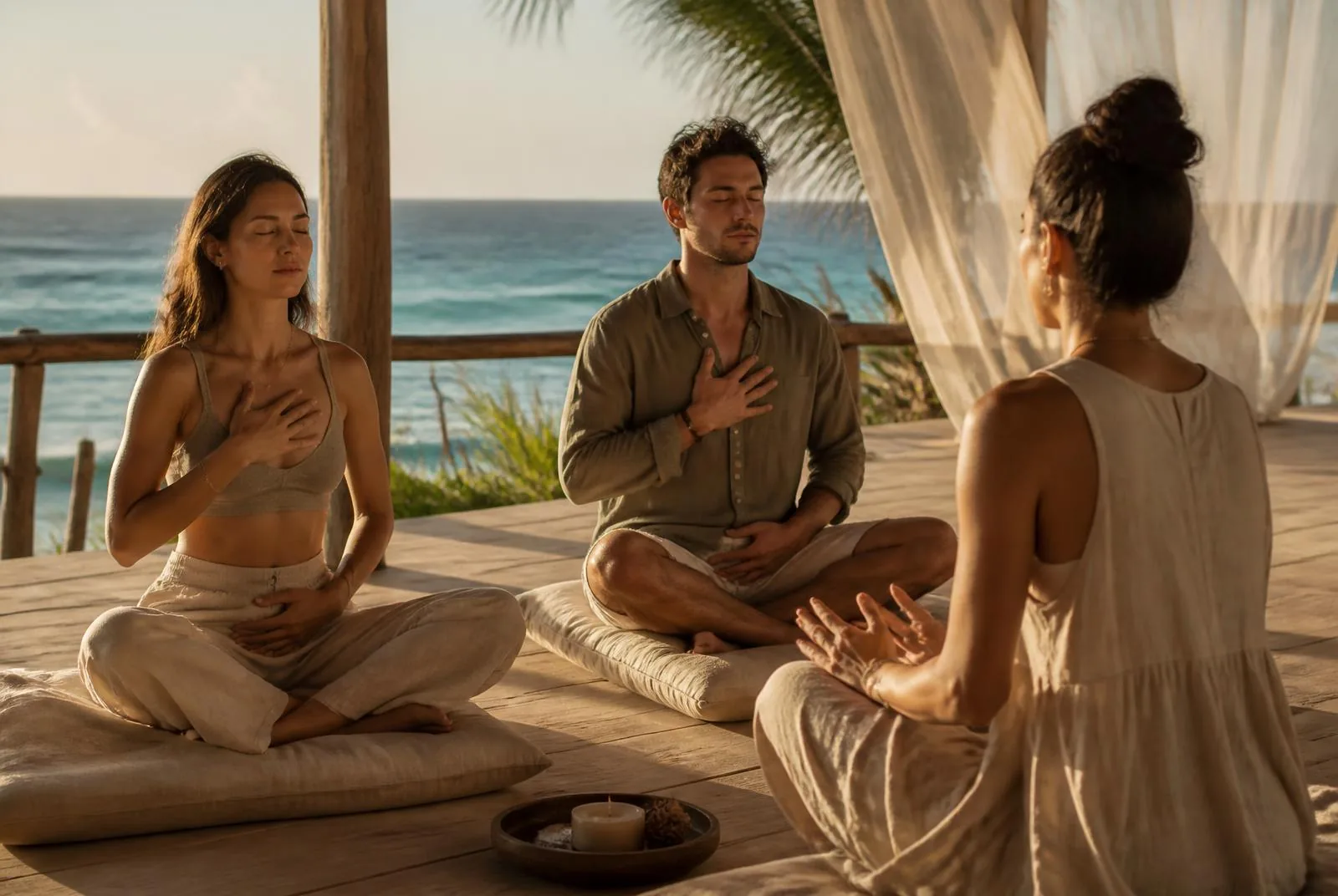
Breathwork and the autonomic nervous system
Breathwork occupies a particular place in the daily rhythm because it offers a rare direct lever on the autonomic nervous system — slow, controlled breathing measurably shifts the balance between sympathetic (fight-or-flight) and parasympathetic (rest-and-digest) activity within minutes.
For guests who arrive in a persistently activated state, this is often the first tool that produces a felt, immediate result, which builds confidence in the broader practice of self-regulation before the harder clinical work begins.
The goal is not a single peaceful moment. It is a nervous system that recovers its baseline faster, session after session, week after week.
Sanctuary Tulum
Practices woven through the day
Morning meditation
Sets a regulated baseline before clinical sessions begin.
Guided breathwork
A direct, immediate tool for shifting stress response.
Yoga and movement
Somatic practice that reconnects body and awareness.
Bodywork and massage
Touch-based regulation of the nervous system.
Time in nature
Unstructured outdoor time between sessions.
Evening wind-down
Practices that support consistent, restorative sleep.
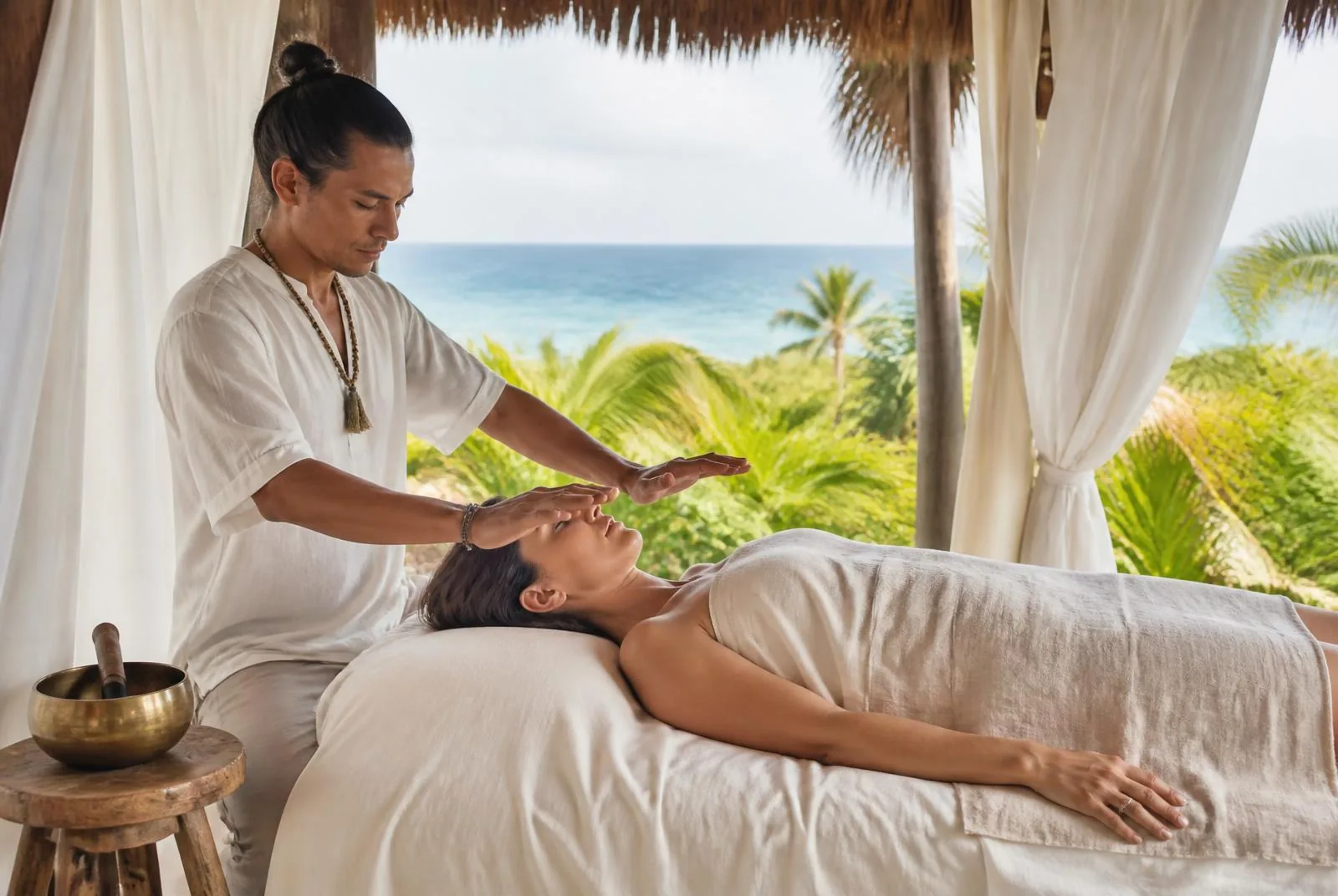
Where energy work fits
Practices like energy healing sit alongside — never in place of — the medical and clinical backbone of the program. They are offered as complementary support for guests who find them meaningful, integrated into the day without displacing physician-led care or one-to-one clinical time.
This layered approach reflects the wider philosophy behind our luxury wellness center model: multiple genuinely complementary tools, sequenced deliberately rather than offered as an unrelated menu.
Why this matters for long-term outcomes
Mindfulness-based skills are portable in a way that a single therapeutic breakthrough is not. A guest who leaves able to notice an urge, take three slow breaths and choose a different response has taken home something usable at 2 a.m. on a difficult night, long after the retreat itself has ended.
That is the practical case for building these practices into daily structure rather than treating them as a spa amenity: they are training, not indulgence, and the broader clinical literature on neuroplasticity and integration — including work on how structured reflection consolidates gains from intensive therapeutic work (Uthaug et al., 2018) — supports their inclusion as a core, not peripheral, component of care.
Why daily repetition matters more than intensity
Contemplative practice behaves less like a treatment and more like training. A single long session produces a pleasant afternoon; short sessions repeated every day at the same time produce a measurable change in how quickly a person can downshift out of a stress response. Consistency, not duration, is the active ingredient.
This is why a retreat schedule places breath and meditation work at fixed points in the day rather than offering it as an optional class. It also explains why guests are asked to keep practising after discharge, with a written plan that specifies when and for how long. The habit, carried home, is what preserves the gains made on site.
Sleep, nutrition and the practices that support regulation off the cushion
Mindfulness and breathwork do not operate in isolation from the rest of daily biology. Sleep architecture, blood sugar stability and hydration all influence how available a person's nervous system is for a meditation practice to actually work. A guest who is sleep-deprived or running on erratic blood sugar will find that even well-taught breathwork produces a smaller, shorter-lived effect than the same practice delivered after a night of consistent rest and a stable, whole-food diet.
That is one reason the daily structure at Sanctuary Tulum pairs contemplative practice with chef-prepared, whole-food meals and a consistent sleep schedule rather than treating nutrition and rest as separate wellness tracks. The nervous system regulation these practices aim to build is easier to sustain on a stable physiological foundation than on top of chronic under-sleeping or nutritional swings.
How mindfulness interacts with plant-medicine and clinical work
For guests whose program includes medically supervised plant-medicine ceremonies, mindfulness training is not incidental preparation — it is part of what makes the ceremony work productively. The capacity to notice a difficult sensation and stay with it, rather than immediately resisting or dissociating from it, is directly relevant during and after a ceremony, and it is a skill that is far easier to access if it has already been practiced daily in the weeks before.
The same applies afterward. Integration — the process of translating an intense experience into durable behavioral change — depends heavily on the ability to sit with uncomfortable material without immediately reaching for a distraction or an old coping pattern. That is precisely the skill mindfulness and breathwork practice builds, session after session, which is why these practices are scheduled daily rather than offered as an optional extra alongside the clinical program.
What a guest actually notices, week by week
In the first few days, most guests notice the felt effect of breathwork before anything else — a session that visibly lowers heart rate and settles an anxious morning. By the second week, many describe a longer gap between an intrusive thought or craving and their reaction to it; the widened space mentioned earlier becomes something they can point to rather than something abstract. By the time a stay winds down, the emphasis shifts toward portability: can this be done without a facilitator, without an ocean view, in a hotel room or a home office at 6 a.m.
That final question is the actual measure of success for this part of the program. A practice that only works inside a retreat setting has limited long-term value. A practice a guest can still run reliably three months later, on an ordinary Tuesday, is the one worth building the daily schedule around.
Bringing it together
At Sanctuary Tulum, mindfulness and breath practice sit beside, and are reinforced by, the deeper clinical work of the Pouyan Method™, medically supervised protocols, and structured one-to-one care. None of these tools work in isolation; their combination, sequenced daily, is the actual design.
If a luxury mental health recovery center is part of what you are considering, ask how mindfulness practice is scheduled through a typical week — daily and structured is a different commitment than optional and occasional. Learn more about our holistic addiction rehab model, the full range of treatments, or begin with a confidential enquiry.