Cognitive claims deserve the most scepticism of any category in wellness, because they are the hardest to measure and the easiest to feel. Mental clarity is subjective, fluctuates with sleep and stress, and improves for a dozen reasons unrelated to whatever was tried last week. That is exactly why the randomized literature matters here more than testimony.
What the Cognitive Research Reports
The most relevant recent work is a 2025 systematic review and meta-analysis of photobiomodulation effects on cognitive function. Drawing on randomized controlled trials, it reported potential benefits on specific cognitive measures while stressing two limitations: protocols varied widely between studies, and the quality of the underlying evidence needs to improve before firm conclusions are possible.
The 2025 umbrella review of photobiomodulation — 15 meta-analyses, 204 randomized controlled trials, more than 9,000 participants — is the wider frame. Cognitive function appeared among the outcomes with moderate-certainty evidence, which puts it at the stronger end of a field where most outcomes rested on low or very low certainty and none reached high certainty.
Transcranial Delivery and Its Open Questions
Cognitive PBM research usually involves transcranial delivery — light applied to the head with the intention of reaching cortical tissue. A 2025 systematic review on enhancing sleep, wakefulness and cognition with transcranial photobiomodulation discussed possible relationships involving cerebral mitochondrial activity and cerebral blood flow.
The unresolved question is dosimetry. How much light of a given wavelength actually reaches cortical tissue through scalp, skull and cerebrospinal fluid, and how much is needed there to matter? Until that is standardized, trials using different devices are not really testing the same intervention — which is precisely the heterogeneity the meta-analyses keep flagging.
Where The Light System™ Sits
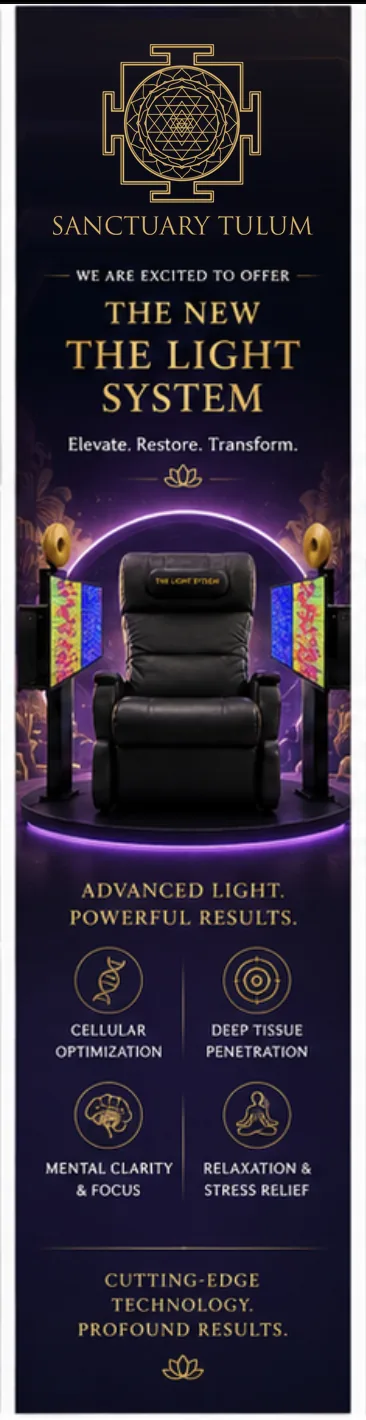
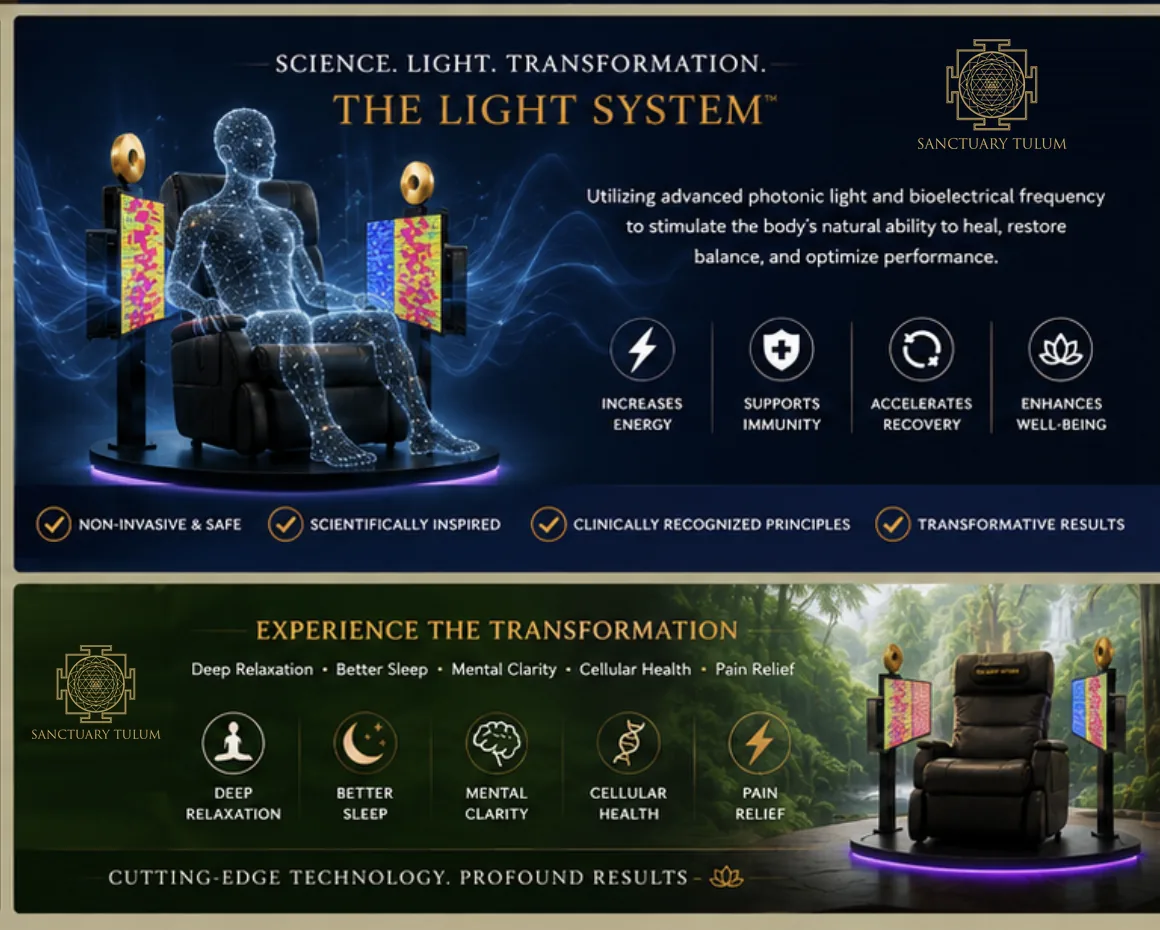
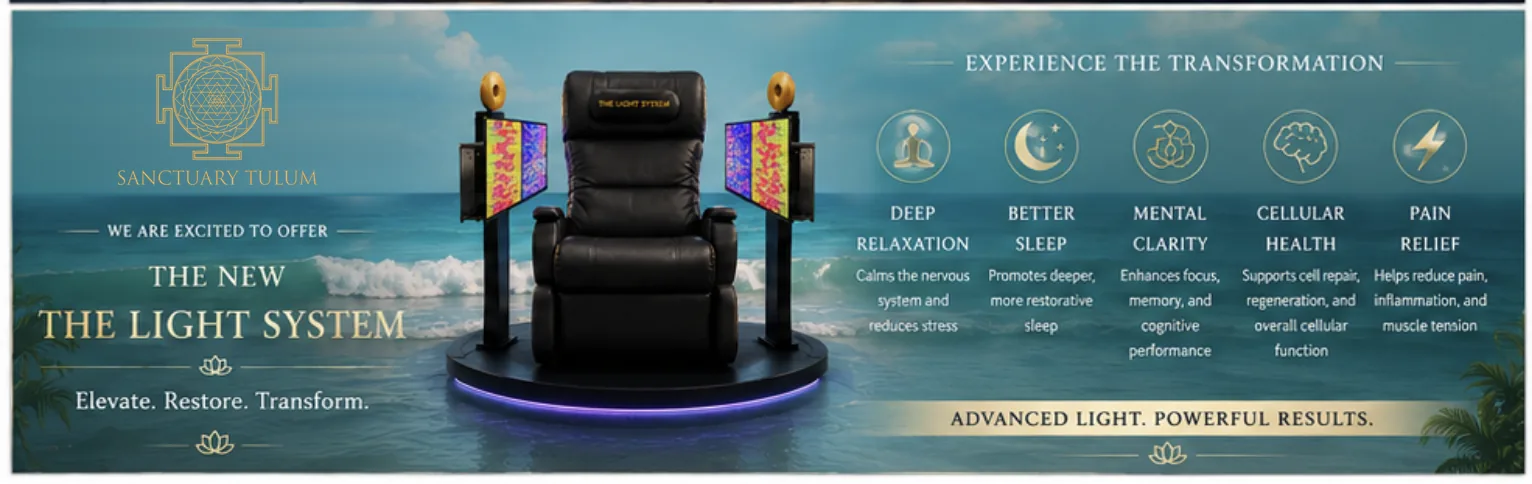
The Light System™ is a proprietary light-based wellness technology whose published research reports bioelectrical activity and cellular conductivity measurements — including up to 80% increased conductivity following TLS Chair exposure. Those are laboratory readings, not cognitive endpoints. No conductivity figure, of any size, demonstrates improved attention, memory or executive function in a person.
So the accurate statement is layered. Photobiomodulation research suggests possible cognitive effects under specific tested conditions. TLS has not published equivalent randomized cognitive trials. Anyone exploring TLS for mental clarity is exploring a plausible wellness objective, not a validated cognitive intervention — and the company's own handbook states that it makes no medical claims about the technology.
What Reliably Affects Cognition
Anyone genuinely interested in mental clarity should get the unglamorous inputs right first, because their evidence base dwarfs anything in the light literature: consistent sleep, aerobic activity, nutrition, alcohol reduction, stress load, and treatment of any underlying condition. Light exposure, if it helps, helps at the margin of those foundations. Marginal gains are worth having — but only once the foundation is in place.
For clinical context on how we approach cognitive and mood-related concerns under physician supervision, see depression treatment, hyperbaric oxygen therapy, and the full Light System™ research guide. You can also compare photobiomodulation versus TLS.
Reading Cognitive Findings Carefully
Cognitive outcomes are unusually easy to overstate. Attention, working memory, processing speed and executive function are separate capacities measured by different instruments, so an improvement on one task is not a general improvement in cognition. Many transcranial photobiomodulation studies are small, use varied wavelengths and montages, and report several outcome measures — a design in which some positive results are expected by chance alone.
Practice effects compound the problem. Cognitive test scores commonly rise on second exposure regardless of any intervention, which is why a sham-controlled, blinded comparison group is essential and why single-arm before-and-after data cannot support a cognitive claim. Where reviews have graded certainty in this area, the ratings have generally sat at low to moderate, with authors calling for standardized protocols and larger independent trials.
The measured position is that transcranial light exposure is a legitimate research direction with plausible mechanisms and preliminary signals, not an established treatment for cognitive decline. Persistent memory change, word-finding difficulty or confusion warrants medical assessment, since reversible causes — thyroid disorder, B12 deficiency, sleep apnoea, medication effects and depression among them — are common and treatable. Light-based wellness technologies are not a substitute for that workup.
Who Should Exercise Extra Caution
Photobiomodulation is generally considered low-risk, but "low-risk" is not "risk-free," and cognitive wellness seekers are disproportionately likely to be managing an underlying condition that warrants medical input before trying any adjunct. Anyone with a seizure history, a photosensitivity disorder, active cancer near the treatment site, or a pacemaker or other implanted device should discuss light-based approaches with their physician first. Pregnant guests and anyone on a photosensitizing medication should do the same. None of this makes photobiomodulation dangerous; it makes it a decision worth making with a clinician who knows the full medical picture, not a decision made from a product page alone.
There is also a simpler caution that applies to everyone: expectation management. Because mental clarity is subjective and self-reported, it is unusually susceptible to placebo response and to the simple fact that trying something new, in a calm setting, with intention, tends to feel good regardless of the mechanism. That is not a criticism of the experience — feeling calmer and more focused has real value — but it is a reason to hold any single-session impression loosely rather than treat it as proof of a durable cognitive effect.
How This Fits Into a Broader Wellness Stay
At Sanctuary Tulum, light-based sessions are offered as one input among many inside a broader, physician-guided program rather than as a stand-alone cognitive treatment. Guests exploring mental clarity, focus or stress recovery typically pair sessions with sleep optimization, movement, nutrition support and, where clinically indicated, structured care for an underlying condition such as depression or anxiety. That sequencing matters: a wellness input layered on top of untreated insomnia or unmanaged mood symptoms is unlikely to produce a meaningful, lasting change in cognition, however pleasant the session itself feels.
For guests recovering from high-stress executive roles, cognitive fog is frequently a symptom of chronic sleep debt and sustained cortisol elevation rather than a standalone problem to be solved with a single modality. Our executive rehab program addresses that pattern directly, combining medical assessment with the kind of structured recovery time that light-based sessions alone cannot replace. Similarly, guests working through holistic addiction treatment often report cognitive fog tied to withdrawal and early recovery, which is addressed through the full clinical protocol rather than any single adjunct.
Questions Worth Asking Any Light-Based Program
Anyone considering a light-based cognitive wellness program should ask about wavelength, dose, session frequency and what outcome measure — if any — the provider tracks over time. A program that cannot describe its delivered dose in specific, measurable terms is not yet operating at the level of precision the underlying research calls for. It is also reasonable to ask whether the provider makes any explicit or implied treatment claim, since a credible wellness program should be able to describe its intended benefits without overstating what has been demonstrated in controlled trials.
Read more about our approach to Sanctuary Tulum's clinical team, explore the Pouyan Method™ that frames how modalities like this are sequenced, or reach admissions with specific questions about a stay.
References
- Systematic review and meta-analysis of photobiomodulation effects on cognitive function. PubMed, 2025.
- Umbrella review of photobiomodulation across 15 meta-analyses and 204 randomized controlled trials. PubMed, 2025.
- Systematic review on transcranial photobiomodulation for sleep, wakefulness and cognition. PubMed, 2025.
- Simulation-based dosimetry of transcranial and intranasal photobiomodulation of the human brain: wavelength, power density and skin tone. Biomedical Optics Express, 2025.
- Dosimetry in cranial photobiomodulation therapy: effect of cranial thickness and bone density. PMC.
Educational information only. Not medical advice, not a diagnosis, and not an offer of The Light System™ as a service at Sanctuary Tulum.