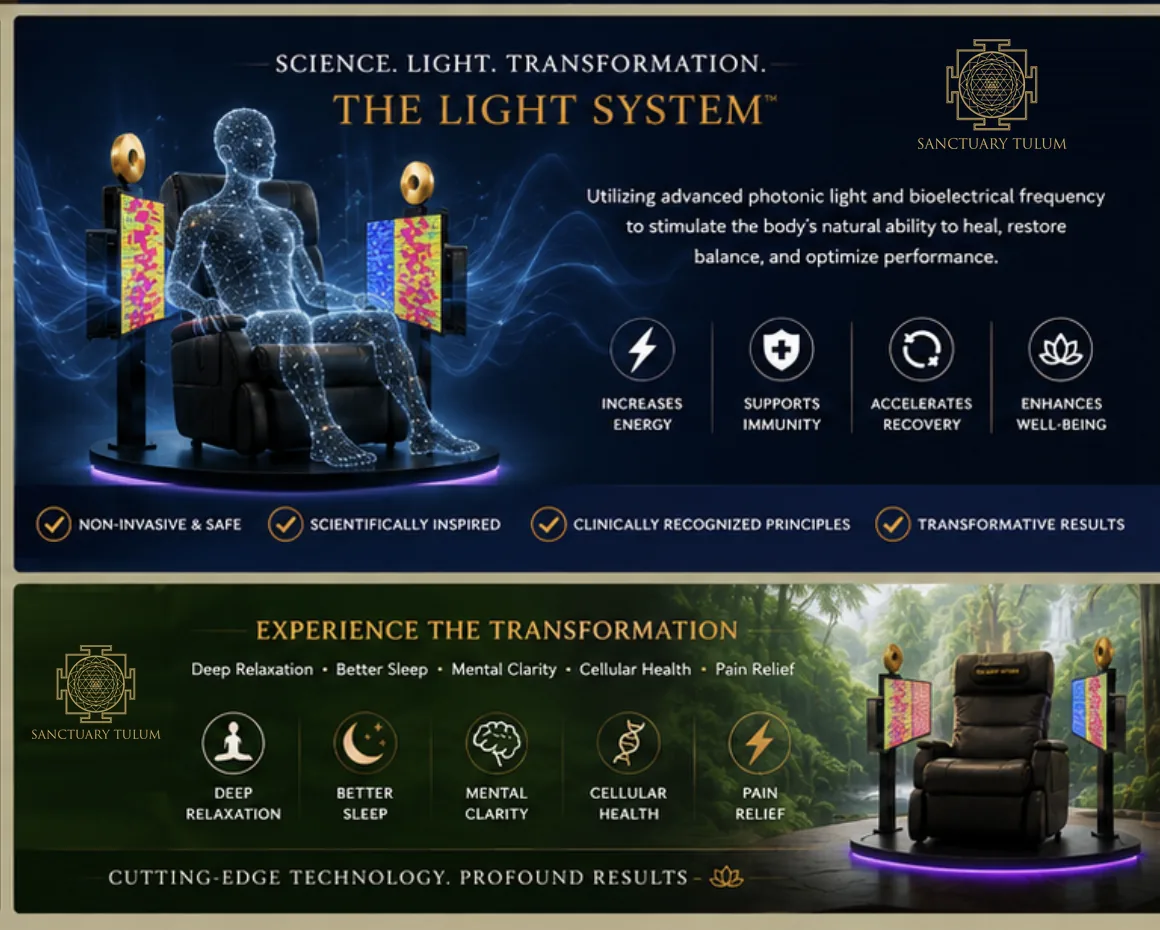
Most confusion about light therapy comes from one collapsed distinction. Photobiomodulation is a scientific field. The Light System™ is a product. They overlap, but they are not the same category of thing, and conflating them is how both overclaiming and unfair dismissal happen.
Photobiomodulation: Defined by Numbers
Photobiomodulation, or PBM, is the therapeutic application of non-ionizing light — usually red and near-infrared wavelengths — intended to influence cellular activity rather than to heat tissue. What makes it a scientific subject rather than a marketing category is that it is fully specified by numbers: which wavelength in nanometres, delivered at what irradiance, for what total dose in joules per square centimetre, over what session length, at what frequency, to which tissue.
Because those parameters are declared, PBM studies can be replicated, pooled and criticized. The leading mechanistic account, set out in reviews of mechanisms and mitochondrial redox signalling in photobiomodulation, describes light absorption at the mitochondrial respiratory chain with downstream effects on cellular energy metabolism, oxidative signalling and pathways relevant to inflammation and repair.
And crucially, parameters are why two devices that look identical can produce opposite results. Dose in PBM is biphasic: too little does nothing measurable, and too much can attenuate the effect. "Red light" is not a protocol. It is a colour.
The Light System™: Defined by Design
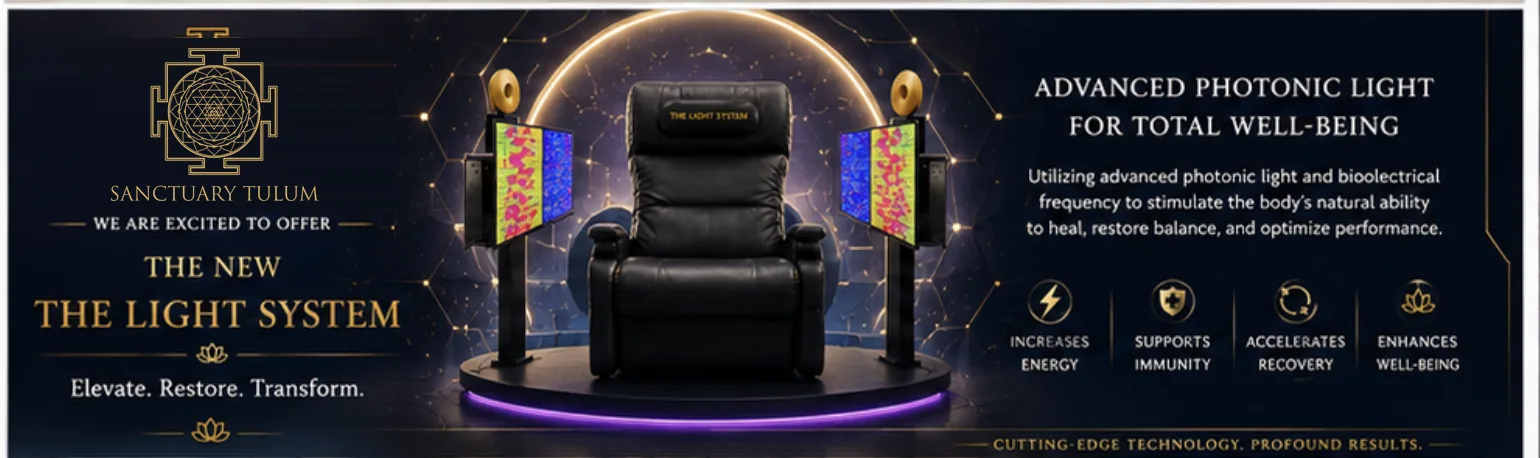
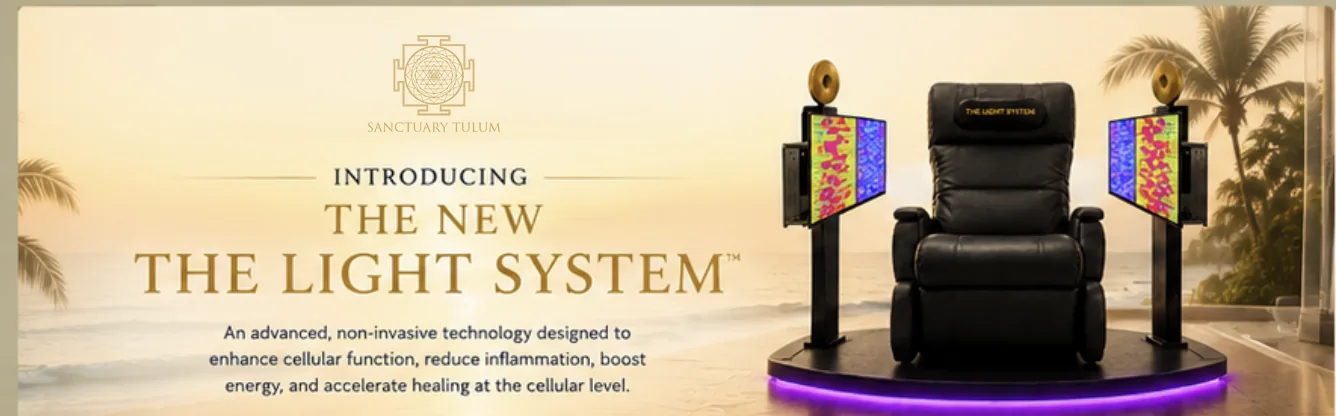
The Light System™ is a proprietary light-based wellness technology built around engineered light environments and proprietary programming — delivered through the TLS Chair, the TLS Cube and a Supercharged Medallion. Its published research reports laboratory measurements of bioelectrical activity and cellular conductivity, including up to 80% increased cellular conductivity after TLS Chair exposure and a 283% increase in bioelectrical activity after extended TLS Cube exposure. The company's own handbook states that it makes no medical claims regarding the technology.
The Two Mistakes
The first mistake is transitive validation: PBM research is strong in some areas, TLS involves light, therefore TLS is proven. That reasoning would also validate a tanning bed. Evidence attaches to tested parameters, not to the general idea of light.
The second mistake is transitive dismissal: TLS is proprietary and uses unfamiliar language, therefore the entire field is nonsense. That ignores a substantial literature. The 2025 umbrella review of photobiomodulation covered 204 randomized controlled trials and more than 9,000 participants, finding significant effects for 12 of 35 outcomes — with moderate-certainty evidence for a short list including hair density in androgenetic alopecia and certain pain and disability measures. It also found no outcome supported by high-certainty evidence, which is the honest ceiling on the field today.
What Different Endpoints Prove
PBM trials typically measure clinical endpoints: pain scores, disability indices, sleep quality instruments, cognitive test batteries, hair density counts. TLS research reports bioelectrical and conductivity measurements. Both are legitimate forms of data — but they answer different questions. A conductivity change tells you something physical happened in a sample. A validated clinical endpoint tells you something changed for a person. Only the second supports a health claim, and only in the population and protocol tested.
Practical Takeaway
If you are evaluating any light device, ask for its parameters first. If they are undisclosed, you cannot compare it to published research — and no one should imply that you can. If you are evaluating TLS specifically, treat it as an emerging wellness technology with manufacturer-reported laboratory findings and an open clinical question attached, and consult a physician before using any light-based device if you have photosensitivity, take a photosensitizing medication, have an eye condition, are pregnant, or have an active malignancy.
Continue with the full Light System™ research guide, or read the science of light therapy and light therapy safety.
Why the Distinction Has Practical Consequences
Treating a proprietary system and the published photobiomodulation literature as interchangeable is not a semantic error; it changes what you can reasonably expect. PBM evidence is tied to specific wavelengths delivered at specific irradiances for specific durations in named conditions. Transfer the conclusion to a different device with different optics, different programming and an unpublished protocol, and the evidence does not travel with it.
Dose is the reason. Photobiomodulation follows a biphasic response: effects tend to rise with delivered energy, plateau, then diminish, and excessive exposure can reverse the result. Two systems emitting the same nominal wavelength can therefore produce opposite outcomes if irradiance, distance, session length or session spacing differ. Without those numbers published, a positive finding cannot be reproduced — and reproducibility is what turns a measurement into evidence.
None of this is an argument against proprietary systems. It is an argument for asking better questions before drawing conclusions: which wavelengths, what irradiance at the distance a person actually sits, which protocol produced the cited result, and was the comparison group shammed and blinded. Systems that answer precisely are easy to evaluate. Systems that answer with adjectives are, for now, unevaluated rather than disproven.
Reading a Study Correctly
A useful habit when reading any photobiomodulation paper is to locate the parameters before reading the conclusion. Wavelength alone is not enough: a 660nm source at low irradiance and a 660nm source at high irradiance are, functionally, different interventions. Session duration and cumulative dose across a course of treatment also matter, since PBM's biphasic response means a protocol that works at one dose can be inert or counterproductive at another. Papers that omit these numbers are harder to compare to anything, including to themselves if repeated.
It is also worth checking who funded the study and whether the control condition was a genuine sham. Some devices emit a faint warmth or sound that is difficult to blind convincingly, and that can inflate placebo response in subjective outcomes like pain or mood. None of this means the underlying science is unreliable — it means individual studies vary in quality, and the strongest conclusions in this piece and our companion Light System™ guide are the ones drawn from meta-analyses and umbrella reviews rather than single trials.
Educational information only. Not medical advice. The Light System™ is not offered as a service at Sanctuary Tulum.
Both modalities are used inside a wider residential protocol — see the holistic treatment center overview and our luxury wellness center page.