Ayahuasca ceremonies have gained enormous attention for their transformative healing potential. Here's what you need to know about this sacred practice.
What Is an Ayahuasca Ceremony?
An ayahuasca ceremony is a structured, guided experience centered around drinking the ayahuasca brew — a powerful plant medicine used for thousands of years by Amazonian indigenous traditions. The ceremony is led by experienced shamanic facilitators in a sacred, intentional setting.
What Happens During the Ceremony
After drinking the brew, effects begin within 30-60 minutes and last 4-6 hours. The experience typically includes vivid visions, deep emotional processing, physical purging (considered a release of stored trauma), and profound spiritual insights. Each ceremony is unique, shaped by your individual needs and intention.
Safety at Sanctuary Tulum
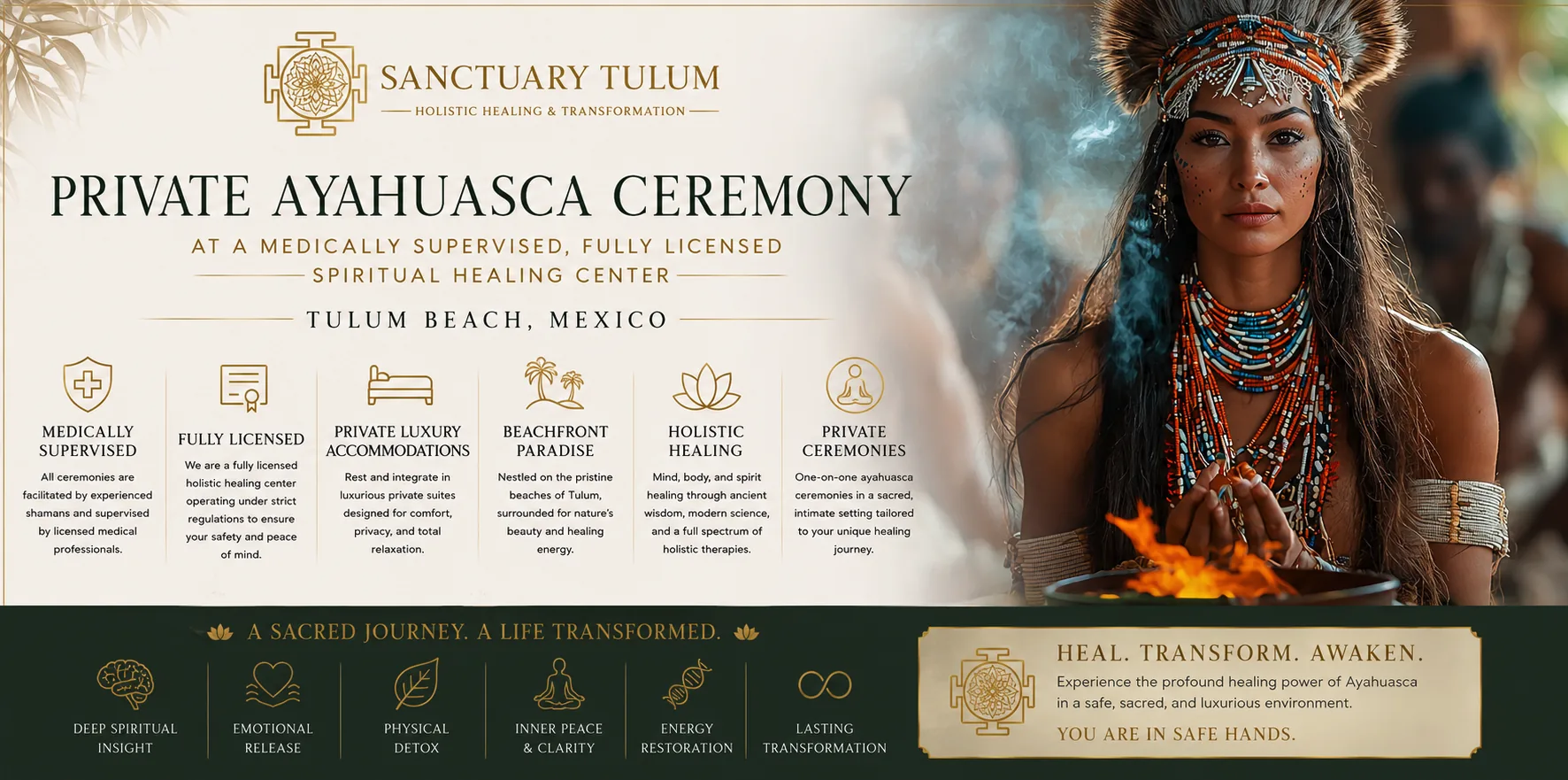
Unlike many ayahuasca retreats, our ceremonies feature full medical oversight, pre-ceremony screening for contraindications, and experienced facilitators with decades of practice. Your safety is never compromised.
Ayahuasca as Part of Holistic Healing
At our luxury rehab center, ayahuasca ceremonies complement other powerful modalities including ibogaine treatment, stem cell therapy, and medical detox. This integrated approach produces the deepest, most lasting transformation.
Pharmacology in Plain Language
Ayahuasca is a decoction of two Amazonian plants — Banisteriopsis caapi, which contains monoamine oxidase inhibitors (harmine, harmaline, tetrahydroharmine), and typically Psychotria viridis, which contains N,N-dimethyltryptamine (DMT). The MAOIs allow orally ingested DMT to reach the brain rather than being broken down in the gut.1 Peak effects typically arise 60–90 minutes after ingestion and last four to six hours.2
What a Ceremony Actually Looks Like
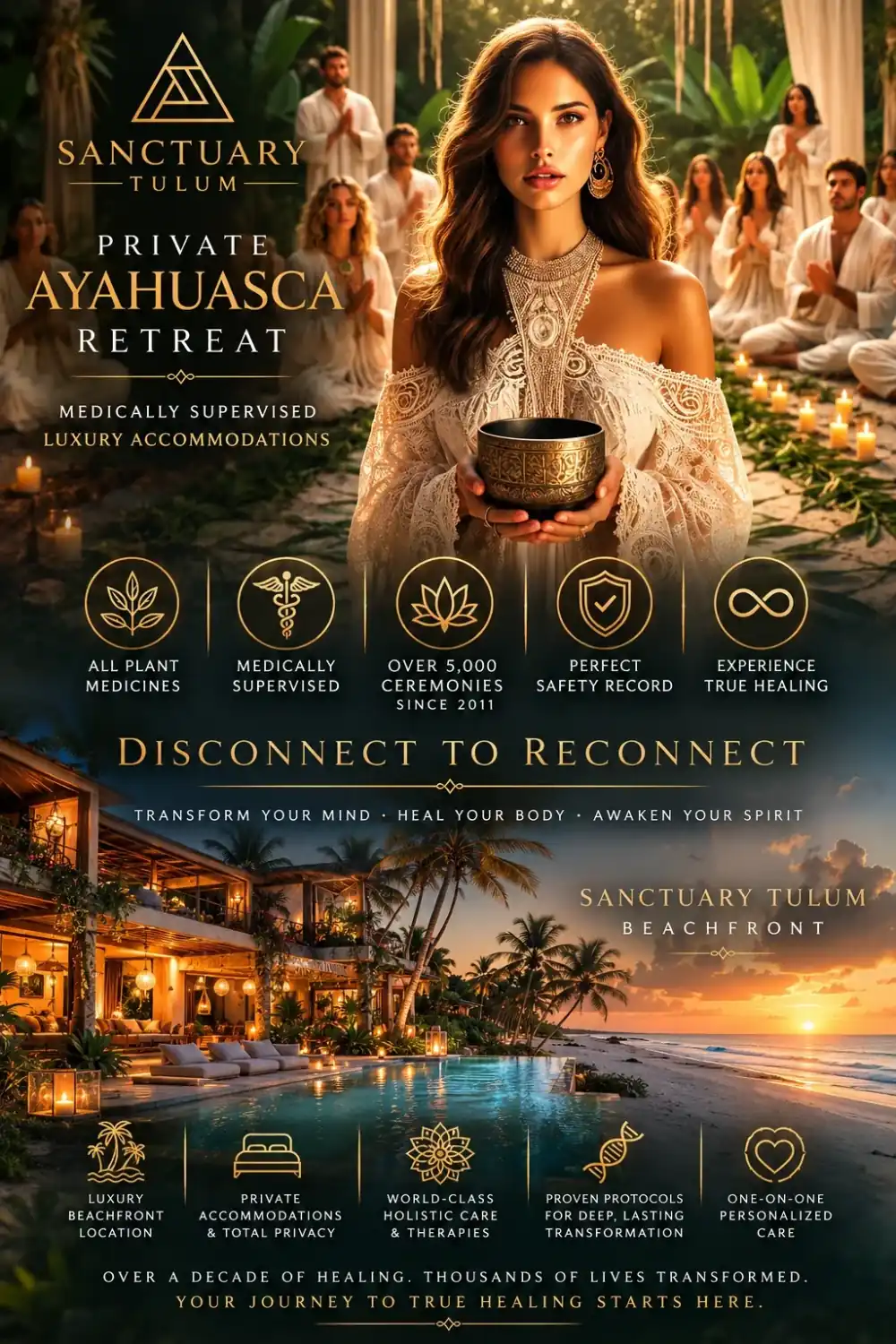
The ceremonial space is dimly lit, temperature-controlled, and prepared in advance by our facilitators. Guests are seated or reclined on individual mats with a purge bucket, water, and blanket within reach. A physician and medically trained facilitators remain in the room throughout the acute phase. Traditional Amazonian icaros — sung, played, or held in silence at intervals — are used to shape the arc of the ceremony.
Purging is common and clinically expected; it is understood as part of how the medicine works rather than a side effect. Most guests experience one or two ceremonies, spaced across the stay, so that integration sessions can process what came up before the next journey.
Screening, Safety, and Integration
Every guest is screened for cardiac risk, serotonergic medication use, and psychiatric history before ceremony. SSRIs, SNRIs, MAOIs, lithium, and tramadol require supervised tapering — abrupt discontinuation is dangerous and is planned in advance with our medical team. Ayahuasca is not FDA-approved and remains investigational for depression, PTSD, and substance use disorders; the published trials are small but consistent in direction of effect.3
Integration sessions the following day, and a written aftercare plan on discharge, are where insight becomes durable change. See our related ayahuasca diet guide and preparation guide.
Common Questions Guests Bring In
First-time guests most often ask about purging, fear, and control. Purging (vomiting, diarrhea, tears, yawning, shaking) is expected and understood as part of how the ceremony works — physically, it clears MAOI-inhibited tyramine and other compounds; symbolically, indigenous traditions frame it as release. Fear tends to be strongest in the first 30–60 minutes as the medicine comes on; facilitators are trained to stay physically close during that window.
Control is the piece the medicine most reliably challenges. Ceremony asks for the opposite of the strategies most guests have used successfully in the rest of their lives, and that reversal is often where the therapeutic work happens. Related: what is ayahuasca.
Pre-Ceremony Diet, Medications, and Screening
The traditional ayahuasca diet — no red meat, no pork, no aged cheese, no fermented foods, no alcohol, minimal salt and sugar — is not a spiritual formality. It is a pharmacological safety measure. The MAO-inhibiting harmala alkaloids in ayahuasca prevent the body from breaking down tyramine, and a tyramine load from aged or fermented foods during that window can trigger a hypertensive crisis. The dietary window is typically two weeks before and one week after ceremony.
The medication list matters just as much. SSRIs, SNRIs, MAOIs, tramadol, dextromethorphan, and several migraine and weight-loss medications carry a serotonin syndrome risk with ayahuasca and must be tapered on a physician-supervised schedule before ceremony access is cleared. Sanctuary Tulum's intake reviews every guest's full medication list against this profile; guests who cannot safely taper are not admitted to the plant medicine arc.
Integration: The Weeks After Ceremony
Peer-reviewed work on psychedelic-assisted therapy is consistent that integration hours — the structured clinical work in the days and weeks after ceremony — are where sustained change is built. A single powerful session without integration tends to fade; the same session followed by focused integration work is where the durable outcomes in published trials come from.
Integration at Sanctuary Tulum is not optional and not confined to the retreat. It includes one-to-one clinical hours during the stay, a written integration plan on departure, and structured check-ins in the first months at home. Related: Pouyan Method™.
References
- Callaway JC, et al. "Pharmacokinetics of Hoasca alkaloids in healthy humans." J Ethnopharmacol. 1999;65(3):243-256.
- Domínguez-Clavé E, et al. "Ayahuasca: Pharmacology, neuroscience and therapeutic potential." Brain Res Bull. 2016;126(Pt 1):89-101.
- Palhano-Fontes F, et al. "Rapid antidepressant effects of the psychedelic ayahuasca in treatment-resistant depression: a randomized placebo-controlled trial." Psychol Med. 2019;49(4):655-663.
US-based readers evaluating travel logistics can also review our detailed guide on luxury ayahuasca retreats for a NYC-focused breakdown of the legal landscape and licensed Mexico alternative.