Mesenchymal stem cell (MSC) therapy is one of the most active areas of regenerative medicine, and it is also one of the most confusing for U.S. residents to navigate. The FDA has approved a narrow set of stem cell products, but many MSC protocols used clinically outside the U.S. remain off-label domestically. That regulatory gap is the practical reason a growing number of U.S. patients travel to licensed international clinics — most commonly in Mexico — for physician-supervised MSC therapy inside a broader recovery program.
The U.S. Regulatory Picture, in Plain Language
The FDA regulates stem cell products under a framework known as 21 CFR 1271. Products classified as HCT/Ps that undergo more than "minimal manipulation" or are used for other than "homologous use" are considered biologic drugs and require formal FDA approval. To date, most approved products are hematopoietic (blood-forming) — used in specific transplant settings. Broader MSC applications for orthopedic, neurological, or general regenerative indications remain investigational or off-label in the U.S. This is a straightforward regulatory fact, not a criticism of the FDA.
Outside the U.S., regulators take different approaches. In Mexico, medical facilities and their protocols are regulated by Mexico's federal health authority — the federal health authority equivalent in scope to the U.S. FDA. Licensed facilities can provide MSC therapy under physician oversight with defined standards for sterility, sourcing, informed consent, and clinical documentation.
What to Look For in a Mexican Stem Cell Clinic
- Verifiable Mexico's federal health authority licensure — with a license number the facility will share on request
- Published physician credentials — board certifications, training, and clinical scope
- Transparent cell sourcing — laboratory partnerships and product characterization documentation
- Clinical infrastructure — sterile treatment rooms, monitored infusion protocols, on-site emergency capability
- Honest framing — a clinic that describes what MSC therapy is being studied for, and what it is not approved to treat
- Coordinated aftercare — communication with the guest's home physician and structured follow-up
How Sanctuary Tulum Structures MSC Therapy
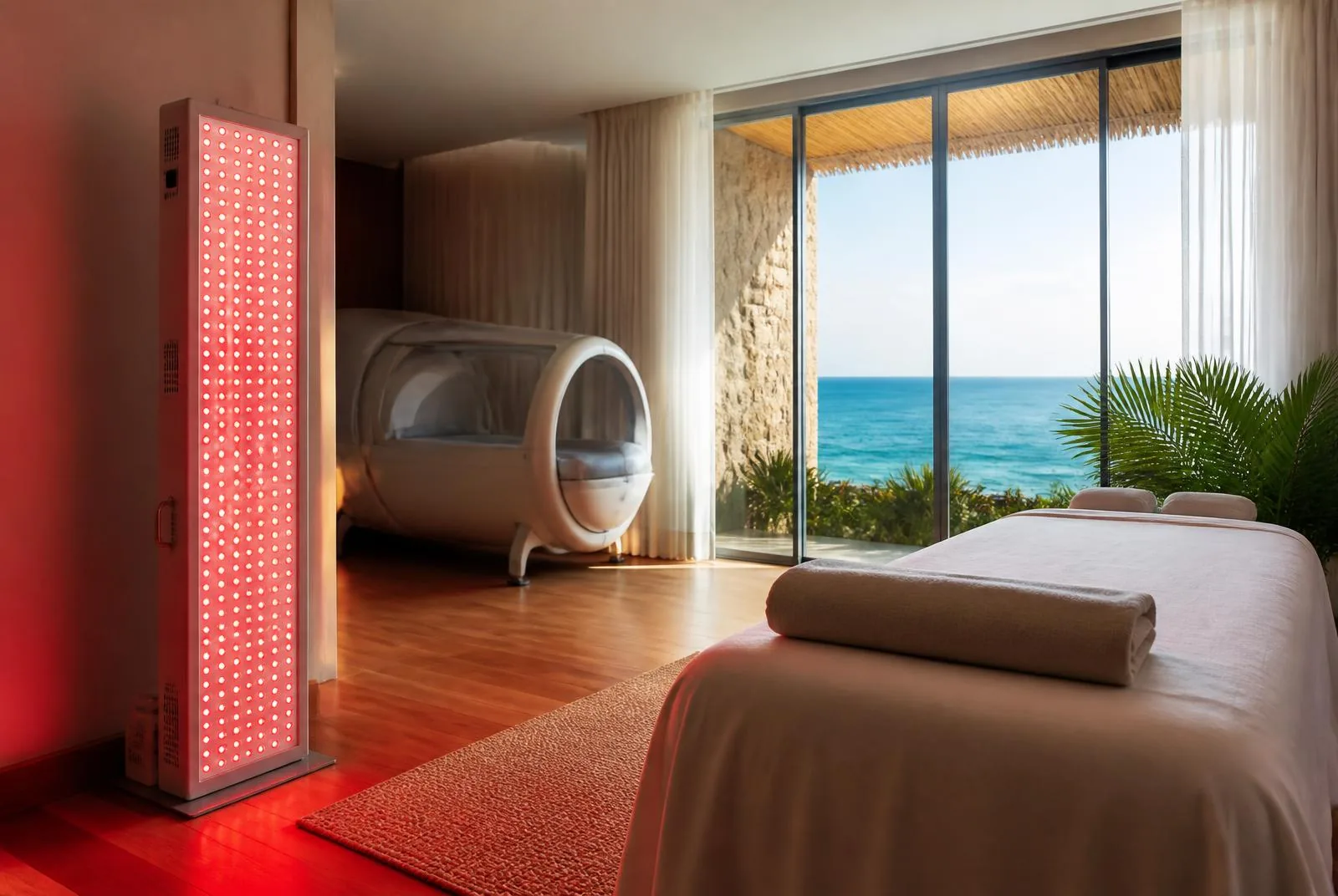
At Sanctuary Tulum, MSC therapy is delivered by our physician-led clinical team inside a broader recovery program rather than as an isolated infusion. Guests are screened on intake, receive imaging or labs where clinically indicated, and are supported through and after infusion days with NAD+ infusions, hyperbaric oxygen therapy, nutrition, and rest.
Where appropriate for the guest's history and goals, MSC therapy is sequenced with our ibogaine therapy program, ayahuasca ceremony, or psilocybin therapy protocols so guests are supported physically as well as psychologically. It is never sold as a standalone "product" divorced from clinical context.
The Evidence, Framed Honestly
Clinical evidence for MSC therapy has grown substantially over the past decade. Preliminary trials in aging frailty, osteoarthritis, and post-COVID inflammation have reported safety and signals of benefit, and mechanistic reviews of MSC paracrine signaling continue to expand the understanding of how these cells modulate tissue behavior. Larger and longer-duration randomized trials are still needed before MSC therapy can be described as an evidence-based standard-of-care for most indications. Pages on this site are written to reflect that reality rather than to overstate it.
What the Stay Looks Like
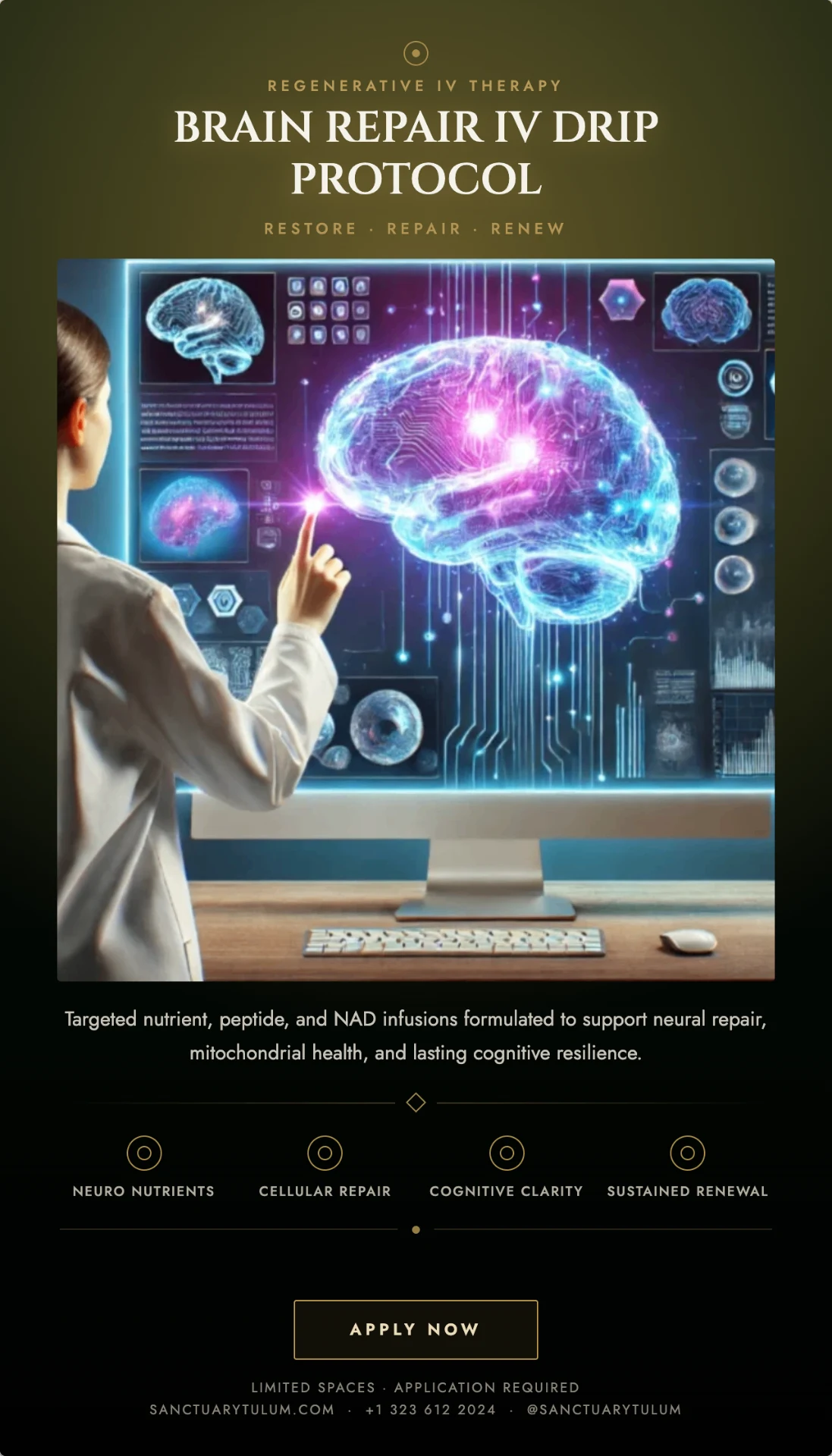
Most guests stay 2–8 weeks depending on their protocol. Sanctuary Tulum arranges private airport transfers from Cancún International Airport, coordinates travel logistics for guests from major U.S. metro areas, and provides private-suite accommodation on our oceanfront property. Learn more about our approach through the luxury rehab center and the Pouyan Method™.
References
- U.S. Food and Drug Administration. "Consumer Alert on Regenerative Medicine Products Including Stem Cells and Exosomes." FDA.gov.
- Han Y, et al. "Mesenchymal Stem Cells for Regenerative Medicine." Cells. 2019;8(8):886.
- Tompkins BA, et al. "Allogeneic Mesenchymal Stem Cells Ameliorate Aging Frailty: A Phase II Randomized, Double-Blind, Placebo-Controlled Clinical Trial." J Gerontol A Biol Sci Med Sci. 2017;72(11):1513-1522.
Stem cell therapy in Mexico is only as good as the environment around it. At Sanctuary Tulum it is delivered within our full luxury wellness center program so guests receive the compounding benefits of a fully integrated protocol.