Model of Care
Fusing Science and Sacred Medicine at Sanctuary Tulum
Two traditions of healing, brought together under medical supervision rather than treated as competing philosophies.
The phrase "science meets sacred medicine" gets used loosely across the wellness industry, often as marketing shorthand for very little. At Sanctuary Tulum it describes something specific: a licensed medical facility, on the Caribbean coast near Tulum, where plant-based ceremonial practices sit inside a framework of physician oversight, lab work, cardiac screening and continuous one-to-one clinical support.
The two halves are not decorative. The clinical infrastructure exists because the ceremonial work carries real physiological demands, and the ceremonial work exists because, for many guests, purely biomedical approaches have already been tried and have not reached the underlying pattern. Neither half is positioned as sufficient on its own.
The National Institutes of Health has tracked a resurgence of clinical interest in psychedelic-assisted approaches to mood and substance-use conditions over the past decade, and that research context matters: it is the difference between a facility using these substances because they are trending and a facility using them because there is a growing, serious body of inquiry behind the mechanism.
The clinical layer: what makes it medicine, not ritual tourism
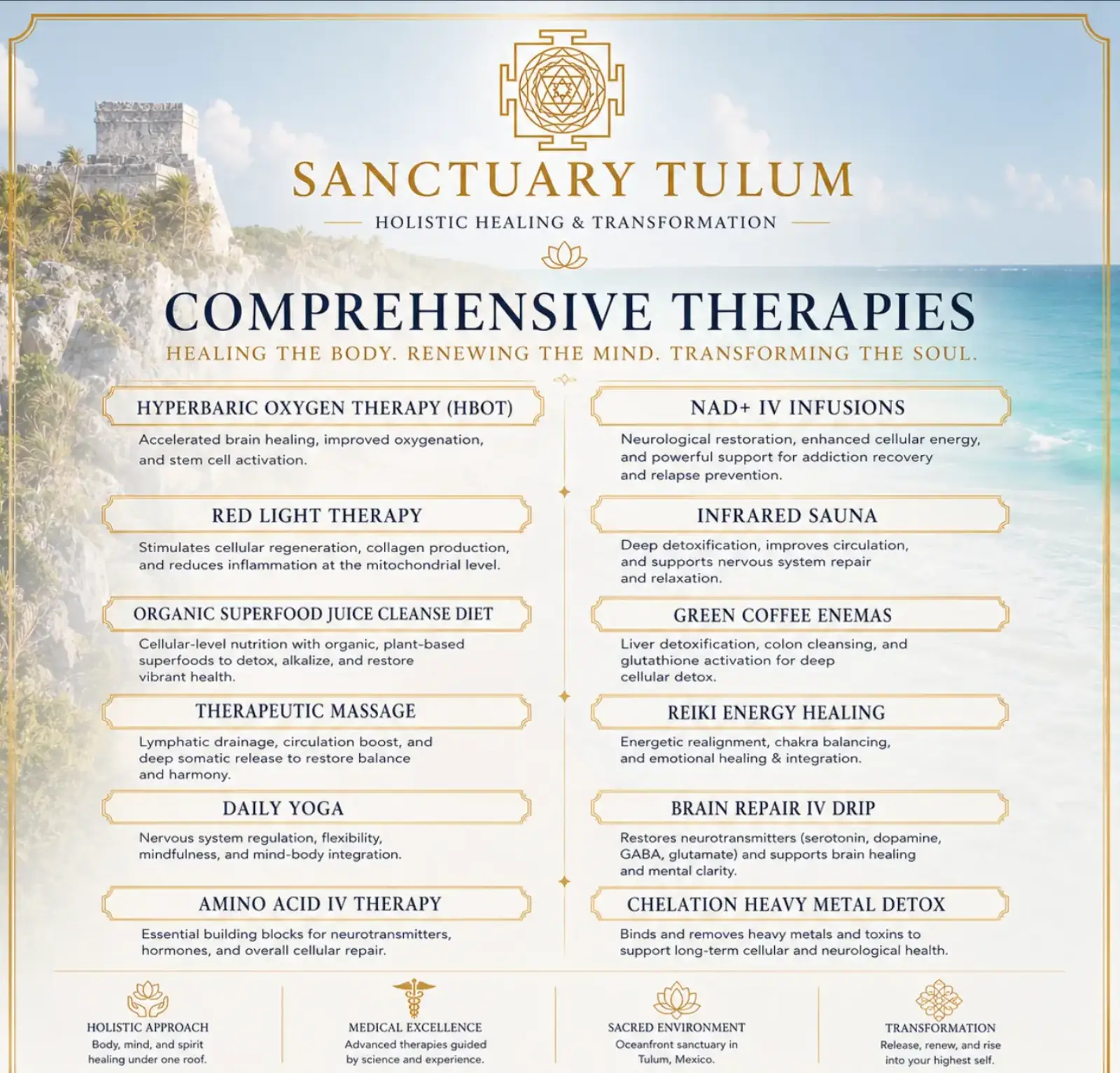
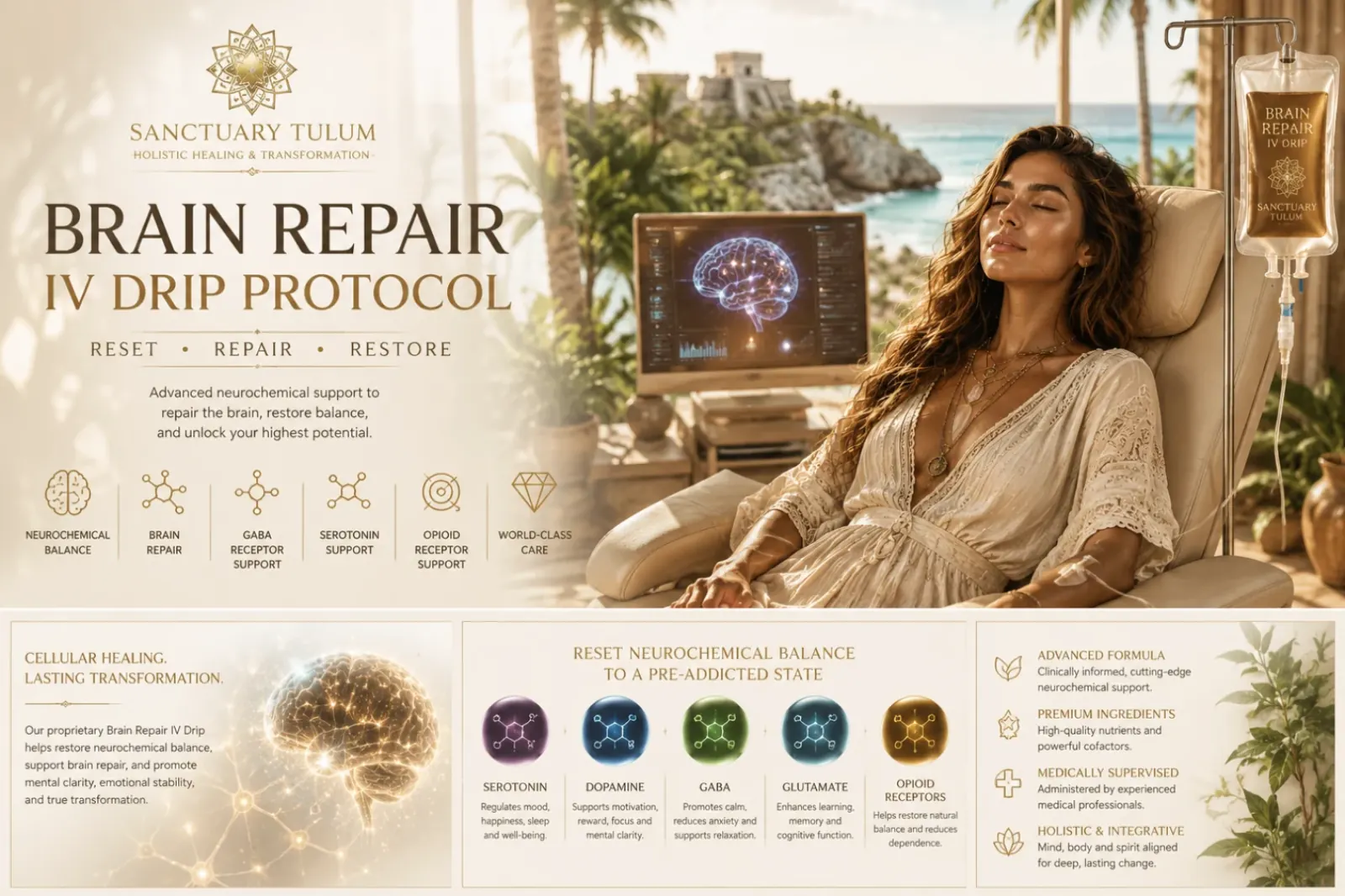
Before any ceremonial work is considered, guests go through medical intake: cardiac and metabolic screening, a medication and psychiatric history review, and a clinical decision about whether, and in what sequence, plant medicine work is appropriate. Some guests are advised against it entirely and are treated through Brain Repair IV protocols, NAD+ IV therapy and bodywork instead.
This is the part of the model that most differentiates a licensed facility from an unregulated retreat: the willingness to say no to a ceremony on clinical grounds, and to have physicians present with the training to make that call.
The Pouyan Method and the one-to-one structure
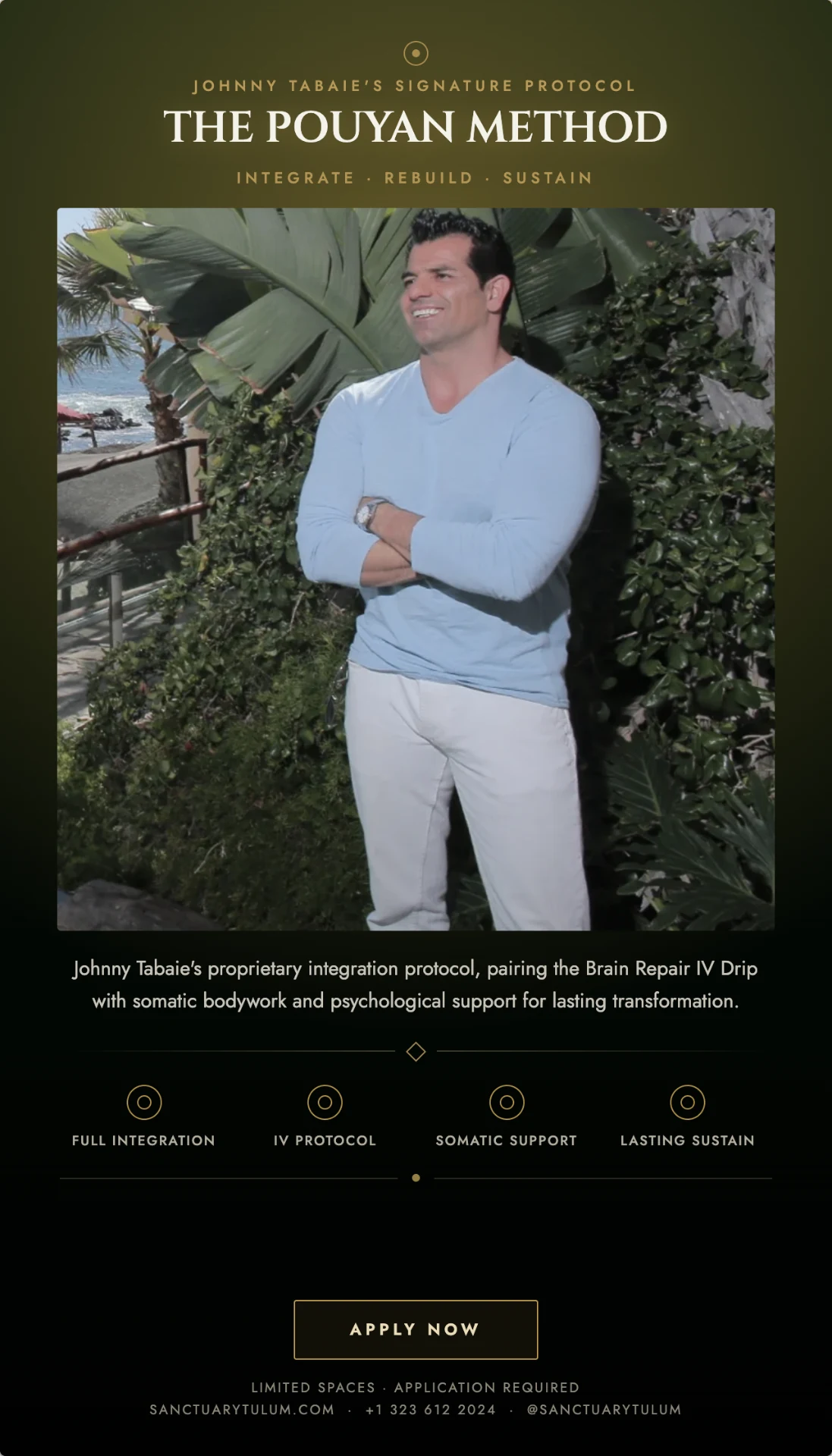
Founder Johnny Tabaie's proprietary Pouyan Method™ organizes the entire stay around individual attention — more than 35 hours of one-to-one clinical work per week, delivered to a single guest rather than distributed across a group. There is no talk therapy in the conventional group sense, no 12-step curriculum and no psychiatric medication regimen; instead, the model integrates ceremonial work, IV-based restoration, bodywork and rest into a sequence built around one person's history and physiology.
The census stays intentionally small. Single-occupancy suites and a low guest count are not simply comfort features — they are what makes the one-to-one hour count possible at all.
The plant medicine opens a door. What determines whether anything changes is everything that happens around it — the medicine, the rest, and the attention.
Johnny Tabaie, Founder
Where the two traditions meet
A rough map of how a stay moves between clinical and ceremonial work.
Medical intake
Screening, labs and history before anything ceremonial is scheduled.
IV restoration
NAD+, amino acid and Brain Repair protocols support the nervous system.
Ceremonial work
Ayahuasca, psilocybin, ibogaine or 5-MeO-DMT under medical supervision, where indicated.
Somatic recovery
Massage, cold plunge and infrared sauna help the body process and integrate.
One-to-one integration
Individual sessions translate the experience into a workable plan.
Continuous monitoring
Physicians and clinical staff track response throughout, not only at intake.
Why the setting is part of the treatment
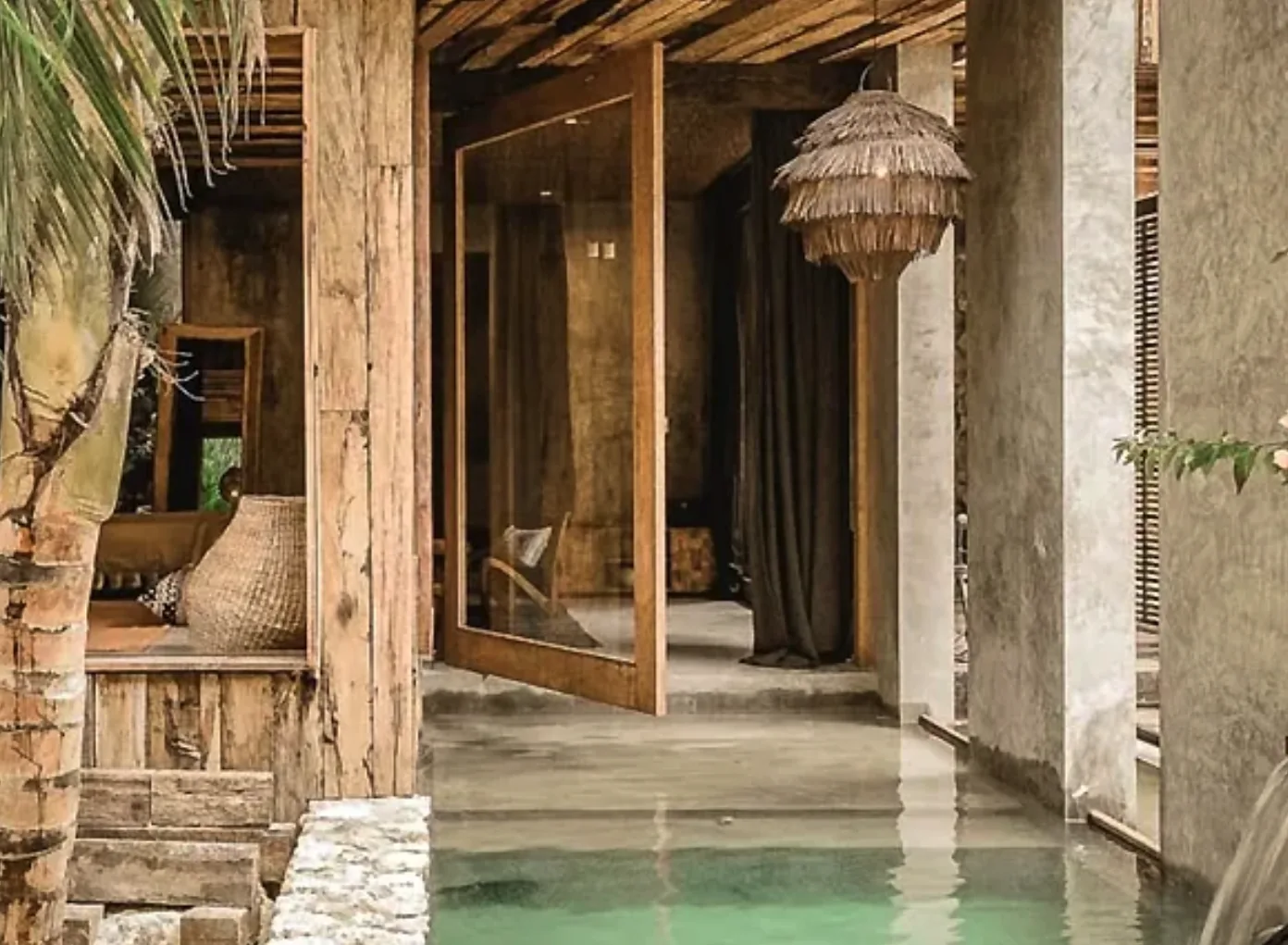
None of this integrative model works especially well in a clinical, institutional setting, and it works poorly in a crowded one. The oceanfront property, the single-occupancy suites and the tiny census are structural choices that let the clinical and ceremonial layers actually meet, rather than being scheduled around each other.
Guests are not competing for staff attention or negotiating shared space during a period when both are in short supply. That is a deliberate design decision, not an amenity.
Evidence, and where it currently stands
It would be inaccurate to describe any of these plant-medicine protocols as a cure, and no responsible facility should claim one. What the current research base supports is a growing, serious interest in supervised psychedelic-assisted approaches for treatment-resistant depression, trauma and substance-use patterns — not a guarantee of outcome for any individual. The U.S. Food and Drug Administration continues to evaluate several psychedelic compounds through formal drug-development pathways, which is the appropriate register for discussing where this field actually stands.
That caution is precisely why the clinical layer exists at Sanctuary Tulum: not to add bureaucracy to a ceremonial practice, but to make sure a guest's physical and psychiatric history is actually accounted for before anything is offered.
Who this model tends to suit
This integrative approach tends to suit people who have already tried more conventional routes — outpatient therapy, medication, standard residential programs — without reaching the depth of change they were looking for, and who are prepared for a stay that is longer and more physically demanding than a typical wellness retreat. It is less suited to someone looking for a short reset or a group experience; both the length and the individual structure argue against that.
Programs run from four to sixteen weeks across the Gold, Platinum and Elite VIP tiers, described in full on the packages and pricing page. For the clinical rationale behind the model overall, the about us page and the holistic rehab center program page go into more depth than a single article can.
Anyone weighing whether this model fits their situation is welcome to start with a straightforward conversation via the contact page. Sanctuary Tulum operates as a luxury treatment for anxiety and licensed medical facility, operating on these principles since 2011.
How the clinical and ceremonial calendars interact
In practice, the science and the sacred medicine sides of the program are scheduled against one shared calendar rather than run in parallel tracks. Lab results, sleep data and daily clinical observation inform whether and when a ceremonial session is appropriate; and, in turn, any ceremonial work is followed by IV-based restoration and one-to-one integration sessions calibrated to what actually happened in the room. Neither side is scheduled in isolation from the other.
This integration is what distinguishes a licensed model from a retreat that simply offers both elements on the same property without connecting them clinically.
What this looks like for a guest in practice
For a guest arriving with a complex history — prior treatment attempts, psychiatric medication, or unresolved trauma — the practical sequence usually begins with medical stabilization, moves through IV-based restoration such as NAD+ IV therapy, and only later considers ceremonial work once the clinical team is satisfied the guest is physically and psychologically prepared. Guests who are not candidates for ceremonial work still receive the full clinical and somatic program, just without that specific element.
What the research base actually supports
It is worth stating plainly what the underlying science does and does not show, rather than borrowing the authority of research for claims it cannot carry. Controlled evidence for psilocybin-assisted approaches to alcohol use disorder comes from a randomized trial that found a reduction in heavy drinking days versus placebo — a genuine and encouraging signal from a single trial, not proof that any ceremonial plant medicine reliably resolves the underlying condition (Bogenschutz et al., 2022). Reviews of ayahuasca's pharmacology and reported effects in addiction and mental illness note real pharmacokinetic and subjective-effect data alongside an honest acknowledgment that the controlled evidence base still lags behind the enthusiasm around it (Hamill et al., 2019). Work on psychedelic-induced neural plasticity offers a plausible biological mechanism for why structured ceremonial work paired with integration may support durable change, but a mechanism is not the same as a guaranteed outcome for any individual guest (Weiss et al., 2025).
This is also why alcohol and substance-use histories are screened as thoroughly as they are before any ceremonial work is scheduled. The National Institute on Alcohol Abuse and Alcoholism and the World Health Organization both document the physiological damage chronic alcohol use can cause, and a recent pharmacology review of alcohol's cellular and organ-level effects is part of why cardiac and metabolic clearance comes before, not alongside, any plant-medicine protocol (Paloczi et al., 2026). A systematic review of psychosocial interventions in inpatient substance-use settings likewise found that structured, individualized clinical contact — not any single modality — correlates with better outcomes, which is the same principle behind the one-to-one hours built into the Pouyan Method™ (Park et al., 2026).
None of this is offered as proof that the model works for everyone, or that any single protocol is a cure. It is offered as the specific, checkable basis for why the clinical layer exists, why screening is strict, and why some guests are advised toward IV-based and somatic protocols instead of ceremonial ones.