What is ayahuasca? It is one of the most profound healing medicines ever discovered by humanity — a sacred plant medicine brew that has been used for thousands of years by indigenous Amazonian cultures, and is now at the forefront of a global mental health revolution. This complete guide explains everything you need to know about ayahuasca: what it is, how it works, what it heals, and why it is being called the most important medicine of our time.

What Is Ayahuasca? Origins and History
Ayahuasca is a sacred plant medicine brew made from two primary ingredients: the Banisteriopsis caapi vine (the "ayahuasca vine") and the leaves of Psychotria viridis (also known as chacruna). The word "ayahuasca" comes from the Quechua language and translates as "vine of the soul" or "vine of the dead" — names that point to its profound capacity for healing at the deepest levels of the human psyche.
Indigenous Amazonian cultures — including the Shipibo, Shuar, Tukano, and dozens of other traditions — have used ayahuasca as a sacred healing medicine for at least 1,000 years, and likely much longer. Traditional ayahuasca ceremony program were led by trained healers called curanderos or ayahuasceros, who used the medicine to diagnose illness, treat disease, navigate spiritual realms, and facilitate healing in their communities.
In recent decades, ayahuasca has spread far beyond the Amazon, with ayahuasca retreat centers and healing programs now operating throughout Latin America, Europe, and the United States. Western science has followed this expansion with a growing body of clinical research demonstrating ayahuasca's remarkable therapeutic potential.
The Chemistry of Ayahuasca: How It Works
The active compound in Psychotria viridis is DMT (N,N-Dimethyltryptamine) — one of the most powerful psychoactive compounds known to science. Ordinarily, DMT taken orally is broken down in the gut by monoamine oxidase (MAO) enzymes before it can cross the blood-brain barrier. The genius of ayahuasca lies in its second ingredient: the Banisteriopsis caapi vine contains beta-carboline alkaloids (harmine, harmaline, tetrahydroharmine) that act as MAO inhibitors — allowing the DMT to reach the brain and produce its profound effects.
This combination produces a 4–6 hour experience characterized by vivid visionary states, deep emotional processing, physical purging (considered by traditional cultures to be a release of stored emotional and physical toxins), and profound insights into the nature of the self and one's life patterns. Neuroimaging studies show that ayahuasca significantly increases activity in the default mode network (DMN) — the brain's "self-referential" system — while simultaneously reducing the rigid, repetitive thought patterns associated with depression, anxiety, and addiction.
What Does Ayahuasca Treat?
The clinical research on ayahuasca is increasingly compelling. Peer-reviewed studies have demonstrated significant therapeutic benefits for:
- Depression: Multiple studies show rapid, sustained antidepressant effects, including in treatment-resistant cases. Read more: Ayahuasca for Depression.
- PTSD and Trauma: Ayahuasca creates the neurological conditions for complete processing of traumatic memories. Read more: Ayahuasca for PTSD.
- Addiction: Observational and clinical studies show significant reductions in substance use, cravings, and addiction-related thinking after ayahuasca ceremonies.
- Anxiety Disorders: Including generalized anxiety, social anxiety, and anxiety related to existential concerns such as terminal illness.
- Grief and Loss: Ayahuasca facilitates profound contact with feelings of grief, allowing complete processing and integration.
- Spiritual Disconnection: Perhaps ayahuasca's most universal gift — a restoration of meaning, purpose, and connection to something larger than the self.
What Happens During an Ayahuasca Ceremony?
An ayahuasca ceremony is a structured, sacred experience conducted under the guidance of experienced shamanic facilitators. At Sanctuary Tulum, ceremonies are held in a private, intentionally designed space that honors the sacred nature of the medicine. After drinking the brew, effects begin within 30–60 minutes. The peak experience, lasting 3–4 hours, typically involves vivid visions, deep emotional release, physical purging, and profound spiritual insights. Facilitators and medical staff are present throughout, providing support, safety, and guidance.
Is Ayahuasca Safe?
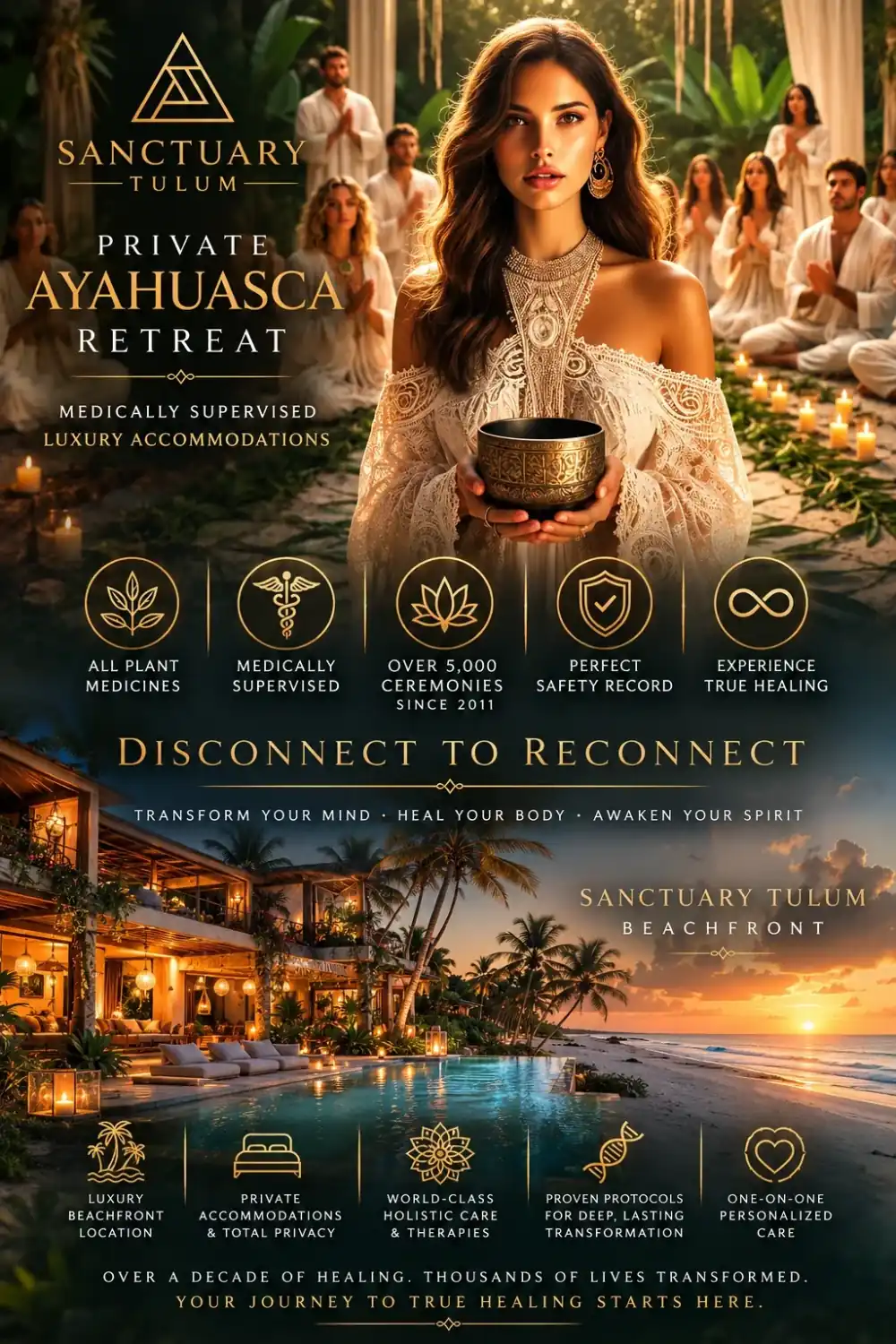
Ayahuasca is physiologically safe for most people when administered with proper medical screening and oversight. The primary risks involve drug interactions — particularly with SSRIs, MAOIs, and certain medications — which is why comprehensive pre-ceremony medical review is essential. Ayahuasca is also contraindicated for individuals with certain cardiac or psychiatric conditions. At Sanctuary Tulum, our full medical screening protocol and on-site physician presence during every ceremony ensures the highest possible standard of safety. We have maintained a documented, fatality-free safety record since 2011.
Preparation is equally critical. Following the ayahuasca diet for 1–2 weeks before ceremony reduces interaction risks and enhances the medicine's therapeutic effects. See our complete ayahuasca preparation guide for full details.
The Clinical Evidence Base: What Peer-Reviewed Research Actually Shows
Ayahuasca is one of the most-studied classical psychedelics in the modern clinical literature, alongside psilocybin and MDMA. A single-dose open-label trial in treatment-resistant depression (Osório et al., Revista Brasileira de Psiquiatria, 2015) reported rapid reductions in depressive symptoms measurable within hours and sustained through the 21-day follow-up. A subsequent randomized, placebo-controlled trial by Palhano-Fontes and colleagues (Psychological Medicine, 2019, PubMed 29903051) confirmed a significant antidepressant effect versus placebo in treatment-resistant patients at seven days post-dose. Naturalistic and observational studies in populations with post-traumatic stress and substance use disorders have reported similar directional signals, though the evidence base for those indications is thinner than for depression.
Neuroimaging work — including a Frontiers in Human Neuroscience study by Palhano-Fontes and colleagues (PubMed 25774136) — has shown that ayahuasca reduces activity in the default mode network, the brain system implicated in rumination, self-referential thinking, and the rigid negative-thought loops characteristic of depression and PTSD. This gives a plausible mechanism for the clinical effects: not simply a mood lift, but a temporary softening of the neural patterns that hold psychological rigidity in place, opening a window in which lasting change becomes possible.
Choosing the Best Ayahuasca Retreat
With the growth of ayahuasca retreat centers worldwide, choosing the right one is critical. The best ayahuasca retreats offer mandatory medical screening, on-site physician supervision, experienced facilitators, integration support, and a comprehensive surrounding healing program. Sanctuary Tulum operates under a federal health license in Tulum, Mexico, and meets each of these criteria. See our safety criteria for a psychedelic facility and our companion piece on the best ayahuasca retreat in Mexico for the specific questions to ask any center. Contact our team for a confidential consultation.
US-based readers evaluating travel logistics can also review our detailed guide on ayahuasca retreats near me for a NYC-focused breakdown of the legal landscape and licensed Mexico alternative.