Most "best ayahuasca retreat" lists are ranked by marketing budget, not quality. This guide takes the opposite approach: rank the criteria, not the companies. If you use these 10 factors — in this order — you'll be equipped to evaluate any facility on your own, regardless of what the reviews say.
1. Medical Screening and On-Site Physician Supervision
The single highest-impact factor. Ayahuasca contains MAOIs that interact with SSRIs, SNRIs, tramadol, tyramine-rich foods, and many other substances, and it produces significant cardiovascular effects. A safe retreat requires pre-arrival medical screening (medication review, cardiac history, mental health history) and a licensed physician present during ceremony — not on call from off-site.
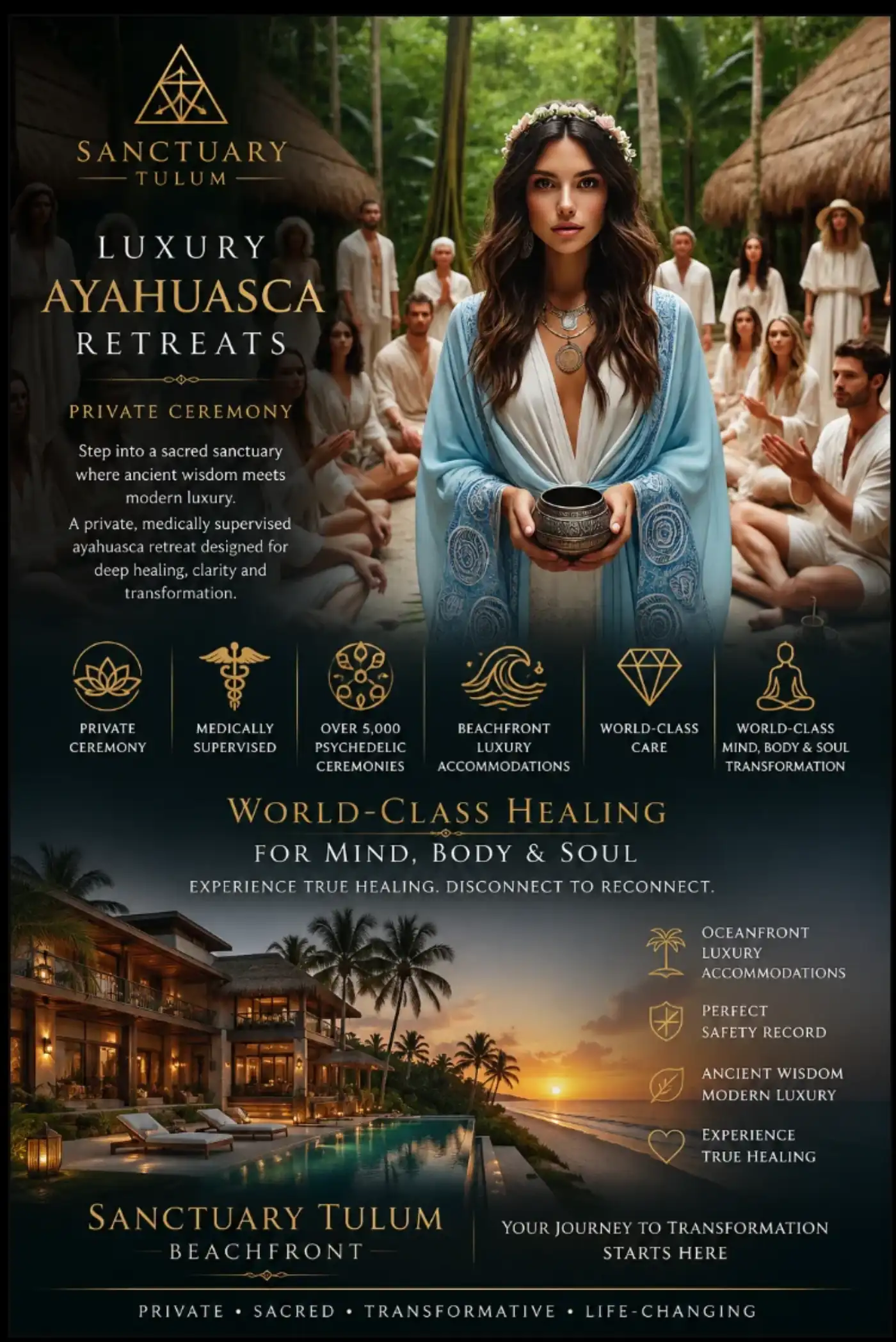
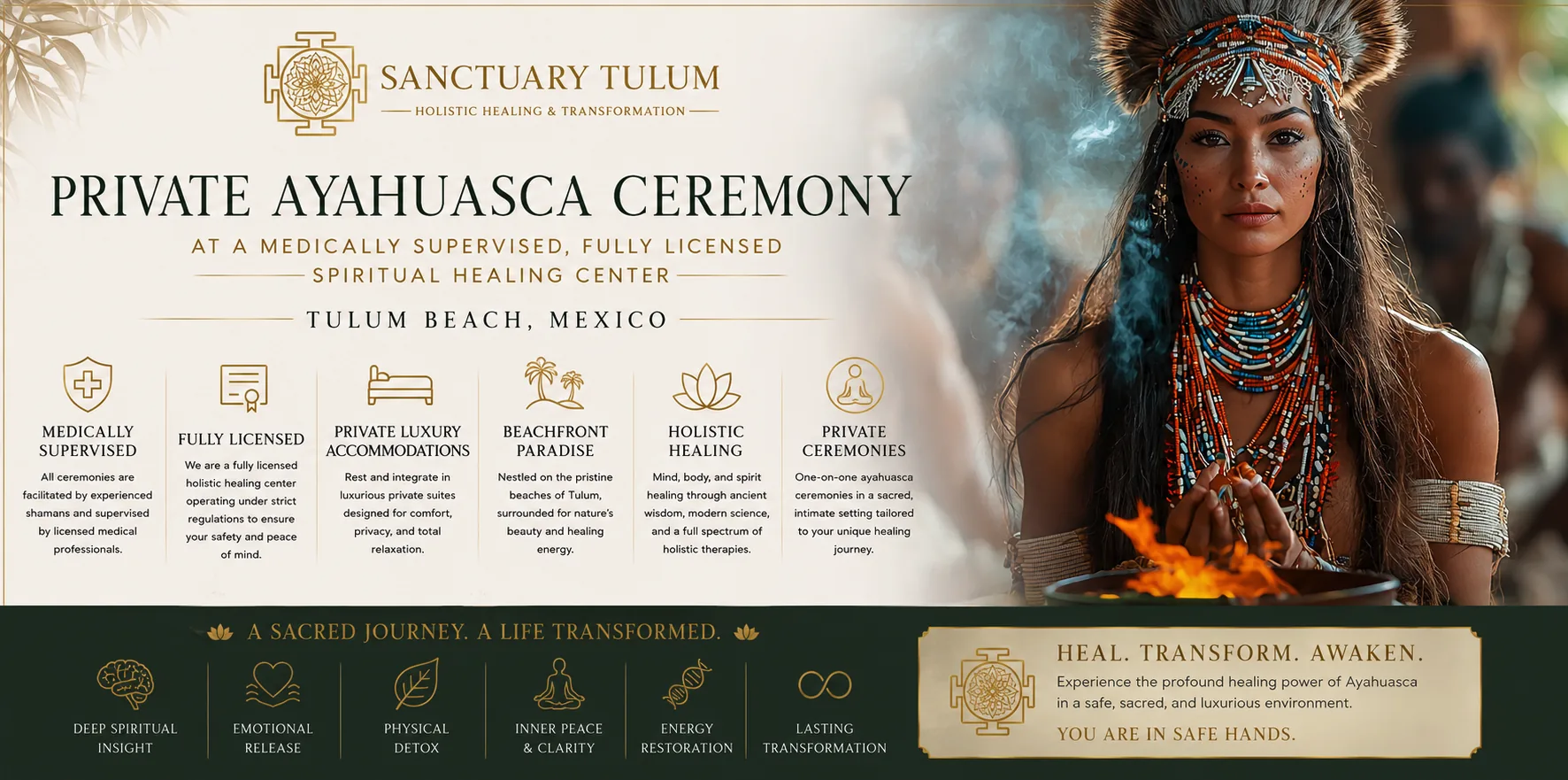
Sanctuary Tulum operates under a federal health license as a hospital and clinic, with pre-arrival medical intake and a physician on-site for every ceremony.
2. Facilitator Training and Experience
Ceremony facilitators should have documented, multi-year experience holding space for ayahuasca specifically — not general "plant medicine" experience or a weekend certification. Ask directly: how many ceremonies have they facilitated, and under whose training lineage.
Sanctuary Tulum's ceremony team has operated continuously for over a decade under the direction of founder Johnny Tabaie and Medical Director Dr. José A. Jiménez, with medical oversight integrated into every ceremony.
3. Group Size
Smaller groups mean more attention per participant, faster response if something goes wrong, and a calmer container overall. Large ceremonies (20+ participants) dilute facilitator focus and increase the odds that a difficult experience is noticed late.
Sanctuary Tulum runs intentionally small ceremonies with one-on-one attention as the operating model.
4. Legal Operating Status
A licensed facility is accountable — inspected, documented, and subject to formal complaint. Unlicensed operations are not. This factor is not about paperwork for its own sake; it is about whether anyone external is checking that the operation matches what's advertised.
Sanctuary Tulum operates under a federal hospital and clinic license in Mexico.
5. Integration Support
The ceremony is the smaller part of the work. Integration — the structured application of insights afterward — is what determines whether the experience produces lasting change. Look for scheduled integration sessions during the program, written materials, and defined post-retreat follow-up.
Sanctuary Tulum's programs include integration sessions built into the daily schedule and post-departure follow-up as part of every package.
6. Medicine Quality Control
Ayahuasca is prepared by hand and its composition varies. A serious facility has a consistent source, documented preparation practices, and does not source brew from unknown intermediaries. Ask directly where the medicine comes from and who prepares it.
Sanctuary Tulum uses a consistent, traditionally prepared source with documented sourcing.
7. Emergency Protocols
Ask specifically: what happens if a participant has a hypertensive episode, a psychiatric crisis, or a serotonergic reaction during ceremony? A safe facility answers concretely — medications on hand, physician response, transport plan. A facility that answers vaguely is a facility without a plan.
Sanctuary Tulum maintains documented emergency medical protocols and on-site clinical resources as part of its hospital-clinic licensing.
8. Program Length
Programs need enough time for medical preparation, dieta, ceremony, and integration. Extremely short programs (a single weekend) rarely allow adequate preparation or integration. The right length depends on personal history and goals — not a marketing default.
Sanctuary Tulum offers 4-week, 8-week, and 12+ week programs matched to individual clinical needs.
9. Accommodations and Environment
Setting affects nervous-system regulation, sleep quality, and integration. Private rooms, quiet natural surroundings, and physical separation from public tourism support the work. Shared rooms and party-adjacent settings undermine it.
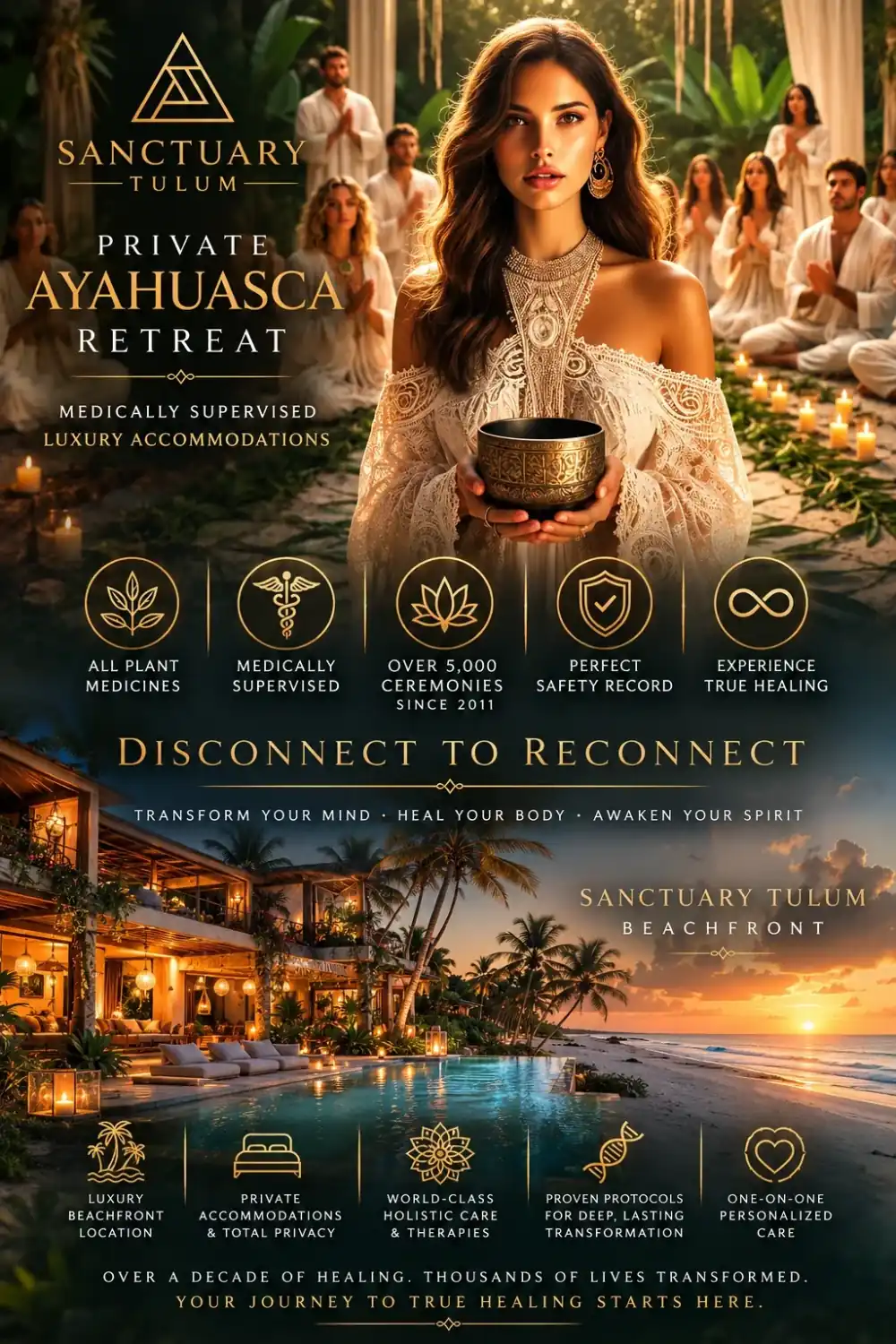
Sanctuary Tulum is a private oceanfront facility with individual suites.
10. Aftercare and Follow-Up
The lowest-priority factor on this list is still meaningful: structured contact after departure, integration coaching, and a defined pathway if issues arise weeks or months later. Retreats that end at the exit door are incomplete by design.
Sanctuary Tulum includes structured post-program follow-up as part of every package.
How to Use This List
Take these ten factors in order to any facility you're considering — including this one. If a facility can't answer factors 1 through 4 clearly, the remaining six don't matter. For the companion list of specific named centers ranked against these criteria, see our top 10 ayahuasca retreats in the world. For a companion piece on facility-level safety infrastructure, see safest psychedelic facility and the overview of what a medically supervised ayahuasca retreat looks like in practice. For Mexico-specific context, see our best ayahuasca retreat in Mexico guide and the what is ayahuasca primer.
References
- Callaway JC, et al. Pharmacokinetics of Hoasca alkaloids in healthy humans. J Ethnopharmacol. 1999;65(3):243-256.
- dos Santos RG, Bouso JC, Hallak JEC. Ayahuasca, dimethyltryptamine, and psychosis: a systematic review of human studies. Ther Adv Psychopharmacol. 2017;7(4):141-157.
- Bouso JC, et al. Long-term use of psychedelic drugs is associated with differences in brain structure and personality in humans. Eur Neuropsychopharmacol. 2015;25(4):483-492.
US-based readers evaluating travel logistics can also review our detailed guide on Ayahuasca Retreats in NYC for a NYC-focused breakdown of the legal landscape and licensed Mexico alternative.