Costa Rica is one of the most-searched destinations for ayahuasca retreats, and it has been for over a decade. This guide compares what a Costa Rica retreat typically looks like against what a medically supervised program at Sanctuary Tulum actually is — not to disparage Costa Rica, but to make the underlying differences visible so a seeker can choose with real information.
The Costa Rica Ayahuasca Market — What It Is
Costa Rica became a hub for ceremonial ayahuasca work in the 2010s, driven by a tolerant legal posture, an established wellness-tourism industry, and inland jungle properties that suited retreat marketing. The country does not explicitly prohibit ayahuasca — but it also does not explicitly license or regulate it. The result is a large market of retreats operating in a legal gray zone as ceremonial businesses, not as licensed medical facilities.
The typical Costa Rica retreat runs a weekend or 5-to-7-day format with 10 to 30 participants sharing a single ceremonial space. Facilitators are often trained in a South American lineage — Shipibo, Peruvian, or Colombian — but they hold no Costa Rican medical license because none is required for what they're doing. Medical screening is generally a self-reported intake form. Emergency infrastructure is generally not on site.
This is a fair description of the market average, not a slur against every operator. A small number of Costa Rica retreats offer more medical support than the average — but "more" in that context still typically means an on-call nurse or a visiting physician, not an on-site licensed medical facility.
The Tulum Model — What It Is
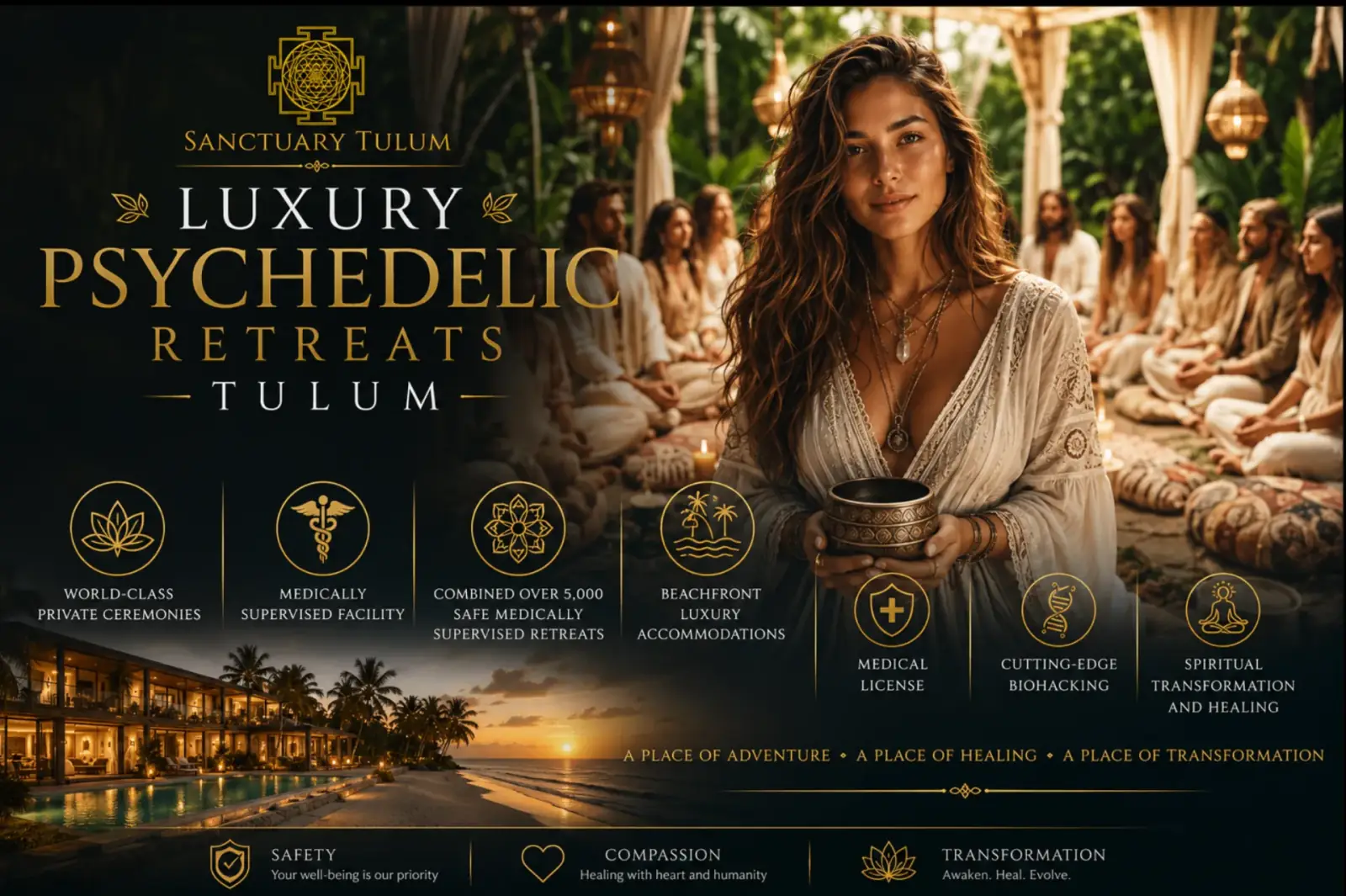
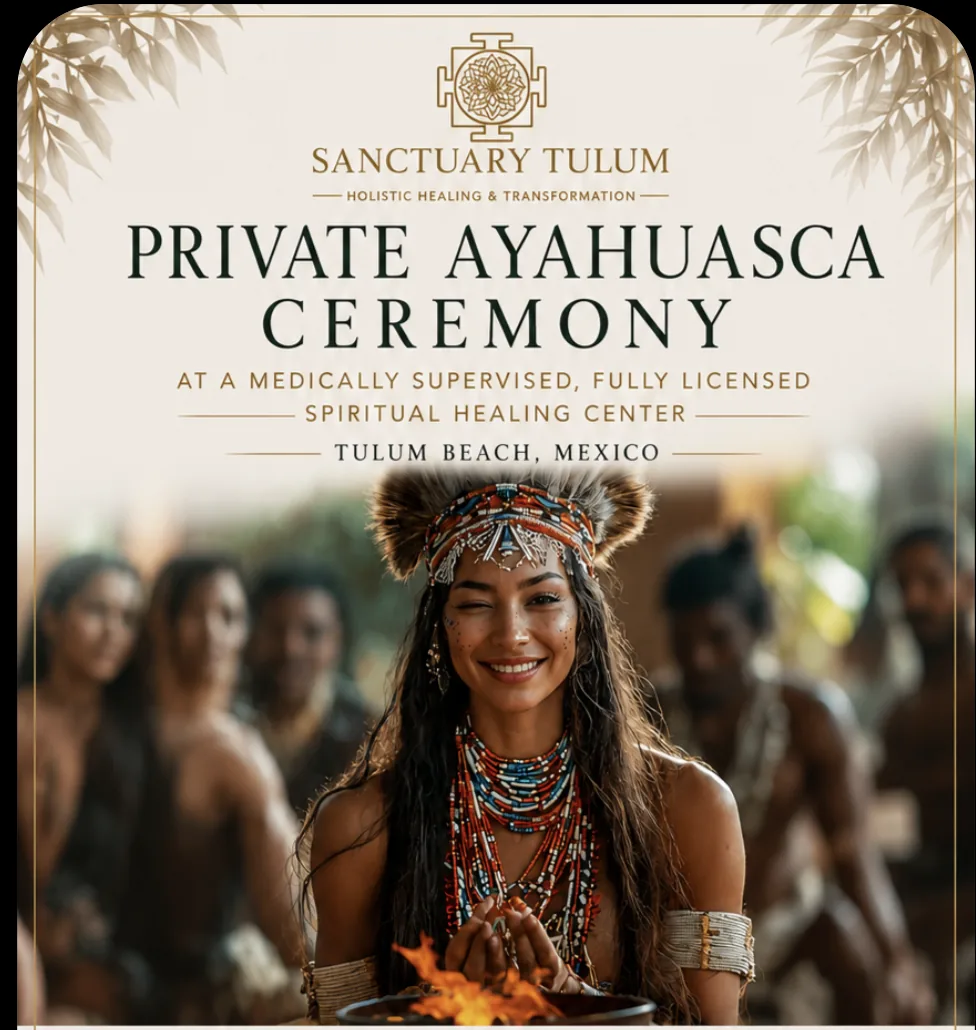
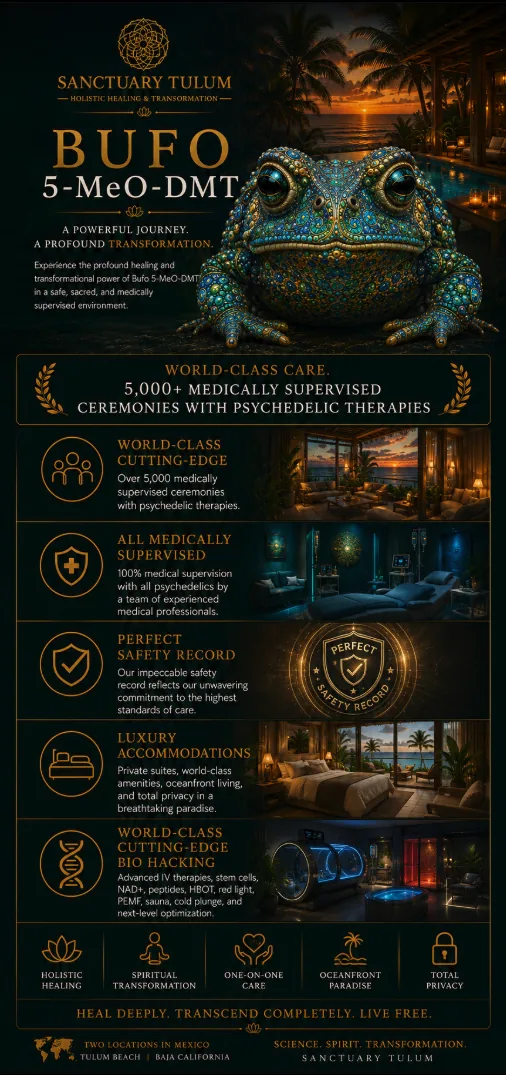
Sanctuary Tulum operates under a Federal License of Operation for Hospital and Clinic — a formal Mexican medical license issued by the federal health authority. The facility has run continuously since 2011 with a clean safety record. Ceremonies are held privately, not in groups. On-site physicians are present during ceremony, not on-call. Every guest completes written medical intake — full medication list, cardiac history, psychiatric history, prior treatment — weeks before arrival, reviewed by our Medical Review Board. SSRI and MAOI taper plans are coordinated with the guest's prescriber. EKG and lab work are ordered when indicated. IV access and emergency medications are on hand during every ceremony.
This is the concrete meaning of "medically supervised" — a specific set of clinical procedures backed by a verifiable license number, not a marketing phrase.
Side-by-Side Comparison
Licensing. Costa Rica: no dedicated ayahuasca licensing framework; most retreats operate as ceremonial or wellness businesses. Tulum: federal hospital-and-clinic license, verifiable with the issuing authority.
Medical screening. Costa Rica: typically a self-reported online form with no clinical review. Tulum: written medical intake reviewed by physicians, with taper plans and clearance protocols before an arrival date is confirmed.
Ceremony format. Costa Rica: group ceremonies of 10 to 30 participants sharing one facilitator. Tulum: private ceremonies with a facilitator, medical clinician, and integration lead dedicated to the individual guest.
On-site medical presence. Costa Rica: usually none, sometimes an on-call nurse. Tulum: on-site licensed physicians during every ceremony, with IV access and emergency medications available.
Integration. Costa Rica: closing circle and self-directed follow-up. Tulum: structured one-to-one integration sessions during the arc, with a formal discharge protocol before departure.
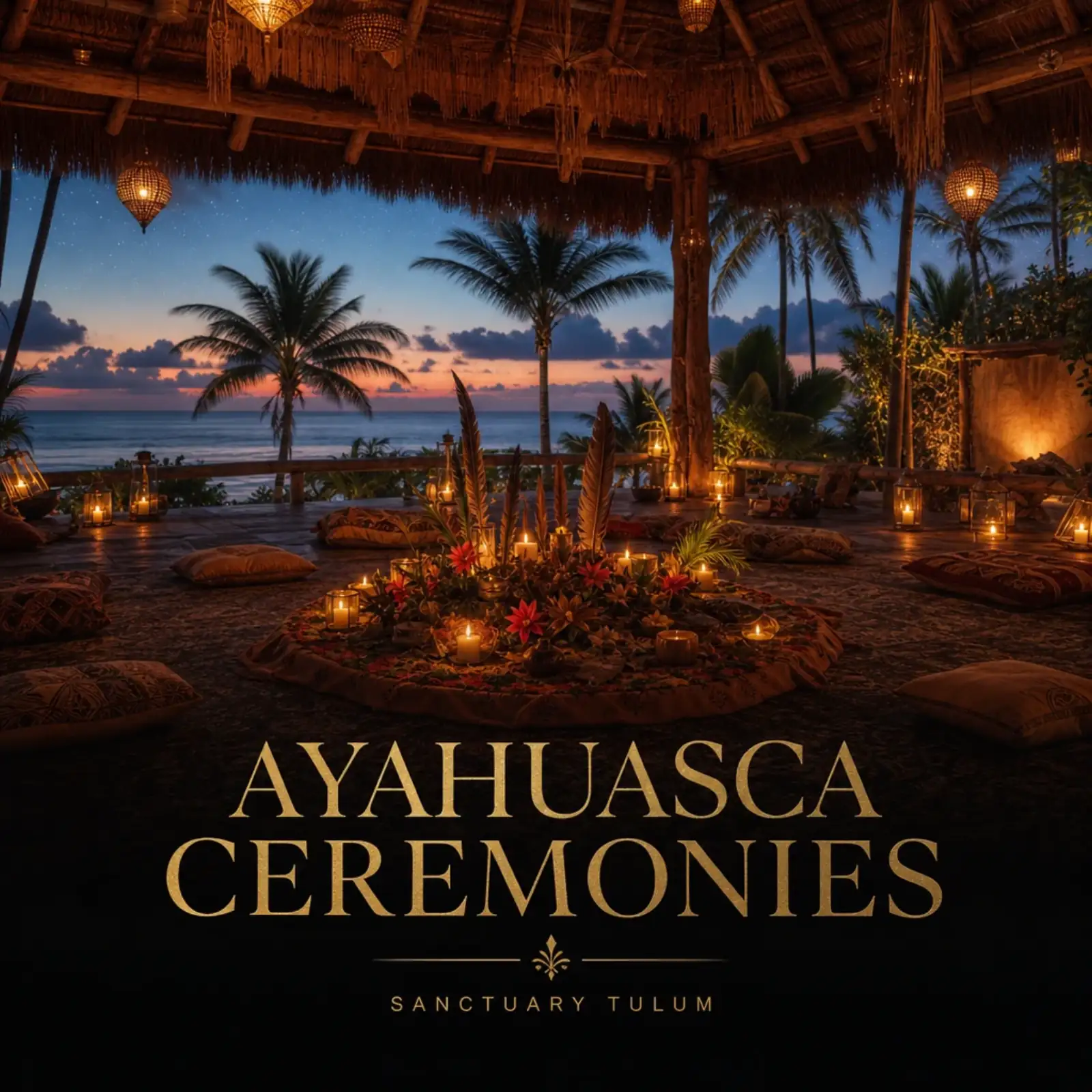
Setting. Costa Rica: inland jungle, sometimes hours from the nearest hospital. Tulum: oceanfront campus with real regional medical infrastructure and a paved federal highway to Cancún International Airport.
Travel. Costa Rica: SJO or LIR plus a 2-to-4-hour ground transfer to most jungle retreats. Tulum: CUN plus a 90-minute private ground transfer, with more daily direct flights from more US cities.
Pricing. Costa Rica group weekends can start at 1,000 to 3,000 USD. Sanctuary Tulum's programs are medical arcs with private accommodation, on-site clinical staff, IV protocols, and integration — priced against that infrastructure.
Why the Group vs. Private Distinction Matters Clinically
A group ceremony of 15 to 30 participants sharing one facilitator is a workable format for well-screened, physically healthy, medication-free adults doing preventive-wellness work. It becomes structurally unsafe for guests carrying real medical or psychiatric complexity — the exact profile of most seekers who arrive at ayahuasca after conventional treatment has failed. In a group format, one facilitator cannot meaningfully monitor 20 people through the peak of a ceremony, and there is no clinician in the room to respond if a serotonergic reaction, a cardiac event, or a psychiatric crisis emerges at 2 a.m.
This is why medically supervised programs use private ceremony formats. It is not a luxury preference. It is what clinical monitoring actually requires when the guest has a real medical history.
Where Costa Rica Is the Right Choice
Costa Rica is a reasonable choice for a specific kind of seeker: healthy, medication-free, without significant trauma or psychiatric history, drawn to a group ceremonial experience in a jungle setting, and clear-eyed that they're choosing a ceremonial retreat rather than a medical program. Many people have meaningful experiences at Costa Rica retreats. The critique here is not that Costa Rica retreats are bad — it's that they are not medical facilities, and they should not be evaluated as if they were.
Where Sanctuary Tulum Is the Right Choice
Sanctuary Tulum is the right choice for a seeker with real medical or psychiatric complexity — current SSRI or SNRI use, benzodiazepine dependence, cardiovascular history, treatment-resistant depression, PTSD, long-term addiction, or any combination of those. It is also the right choice for anyone who wants a private, non-group ceremony inside a licensed medical facility rather than a group ceremony in a ceremonial business. And it is the right entry point for a broader arc — the licensed luxury psychedelic retreat model that sequences ayahuasca alongside ibogaine treatment, 5-MeO-DMT, and psilocybin ceremonies when the clinical picture calls for it.
How to Evaluate Any Retreat — Costa Rica, Tulum, or Elsewhere
Use the same questions everywhere. Does the facility hold a verifiable health-authority license, and can you look up its number? Is a licensed physician present during ceremony, or on-call, or absent? Is medical intake reviewed by a clinician before arrival? What is the group size? What is the emergency protocol, and what emergency equipment is on site? Is integration built into the program or sent home as homework? Will the facility say no to a guest who cannot be safely cleared? A retreat that cannot answer these in writing is a retreat to walk away from. Read more on what defines a safe psychedelic facility, and see our near-me guide for the equivalent question from the US side.
Bottom Line
Costa Rica and Tulum are not equivalent products marketed differently. They are structurally different — one is a large market of ceremonial retreats in a legal gray zone, the other is a licensed medical facility operating under a formal health authority. Both have their place. Choosing between them honestly requires understanding which one you actually need.
A Note on Facilitator Lineage vs. Medical Oversight
One source of confusion in this comparison is that Costa Rica retreats often feature facilitators with strong South American lineage credentials — Shipibo, Peruvian, Colombian — and this is real and meaningful for the ceremonial dimension of the work. Lineage is not the same category as medical oversight, though, and the two are frequently conflated in marketing copy. A curandero trained over decades in the Amazon is qualified to lead ceremony. That same curandero is not qualified to review an SSRI taper plan, order an EKG, or manage a serotonergic crisis at 3 a.m. — because that is not what lineage training covers. Sanctuary Tulum works with experienced curanderos alongside licensed physicians, with the two roles kept clearly separate. That separation is what allows the ceremonial depth of the tradition to be preserved without pretending it substitutes for medical infrastructure.
Cost, Value, and What "Expensive" Actually Buys
A common reaction from seekers comparing prices is that a Costa Rica weekend at 1,500 USD sounds vastly more accessible than a Sanctuary Tulum program. That comparison is only meaningful when what's inside the price is compared honestly. A Costa Rica weekend price typically buys shared accommodation, food, and two or three group ceremonies. A Sanctuary Tulum program price buys medical intake by physicians, private accommodation, on-site clinicians during ceremony, IV nutrient and detox protocols, one-to-one integration sessions, structured discharge, and a facility license backing all of it. These are not the same product at different price points. They are different products.
Which one is the right value depends entirely on the guest's clinical picture. For a healthy medication-free seeker doing preventive-wellness work, the Costa Rica price reflects a fair value for what's delivered. For a guest with real medical or psychiatric complexity, the same price reflects the absence of infrastructure that the medical picture actually requires — and the true cost of that gap only becomes visible if something goes wrong.
A Word on Costa Rica's Legal Position
Costa Rica's legal posture toward ayahuasca is often summarized as "legal" in retreat marketing. The more accurate description is "not explicitly prohibited and not explicitly regulated." That is a meaningful distinction. A tolerated legal gray zone is workable as long as the political posture holds, but it does not confer the same durability or accountability as a formal medical license. Mexico's federal health licensing framework is not perfect either, but it is a formal regulatory relationship with the federal health authority, with a verifiable license number, an issuing agency that can be contacted, and a documented compliance history. Seekers making this decision deserve the honest legal picture on both sides, not a slogan.
References
- dos Santos RG, et al. Antidepressive, anxiolytic, and antiaddictive effects of ayahuasca, psilocybin and LSD: a systematic review of clinical trials. Ther Adv Psychopharmacol. 2016;6(3):193-213.
- Riba J, et al. Subjective effects and tolerability of the South American psychoactive beverage ayahuasca in healthy volunteers. Psychopharmacology. 2001;154(1):85-95.
- Callaway JC, et al. Pharmacokinetics of Hoasca alkaloids in healthy humans. J Ethnopharmacol. 1999;65(3):243-256.
US-based readers evaluating travel logistics can also review our detailed guide on best ayahuasca retreats for a NYC-focused breakdown of the legal landscape and licensed Mexico alternative.