Stem cell therapy for traumatic brain injury attracts both legitimate scientific interest and significant hype. Separating the two requires understanding what the trial evidence actually supports, what the mechanistic case is, and where in a comprehensive recovery protocol this modality actually belongs.
What Mesenchymal Stem Cells Do in Brain Injury
Mesenchymal stem cells (MSCs) — typically sourced from umbilical cord tissue in ethical clinical use — do not primarily work by differentiating into new neurons. That was an early hypothesis and it has largely not held up. What MSCs actually do is act as paracrine signaling factories: they secrete a broad panel of trophic factors (BDNF, NGF, VEGF), anti-inflammatory cytokines, and exosomes that modulate the local tissue environment. In TBI, this means suppressing chronic neuroinflammation, supporting endogenous repair processes, and improving the microenvironment for neurogenesis and remyelination (Zhang et al., 2020; Zanier et al., 2011).
What the Clinical Trial Evidence Actually Shows
The published MSC-in-TBI evidence base includes several Phase I/II trials showing safety and preliminary efficacy signals — improvements in motor function, cognitive scores, and imaging measures. Effect sizes have been meaningful but not universally large, and the field is still working through optimal cell source, dose, route (IV vs intrathecal), and timing after injury. This is a legitimate active area of clinical development, not a fringe intervention — but it is also not a settled standard-of-care and honest practice requires naming the limits of the evidence.
Why Combination Protocols Matter
The clinical picture supporting stem cell work in TBI is strongest when the intervention is combined with modalities that amplify the same repair pathways. HBOT mobilizes endogenous stem cells and improves the perfused microenvironment cell therapy is trying to seed. NAD+ IV therapy and Brain Repair IV drips support the neurotransmitter and metabolic systems that recovering tissue needs. This is why Sanctuary Tulum protocols stack these modalities rather than delivering stem cell therapy in isolation.
Sourcing Ethics and Clinical Standards
Ethical MSC therapy uses cells sourced from donated umbilical cord tissue after full-term delivery — a process that produces no harm to donor or infant. Cells are expanded and characterized to defined regulatory standards. Guests should be cautious of programs that cannot provide cell source documentation, characterization data, and clear clinical rationale for their protocol.
Where This Fits in Real Clinical Practice
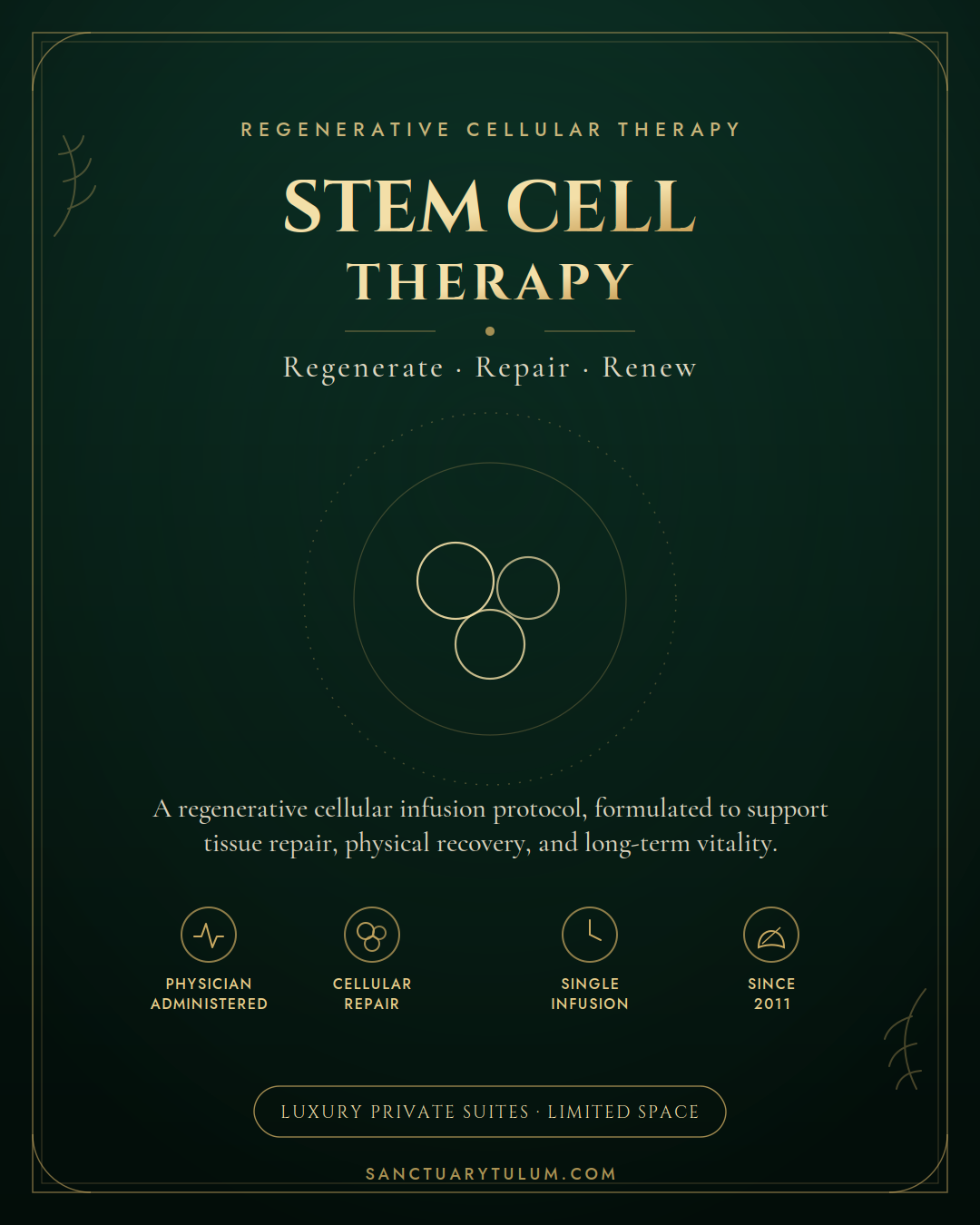
Stem cell therapy for TBI at Sanctuary Tulum is part of a comprehensive neurological recovery protocol for guests with post-concussion syndrome, post-acute-withdrawal neurological picture, or documented structural brain injury. It is not a first-line treatment offered in isolation. Guests interested specifically in stem cell work should complete a full neurological workup and receive an honest assessment of expected effect size and evidence quality. Explore our stem cell therapy program and stem cell therapy in addiction recovery.
References
- Zhang Y, et al. "Mesenchymal stem cell-derived exosomes for the treatment of traumatic brain injury." Neural Regen Res. 2020;15(11):1997-2003.
- Zanier ER, et al. "Bone marrow mesenchymal stromal cells drive protective M2 microglia polarization after brain trauma." Neurotherapeutics. 2014;11(3):679-695.
To see how this fits into a complete program, explore our stem cell therapy.