In brief: What is bufo 5-MeO-DMT, in plain terms? It is the common name for a naturally occurring psychoactive compound, 5-MeO-DMT, found in the venom of the Sonoran Desert toad and in a number of plant species. This article explains what 5-MeO-DMT is, what is bufo DMT as distinct from synthetic 5-MeO-DMT, what the scientific literature actually shows, and whether 5-MeO-DMT is safe. It makes no claims about outcomes and is not a substitute for individualized medical advice.
What Is 5-MeO-DMT?
What is 5-MeO-DMT, chemically and functionally? 5-MeO-DMT, or 5-methoxy-N,N-dimethyltryptamine, is a naturally occurring tryptamine — a class of molecules that also includes psilocybin, DMT, and the neurotransmitter serotonin itself. Structurally, 5-MeO-DMT is closely related to N,N-DMT (the compound in ayahuasca) but differs in its receptor activity, its duration of effect, and the intensity of the subjective experience it produces. Where classic psychedelics such as psilocybin and LSD act primarily on the 5-HT2A serotonin receptor, 5-MeO-DMT engages a broader set of serotonin receptors, including 5-HT1A, which recent structural pharmacology research has identified as a key site associated with antidepressant-like effects in animal studies, separate from the receptor activity associated with hallucinogenic effects.
5-MeO-DMT occurs naturally in a range of plant species used historically in South American entheogenic preparations, and it is also present in the venom secreted by the Sonoran Desert toad, scientifically known as Incilius alvarius (formerly Bufo alvarius). It was first chemically identified in this toad's secretions in 1967, though the compound itself, and its use in plant form, predates that identification by a considerable margin. In a clinical or facilitated setting, 5-MeO-DMT is most commonly vaporized and inhaled, producing an acute experience that researchers and clinical guides typically describe as lasting between five and twenty minutes, with residual effects tapering over roughly one to two hours.

What Is Bufo DMT? Understanding the Toad Secretion Specifically
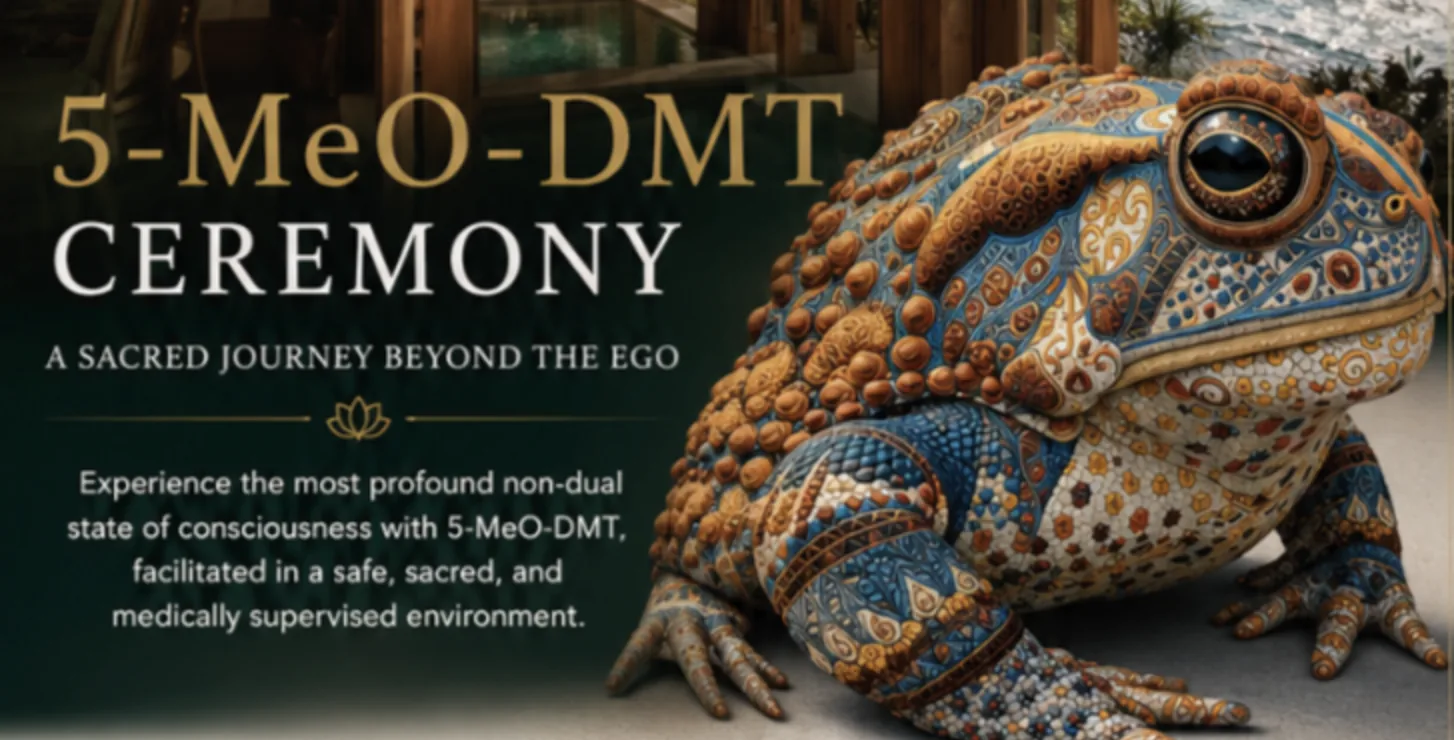
What is bufo DMT, as distinct from the compound 5-MeO-DMT on its own? "Bufo" refers specifically to the dried venom secretion of the Sonoran Desert toad, which is often smoked or vaporized as a way of administering 5-MeO-DMT. This is where a great deal of public confusion sets in, and it is worth being precise about it: bufo secretion is not pure 5-MeO-DMT. It is a natural mixture in which 5-MeO-DMT is the primary psychoactive constituent, alongside other compounds — including bufotenine, other indolealkylamines, and separately, non-psychoactive cardiac glycosides (bufadienolides) that the toad also produces as part of its natural defense mechanism.
That distinction matters medically. The cardiac glycosides in toad secretion are the same broad class of compound responsible for documented poisonings, and in some reported cases deaths, in humans and animals that have ingested toad toxin directly — for example, through the well-documented but dangerous practice of licking or ingesting toad skin, which delivers a very different and far more dangerous chemical exposure than inhaling the vaporized, psychoactive fraction of the secretion. Vaporizing bufo secretion for its 5-MeO-DMT content is a different route of administration than ingestion, but the natural variability of a biological secretion — as opposed to a laboratory-synthesized, precisely dosed compound — remains a documented safety consideration that researchers and harm-reduction organizations consistently raise.
What Is Bufo 5-MeO-DMT, and How Does It Differ From Synthetic 5-MeO-DMT?
So, what is bufo 5-MeO-DMT specifically, when people use that exact phrase? It typically refers to 5-MeO-DMT as delivered via toad secretion (bufo), as opposed to 5-MeO-DMT that has been synthesized in a laboratory to a known, pure concentration. Both deliver the same core psychoactive molecule, but the pharmacological experience and the safety profile are not identical in practice, for the reasons described above: bufo secretion carries a variable concentration of 5-MeO-DMT alongside other bioactive compounds, while synthetic 5-MeO-DMT allows for a precisely measured, single-molecule dose.
Historically, indigenous use of 5-MeO-DMT-containing plant preparations in parts of South America predates any modern awareness of the toad secretion by a considerable margin, and researchers have documented that the popularized narrative of "toad medicine" as an ancient indigenous practice specific to the Sonoran Desert region itself is not supported by the historical or anthropological record — the modern practice of smoking bufo secretion appears to have emerged and spread primarily from the 1980s onward, gaining significant momentum only after 2014, when mainstream media coverage introduced the practice to a much wider audience. That distinction matters for anyone trying to evaluate claims made about the practice's history or its cultural legitimacy.
This distinction is also at the center of a growing conservation concern. Because the Sonoran Desert toad is the only known animal source of 5-MeO-DMT, rising demand for bufo ceremonies has placed real pressure on wild toad populations — the species is already listed as threatened in New Mexico and believed extirpated from California, and researchers, herpetologists and conservation organizations have publicly urged the field to shift toward laboratory-synthesized 5-MeO-DMT, both for the toad's sake and because synthetic material eliminates the dosing variability described above. Some practitioners maintain that the natural secretion produces a qualitatively different experience than the synthesized molecule; that claim remains a subject of debate rather than established scientific consensus, since the primary active molecule in both is chemically identical.
How 5-MeO-DMT Compares to Other Psychedelics
Understanding what is bufo 5-MeO-DMT is easier in context. It is frequently discussed alongside psilocybin (the compound in psilocybin mushrooms), classic N,N-DMT (the primary active compound in ayahuasca), and ibogaine — but the differences between these compounds are substantial, and conflating them is a common source of public confusion.
Duration. A 5-MeO-DMT experience, whether from bufo secretion or synthetic material, is typically reported to last fifteen to thirty minutes at its most intense, with total effects resolving within one to two hours. A psilocybin experience commonly runs four to six hours. Ibogaine sessions, used in a different clinical context entirely, can extend well beyond twenty-four hours.
Receptor activity. Classic psychedelics — psilocybin, LSD, N,N-DMT — act primarily through the 5-HT2A serotonin receptor, which is the receptor most closely associated with visual and cognitive hallucinogenic effects. 5-MeO-DMT engages a broader receptor profile, including significant activity at 5-HT1A, which recent structural pharmacology research links to antidepressant-like effects independent of the hallucinogenic dimension. Ibogaine acts through an entirely different set of receptor systems, including NMDA receptor antagonism, and is not considered a classic psychedelic in the same pharmacological sense at all.
Subjective intensity. Across published surveys and clinical reports, 5-MeO-DMT is consistently described as producing one of the most intense subjective experiences among naturally occurring psychoactive compounds relative to its short duration — a combination that has direct implications for how it needs to be administered and supervised.
None of these comparisons are offered to rank the compounds by safety or effectiveness. They exist to make clear that "psychedelic" is not a single category with uniform risks or uniform evidence behind it, and that answering what is 5-MeO-DMT accurately requires treating it as its own distinct compound rather than a stand-in for the broader category.
Is 5-MeO-DMT Safe? What the Evidence Actually Shows
Is 5-MeO-DMT safe? This is the question that matters most, and the honest answer is neither a blanket "yes" nor a blanket "no" — it depends heavily on the substance's purity, the person's health history, the setting, and the medications or substances present in their system at the time. The consistent pattern across the published safety literature and clinical guidance on this compound is as follows.
Cardiovascular effects. 5-MeO-DMT reliably produces a transient but real rise in heart rate and blood pressure during onset. This is a physiological effect of the compound itself, not only of contaminants in bufo secretion, and it is the primary reason clinical and research protocols require cardiac screening — resting EKG and blood pressure evaluation at minimum — before any session, and why individuals with uncontrolled hypertension, arrhythmia history, or other significant cardiac conditions are advised against participation without thorough medical evaluation.
Drug interactions, particularly MAOIs. The most serious documented risk associated with 5-MeO-DMT is its interaction with monoamine oxidase inhibitors (MAOIs) — a class that includes certain prescription antidepressants and the harmala alkaloids found in ayahuasca and Syrian rue preparations. Combining 5-MeO-DMT with an MAOI can produce serotonin toxicity, a potentially life-threatening condition, and case reports in the literature link this specific combination to documented fatalities. Selective serotonin reuptake inhibitors (SSRIs), SNRIs, and other serotonergic medications carry a related, though generally less severe, interaction risk and require careful review before any session.
Psychological and behavioral risk. Because the onset of a 5-MeO-DMT experience can be extremely rapid and its subjective intensity high, acute panic, disorientation, agitation, or brief loss of physical coordination are recognized possibilities during a session, which is why physical safety measures — a supervised setting, someone present at all times, and a calm environment — are treated as standard rather than optional in any responsible protocol.
Setting is the dominant variable. Across the published case reports and harm-reduction literature, adverse events — including the rare but real fatalities that have occurred — are concentrated overwhelmingly in unsupervised, unscreened settings: no cardiac evaluation, no medication review, unknown dosing, and no one present with the training or equipment to respond to a medical emergency. The recurring conclusion across this literature is that the compound itself is generally physiologically manageable in a screened, healthy adult under supervision, but that supervision, screening, and setting are what actually determine real-world risk — not the substance in isolation.
None of this amounts to a safety guarantee, and no one should read it that way. It is a summary of a real, if still developing, body of evidence, and the conclusion that evidence supports is narrow and specific: medical screening and professional supervision are not procedural formalities around 5-MeO-DMT. They are the variable that most directly separates a manageable physiological event from a genuinely dangerous one.
What Responsible Medical Screening for 5-MeO-DMT Actually Involves
Given everything above, it is worth describing concretely what a genuine medical screening process for 5-MeO-DMT looks like, since the term "medically supervised" is used loosely across this industry and does not always mean the same thing from one provider to another.
Cardiac evaluation. Given the documented rise in heart rate and blood pressure associated with 5-MeO-DMT, a resting EKG and blood pressure assessment are the baseline standard cited across the clinical and harm-reduction literature. Some protocols also include a stress test or echocardiogram for individuals with any cardiac history.
Full medication review. Because the MAOI interaction described above is the most serious documented risk associated with this compound, a complete and honest medication history — including antidepressants, and any recent use of ayahuasca or harmala-containing preparations — is essential, and any necessary tapering must be done under medical supervision, never abruptly and never self-directed.
Mental health history. Individuals with a personal or family history of psychosis or certain bipolar spectrum conditions are generally advised against participation, given the intensity of the experience and its potential to interact with underlying vulnerability.
A controlled, supervised setting. Given how rapidly the experience can onset and how disorienting its peak can be, a trained person present throughout the session, in a physically safe environment, is treated as a non-negotiable baseline in every credible clinical protocol.
This is not a claim that screening eliminates risk. It is a description of what separates the pattern of adverse outcomes documented in unsupervised settings from the pattern reported in supervised ones — a distinction the published literature draws consistently and one that anyone evaluating this subject should take seriously. Our own approach is described on the safest psychedelic facility page and within the Pouyan Method™.
What the Scientific Literature Says About Therapeutic Potential
The scientific interest in 5-MeO-DMT has accelerated substantially in recent years, moving from case reports and observational surveys toward structural pharmacology and controlled clinical trials. A 2025 structural pharmacology study using cryo-electron microscopy identified 5-MeO-DMT's activity at the 5-HT1A serotonin receptor as a likely mechanism behind antidepressant and anxiolytic effects observed in animal behavioral models, distinguishing that receptor pathway from the 5-HT2A activity more closely associated with the hallucinogenic dimension of the experience. That distinction — separating the therapeutic mechanism from the hallucinogenic one at a molecular level — is one of the more significant developments in the recent literature, because it opens the door to compounds designed around the former without necessarily requiring the latter.
This research direction is not purely academic. It is the same scientific territory that led directly to one of the largest transactions in the history of psychedelic medicine.
The Receptor Science, Explained Further
To understand why researchers are so interested in 5-MeO-DMT specifically, it helps to understand a little more about how tryptamine psychedelics work at the receptor level. Serotonin, the body's own neurotransmitter, interacts with more than a dozen distinct receptor subtypes distributed throughout the brain and body. Classic psychedelics like psilocybin and LSD produce their characteristic hallucinogenic effects largely through the 5-HT2A receptor, which is densely expressed in the cortex and is closely tied to visual processing and altered states of perception.
5-MeO-DMT is unusual among tryptamines in that it activates a broader set of these receptors with meaningfully different binding characteristics, including substantial activity at 5-HT1A — a receptor subtype already targeted by some existing pharmaceutical antidepressants, though through different chemical mechanisms. The 2025 cryo-electron microscopy study referenced earlier used structural imaging techniques to map exactly how 5-MeO-DMT and related bufotenine derivatives physically engage the 5-HT1A binding pocket, and found that this specific interaction pattern correlated with antidepressant and anxiolytic behavioral effects in mouse models, largely independent of the 5-HT2A activity responsible for hallucinogenic effects. This is the scientific basis for the broader pharmaceutical industry interest in developing what researchers call "non-hallucinogenic" or "reduced-hallucinogenic" derivatives — molecules designed to retain a therapeutic mechanism while minimizing the subjective intensity of the experience itself.
It is worth being direct about the limits of this research. These are largely animal behavioral studies and early-stage structural pharmacology, not yet definitive proof of a therapeutic mechanism in humans, and BPL-003 — the compound at the center of the Lilly acquisition — is still undergoing Phase 3 clinical trials rather than serving any approved medical purpose. The scientific direction is genuinely significant. It is not yet a settled conclusion, and no responsible account of this subject should present it as one.
The Ethics of Bufo Harvesting
Beyond the conservation statistics cited earlier, there is a more fundamental ethical question that researchers and herpetologists have raised directly: whether there is any way to collect toad secretion humanely at all. The Sonoran Desert toad produces its defensive secretion specifically as a stress response to being handled, threatened, or provoked — it is not a substance the animal produces incidentally or releases without distress. Multiple researchers who study the species have stated publicly that there is no method of "milking" the toad for its secretion that does not involve inducing that stress response, which has led conservation groups to campaign directly against the practice rather than merely arguing for more sustainable harvesting methods.
This ethical dimension exists entirely separately from the pharmacological and legal questions addressed elsewhere in this article, and it is one more reason the shift toward laboratory-synthesized 5-MeO-DMT — which removes both the conservation pressure and the animal welfare question — has gained support even among some practitioners who otherwise value traditional or naturalistic approaches to this compound.
Eli Lilly's $3.8 Billion Bet on a 5-MeO-DMT Compound
In July 2026, Eli Lilly — one of the largest pharmaceutical companies in the world — announced a definitive agreement to acquire AtaiBeckley, a clinical-stage biopharmaceutical company, in a deal valued at up to $3.8 billion. The structure of the deal was approximately $2.8 billion in upfront cash, paid at $6.75 per share, plus contingent value rights of up to $2.50 per share tied to future development and regulatory milestones, bringing the total potential value to roughly $3.8 billion1.
The asset at the center of that acquisition was BPL-003 (mebufotenin benzoate), a synthetic, intranasally administered form of 5-MeO-DMT that had already received Breakthrough Therapy Designation from the FDA2 and was, at the time of the announcement, entering Phase 3 clinical trials for treatment-resistant depression. In earlier Phase 2a data, a single 10-milligram dose was reported to produce symptom improvement that persisted at twelve weeks in a majority of the study's participants — a finding that reflects that specific clinical trial's reported results and should not be generalized beyond it3. The acquisition also included VLS-01, a DMT-based buccal film in earlier-stage development.
Why does a company that built its reputation on Prozac spend billions of dollars on a compound derived from the same molecule found in toad venom? Analysts covering the deal described it as the clearest strategic validation to date of psychedelic-derived compounds as a legitimate pharmaceutical category — arriving after a wave of federal actions in 2026 that accelerated regulatory review pathways for psychedelic therapies, and following a broader eighteen-month buying spree across the pharmaceutical industry into this exact class of molecule. The commercial logic cited by industry analysts centers on speed and durability of effect: unlike conventional antidepressants, which require daily dosing and weeks to take effect, a 5-MeO-DMT-based treatment administered in a clinical setting is being studied for its potential to produce effects that persist for months from a small number of doses4.
It is important to state plainly what this deal does and does not mean. It does not mean 5-MeO-DMT or bufo 5-MeO-DMT is now an approved medical treatment for anything — BPL-003 remains an investigational drug in clinical trials, and both it and natural 5-MeO-DMT remain Schedule I controlled substances in the United States, a classification that by definition asserts no currently accepted medical use. What the deal does represent is a significant, well-documented signal of institutional and financial confidence in this specific area of pharmacology — a signal worth understanding accurately rather than either dismissing or overstating. Our fuller account of the transaction is in Eli Lilly's AtaiBeckley acquisition.
Legal Status and the Conservation Question
In the United States, 5-MeO-DMT is classified as a Schedule I controlled substance under the Controlled Substances Act, which restricts its use outside of licensed research settings and imposes federal criminal penalties on unauthorized possession or distribution, regardless of whether it is synthesized or derived from bufo secretion5. In Mexico, where facilitated ceremonial use is more established, its legal status differs, though anyone considering any form of psychedelic experience is responsible for understanding the specific legal framework of the jurisdiction they are in.
Separately from the legal question sits a genuine conservation concern. Because the Sonoran Desert toad is, as far as researchers currently know, the only animal species that produces 5-MeO-DMT, rising demand for bufo ceremonies over the past decade has placed measurable pressure on wild populations. The species is already listed as threatened in New Mexico, is believed to be extirpated from California, and conservation biologists have published research and public appeals specifically asking the psychedelic community to shift toward laboratory-synthesized 5-MeO-DMT rather than wild-harvested toad secretion, on the basis that there is no way to collect the defensive secretion from a toad without inducing the stress response that triggers it.
A Closing Note
What is 5-MeO-DMT, what is bufo DMT, and what is bufo 5-MeO-DMT are questions worth asking carefully, because the honest answers sit in genuinely complex territory: a molecule with a real and growing body of scientific interest behind it, a natural source under real conservation pressure, a documented set of medical risks that are manageable under the right conditions and genuinely dangerous under the wrong ones, and a federal legal status that has not caught up to the scale of pharmaceutical investment now moving into the same chemistry. Anyone approaching this subject deserves a clear-eyed account of all of that — not a sales pitch, and not a scare story. If you are weighing a medically supervised 5-MeO-DMT ceremony, you can also speak with our clinical team.
Editorial note: This article is provided for educational purposes and does not constitute medical advice, nor does it promote or facilitate the use of any controlled substance. It makes no claims about treatment outcomes for any individual. 5-MeO-DMT remains a Schedule I controlled substance in the United States. Anyone with questions about their own health should consult a licensed physician.
References
- Eli Lilly and Company. "Lilly to Acquire AtaiBeckley to Advance Investigational Psychedelic Medicine for Treatment-Resistant Depression." Press release, July 2026.
- US Food & Drug Administration. Breakthrough Therapy Designation program overview.
- A phase 2 open-label study of intranasal BPL-003 (5-methoxy-N,N-dimethyltryptamine) in patients with treatment-resistant depression. PubMed, 2025.
- Seynaeve M, Dunbar F, Hindocha C, et al. Intranasal 5-MeO-DMT Concomitant with SSRI for Treatment-Resistant Depression: A Proof-of-Concept Trial. CNS Drugs, 2026.
- US Drug Enforcement Administration. Controlled Substances Act — Schedule I listings for DMT and 5-MeO-DMT.
- Davis AK, et al. The epidemiology of 5-MeO-DMT use: benefits, consequences, patterns of use, subjective effects, and reasons for consumption. J Psychopharmacol. 2018;32(7):779-792.
- Uthaug MV, et al. A single inhalation of vapor from dried toad secretion containing 5-MeO-DMT in a naturalistic setting. Psychopharmacology (Berl). 2019;236(9):2653-2666.
- Li S, et al. "Structural Pharmacology of Bufotenine Derivatives in Activating the 5-HT1A Receptor for Therapeutic Potential in Depression and Anxiety." Research (Wash D C). 2025;8:0987. DOI: 10.34133/research.0987 (PMC12722636).
- Bufo alvarius (Sonoran Desert toad) and 5-MeO-DMT — pharmacology and safety summary: MAO-A metabolism, CYP2D6-mediated bufotenine formation, and documented serotonin-toxicity risk with MAOI co-administration, drawing on peer-reviewed sources indexed in PMC.
- US Drug Enforcement Administration (2010). "Schedules of Controlled Substances: Placement of 5-Methoxy-N,N-Dimethyltryptamine Into Schedule I of the Controlled Substances Act." Federal Register, 75 FR 79296, effective January 19, 2011.
- Glatter R. "Big Pharma And Psychedelic Medicine — Eli Lilly's $3.8 Billion Bet." Forbes, July 20, 2026.
- Kutz J. "Don't Lick This Toad, National Park Service Says." Smithsonian Magazine — citing Tucson Herpetological Society and University of Arizona Desert Laboratory research on Sonoran Desert toad conservation status and Schedule I legal status.