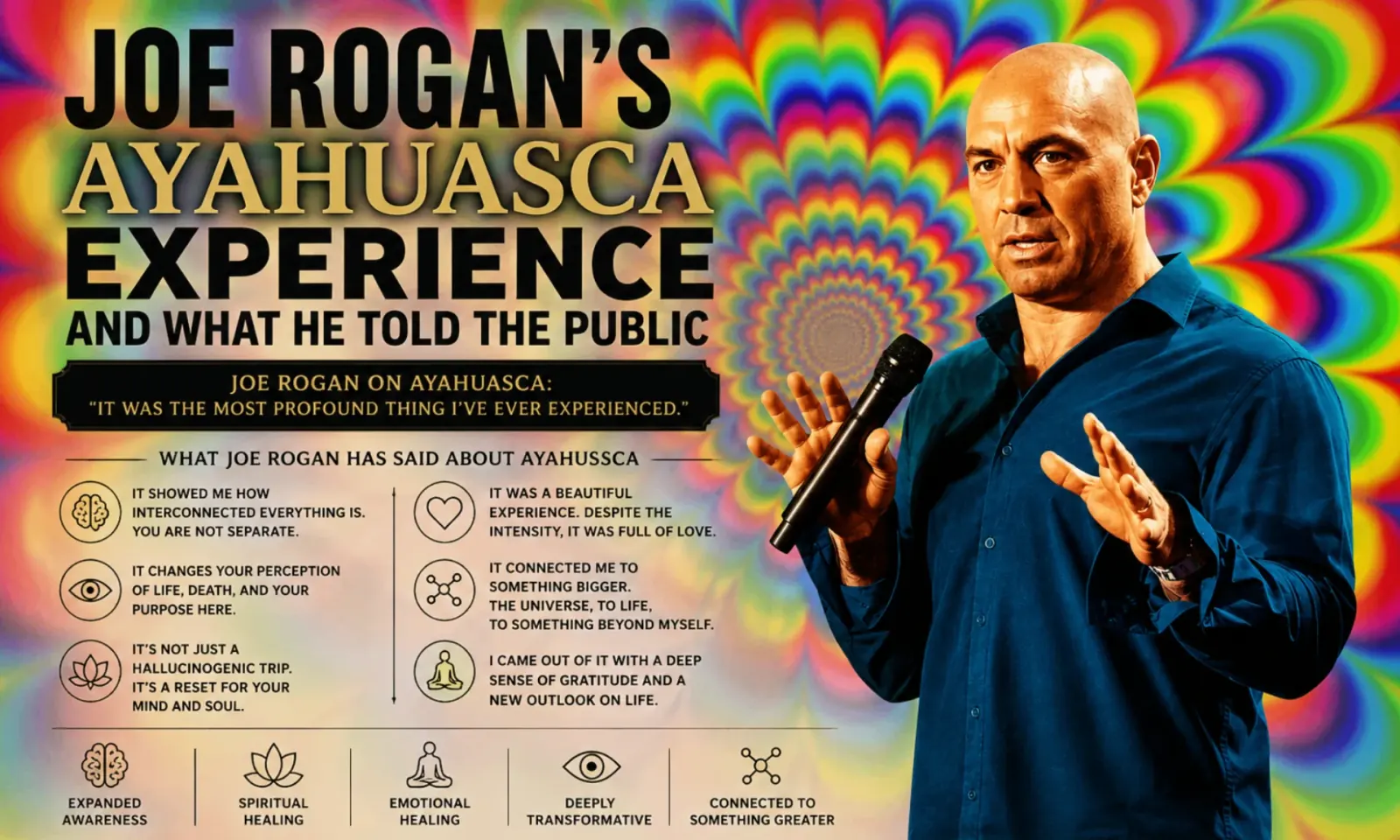
Joe Rogan's Ayahuasca Experience: What He's Said Publicly
Few public figures have driven mainstream curiosity about ayahuasca the way Joe Rogan has. Across hundreds of hours of long-form podcasting, he has talked about his own experience with the brew and hosted researchers, authors, athletes, and clinicians who study or have used psychedelic medicine. This article is a factual overview of what he has said publicly, which guests have shaped those conversations, and what curious listeners should understand before considering a retreat.
Rogan has discussed drinking ayahuasca on multiple episodes of The Joe Rogan Experience over the years. He typically describes it as difficult, humbling, and psychologically confronting — not a recreational drug, and not something to approach casually. He has repeatedly emphasized the importance of experienced facilitators, a proper setting, and taking the experience seriously as a mental and physical event, not entertainment.
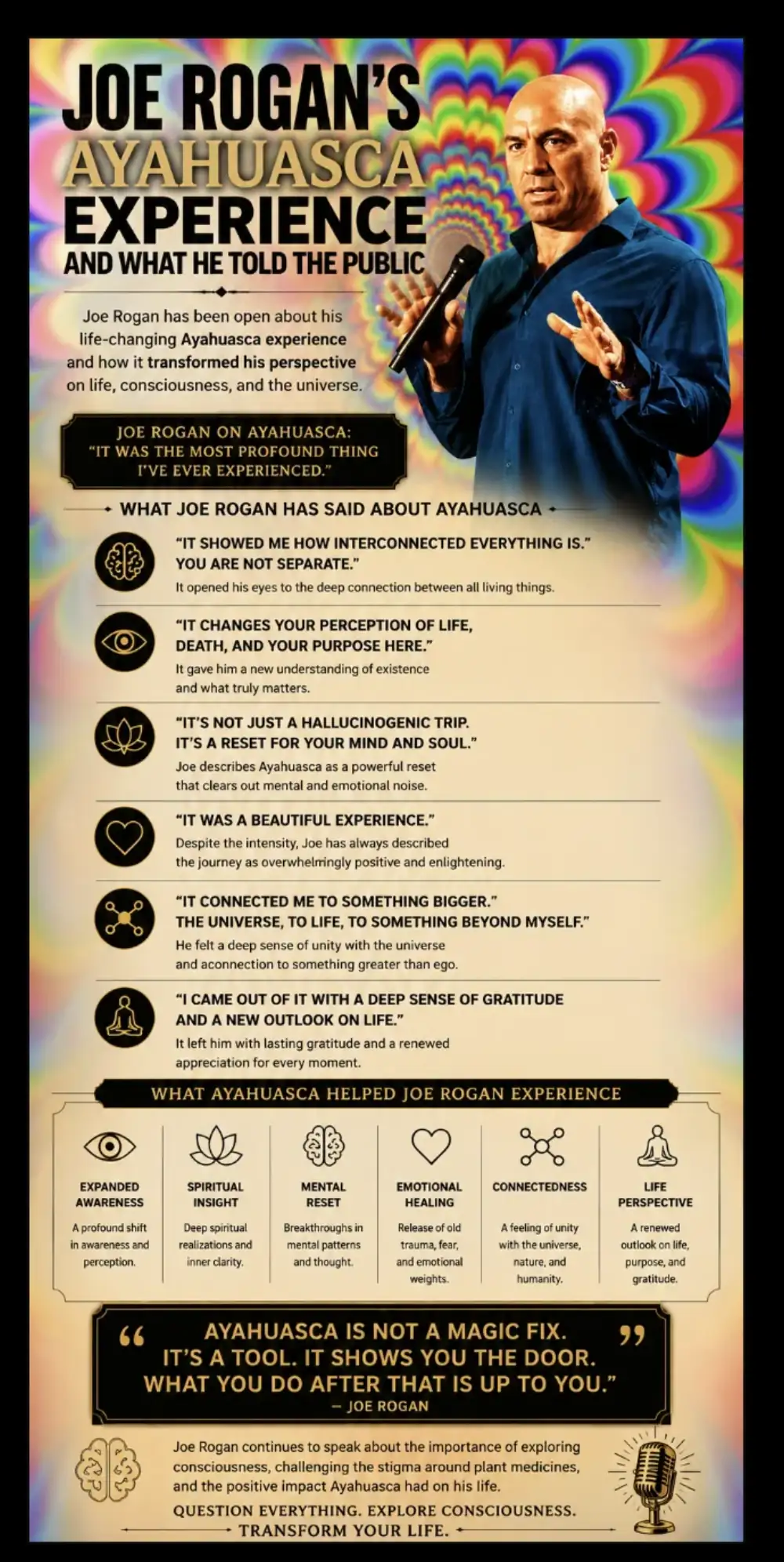
Has Joe Rogan Done Ayahuasca?
Yes — he has said so publicly, on his own podcast, more than once. What he has not done is turn those statements into a marketing endorsement. He has never publicly recommended a specific retreat, named a preferred provider, or accepted any promotional relationship with an ayahuasca facility. His comments are personal reflections shared on his show, not recommendations of any provider — and specifically, Joe Rogan has no affiliation with Sanctuary Tulum. Any site that suggests otherwise is misrepresenting him.
Two things about his on-record framing are worth naming directly. First, he consistently treats ayahuasca as belonging in a different category from recreational substances — closer to a serious ritual or clinical event. Second, he has repeatedly noted that the experience itself is only part of what matters; what a person does with the material afterward is where the real work happens. That framing lines up with what integrative-medicine researchers have been saying for years, and it's part of why the topic keeps drawing serious guests to the show.
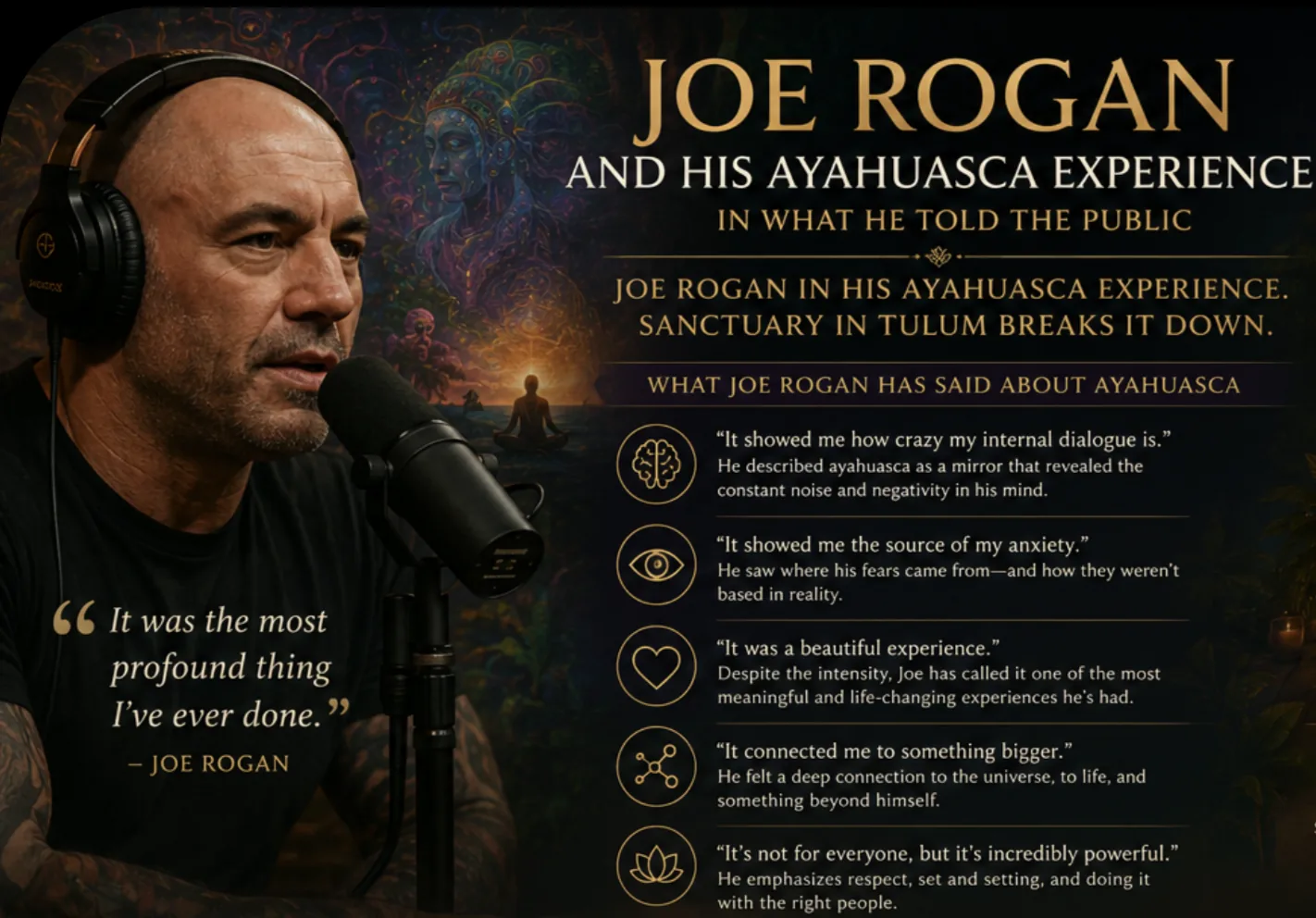
Joe Rogan Ayahuasca Ceremony Guests: The Voices Behind the Conversation
Part of why ayahuasca keeps recurring on the podcast is Rogan's roster of guests. Researchers, integrative doctors, journalists who've written on psychedelics, and authors who work in the psychedelic-therapy space have all sat down with him and discussed ayahuasca and other plant medicines. Three guests in particular have shaped the on-air conversation around the brew.
Graham Hancock — Ancient Cultures and Amazonian Traditions
Graham Hancock, the British author known for his work on ancient civilizations, has appeared on the podcast multiple times. His conversations with Rogan on ayahuasca focus on the brew's cultural and anthropological context: the long history of its ceremonial use among Amazonian societies, the role of plant preparations in indigenous cosmologies, and how Western frameworks have historically failed to take these traditions seriously. Hancock discusses ayahuasca as a subject of study and cultural inheritance rather than a therapeutic product, and Rogan uses those conversations to give the topic historical depth beyond a single trip report.
Hearing Hancock lay out centuries of ceremonial context is a useful counterweight to the modern "psychedelic tourism" framing. It positions ayahuasca as something with a lineage — used inside a system of preparation, ritual, and integration — rather than a standalone experience to be consumed. That distinction shapes how a responsible retreat is structured, even in a modern medical setting.
Dorian Yates — Life After Elite Sport
Six-time Mr. Olympia Dorian Yates has spoken on the podcast about his post-competitive exploration of psychedelics, including ayahuasca, as part of a broader personal shift after leaving elite bodybuilding. Rogan's conversation with Yates is notable because it comes from an athlete's frame of reference — someone with a lifetime of physical discipline discussing what psychedelic experiences did or didn't offer in terms of self-understanding after his competitive career ended. Yates describes his experiences in personal, reflective terms; the podcast does not present these as medical outcomes, and neither does Yates.
Yates has discussed the same themes in mainstream fitness press — including a Muscle & Fitness feature on his spiritual healing work — where he frames ayahuasca as part of a broader shift away from the pure-performance mindset of his competitive years.
Dennis McKenna — Ethnopharmacology and the DMT/Ayahuasca Pharmacology
Ethnopharmacologist Dennis McKenna — a longtime researcher of Amazonian plant medicines and co-author of foundational work on the pharmacokinetics of ayahuasca — has appeared on the podcast to discuss the chemistry and pharmacology of the brew. McKenna's contribution is technical: he explains how ayahuasca combines DMT-containing plants with harmala-alkaloid MAOI plants so that the DMT becomes orally active, and he walks through the pharmacological reasons this specific combination behaves the way it does in the body.
Those conversations are where listeners typically encounter the specifics behind the safety warnings — the MAOI mechanism, the drug-interaction profile, and why the brew's effects are so different from smoked or injected DMT. It's also the point at which any casual listener should hear the underlying message clearly: this is a serious pharmacological event, not a lifestyle product. McKenna has expanded on these same points at length in his long-form Tim Ferriss interview covering 500+ ayahuasca sessions and in his peer-reviewed essay "Ayahuasca and Human Destiny" in the Journal of Psychoactive Drugs.
The Recurring Themes Across These Conversations
Across Hancock, Yates, McKenna, and the broader roster of researchers and clinicians Rogan has hosted, a few themes come up over and over:
- Ayahuasca has a long ceremonial and cultural lineage that predates any modern "wellness" framing.
- The brew's MAOI content creates real drug-interaction risks that casual settings routinely underestimate.
- Set, setting, and preparation matter enormously — the same substance in two different contexts is effectively two different experiences.
- Medical screening — especially around cardiac issues and interactions with SSRIs, MAOIs, and other medications — is not optional.
- The "healing" people describe usually happens in the weeks after ceremony, during integration, not during the ceremony itself.
That last point is worth sitting with. It moves ayahuasca out of the "extreme experience" category and into a category closer to a serious clinical intervention that deserves the same rigor as any other. For context on the compound itself, our what is ayahuasca primer covers the pharmacology, tradition, and current research base.
Why the Topic Keeps Coming Back on the Show
Ayahuasca sits at an interesting intersection: it's ancient, it's being studied clinically, and it's still legally and culturally complicated in the United States. That mix — traditional use, emerging research, and legal ambiguity — makes it exactly the kind of topic Rogan's long-form format handles well. Listeners hear from people with lived experience alongside people with clinical or scientific backgrounds, without either voice being edited down to a soundbite.
The legal picture is worth naming directly. DMT — the primary psychoactive compound in ayahuasca — is a Schedule I substance under U.S. federal law. The Supreme Court's 2006 decision in Gonzales v. O Centro Espírita Beneficente União do Vegetal created a narrow religious-use exemption for one specific church, not a general legal opening for retreats. Which is why almost every licensed ayahuasca facility operates outside the United States.
Considering an Ayahuasca Retreat After Hearing Rogan's Podcast
If podcast conversations have you curious, treat that curiosity as a starting point, not a decision. A responsible next step is understanding what a genuinely safe retreat looks like — before comparing prices, locations, or aesthetics. The criteria below aren't marketing filters; they're the specific things that separate a facility with real medical infrastructure from one that has borrowed the language.
What Actually Separates Safe Facilities from Unsafe Ones
How Sanctuary Tulum Approaches Ayahuasca Safety
Sanctuary Tulum is a licensed healing center that has operated since 2011 with a documented, fatality-free safety record across our sacred plant medicine ceremonies. Every guest goes through medical screening before a ceremony, licensed physicians are present, and the ceremony itself is one part of a larger integrated program — not a standalone experience. Our medically supervised ayahuasca ceremony page walks through exactly how we structure the process, from arrival through integration.
The Pharmacology Behind the Warnings — In Plain Language
Podcast conversations move fast, and the pharmacology often gets compressed into a single sentence. It's worth slowing that part down, because it's where most of the real risk lives. Ayahuasca is a decoction of two plants: Banisteriopsis caapi, which contains harmala alkaloids (harmine, harmaline, tetrahydroharmine), and Psychotria viridis or a similar DMT-containing plant. Taken alone, DMT is destroyed almost instantly in the gut by an enzyme called monoamine oxidase. The harmala alkaloids inhibit that enzyme, which is why the DMT survives long enough to reach the brain when drunk as a brew.
The clinical consequence is the part that matters. A functioning MAO enzyme is also what breaks down serotonin, tyramine, and several other compounds — including the active ingredients in many antidepressants and cold medications. When that enzyme is inhibited by ayahuasca, those compounds can accumulate to dangerous levels. That's the mechanism behind serotonin syndrome (over-accumulation of serotonin, which can be fatal) and hypertensive crisis (over-accumulation of tyramine or sympathomimetic drugs, which spikes blood pressure). This is not theoretical; it's the same class of interactions that led to the decline of first-generation MAOI antidepressants in psychiatric practice. A retreat that doesn't take a full medication history is not simply cutting corners — it's operating without knowing whether the guest in front of it can safely metabolize what they are about to drink.
Integration: The Part Rogan's Guests Keep Circling Back To
A pattern shows up repeatedly on the podcast: a guest describes a memorable ceremony, and then, almost as an afterthought, mentions that the meaningful shifts happened in the weeks or months afterward. That afterthought is actually the thesis. Ceremony without integration is closer to an intense weekend than a therapeutic process — the material surfaces, and then the person goes back to the same environment, same relationships, and same nervous-system defaults. What changes long-term is what happens in the return.
Structured integration means specific things: scheduled follow-up sessions with someone qualified to hold that conversation, concrete behavioral practices (sleep, nutrition, movement, contact with nature), and a plan for what to do when difficult material continues to surface in the days after ceremony. It also means honest limits — a good integration program acknowledges when what a guest is dealing with belongs in front of a licensed therapist or physician back home, and helps arrange that continuity of care.
Reading Podcast Anecdotes Without Overreading Them
There's a specific listening error worth naming. When a compelling guest describes a personal outcome — a shift in mood, a break in an old pattern, relief from a persistent symptom — it is tempting to hear that as a claim about what ayahuasca does. It isn't. It's a description of what happened for one person, in one setting, with one protocol, and one integration path. That person's screening, dose, facilitator, prior therapy, medications, and life context are all invisible in a two-hour audio conversation. Generalizing from that to a personal decision skips every variable that actually determines whether the same experience would be safe or useful for you.
This is why researchers who appear on the show consistently frame their comments around study populations, not individuals — and why they qualify their statements with references to screening criteria, controlled settings, and the presence of medical support. Those qualifications aren't legal boilerplate; they're the actual conditions under which the reported outcomes hold. Strip them out and the anecdote loses its evidentiary weight.
What the Podcast Doesn't Cover
Long-form audio is good for exploring ideas; it's a poor tool for screening individuals. What a podcast conversation can't do is review your current medications, look at your cardiac history, evaluate your psychiatric background, or tell you honestly whether ayahuasca is contraindicated for you specifically. Those questions require a licensed physician, a formal intake, and a facility willing to say "no" when the answer should be no.
That gap is worth naming: hearing a compelling episode is not the same thing as being medically cleared, and the responsible next step after curiosity is a screening conversation, not a booking. Rogan's willingness to talk openly has done a lot to reduce stigma around psychedelic medicine — but hearing a great conversation on a podcast is not the same as being ready for a ceremony. The gap between "interesting" and "safe for you specifically" is exactly what medical screening and experienced facilitation exist to close.
The Cultural Shift Rogan's Show Has Actually Produced
Beyond any individual episode, the cumulative effect of ten-plus years of these conversations is a genuine cultural change in how ayahuasca is discussed in the English-speaking world. In 2013, saying the word "ayahuasca" in most professional settings produced blank stares or nervous laughter. A decade later, physicians, veterans' advocates, addiction clinicians, and academic researchers openly discuss it as a subject worth studying. Podcast conversations didn't cause that shift on their own — clinical research at Johns Hopkins, NYU, Imperial College London, and elsewhere has done the heavier scientific lifting — but they contributed to the public vocabulary that made the research legible outside academia.
That shift has an uncomfortable side effect worth naming. As interest widened, so did the number of unlicensed operators willing to serve ayahuasca to anyone who could pay. The gap between what a curious listener imagines a retreat looks like and what an underground ceremony actually delivers has grown, not shrunk. Some of the safety incidents reported in the press in recent years — cardiac events, psychiatric decompensation, and in a few cases deaths — occurred at unlicensed settings that had adopted the aesthetic of a serious ceremony without any of the medical infrastructure. Reading those cases carefully reveals a common pattern: no real intake, no physician on site, no plan for adverse events, and no follow-up. Every one of those failure modes is exactly what the screening framework earlier in this article is designed to prevent.
A Note on Anonymized Guest Anecdotes
Rogan's format allows guests to speak in personal, unscripted terms. That's part of its value and part of its limit. Personal accounts convey the felt sense of an experience — the fear, the surrender, the strangeness, the aftermath — in a way that clinical writing cannot. They do not, however, convey base rates. For every guest who describes a life-changing ceremony on air, there are people who had difficult, ambivalent, or destabilizing experiences who never end up on a podcast. That selection bias is not a problem with the show; it's a feature of any medium built on volunteer storytellers. It becomes a problem only when a listener treats a curated set of positive anecdotes as an epidemiological signal. It isn't one. It's a set of stories told by people willing to tell them.
References
- Gonzales v. O Centro Espírita Beneficente União do Vegetal, 546 U.S. 418 (2006).
- dos Santos RG, Bouso JC, Hallak JEC. Ayahuasca, dimethyltryptamine, and psychosis: a systematic review of human studies. Ther Adv Psychopharmacol. 2017;7(4):141-157.
- Callaway JC, et al. Pharmacokinetics of Hoasca alkaloids in healthy humans. J Ethnopharmacol. 1999;65(3):243-256.
- Gillman PK. Advances pertaining to the pharmacology and interactions of irreversible nonselective monoamine oxidase inhibitors. J Clin Psychopharmacol. 2011;31(1):66-74.
- Palhano-Fontes F, et al. The therapeutic potentials of ayahuasca in the treatment of depression. Front Psychol. 2016.
US-based readers evaluating travel logistics can also review our detailed guide on best ayahuasca retreats for a NYC-focused breakdown of the legal landscape and licensed Mexico alternative.