
The short answer: a short retreat is typically a few days of guided wellness practices, while a residential wellness program is a longer, medically supervised stay built around an individualized clinical plan. The ten factors below explain how the two differ in depth, oversight, and what they can realistically address. This article is educational and is not medical advice; decisions about which format is appropriate should be made with a licensed physician.
Both formats have a place, and neither is automatically better than the other in the abstract. A short retreat can be a valuable reset, an introduction to practices like meditation or breathwork, or a supplement to therapy someone already has at home. A residential wellness program is a different kind of commitment altogether, built for situations where more time, more medical involvement, and more continuity are genuinely needed. Confusing the two — expecting a few days of programming to accomplish what typically takes weeks, or choosing a lengthy residential stay when a shorter format would have been sufficient — is where people tend to end up disappointed or under-served. The ten factors below are meant to help you match the format to what you are actually trying to address.

1–3: Duration, Depth, and Purpose
1. Length of stay. Short retreats typically run a few days to a week; residential programs are usually structured in multi-week blocks. That additional time allows for assessment, active clinical work, and a period of stabilization before discharge.
2. Depth of clinical work. A short retreat is often built around group workshops and introductory practices. A residential program is generally designed to address deeper, more complex concerns such as trauma, medication dependence, or long-standing mental health conditions, with time built in for that work to actually unfold.
Trauma-related work in particular tends to require sessions spread out over enough time for a person to process material between sessions without becoming overwhelmed, along with enough clinical support nearby if something difficult surfaces. Compressing that kind of work into a few days can leave a person exposed without the follow-up support that made it feel safe to begin with.
3. Defined purpose versus general wellness. Ask whether the program is built to address a specific concern or is marketed broadly as relaxation. Review our issues we treat page for an example of the specificity a residential clinical program should offer.
A useful question for any retreat or program is simply: what problem is this designed to solve, and for whom? A program that answers with a specific population and a specific concern is generally more credible than one that describes itself as beneficial for "anyone looking to reset," since that kind of language rarely reflects a defined clinical approach.
4–6: Medical Oversight and Individualization
4. Medical oversight. A residential program should include a named physician responsible for clinical decisions and a regular examination schedule. Short retreats are often led by wellness facilitators without the same level of medical involvement, which may be appropriate for lighter programming but matters greatly for anyone with medical or psychiatric needs.
Ask directly whether a physician is involved at all, and if so, in what capacity — reviewing intake forms from a distance is very different from examining clients in person on a defined schedule. If you are managing a diagnosed condition or taking prescribed medication, this distinction should weigh heavily in your decision between formats.
5. Individualized planning versus a fixed group itinerary. Residential programs typically begin with an intake assessment and build a plan around your history. Short retreats more often run a fixed group schedule that every participant follows regardless of individual needs.
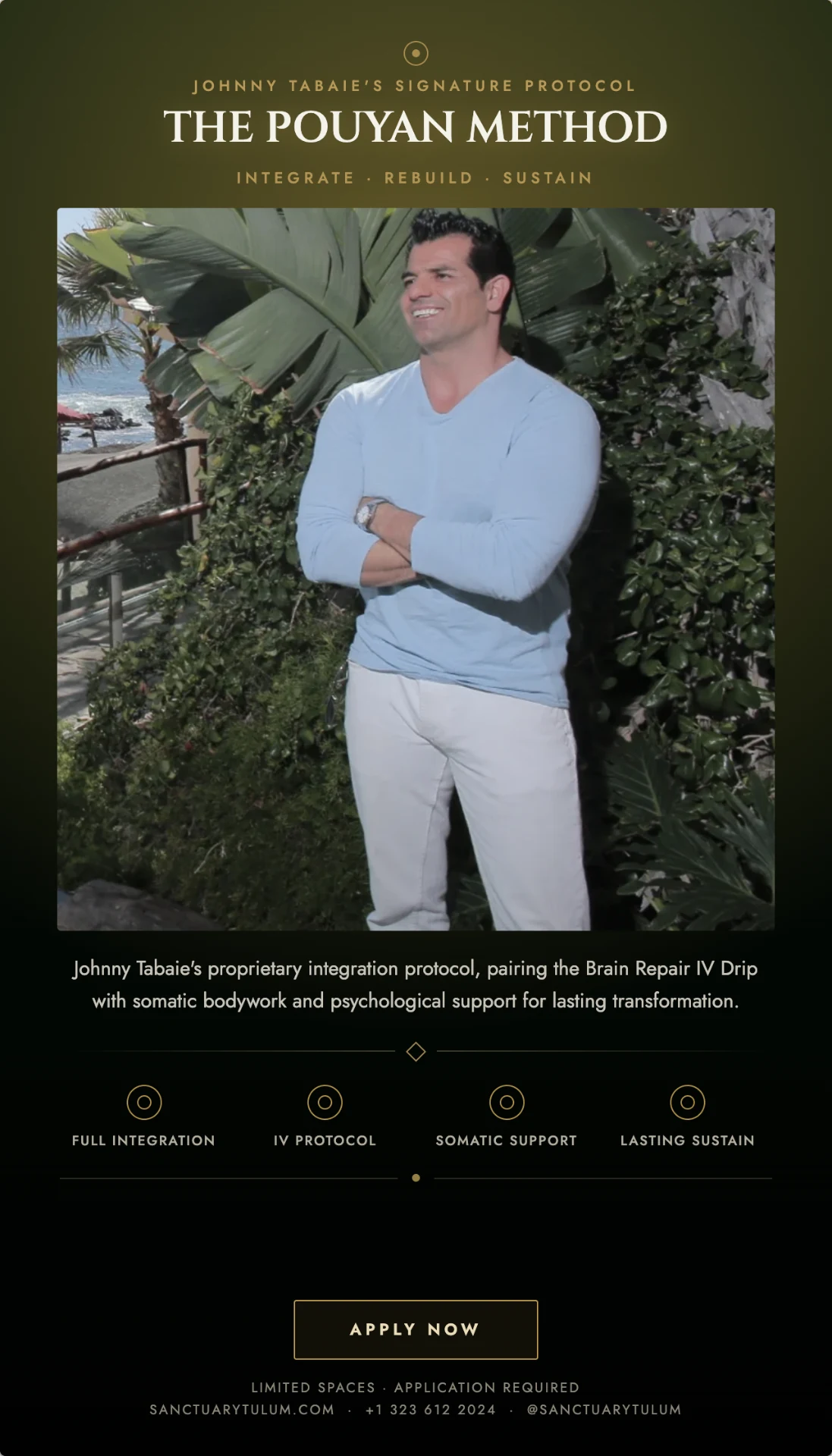
6. A defined clinical protocol. Ask whether the program follows a structured, staged approach across the stay. A proprietary framework such as the Pouyan Method™ is an example of a protocol designed to unfold in stages over a longer residential stay, which is difficult to replicate in a few days.
Ask how the protocol changes from week to week and what markers the clinical team uses to decide someone is ready to move to the next stage, or ready for discharge. A program that can describe this progression in concrete terms is generally further along in its clinical thinking than one that describes its approach only in general wellness language.

7–8: Medication Management and Continuity
7. Medication management, when relevant. Residential settings with medical staff on-site are better positioned to monitor medication changes over time. Any reduction of a prescribed medication, including benzodiazepines, should always be gradual and physician-supervised, and this kind of careful monitoring is generally not something a short retreat is equipped to provide.
8. Continuity across the stay. A residential program can track progress day to day and adjust the plan as needed. A short retreat, by design, ends before that kind of iteration is usually possible.
9–10: Aftercare and Cost Structure
9. Aftercare planning. A residential program should offer a structured aftercare plan, sometimes including one-on-one coaching after discharge. Short retreats may end with little more than a closing circle and no ongoing contact.
Ask specifically what aftercare includes: is it a scheduled check-in call, ongoing coaching sessions, or coordination with a therapist at home, and for how long after discharge does that support continue? The period immediately following any intensive experience, short or long, is often when new habits are most fragile, and a program that plans for that period is offering something a single retreat weekend typically cannot.
10. Cost structure and what it reflects. Compare pricing carefully against what is actually included, using the published programs and pricing as a reference point. A higher price for a residential program should correspond to more clinical time, not simply more nights at a resort.
It can also help to calculate an approximate cost per day of actual clinical contact, rather than looking only at the total price. Two programs charging similar totals can differ substantially in how many hours of individual physician or therapist time are actually included, and that comparison is often more revealing than the headline price alone.
A Short Checklist Before You Choose
- Match the length of stay to the depth of what you are addressing
- Ask whether medical oversight is present and how often you'll be seen
- Confirm whether your plan is individualized or a fixed group itinerary
- Ask if the program follows a defined, staged clinical protocol
- Clarify how medication needs would be monitored, if relevant
- Ask what aftercare is included once the stay ends
- Compare pricing against actual clinical inclusions, not amenities alone
Whichever format you are considering, it is worth having an honest conversation with yourself, and ideally with a physician or therapist you already trust, about what you are actually trying to accomplish and how much time that realistically takes. A short retreat marketed as a complete solution to a complex, long-standing concern is promising more than the format can typically deliver, while an extended residential stay may be more than is needed for someone simply looking to reset and recharge.
It is also worth asking a program directly which of the two formats it would recommend for your specific situation, rather than simply asking which one it offers. A program willing to say a short retreat would suit you better than its own longer residential option, or vice versa, is generally being more candid than one that recommends its own product regardless of fit.
If your needs are complex or involve medical supervision, a residential program is generally the more appropriate format. Read what to expect from luxury rehab or speak with our team through the contact page.
Educational content only. This article does not diagnose, treat, or replace care from a licensed physician, and nothing here is a promise of any particular outcome. Never start, stop, or change a prescribed medication without medical supervision.
For the full program overview, read about our private luxury rehab program.