Both plasmapheresis and EBOO ozone therapy are blood-level interventions — but they work in fundamentally different ways. Understanding the difference helps you and your physician choose the right protocol.
Side-by-Side
Mechanism
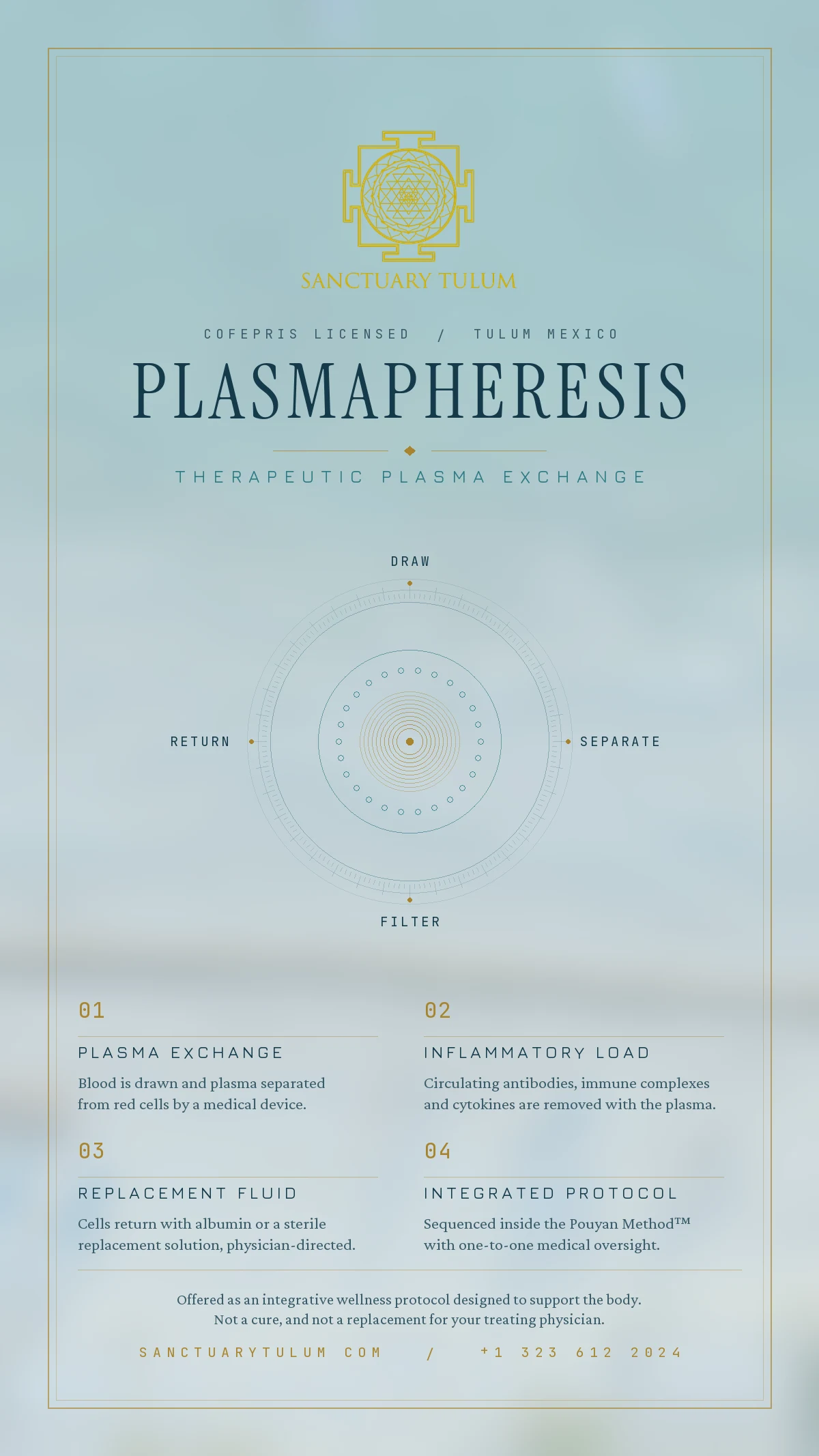
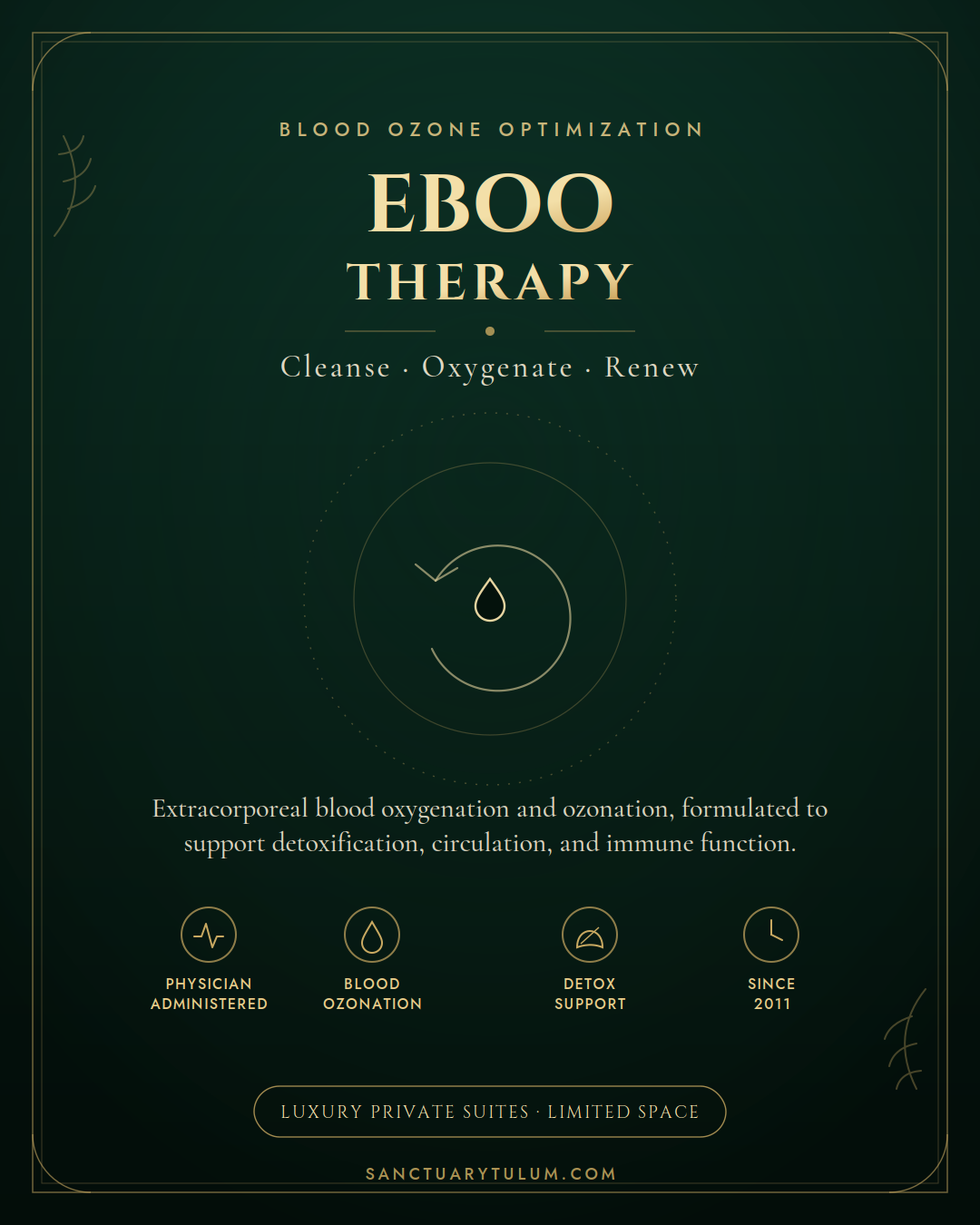
EBOO: oxidizes pathogens and filters lipid peroxides while leaving plasma intact. Plasmapheresis: removes the plasma entirely and replaces it with clean fluid.
What's Removed
EBOO targets pathogens, biofilms, and oxidized lipids. Plasmapheresis additionally removes autoantibodies, cytokines, immune complexes, and protein-bound toxins.
Best For
Neither therapy is FDA-approved for these uses. Both are investigational and adjunctive; a physician determines candidacy after reviewing labs, not a marketing claim on this page.
Used Together
At Sanctuary Tulum, EBOO often precedes plasmapheresis to reduce oxidative load before the deeper reset.
Clinical Screening Before Any Session
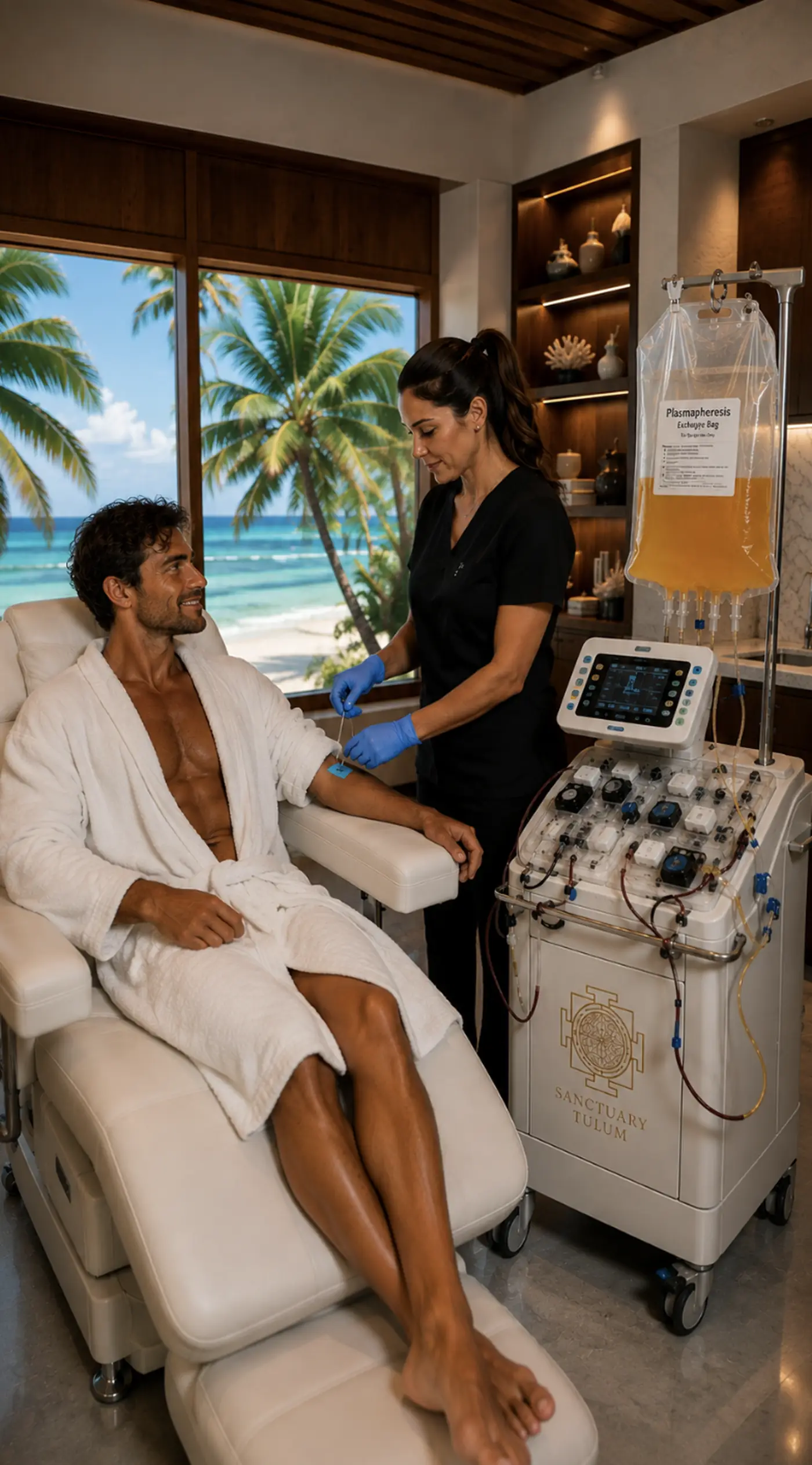
Every prospective guest at Sanctuary Tulum completes a confidential clinical intake and full medical screening before any plasmapheresis vs EBOO session is scheduled. The intake reviews cardiovascular status, kidney and liver function, current medications, coagulation history, and any recent infections. Guests currently prescribed anticoagulants, immunosuppressants, or SSRIs are reviewed on a case-by-case basis with their treating physician before a session is planned.1 The team never advises anyone to discontinue prescribed medication on their own.
Who Is Screened Out
Neither therapy is offered to everyone who asks. Guests with active bleeding disorders, uncontrolled anticoagulation, or unstable platelet counts are not scheduled for either protocol, and plasmapheresis carries an additional layer of exclusion because it involves a larger extracorporeal circuit and temporary removal of clotting factors along with plasma. G6PD deficiency is screened for specifically before EBOO, since ozone exposure can trigger hemolysis in G6PD-deficient red blood cells. Pregnancy, active systemic infection, decompensated cardiac or pulmonary disease, and severe unstable hypotension rule out both. These exclusions are decided in advance from labs and history, not discovered mid-session.
On-Site Medical Oversight
A physician is on site during every session, supported by registered nurses and IV therapy specialists. Vital signs — blood pressure, oxygen saturation, and cardiac rhythm where clinically indicated — are monitored continuously across the session, with emergency medications and airway equipment on hand.2 Credentialing detail lives on the Medical Review Board page, and a broader description of the safety approach is available on the safest psychedelic facility page. Guests are encouraged to review both before deciding whether the program fits them.
What a Session and a Course Feel Like
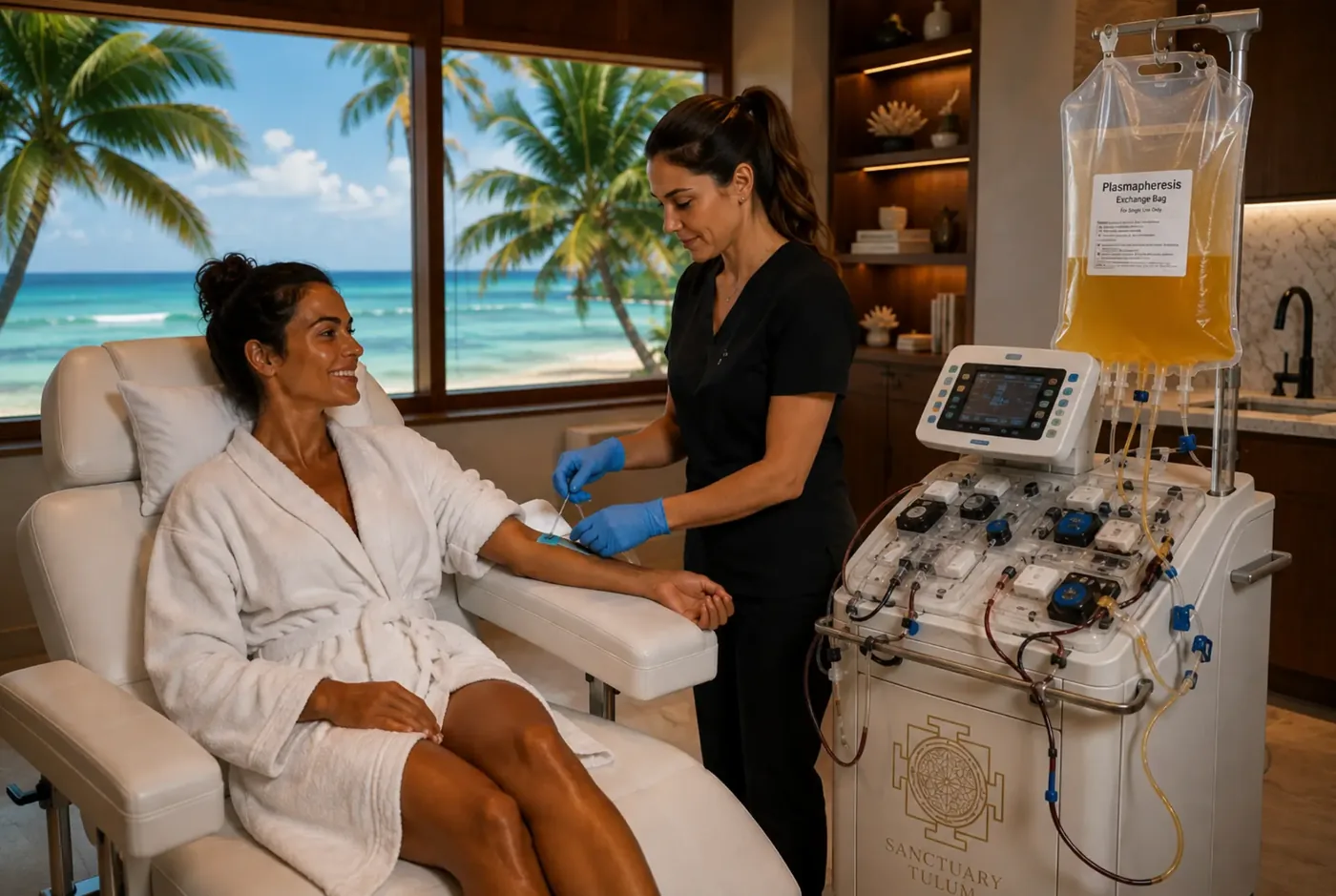
A plasmapheresis session runs longer than an EBOO session, typically one and a half to two hours, because plasma is withdrawn, separated, and replaced in stages rather than continuously filtered and returned. Most guests describe intermittent coolness or tingling as replacement fluid is introduced, which the nursing team monitors for and manages in real time; it is not typically painful, but it is more physically involving than an EBOO session, and guests are advised to rest for the remainder of the day afterward. EBOO, by contrast, more closely resembles a long blood draw — two IV lines, no sedation, and most guests read or rest through the 45- to 60-minute session with no notable downtime after.
A course of either therapy is planned, not improvised. The medical team sets an initial number of sessions based on labs and response, checks bloodwork between sessions, and adjusts the plan rather than running a fixed package regardless of how the guest responds. Guests should expect gradual, individually variable change rather than a single dramatic session — and should not expect either therapy to replace an existing relationship with a specialist managing a diagnosed autoimmune or neurologic condition.
How This Fits the Wider Program
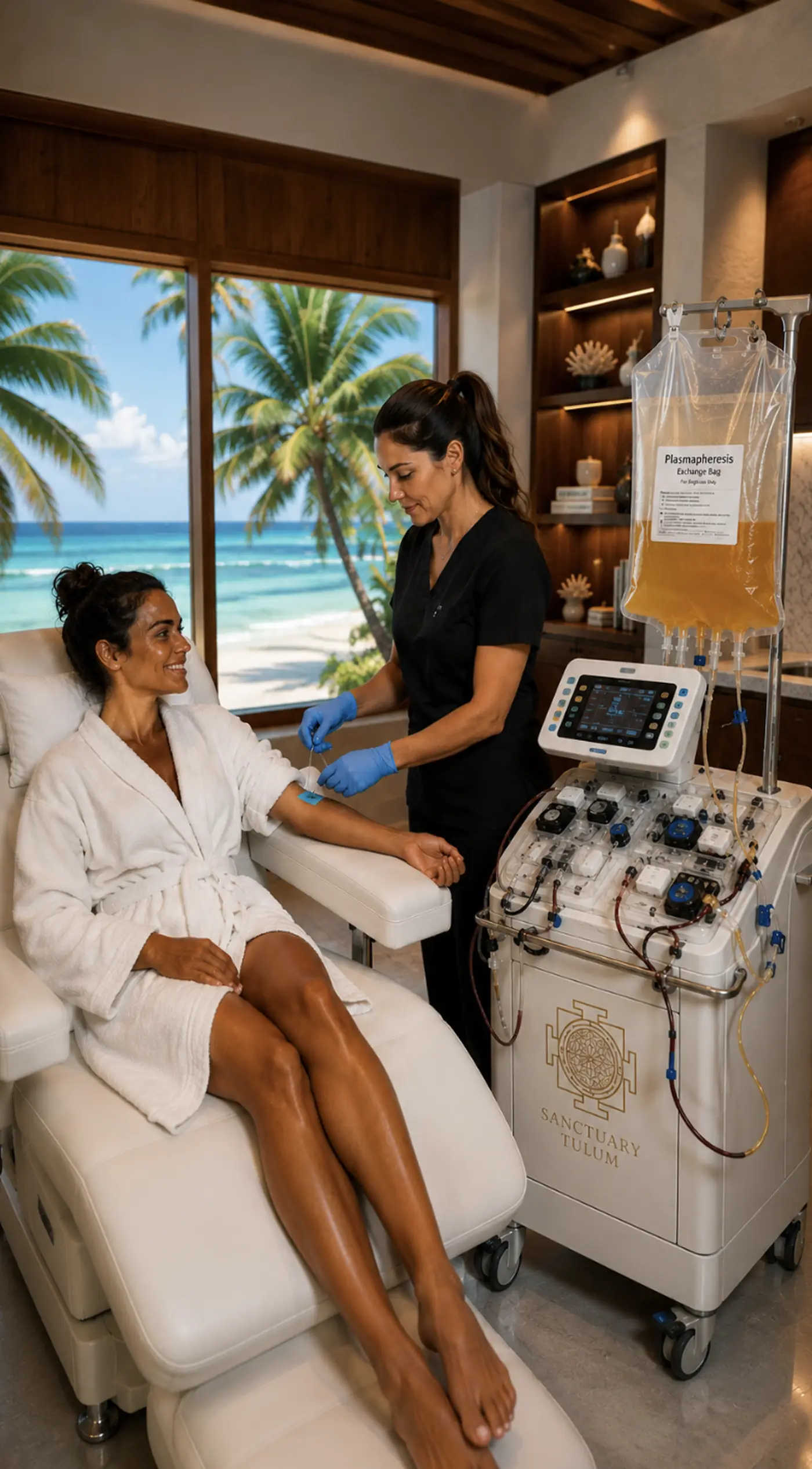
Therapeutic plasma exchange sits inside a broader biological and neurological protocol at Sanctuary Tulum rather than being offered as a standalone service. That means medical stabilization first, then a physician-scheduled combination of NAD+ IV therapy, HBOT, targeted nutrition, and — where clinically appropriate — medically supervised ibogaine treatment center, ayahuasca ceremony program, or psilocybin therapy. The full framework is described in the proprietary Pouyan Method™. The exact sequence is individual and set by the medical team after intake — one guest's plan rarely looks identical to another's.
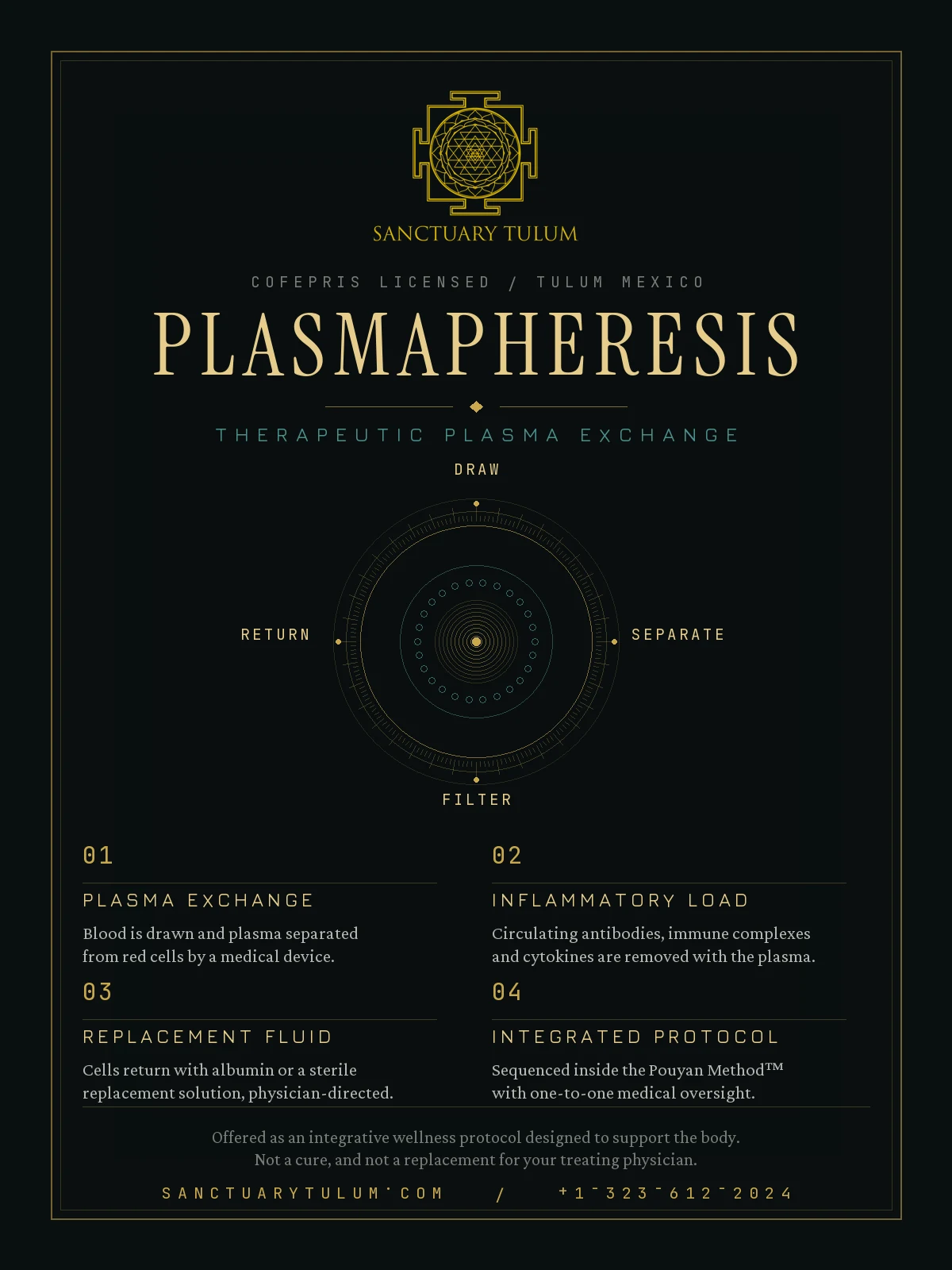
Honest Limits of the Evidence
Published research on plasmapheresis vs EBOO for the indications discussed here is still evolving. Therapeutic apheresis is well established for specific autoimmune and neurologic conditions in mainstream medicine,3 and ozone therapies have a longer clinical history in parts of Europe than in the United States. For broader wellness applications the evidence base is smaller and largely observational. Sanctuary Tulum does not present these protocols as cures or guaranteed treatments, and no diagnostic or prognostic claim is made outside a clinical evaluation.
Integration and Aftercare
A stay is only useful if it holds. Every program ends with a written integration and aftercare plan — continued check-ins with the integration team, referral to trauma-informed practitioners at home when appropriate, and lifestyle protocols covering nutrition, sleep, movement, and nervous-system regulation. Guests are encouraged to maintain their existing relationship with a treating physician and to return for booster sessions when a specific life transition benefits from it.
Related Plasmapheresis Articles
Choosing Between the Two, in Practice
Guests rarely arrive already knowing which protocol they need, and that is expected — the decision is made after labs, not before. A physician reviewing inflammatory markers, autoantibody panels, and a guest's symptom history will typically weigh how acute the picture is against how broad it is. A sharply autoimmune or neuro-inflammatory presentation, where a specific antibody or immune complex is doing measurable damage, tends to favor starting with plasmapheresis, because removing the offending material directly is the fastest way to interrupt the process. A more diffuse picture — chronic fatigue, brain fog, a broad toxic burden without one dominant driver — more often starts with EBOO, since it addresses oxidative load and pathogen burden without the intensity of a full plasma exchange.
Cost and recovery time also factor into sequencing. EBOO sessions are shorter and the body tolerates them with less downtime, which makes them a reasonable first step even when plasmapheresis is likely to follow — reducing oxidative stress beforehand can make the subsequent plasma exchange more comfortable. Plasmapheresis, by contrast, asks more of the body in a single session and is scheduled with more recovery time built around it.
Questions to Ask Before Committing to Either
Because both protocols are blood-level interventions, the questions worth asking are less about comfort and more about oversight. Ask who is physically present during the session and what their credentials are; ask what equipment is used and whether it is single-use and sterile; ask what monitoring occurs throughout, not just at intake; and ask what the plan is if a guest reacts poorly mid-session. A program that answers these plainly, with named clinicians and documented protocol, is a meaningfully different proposition from one that answers only in terms of ambience.
It is also worth asking what happens after the session. Neither plasmapheresis nor EBOO is a one-time fix in isolation; both work best as part of a broader plan that includes nutrition, sleep, and — where indicated — the neurological and plant-medicine protocols described above. A single session without that surrounding structure is unlikely to produce a durable result.
References
- Elvis AM, Ekta JS. "Ozone therapy: A clinical review." J Nat Sci Biol Med. 2011;2(1):66-70.
- COFEPRIS — Mexico's federal health regulator.
- Bin-Alamer O, et al. "Hyperbaric oxygen therapy as a neuromodulatory technique: a review of the recent evidence." Front Neurol. 2024;15:1450134.
- National Institute on Drug Abuse. Treatment approaches for drug addiction.
- National Institute on Alcohol Abuse and Alcoholism. Understanding alcohol use disorder.
Neither plasmapheresis for these wellness indications nor EBOO is FDA-approved. Both are investigational, adjunctive therapies offered after clinical screening, not guaranteed treatments.