Ayahuasca vs. psilocybin — two of the most powerful healing medicines in the world, and two of the most commonly compared. Both are psychedelic plant medicines with extraordinary therapeutic potential. Both are offered at Sanctuary Tulum. But they are meaningfully different in their chemistry, duration, intensity, preparation requirements, and optimal therapeutic applications. Understanding these differences is essential for making an informed choice — or for understanding why many guests at our ayahuasca retreat and psilocybin therapy programs receive both as part of an integrated protocol.
Ayahuasca vs. Psilocybin: A Direct Comparison
| Factor | Ayahuasca | Psilocybin |
|---|---|---|
| Duration | 4–6 hours | 3–5 hours |
| Intensity | Very intense | Moderate to intense |
| Purging | Common (part of healing) | Rare |
| Visionary Content | Very vivid, narrative | Introspective, geometric |
| Physical Experience | Demanding | Gentle |
| Preparation Required | Strict dieta (1–2 wks) | Lighter dietary prep |
| Best For | Deep trauma, addiction, depression | Introspection, anxiety, depression |
| Contraindications | SSRIs, MAOIs, cardiac issues | Fewer contraindications |
| Ceremonial Tradition | Amazonian shamanic | Mazatec/Mesoamerican |
| Origin | Amazon basin | Mexico/Central America |
The Chemistry: How They Differ
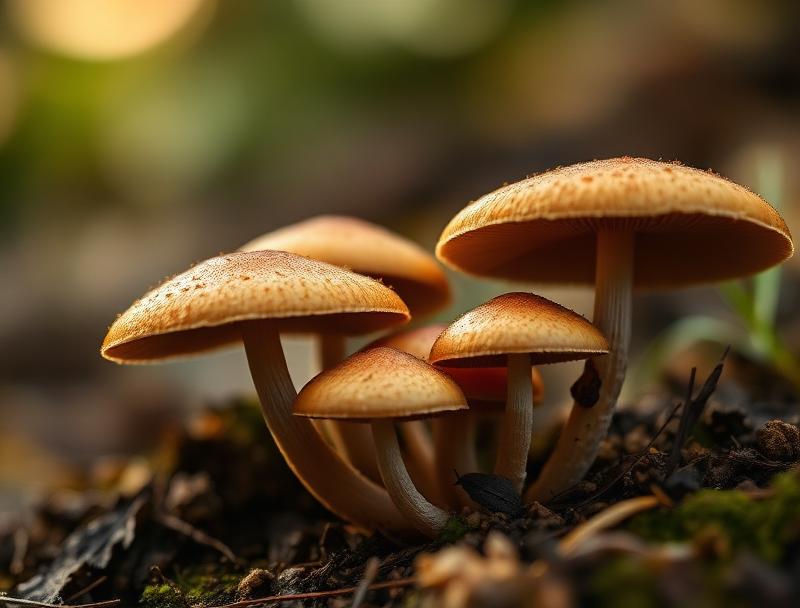
Both medicines work primarily through serotonin receptor agonism — specifically at 5-HT2A receptors — but through different compounds. Ayahuasca contains DMT (N,N-Dimethyltryptamine) combined with MAO-inhibiting alkaloids from the Banisteriopsis caapi vine that allow DMT to be orally active. Psilocybin, found in "magic mushrooms," is metabolized in the body to psilocin, which also acts on 5-HT2A receptors. Psilocin has a more selective receptor profile and a somewhat gentler physiological effect than DMT.
When to Choose Ayahuasca
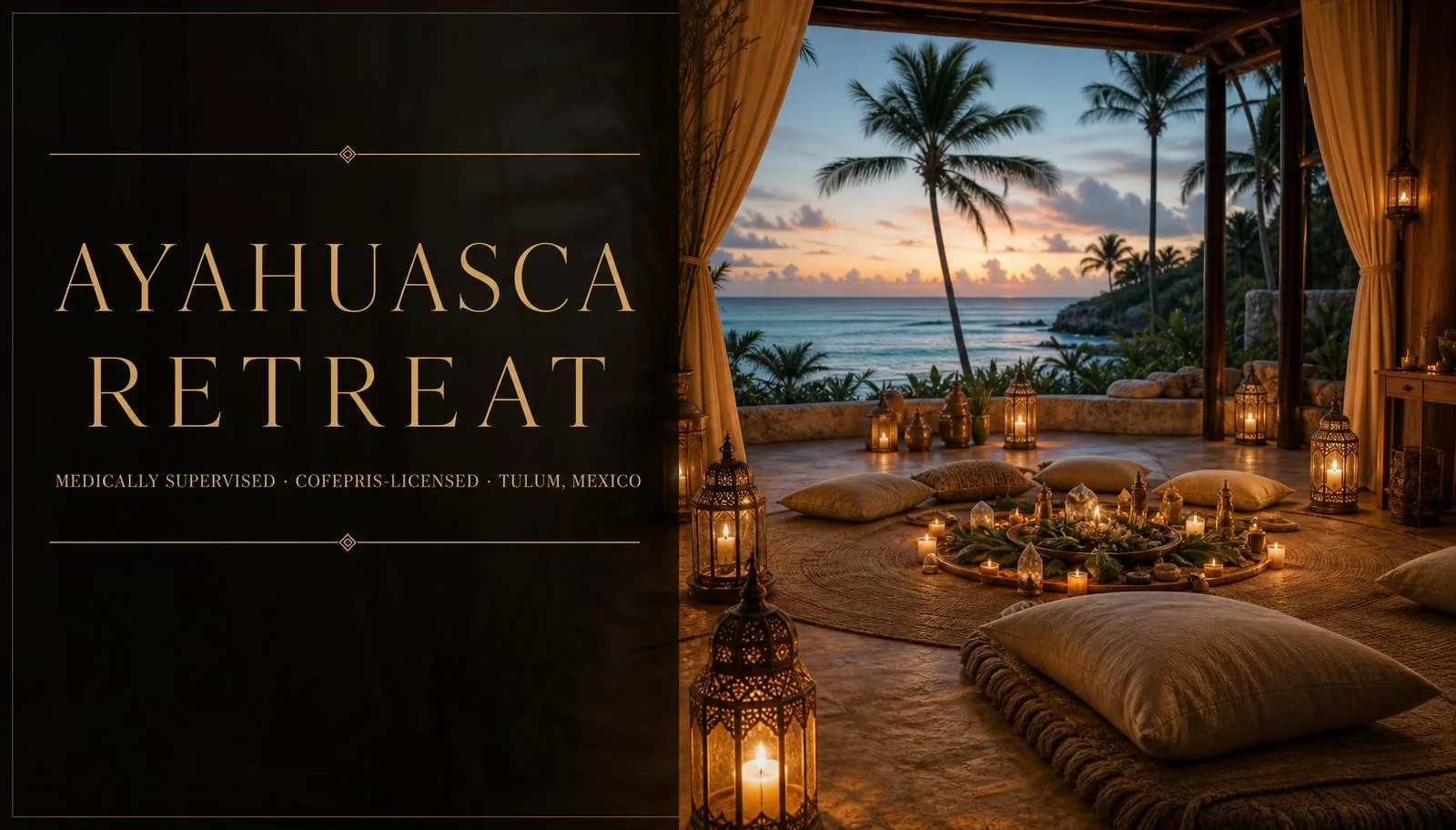
Ayahuasca is typically the better choice for:
- • Deep, complex trauma and severe PTSD requiring intensive emotional processing
- • Addiction treatment — particularly alongside ibogaine therapy program
- • Treatment-resistant depression that has not responded to other interventions
- • Those ready for a more intense, cathartic healing experience
- • Spiritual development involving deep surrender and self-dissolution
When to Choose Psilocybin
Psilocybin is typically the better choice for:
- • Anxiety, OCD, and existential distress
- • Introspective personal development and self-exploration
- • Individuals new to plant medicine seeking a gentler introduction
- • Those unable to take the MAOI medications that contraindicate ayahuasca
- • Depression with strong introspective and cognitive components
Why Many Guests Receive Both
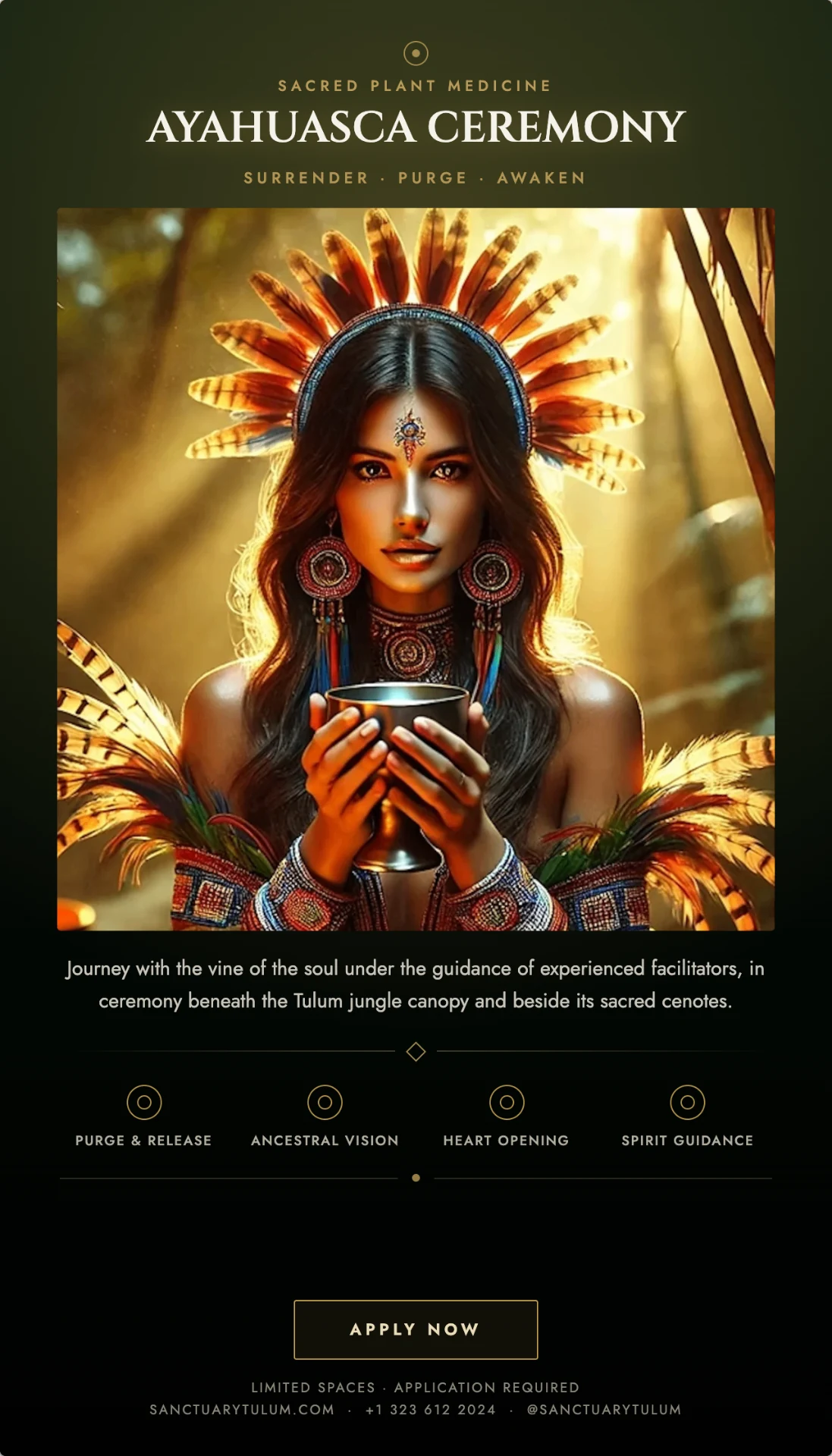
At Sanctuary Tulum, many guests receive both medically supervised ayahuasca ceremonies and psilocybin therapy as part of an integrated healing protocol. These medicines are powerfully complementary: ayahuasca accesses and releases deep emotional and trauma material, while psilocybin provides more introspective, consolidating experiences that help integrate what ayahuasca has opened. Used together within a structured therapeutic program, the combination is profoundly synergistic.
Contact our team to discuss which medicines are right for your specific healing goals, or explore our complete ayahuasca retreat and psilocybin therapy programs.
Pharmacology and Session Arc
Ayahuasca combines DMT (a 5-HT2A/1A/2C agonist) with beta-carboline MAOIs that also modulate sigma-1 and TAAR1 receptors. Psilocybin is metabolized to psilocin, a 5-HT2A/1A agonist without MAOI activity.1 Ayahuasca ceremonies typically run four to six hours with pronounced GI involvement; psilocybin sessions run four to six hours with less consistent GI effects.
Evidence Base: Where Each Sits Today
Psilocybin has the deeper regulatory footprint — FDA Breakthrough Therapy designation for treatment-resistant depression, published Phase 2 data in depression and end-of-life anxiety.2 Ayahuasca has smaller but consistent trials for treatment-resistant depression, plus a systematic review of anti-addictive and antidepressant effects.3 Neither is FDA-approved for general use.
Choosing Between Them Clinically
The clinical fit depends on presentation, medication history, and cardiac status rather than personal preference. Ayahuasca's MAOI content makes serotonergic medication interactions more complex to plan around; psilocybin has a shorter contraindication list. Sanctuary Tulum's medical team makes the call after intake, and many Platinum-tier guests receive both across a longer stay. Related reading: ayahuasca ceremony guide.
Set, Setting, and Integration
Whichever medicine is chosen, the two variables that most reliably shape the therapeutic value of the session are set (the guest's psychological preparation and intention) and setting (the physical, interpersonal, and clinical environment in which the session takes place). This is not a soft point — the literature on psychedelic-assisted therapy consistently identifies preparation and integration hours as core to outcome, not adjunctive.
Sanctuary Tulum builds preparation, medical clearance, and structured integration into every ceremony arc. See our preparation guide and Pouyan Method™ overview for the framework.
Pharmacology in Plain Language
Ayahuasca is a brewed combination of DMT (from Psychotria viridis) and MAO-inhibiting harmala alkaloids (from Banisteriopsis caapi). The MAOIs are what let orally-taken DMT reach the brain; they are also the reason the dietary and medication rules exist. A typical experience runs 4 to 6 hours with a strong somatic and purgative component.
Psilocybin, from Psilocybe cubensis and related species, is orally active on its own and metabolizes to psilocin. Experiences typically run 4 to 6 hours as well but with a different somatic profile — less purging, less MAOI risk, generally less physically demanding. Neither medicine is "better." They are different tools with different indications, different risks, and different demands on the guest.
Which One a Clinical Team Might Choose
In practice, ayahuasca tends to be selected when a guest presents with entrenched trauma, long-standing depression that has not responded to SSRIs, or a pattern of dissociation and needs the somatic intensity to break through defensive structures. Psilocybin is often selected when a guest needs a less physically demanding entry point, has a cardiac profile that argues against MAOI load, or where the treatment goal is around end-of-life anxiety, cognitive rigidity, or addiction restructuring — the indications where most published research sits.
The choice is made with a physician after intake, not chosen from a menu. Related: psilocybin therapy and medically supervised ayahuasca ceremonies.
References
- Nichols DE. "Psychedelics." Pharmacol Rev. 2016;68(2):264-355.
- Griffiths RR, et al. "Psilocybin produces substantial and sustained decreases in depression and anxiety in patients with life-threatening cancer: A randomized double-blind trial." J Psychopharmacol. 2016;30(12):1181-1197.
- dos Santos RG, et al. "Antidepressive, anxiolytic, and antiaddictive effects of ayahuasca, psilocybin and lysergic acid diethylamide (LSD): a systematic review of clinical trials published in the last 25 years." Ther Adv Psychopharmacol. 2016;6(3):193-213.
US-based readers evaluating travel logistics can also review our detailed guide on best ayahuasca retreats for a NYC-focused breakdown of the legal landscape and licensed Mexico alternative.
Ready to take the next step? Learn about our psychedelic retreat program.