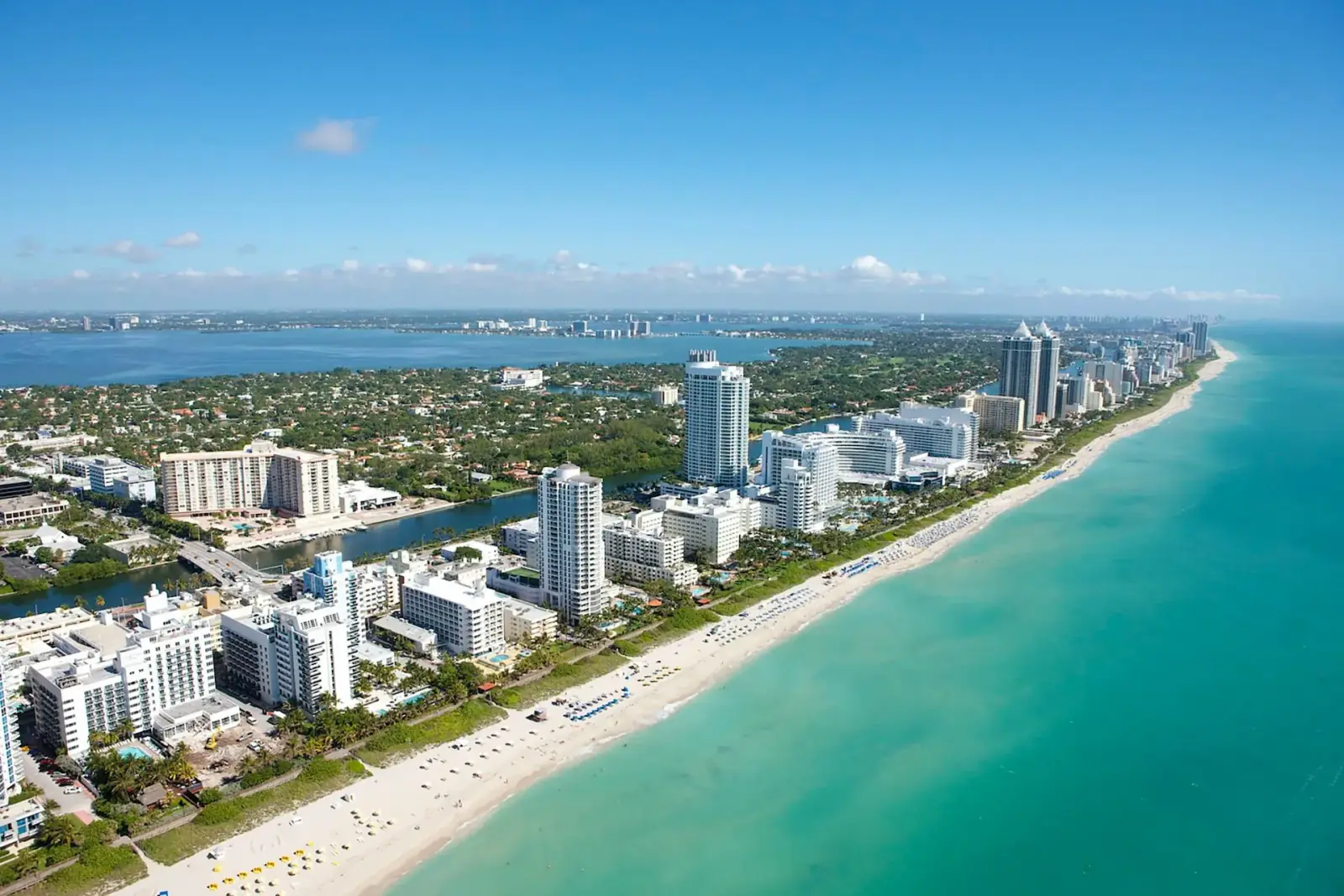
Miami is one of the most concentrated luxury coastal cities — and one of its most socially connected. For residents of Star Island, Fisher Island, Bal Harbour, Coral Gables, Pinecrest, and Key Biscayne, the practical reality is that the wellness landscape at home is dominated by lifestyle resorts and destination spas rather than licensed medical facilities. This piece walks through why a growing number of Miami residents are choosing an oceanfront luxury wellness center in Tulum, Mexico, and what makes the destination structurally different.
Why Miami Residents Are Looking Outside the City
South Florida's wellness landscape is dense but focused on hospitality — pools, spas, gyms, and aesthetic services. Residents ready for a real regenerative reset — physician supervision, IV therapies, biological optimization, and where clinically appropriate sacred plant medicine — find that a licensed medical wellness facility is a different category than a five-star spa.
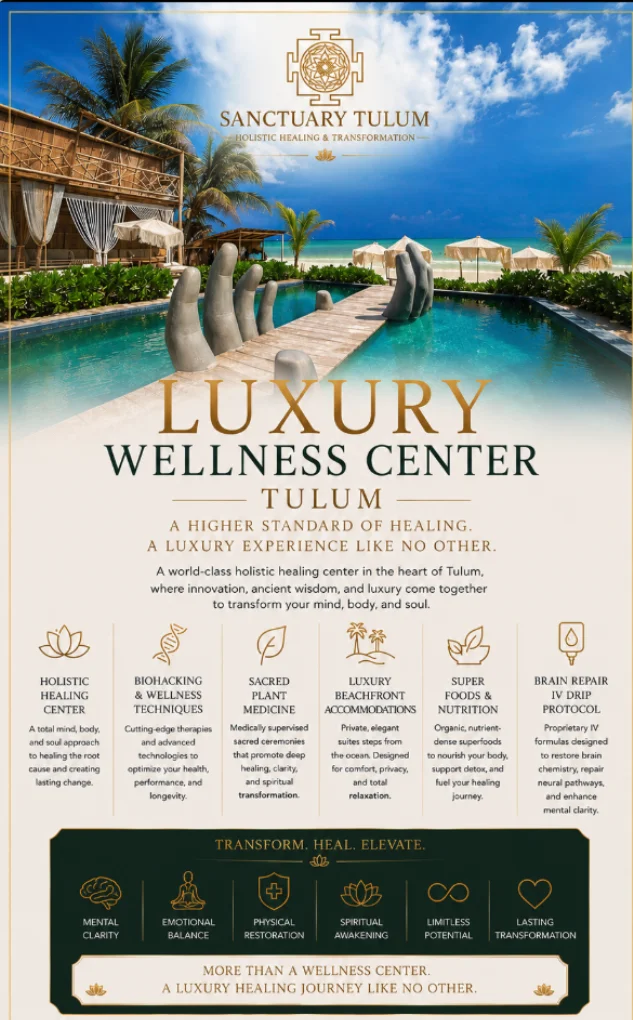
Our luxury wellness center was built for exactly that gap: a licensed medical setting with concierge-level luxury on a coastline that is genuinely different from South Florida.
A Genuinely Different Coastal Environment
Tulum sits on Mexico's Riviera Maya, on the Caribbean side of the Yucatán. Strict coastal building limits keep the shoreline low-density — no high-rise skyline, no beachfront condo towers. The water is turquoise and warm year-round, and the pace is fundamentally different from Miami.
The Yucatán also contains the a large network of freshwater cenotes — sinkholes and underground rivers carved through the limestone bedrock. They are geologically unique to this region and part of the daily rhythm of a stay.
Discretion for a Tightly Connected City
Miami's high-net-worth community — Star Island, Fisher Island, Bal Harbour, Indian Creek, Coral Gables — is tightly interconnected across real estate, finance, hospitality, and family-office circles. Even the most discreet local property sits inside that same network. Traveling to Tulum provides physical distance from those circles: a structural form of privacy that no in-city option can offer.

The Travel Picture
Direct flights from MIA and FLL to Cancún run roughly 2 hours on multiple carriers daily — one of the shortest international flights available from any US city. From Cancún International, Sanctuary Tulum arranges a private transfer of about 90 minutes south along the Caribbean coast. For clients traveling privately, several Riviera Maya airports can accommodate direct arrivals.
What a Medical Wellness Center Actually Involves
The line between a resort spa and a medical wellness center is drawn by clinical supervision. As the Mayo Clinic notes, hyperbaric oxygen therapy is a physician-supervised medical treatment — not a wellness accessory. IV micronutrient protocols, NAD+ therapy, and regenerative work involving cellular therapies fall in the same category.
Guests come to our luxury wellness center for biological optimization, cellular regeneration, inflammation reversal, cognitive recovery, and — where clinically appropriate — physician-supervised sacred plant medicine work. Related tracks include our luxury residential rehab, holistic addiction rehab, and medically supervised luxury detox.
A Note on Substance Use and Mental Health Support
If a Miami resident is dealing with active substance use, alcohol, or acute mental health issues rather than a lifestyle reset, the appropriate first step is a licensed clinical assessment. The SAMHSA National Helpline is a free, confidential 24/7 US resource for referrals. Our program is appropriate for clients who are medically stable and seeking a licensed international facility with a physician-supervised, integrative approach.
What We Provide
Sanctuary Tulum operates under a federal health license as a hospital and clinic, has a physician on site, and has been running continuously since 2011. The residential program is personalized — there is no fixed protocol — and clients arrive after a pre-program medical review including bloodwork and, where indicated, cardiac screening.
Programs and Length of Stay
The residential wellness program is personalized to each guest. Shorter regenerative resets typically run two to three weeks and focus on inflammation reversal, IV nutrient replenishment, HBOT sessions, sleep and hormonal support, and biological baseline testing. Longer integrative programs — four to twelve weeks — layer in deeper cellular work, stem cell protocols where clinically indicated, and, for guests who are appropriate candidates, physician-supervised sacred plant medicine work through our medically supervised ayahuasca ceremony, ibogaine, psilocybin, and 5-MeO-DMT tracks. The right length is determined during pre-arrival medical review, not sold as a fixed package.
The Pre-Program Medical Review
Every guest completes a pre-arrival medical review before travel. That review includes recent bloodwork, a medication and medical history, and — for any guest whose program will involve ibogaine or a related cardiac-relevant modality — a screening electrocardiogram. This is standard responsible practice. Peer-reviewed literature summarized in publications indexed through the National Library of Medicine (PubMed) supports the principle that any regenerative or plant-medicine protocol should begin with objective clinical baselining rather than intake by questionnaire alone. If the review surfaces a contraindication, the appropriate program is adjusted or declined outright.
On-Site Modalities
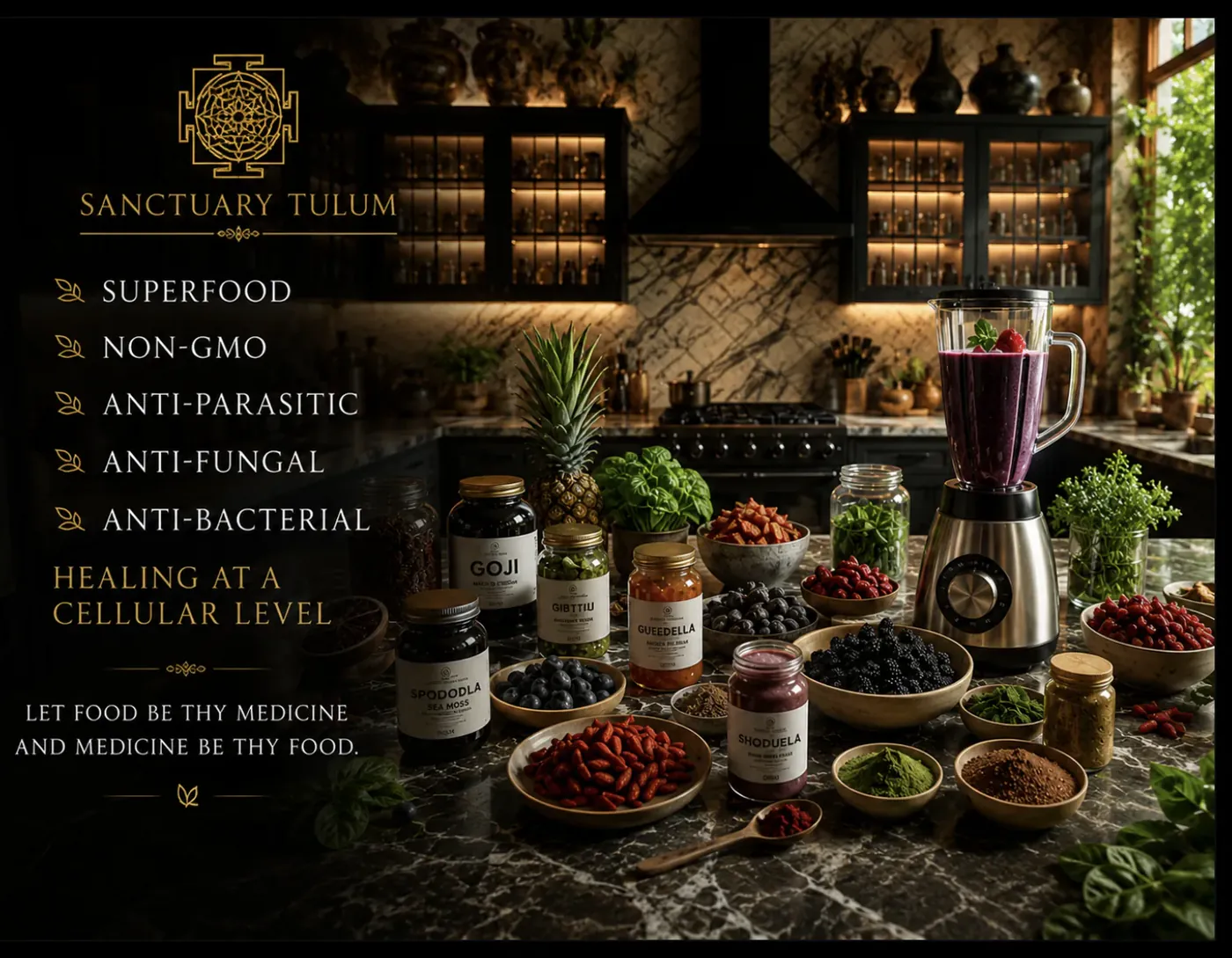
A typical day at our luxury wellness center combines physician-supervised medical work with restorative modalities. Guests commonly receive NAD+ IV therapy, Brain Repair IV protocols, and hyperbaric oxygen sessions, alongside infrared sauna, red light therapy, and cold plunge. Movement, breathwork, and integration time are built into the day. Nutrition is 100 percent organic and personalized to each guest's biology.
Integration and Coming Home
The most durable outcomes come from careful integration after the residential stay ends. Each guest leaves with a written integration plan — sleep, nutrition, supplementation, movement, and where relevant continued IV or HBOT protocols they can source locally at home. For guests who worked with sacred plant medicine, integration also includes a structured post-program check-in cadence. The goal is not a peak experience during the stay; it is a durable shift in biology and behavior that holds when a guest returns to their normal environment.
Frame
This is not a comparison against any specific Miami property. It is a description of what Tulum genuinely offers as a destination — Caribbean coastline, cenotes, warm year-round climate, and physical separation from home — for Miami residents choosing a medically supervised wellness environment.
Spa, Wellness Retreat, or Medically Supervised Facility: The Real Difference
A Miami day spa or destination resort operates under a hospitality license: no physician of record, no medication management, and no protocol for a medical event beyond calling emergency services. A group wellness retreat typically adds a visiting practitioner but is still built around lifestyle programming rather than clinical care. A medically supervised facility is licensed as a health facility — Sanctuary Tulum operates under a license issued by COFEPRIS, Mexico's federal health regulator — with a named medical director, nursing coverage, documented intake screening, and a written emergency protocol. That licensing distinction, not the setting, is what determines whether a facility can safely deliver IV therapy, HBOT, or plant-medicine work at all.
What Clinical Intake and an Individualized Schedule Involve
Clinical intake happens before travel, not after arrival: medical history, current medications, recent bloodwork, and — for any guest whose program includes ibogaine or another cardiac-relevant modality — a screening ECG, reviewed by a physician before a protocol is finalized. From that review, a daily schedule is built and adjusted through the stay rather than assigned from a fixed package. The National Institute on Drug Abuse frames individualized, adjustable treatment planning as foundational to effective care, which is one reason two guests arriving the same week can have entirely different daily plans.
Who This Setting Is — and Is Not — Appropriate For
A resort spa is a reasonable choice for a guest managing ordinary stress with no unstable medical condition. A medically supervised facility is the appropriate choice for a guest managing active dependency, a complex medication regimen, or a condition where a physician needs to be on site rather than reachable by phone. Before booking any wellness travel, Miami residents should ask directly for a facility's license, its medical director's name, and its documented emergency protocol — questions a legitimate operator answers without hesitation.
References
- COFEPRIS — Mexico's federal health regulator.
- National Institute on Drug Abuse. Treatment approaches for drug addiction.
- Bin-Alamer O, et al. Hyperbaric oxygen therapy as a neuromodulatory technique: a review of the recent evidence. Front Neurol. 2024;15:1450134.
- National Institute on Alcohol Abuse and Alcoholism. Understanding alcohol use disorder.