Retreat · Format
Luxury Holistic Wellness Retreat
A private, physician-supervised format that sits between a restorative break and a clinical admission — and works only when the difference is understood.
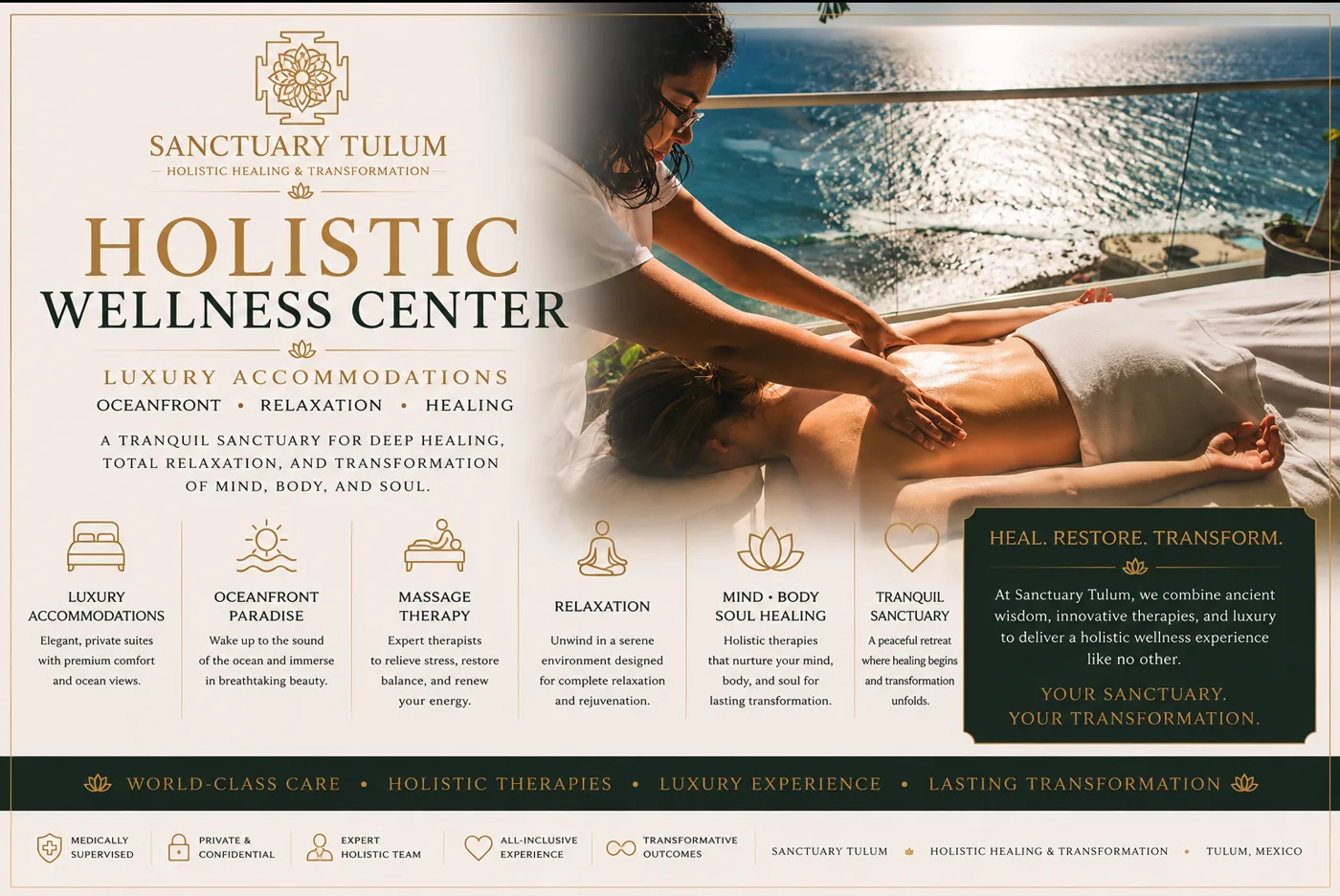
A holistic wellness retreat is easy to picture and surprisingly hard to define. The picture — sea air, unhurried mornings, food that does not come out of a packet — is accurate but incomplete. What determines whether the fortnight changes anything is the structure underneath it.
The word "holistic" is doing real work here. It means the program treats sleep, nutrition, movement, nervous-system state, biochemistry and psychological life as one interacting system rather than as separate departments. In practice that shows up as a single coordinated daily schedule written by one clinical team, instead of a set of bookable appointments.
Sanctuary Tulum has run this format on the Caribbean coast since 2011, with single-occupancy suites, no group programming and no psychiatric medication. It is deliberately small.

What a day actually looks like
Mornings begin with light, movement and food rather than therapy. Physiological work — hyperbaric oxygen, NAD+ IV and nutrient protocols where indicated, infrared sauna, cold exposure — is usually placed mid-morning when tolerance is highest.
Afternoons are one-to-one. Evenings are protected: no screens by default, an early dinner, and a deliberate wind-down. Sleep is treated as an intervention rather than a by-product, because for most arriving guests it is the single most broken variable.
Nervous system first
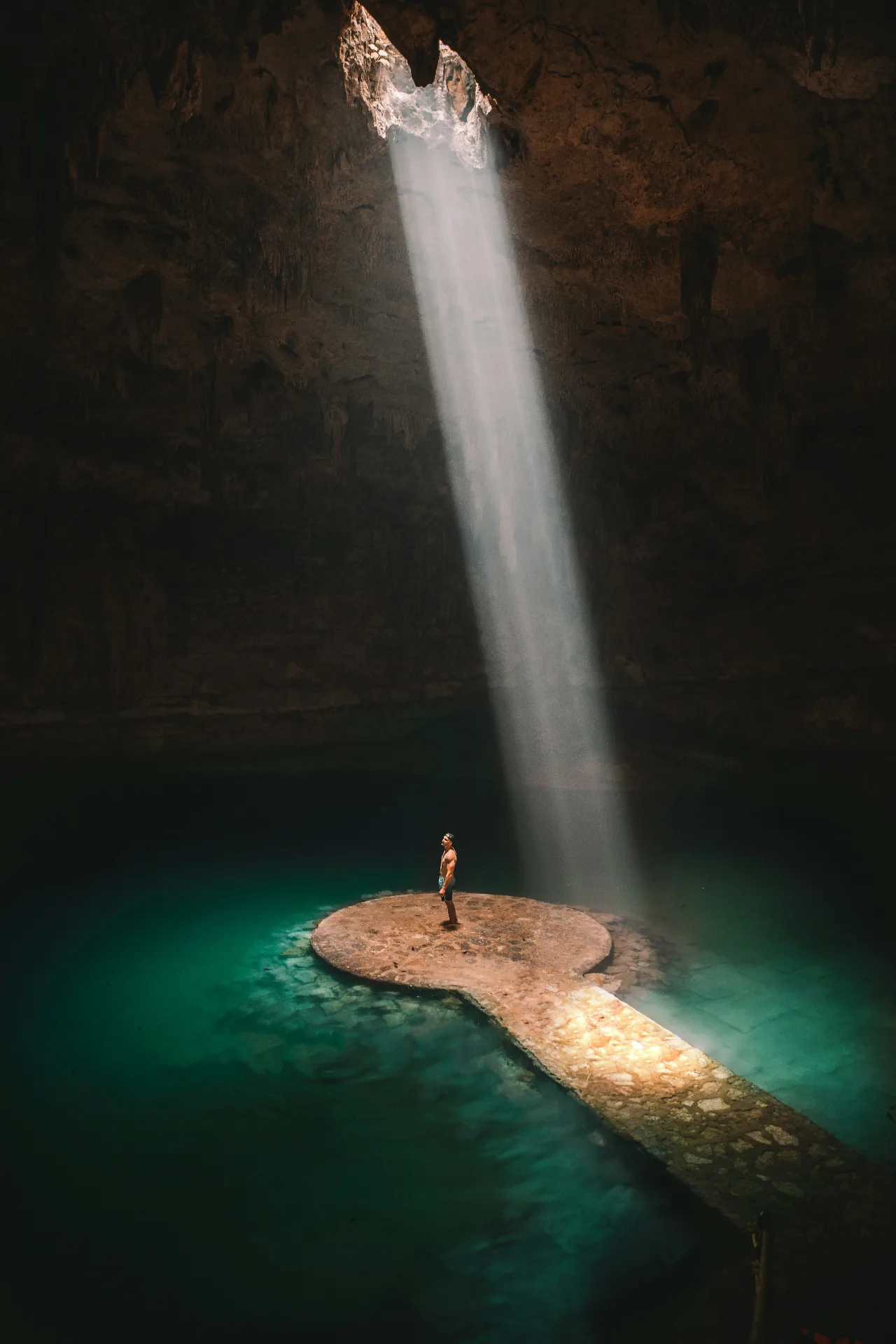
Nothing therapeutic lands well in a body that is still running on adrenaline. The opening days of a retreat are therefore spent lowering physiological arousal — breathwork, meditation, daylight, bodywork, an absence of stimulants and alcohol — before any demanding work begins.
Guests often experience this stage as anticlimactic. It is not. Interventions delivered into a regulated nervous system are simply more useful than the same interventions delivered into a braced one.
The first week is not a warm-up. It is the condition that makes the second and third weeks worth doing.
Sanctuary Tulum
Who the format suits — and who it does not
An honest fit assessment saves everyone time.
Good fit: sustained burnout
Exhaustion, poor sleep, flattened mood, no acute risk.
Good fit: post-treatment recovery
Rebuilding after illness, surgery or a long medical course.
Good fit: plateaued health
Everything is 'fine' and nothing is improving.
Needs a clinical admission
Active withdrawal or an unstable medical condition.
Needs a clinical admission
Significant self-harm or suicide risk.
Poor fit: a holiday
The schedule is full and the days are structured.

Bodywork, touch and the physical layer
Daily bodywork is one of the least discussed and most consistently valued parts of a retreat stay. It supports lymphatic movement and sleep, and for people who have spent years in a permanently guarded posture it is often the first unambiguous relief they feel.
It also does something a schedule cannot: it re-establishes a tolerable relationship with the body, which is a prerequisite for a great deal of the work that follows.
Where retreat ends and treatment begins
The boundary is clinical risk, and it should be drawn during assessment rather than after arrival. A retreat format assumes a physiologically stable guest who can tolerate a full day of activity. Where dependency, withdrawal or an unstable condition is present, the correct setting is a facility with medical capability and overnight clinical cover.
Both exist here, which is why the intake conversation is long. The SAMHSA national helpline is a useful free starting point for anyone unsure how urgent their situation is, and NIMH publishes plain-language guidance on when specialist care is indicated.
If a clinical admission is the right call, our luxury rehab center and medically supervised luxury detox pages describe that pathway.
Length of stay, and what changes when
Two weeks is enough to reset sleep, appetite and baseline arousal, and to see whether a person responds to the protocol. Four weeks is where most guests begin to describe a genuine change in how they feel rather than how rested they are. Longer stays exist for complex histories and are recommended on clinical grounds, never as an upsell.
What survives the flight home depends almost entirely on the discharge plan: a written protocol covering sleep, nutrition, movement, continuing support and what to do if things slip. Retreats that end at the airport rarely hold.
The setting, and why it is not incidental
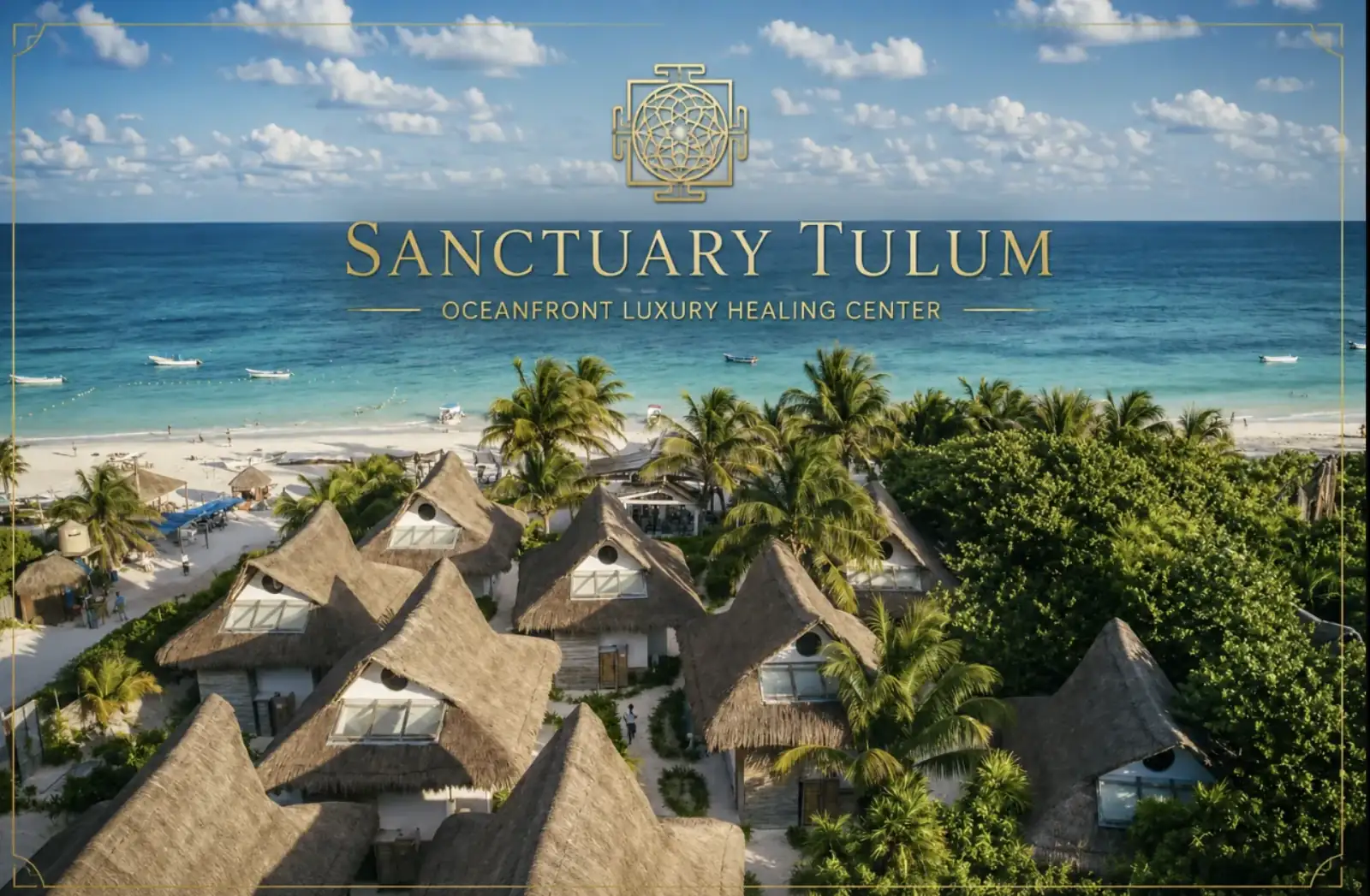
Warm climate, daylight, sea water, quiet and low sensory load are not indulgences in this context; they lower the demand on a system that is trying to repair. Being physically removed from the environment in which the problem developed contributes as much as anything on the schedule.
Read the full range of therapies, review programs and pricing, or learn about the team. Sanctuary Tulum operates as a licensed luxury depression rehab and oceanfront healing center.
Sleep architecture: the metric that predicts everything else
Of every variable tracked during a retreat stay, sleep continuity is the one most closely tied to how a guest reports feeling by the end of the first week. Chronic short or fragmented sleep raises cortisol, blunts glucose regulation and impairs the prefrontal control that makes emotional regulation possible during the day. Reversing that pattern is not a matter of "more rest" in the abstract; it requires a fixed wake time, daylight exposure early in the day, an end to stimulants and screens in the evening, and, when indicated, short-term pharmacological support under physician supervision.
Guests arriving from high-stress professional environments often describe having "forgotten what eight hours feels like." Restoring that baseline is unglamorous work — a rigid schedule, a dark room, consistent meal timing — but it is also the single most reliable early win in the program, and it is the platform every other intervention depends on.
Nutrition and the physiological floor
Diet at a holistic retreat is not a wellness aesthetic; it functions as a medical input. An organic, anti-inflammatory wholefood diet, adjusted for individual deficiencies identified at intake, addresses the physiological floor a person is working from. Chronic stress, poor sleep and, in some cases, long-term substance use commonly leave measurable nutrient deficiencies that affect mood, energy and cognitive clarity well before any psychological work begins.
Where bloodwork indicates a specific deficiency, correcting it — rather than treating fatigue or low mood as purely psychological — is often what allows the rest of the program to be usable. This is one reason a retreat with in-house medical oversight differs meaningfully from a wellness program that is purely experiential.
References
- 1. Zaccaro A, Piarulli A, Laurino M, et al. How Breath-Control Can Change Your Life: A Systematic Review on Psycho-Physiological Correlates of Slow Breathing. Front Hum Neurosci. 2018.
- 2. Krygier JR, Heathers JA, Shahrestani S, et al. Heart rate variability during mindful breathing meditation. Front Physiol. 2022.
- 3. Field T, Hernandez-Reif M, Diego M, et al. Cortisol decreases and serotonin and dopamine increase following massage therapy. Int J Neurosci. 2005.
- 4. Toro-Román V, et al. Massage therapy in cortisol circadian rhythm, pain intensity, perceived stress index and quality of life of fibromyalgia syndrome patients. Complement Ther Clin Pract. 2018.
- 5. Hu Q, et al. Hyperbaric oxygen therapy for traumatic brain injury: bench-to-bedside. Med Gas Res. 2016.
- 6. Hadanny A, Efrati S. Hyperbaric oxygen therapy for cognitive impairments in patients with traumatic brain injury: A systematic review. Appl Neuropsychol Adult. 2023.
- 7. National Institute of Mental Health. Health topics. NIMH.